Empowering Local Communities with Water Management Tools: Walailak University’s Commitment to Actively Promoting Conscious Water Usage and Collaboration

Empowering Local Communities with Water Management Tools: Walailak University’s Commitment to Actively Promoting Conscious Water Usage and Collaboration

Case Studies
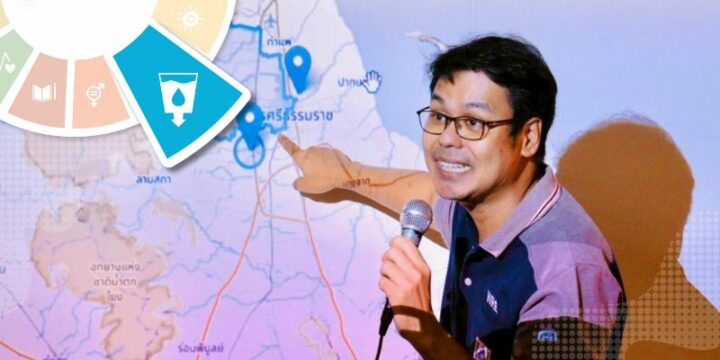
Walailak University recognizes the importance of water conservation and efficient water use. The university is committed to actively promoting conscious and efficient water usage both within the campus and in the wider communities. At present, the university actively promotes conscious water usage in the wider communities through various water conservation projects. These projects include knowledge transfer activities for local farmers, along with awareness campaigns on responsible water consumption in nearby communities. The aim is to enable wider communities to plan and implement effective water-saving measures and to reduce overall water consumption. In 2023, the pilot implementation of the “Decision Support Program for Sub-district Water Management Planning” was first carried out in Pak Phanang District, Nakhon Si Thammarat Province. Building upon its success, in 2024 the university expanded the application of…
Read More
Fostering Awareness to Actively Promote Conscious and Sustainable Water Usage on Campus

Fostering Awareness to Actively Promote Conscious and Sustainable Water Usage on Campus

Case Studies
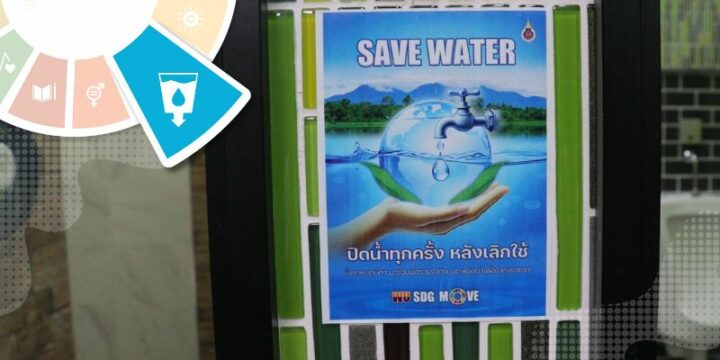
Sustainability and Stewardship Promoting Conscious Water Usage and Efficient Water Management: Fostering Campus-Wide Water Conservation Initiatives In today’s era, where water resources are becoming increasingly limited due to global warming, climate change, and consumption behaviors lacking environmental awareness, promoting mindful water use has become a key mechanism in building the sustainability of ecosystems, economies, and societies. This is especially crucial in the context of Thailand, which faces water shortages in many regions. Efficient and responsible water use is therefore not only the duty of the government or water resource agencies, but a collective mission of all sectors—including higher education institutions, which play a vital role in knowledge development, behavioral cultivation, and driving widespread change. Walailak University is one such institution that has clearly demonstrated this role through activities and measures…
Read More
Strengthening Local, Regional, National, and Global Partnerships for Sustainable Water Security

Strengthening Local, Regional, National, and Global Partnerships for Sustainable Water Security

Case Studies
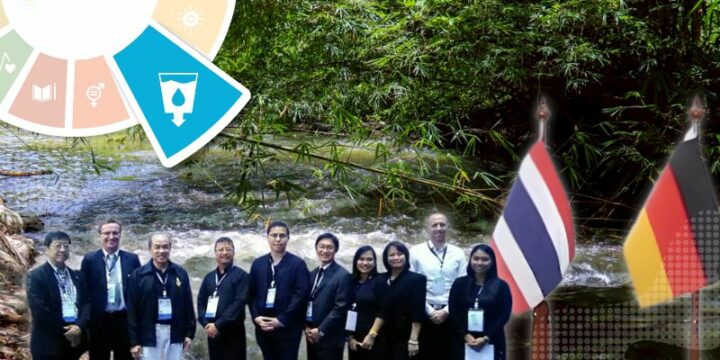
Strengthening Local, Regional, National, and Global Partnerships for Sustainable Water Management In 2024, Walailak University placed a strong emphasis on strengthening water security through tangible actions and cooperation with local, regional, national and global governments. This cooperation on water security aims to address natural disasters and establish a sustainable and reliable water resource management system that effectively meets the water demands of local communities, including flood prevention, salinity control, and drought mitigation. This approach aligns with the definition of Water Security provided by the United Nations, which refers to the capacity of a population to ensure sustainable access to sufficient quantities of water of acceptable quality for sustaining livelihoods, human well-being, and socio-economic development, while protecting against water-borne pollution and water-related disasters, and preserving ecosystems in an environment of peace…
Read More
The Innovation of Water Management for Sustainability: Applicable Water Extraction Technologies at Walailak University

The Innovation of Water Management for Sustainability: Applicable Water Extraction Technologies at Walailak University

Case Studies
Sustainability and Stewardship Sustainable Water Extraction is a process that integrates applicable technology, innovation, and efficient water resource management practices. Its primary goal is to maintain ecological balance, minimize environmental impact, and ensure long-term water security. Sustainable water extraction on campus is not limited to utilizing water without affecting upstream sources; it also encompasses water storage, production of potable water, efficient water use, wastewater treatment, and water reuse—all in ways that promote comprehensive resource conservation by utilizing sustainable water extraction technologies on associated university grounds on and off campus where water is extracted. Figures: Sustainable Water Extraction Technologies within the universityWalailak University, located in the southern region of Thailand, covers a total area of 21,196,440 square meters, making it the largest university in the country in terms of land area.…
Read More
The Role of the University in Supporting Practical Water Conservation Off Campus and Strengthening Communities through Innovation and Participation beyond the Campus

The Role of the University in Supporting Practical Water Conservation Off Campus and Strengthening Communities through Innovation and Participation beyond the Campus

Case Studies
In recent years, Thailand has faced increasingly severe challenges in water resource management, resulting from climate change, urban expansion, environmental degradation, and inefficient water use. These issues have led to droughts, floods, and inefficient water use. These issues have led to droughts, floods, and instability in access to clean water for people in many areas, particularly in rural communities that rely primarily on agriculture. Water conservation has therefore become a critical agenda that requires collaboration across multiple sectors, including universities, which play a key role as sources of academic knowledge and innovation for sustainable development.In 2024, the university continued to implement projects that support practical water conservation off campus, aiming to transfer knowledge, technologies, and innovations to local communities about water conservation. The goal is to enable communities to effectively…
Read More
Free Educational Opportunities for Integrated Water Management: Advancing Local Communities Toward Sustainable Development

Free Educational Opportunities for Integrated Water Management: Advancing Local Communities Toward Sustainable Development

Case Studies
Enhancing Water Management Education: Commitment to Community Engagement and Sustainability Water is an essential resource for both life and national development. However, in recent years, water-related issues—such as drought, flooding, saltwater intrusion, and wastewater from various activities—have become increasingly severe, particularly in fragile ecosystems and areas with diverse land use in Nakhon Si Thammarat Province. Examples include the Pak Phanang River basin, Na Mai Phai Subdistrict, and other regions at both the provincial and national levels.Given this context, Walailak University, as a local university, recognizes the urgent need to provide educational opportunities for local communities to learn about good water management. The university applies a community-based participatory learning approach to build foundational knowledge, develop water management skills, and promote the conservation of natural resources in ways that are suitable to…
Read More
Water Reuse Management and Measurement: A Guide to a Sustainable Green University

Water Reuse Management and Measurement: A Guide to a Sustainable Green University

Case Studies
Sustainability and Stewardship In an era where climate change and water scarcity are global challenges, sustainable water management at all levels has become crucial. This is especially true for educational institutions, which have the potential to serve as role models in the efficient use of water resources. Walailak University recognizes its role and has implemented the policy of becoming a “Happy and Sustainable University,” with a strong emphasis on developing projects for wastewater recycling to support agriculture, internal industrial use, and general university activities. Then, the volume of reuse of water is measured and monitored across the university through advanced technologies and modern instruments. At present, the university operates a wastewater treatment and reuse system with a capacity of up to 1,500 cubic meters per day. The treated water undergoes…
Read More
Sustainable Water Management: Walailak University’s Water Reuse Policy

Sustainable Water Management: Walailak University’s Water Reuse Policy

Case Studies
Sustainability and Stewardship Sustainable Water Management: Walailak University’s Water Reuse Policy Walailak University is committed to becoming a sustainable and environmentally friendly “Happy University” under its 20-Year Strategic Plan (2018–2037). The plan promotes development in infrastructure, water management, waste management, energy management, climate change, transportation, and education. The university emphasizes efficient and participatory management of resources, environmental stewardship, and energy conservation. It integrates renewable energy, resource efficiency, and environmental conservation into teaching, research, and all university activities. The aim is to foster a safe, eco-friendly, and energy-efficient environment that benefits both the university and surrounding communities. In 2024, the university implemented measures and guidelines for water reuse across the university. Treated wastewater of appropriate quality is reused for purposes that do not require potable water, such as watering plants, street…
Read More
Water-Conscious Planting Landscapes to Minimize Water Usage

Water-Conscious Planting Landscapes to Minimize Water Usage

Case Studies
Sustainability and Stewardship Walailak University, as a large higher education institution with an area of over 21,000,000 square meters, recognizes the importance of efficient water resource utilization, particularly in the context of being a university that actively promotes environmental sustainability in tangible ways. One of the key strategies implemented by the university is to align its space utilization with water conservation goals through the allocation and development of land, landscape design, and the selection to minimize water usage in the plants such as drought-tolerant plants, as well as the adoption of efficient water management systems to sustainably reduce overall water consumption. BOTA Cactus Dome: A Model of Water-Efficient Landscape and Learning SpaceCurrently, the university has planted landscapes that serve as ecological and learning hubs, promoting the sustainable use of natural…
Read More
Building Standards Applied to Reduce Water Consumption Walailak University

Building Standards Applied to Reduce Water Consumption Walailak University

Case Studies
Sustainability and Stewardship Efficient water management is a crucial aspect of sustainable development, particularly in the building sector, which consumes a significant amount of water over the long term. For this reason, the university recognizes the importance of applying building standards — such as environmentally conscious design and assessment standards – to systematically and sustainably minimise water use. Walailak University has established a sustainable water resource management policy to support environmental conservation and ensure water security within the campus. In particular, this policy emphasizes designing and renovating buildings to maximize water use efficiency, in line with the university’s vision of becoming a Green University and a Sustainable University. Through the implementation of policies, planning, and building standards, the university continuously applied water-conscious building standards and efficient water use to control…
Read More