WU Initiating and Participating in Cross-Sectoral Dialogues for Tackling SDGs
2024 was another year that Walailak University both organized and participated in various events of cross-sectoral dialogues to bring together experts or representatives from multiple sectors, such as researchers, NGOs, government organizations, the private sector, civil society representatives, politicians, and others, to exchange, express and share opinions, experiences and suggestions to advance the United Nations’ Sustainable Development Goals.
The Roles of Universities in Enhancing Quality of Life in the Turbulent World: Cross-Sectoral Dialogue on Sustainable Education
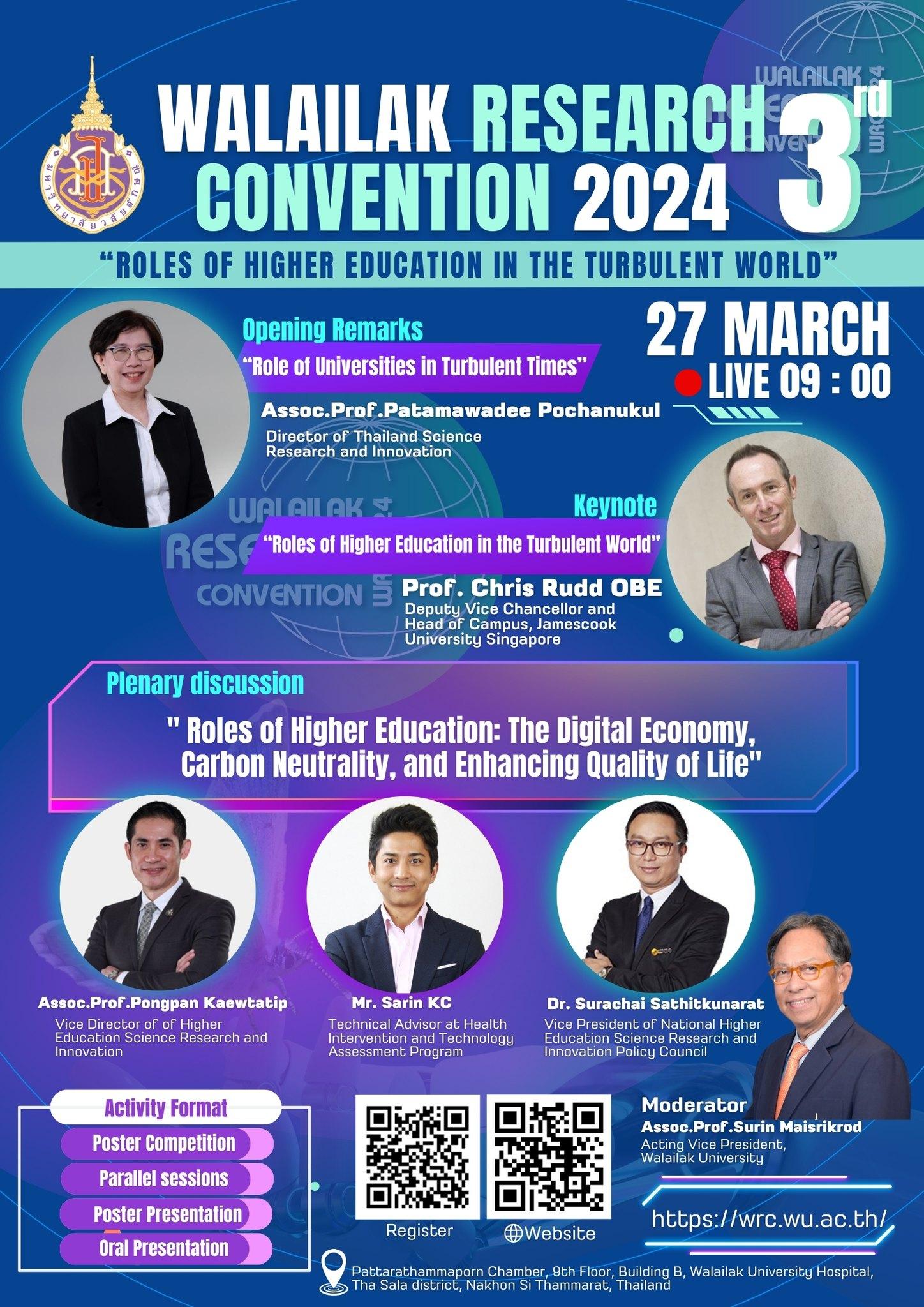
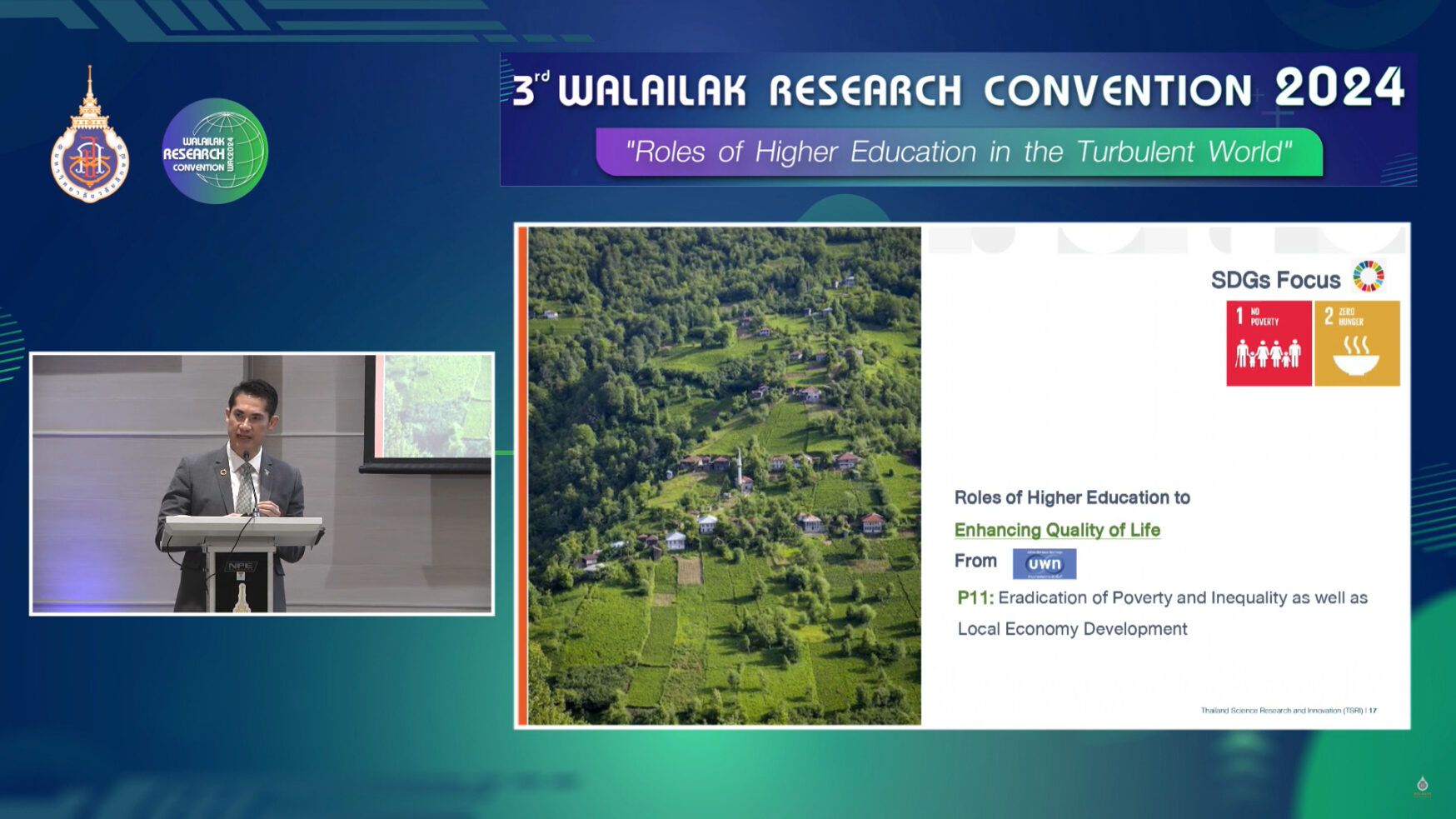
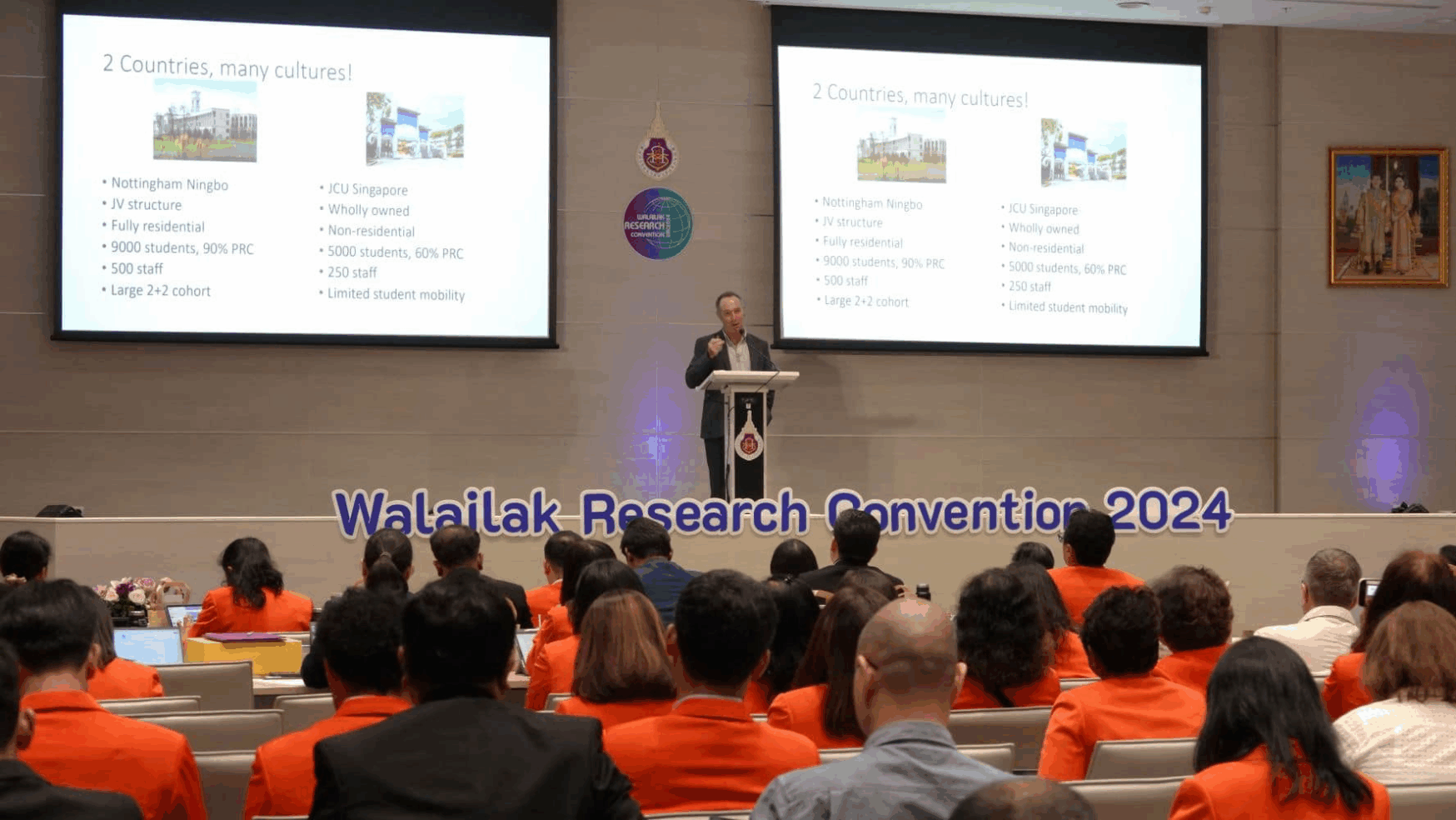
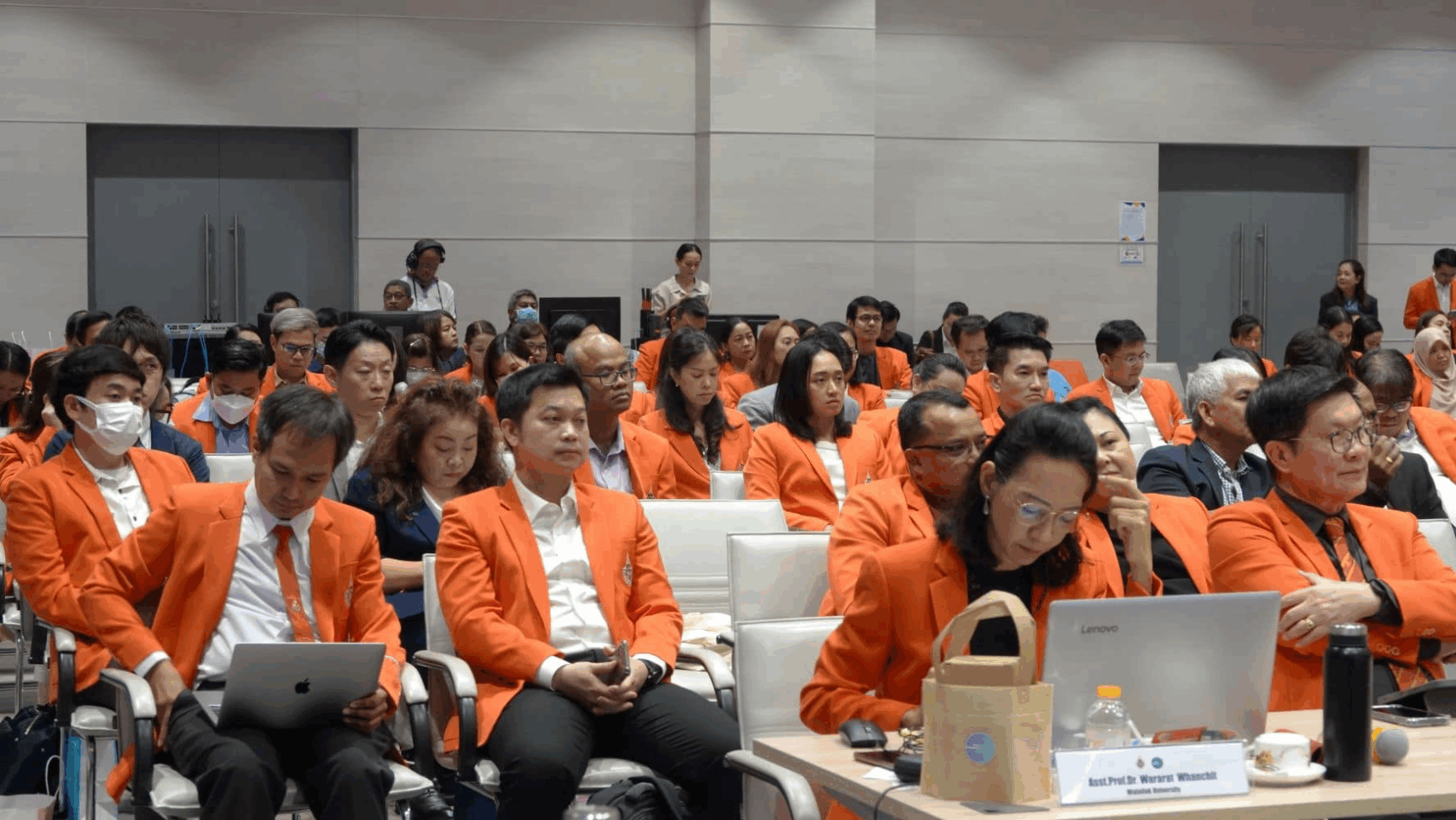
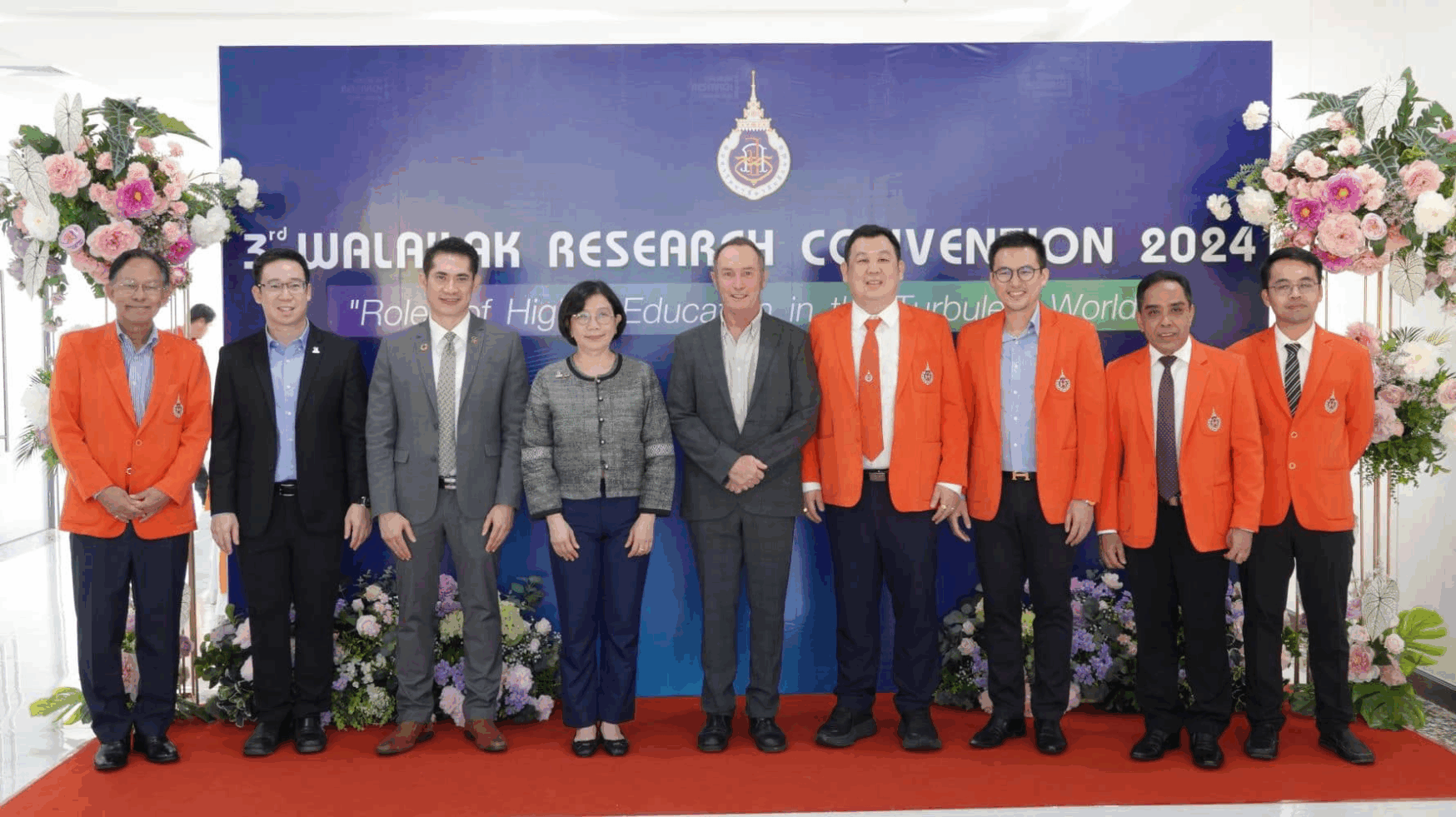
In 2024, Walailak University hosted a cross-sectoral dialogue as part of the Walailak Research Convention 2024 (WRC2024), celebrating the university’s 32nd anniversary. Held under the theme “Roles of Higher Education in the Turbulent World,”. The convention, WRC2024, was dedicated to serving as a public forum for the presentation of academic research and the facilitation of knowledge exchange among a diverse array of participants, including researchers, local operational agencies, entrepreneurs, the general public, and students. The objective was to foster the advancement of research, catalyze innovation and technological development, and encourage the establishment of research networks both nationally and internationally.
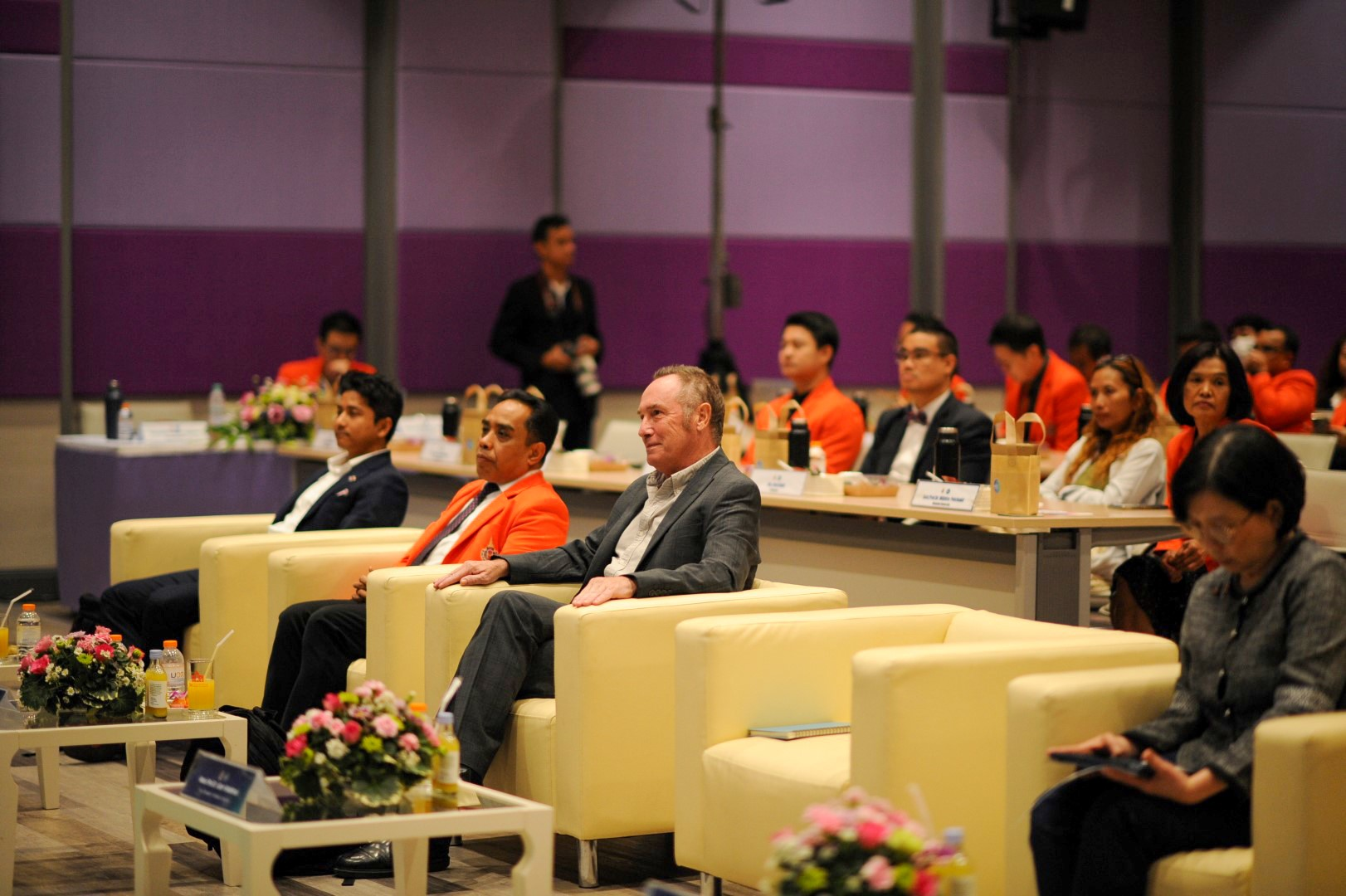
The convention attracted participants from academia, government, NGOs, and the private sector, representing Thailand, the USA, Japan, New Zealand, Finland, Poland, Russia, Palestine, Malaysia, and South Korea. Conducted in a hybrid format, attendees had the flexibility to join either in person or online.
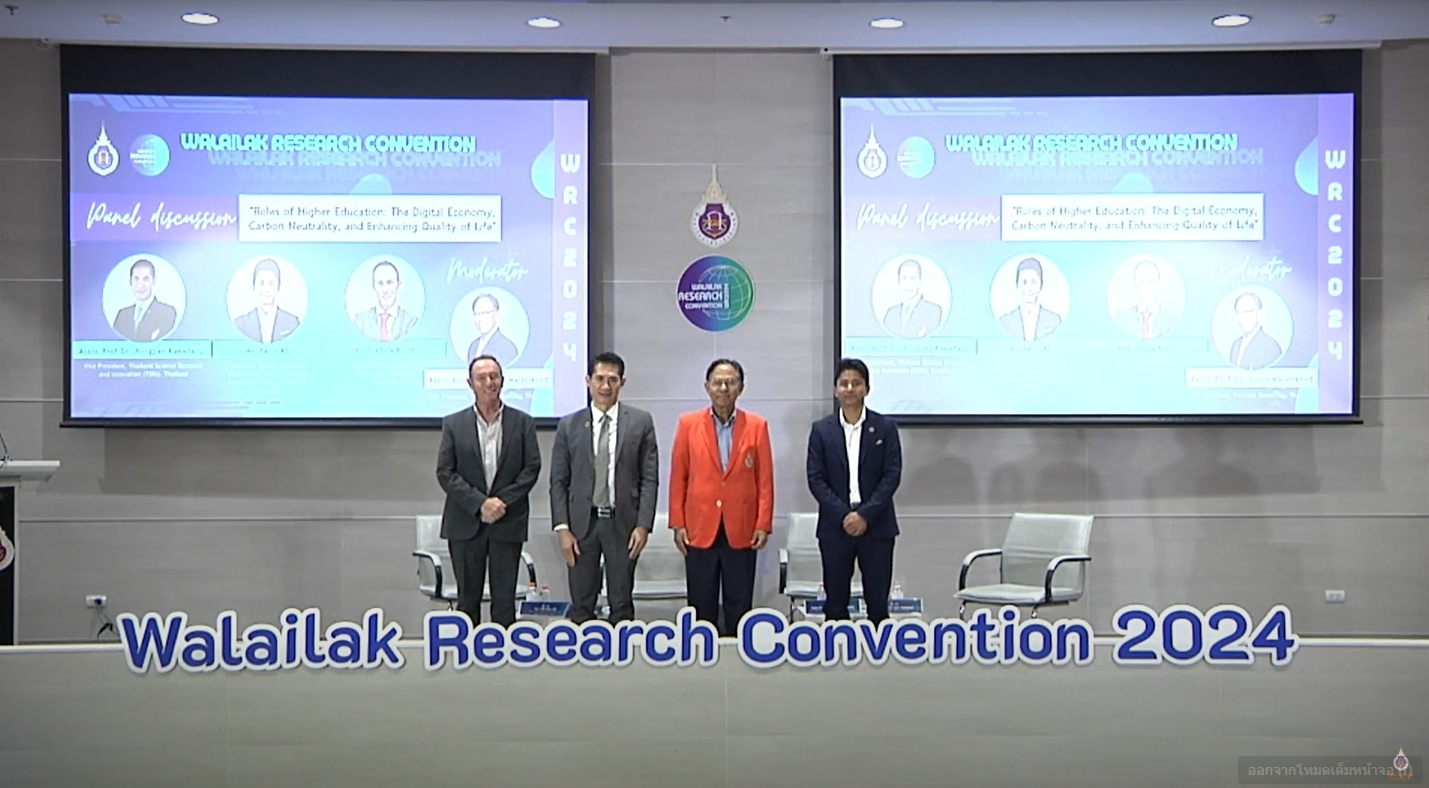
Distinguished keynote speakers included:
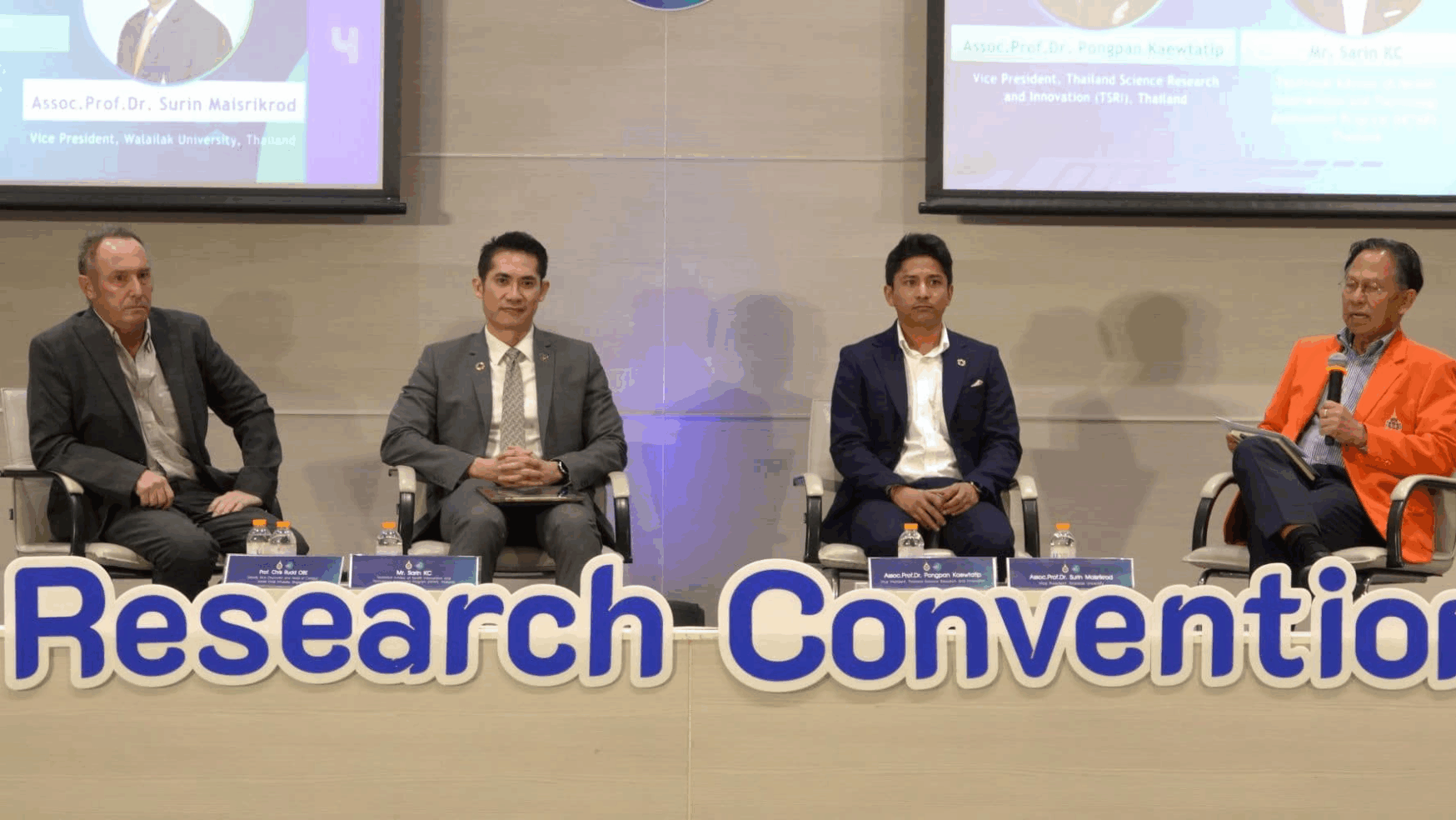
Professor Chris Rudd OBE, Deputy Vice Chancellor and Head of Campus, James Cook University Singapore.
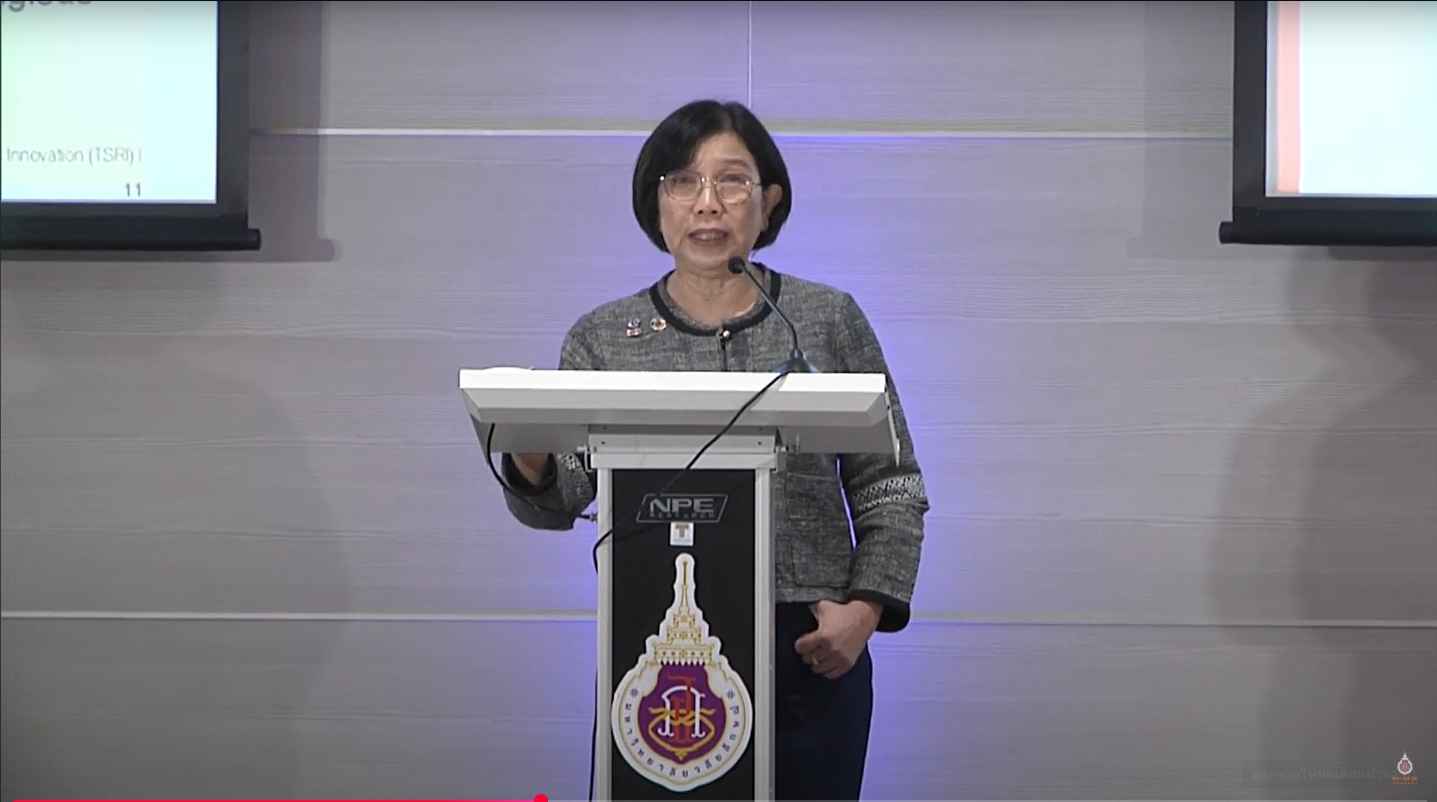
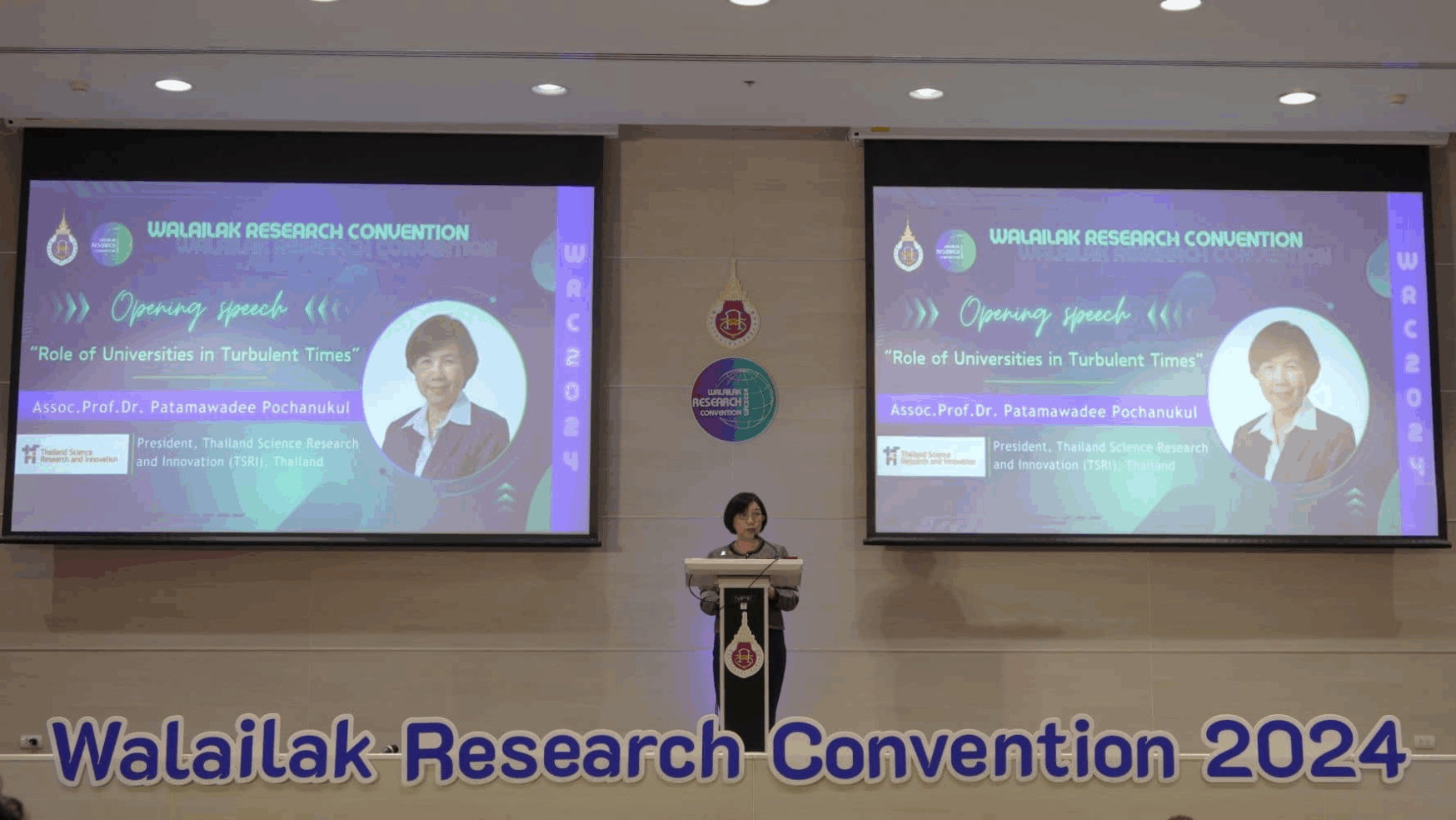
Associate Professor Dr. Patamawadee Pochanukul, Director of Thailand Science Research and Innovation (TSRI).
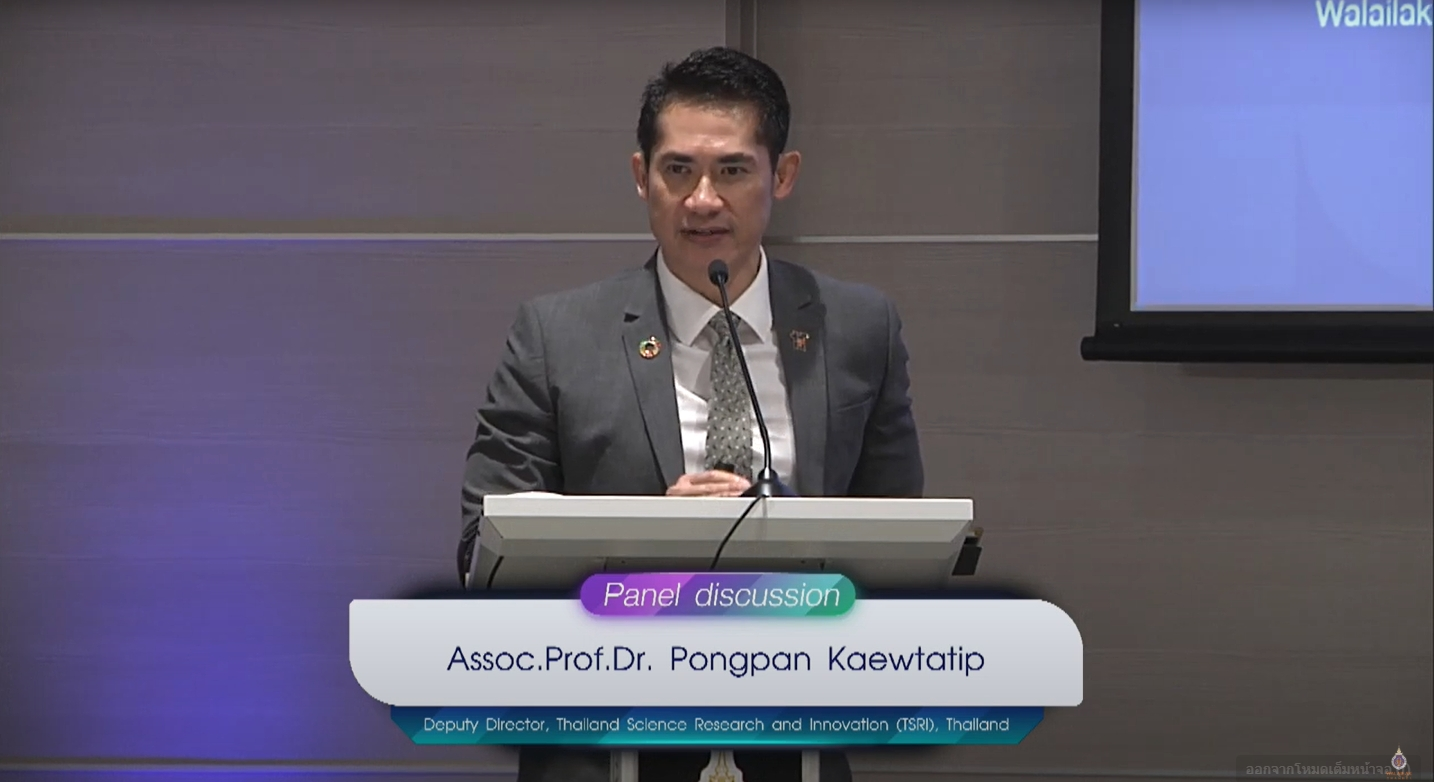
Associate Professor Dr. Pongpan Kaewtatip, Vice Director of TSRI.
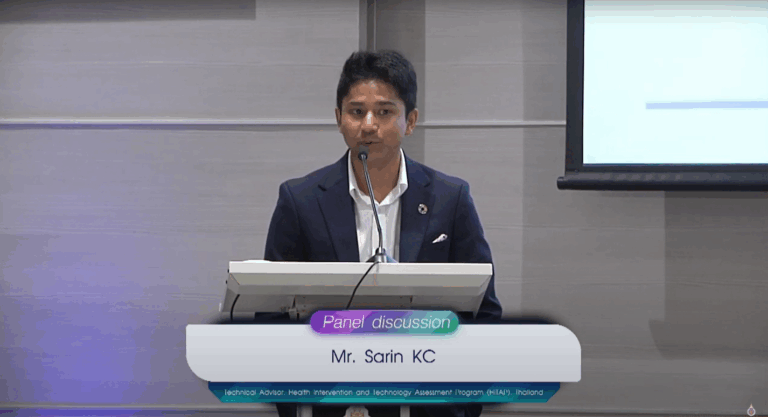
Mr. Sarin KC, Technical Advisor at the Health Intervention and Technology Assessment Program (HITAP).
Dr. Surachai Sathitkunarat, Vice President of the National Higher Education Science Research and Innovation Policy Council (NXPO).
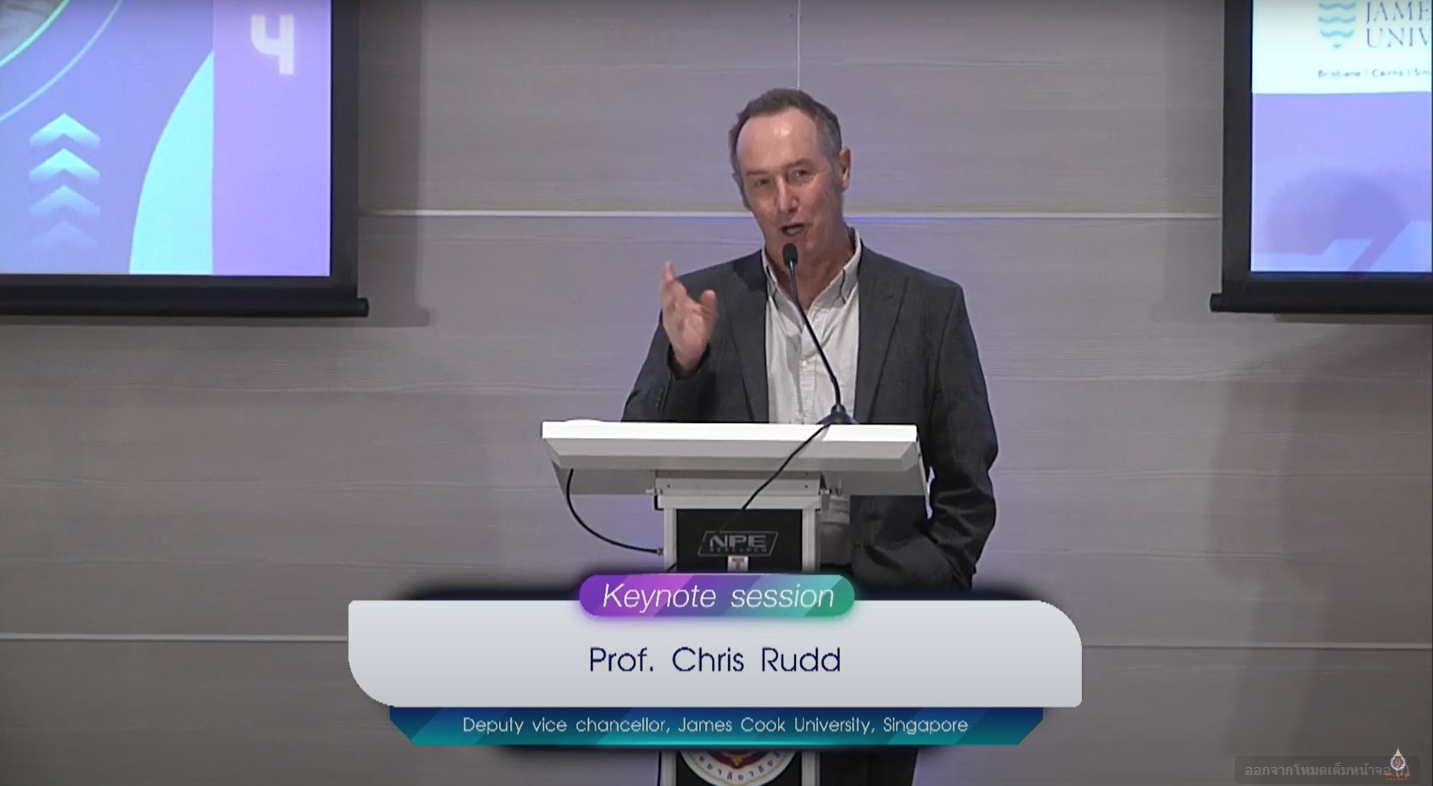
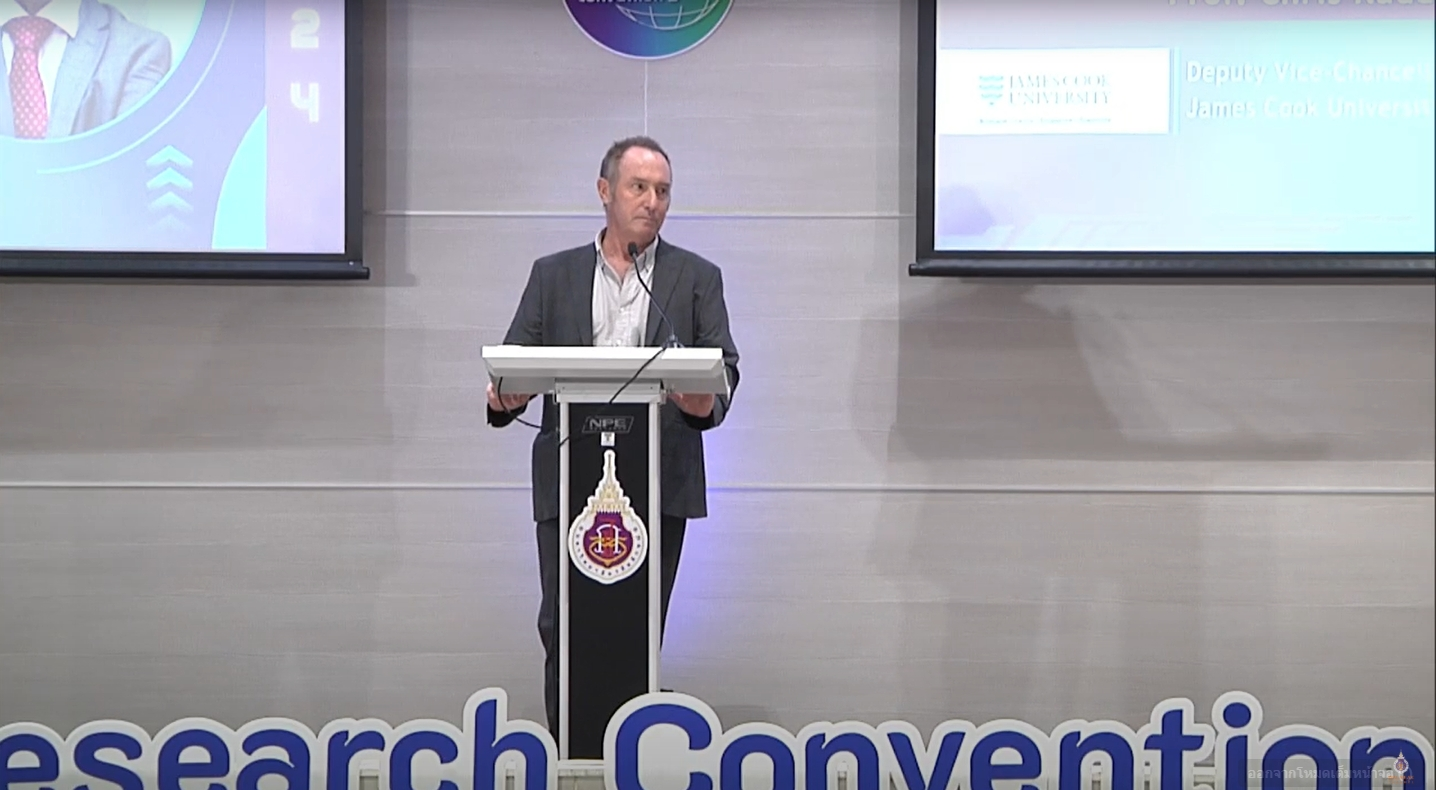
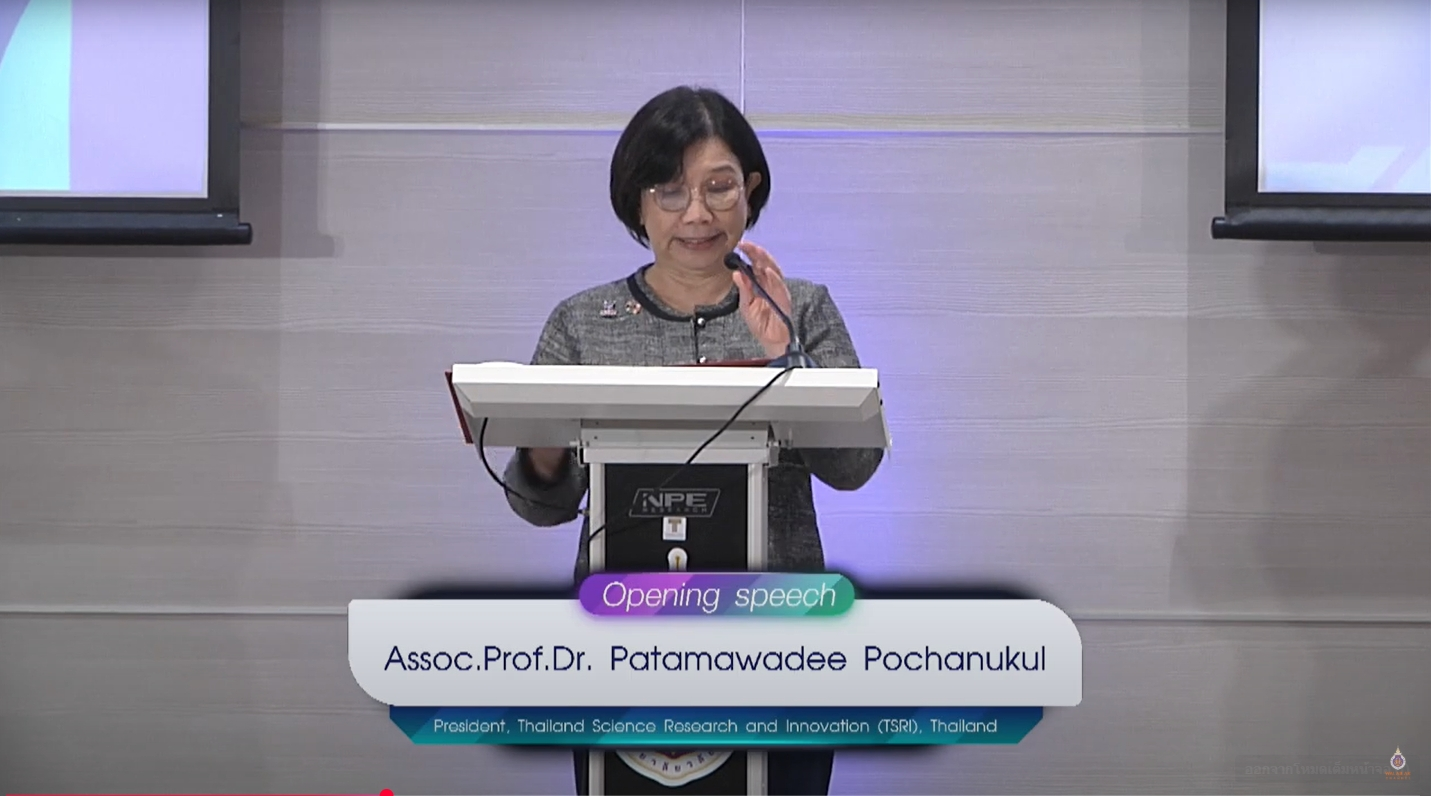
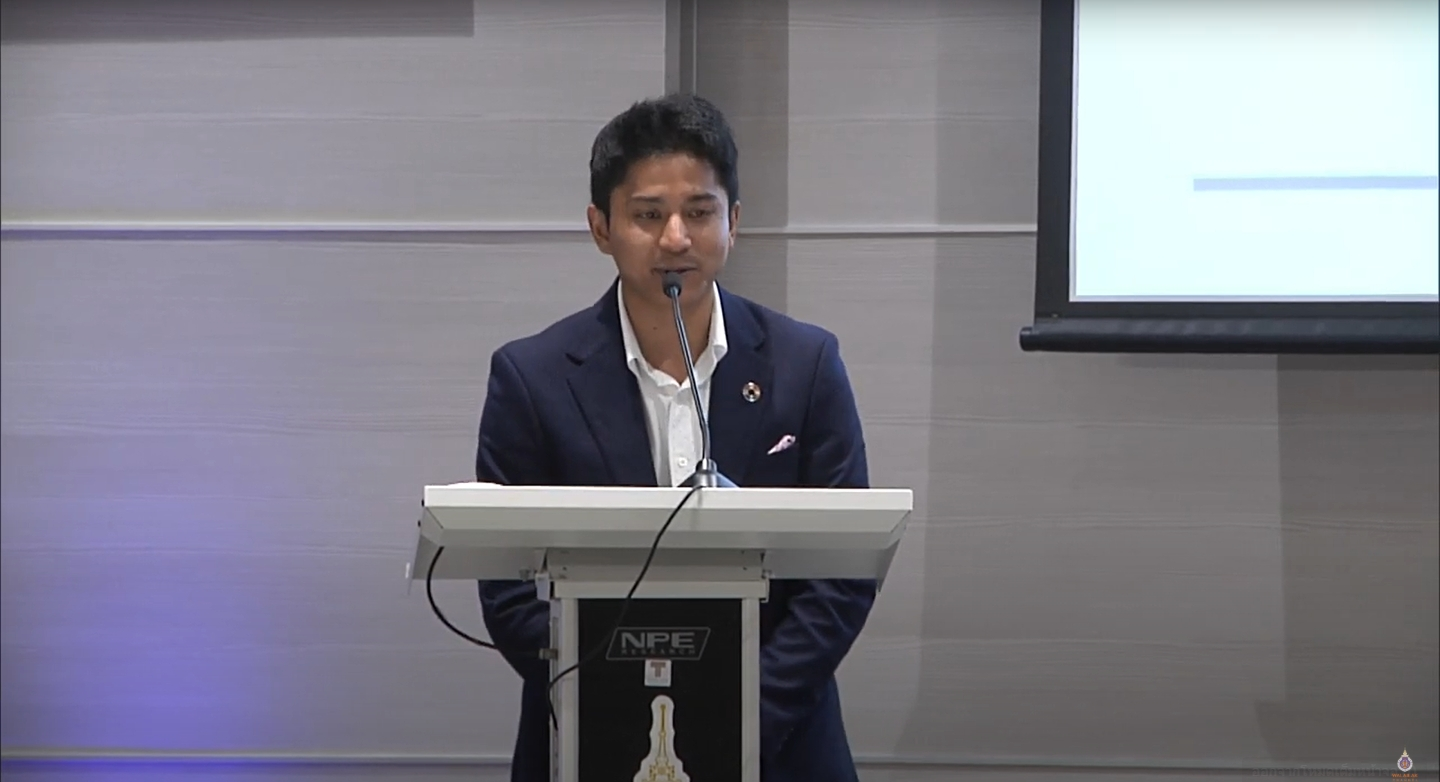
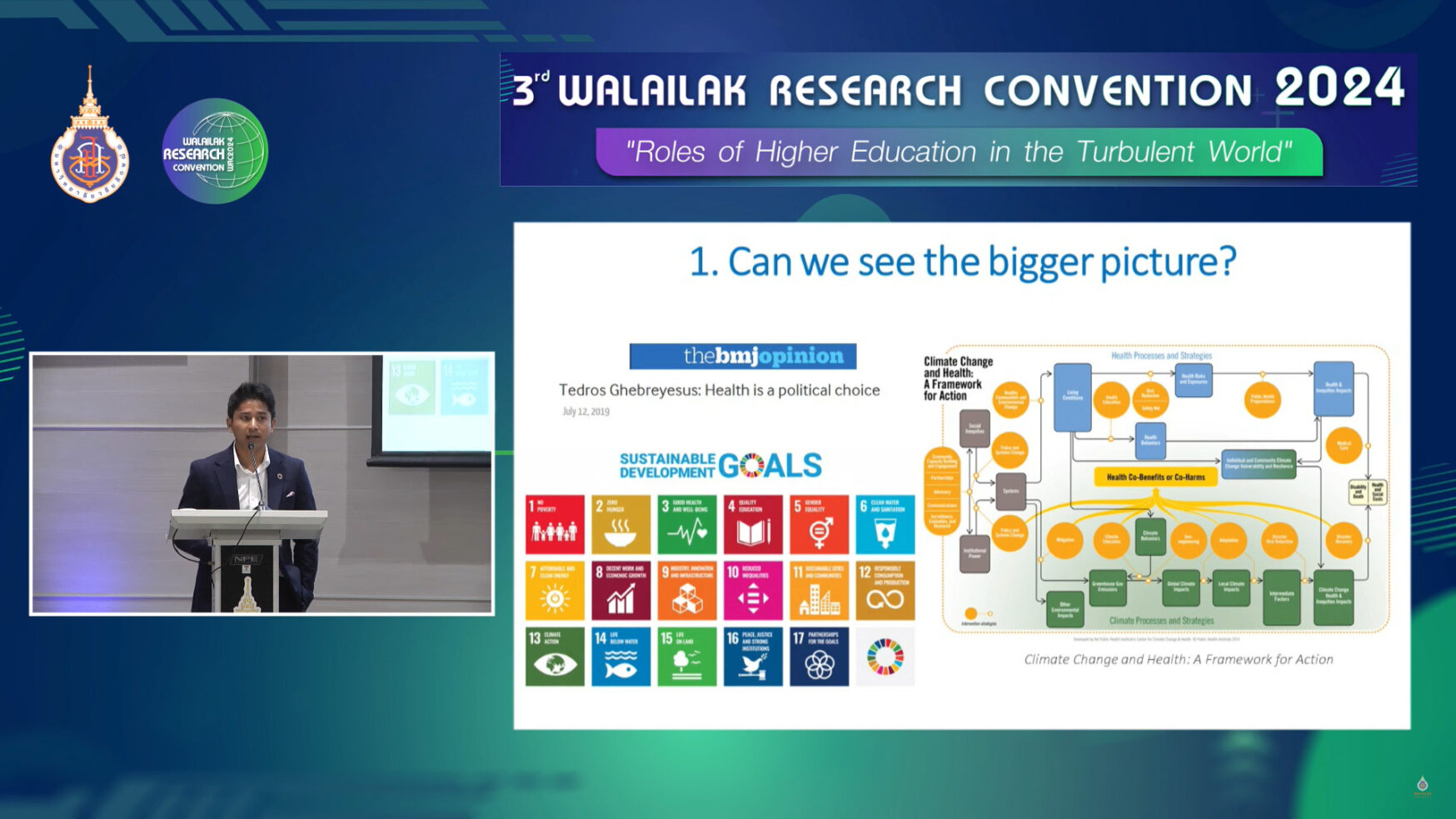
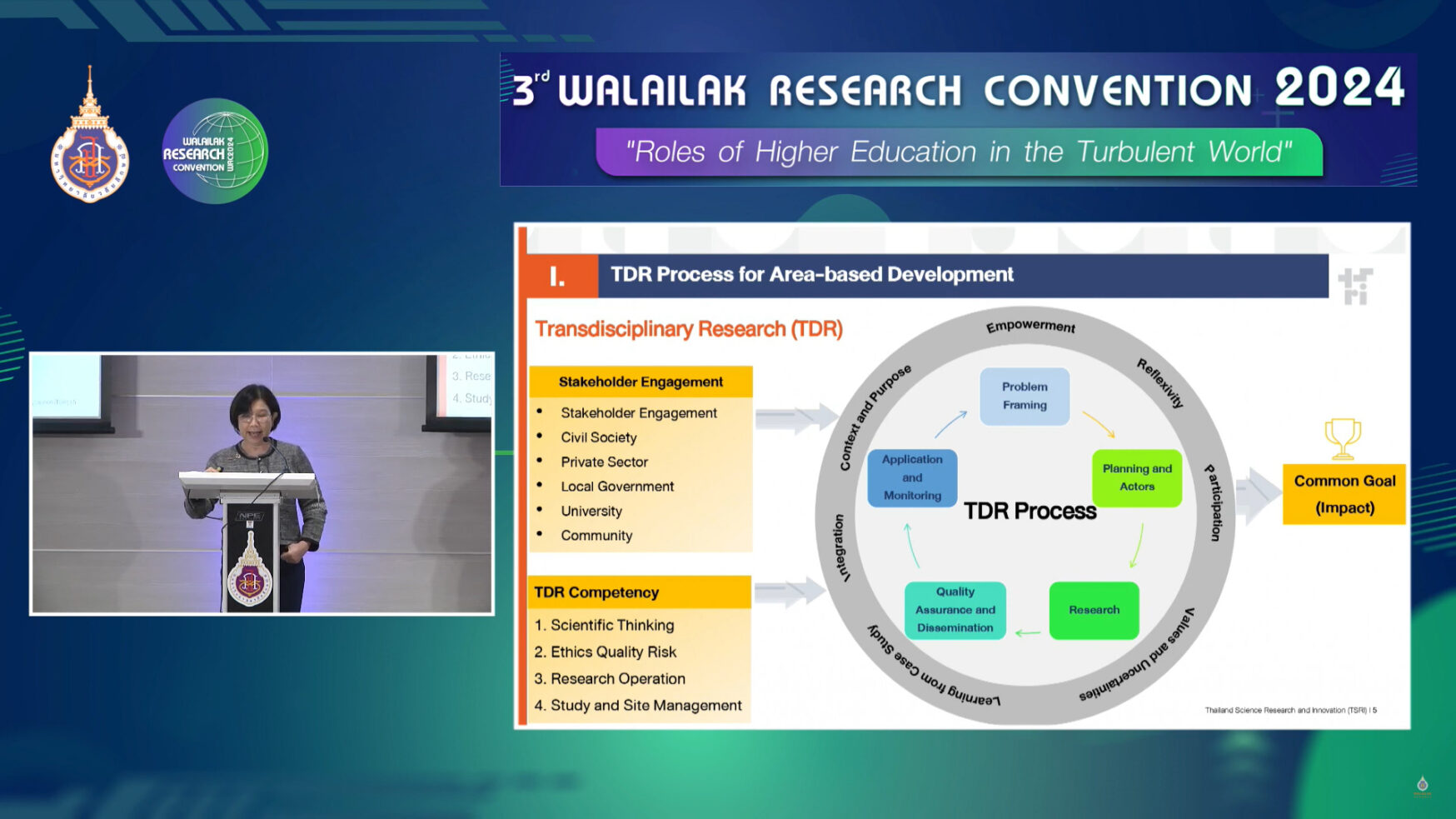
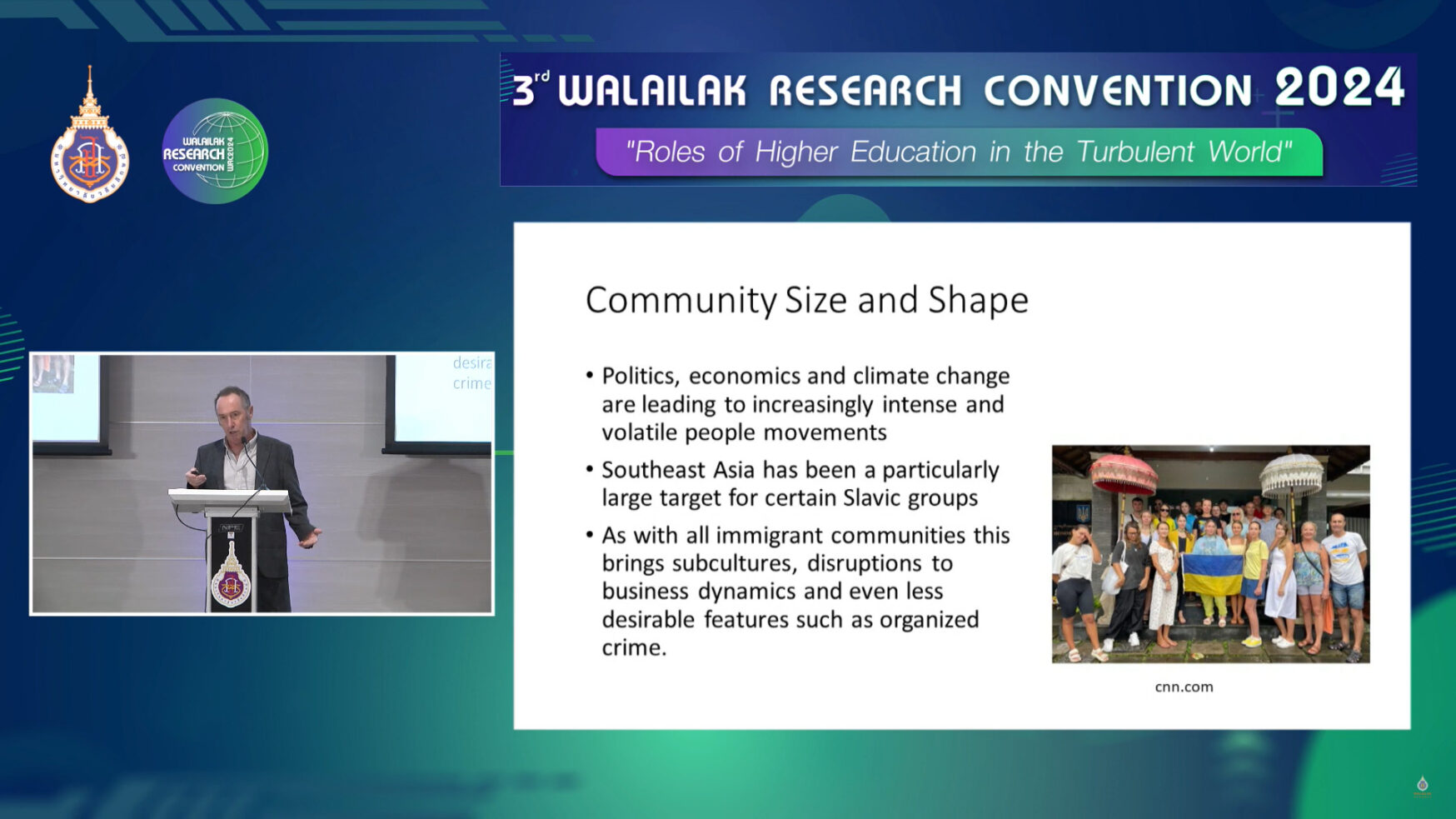
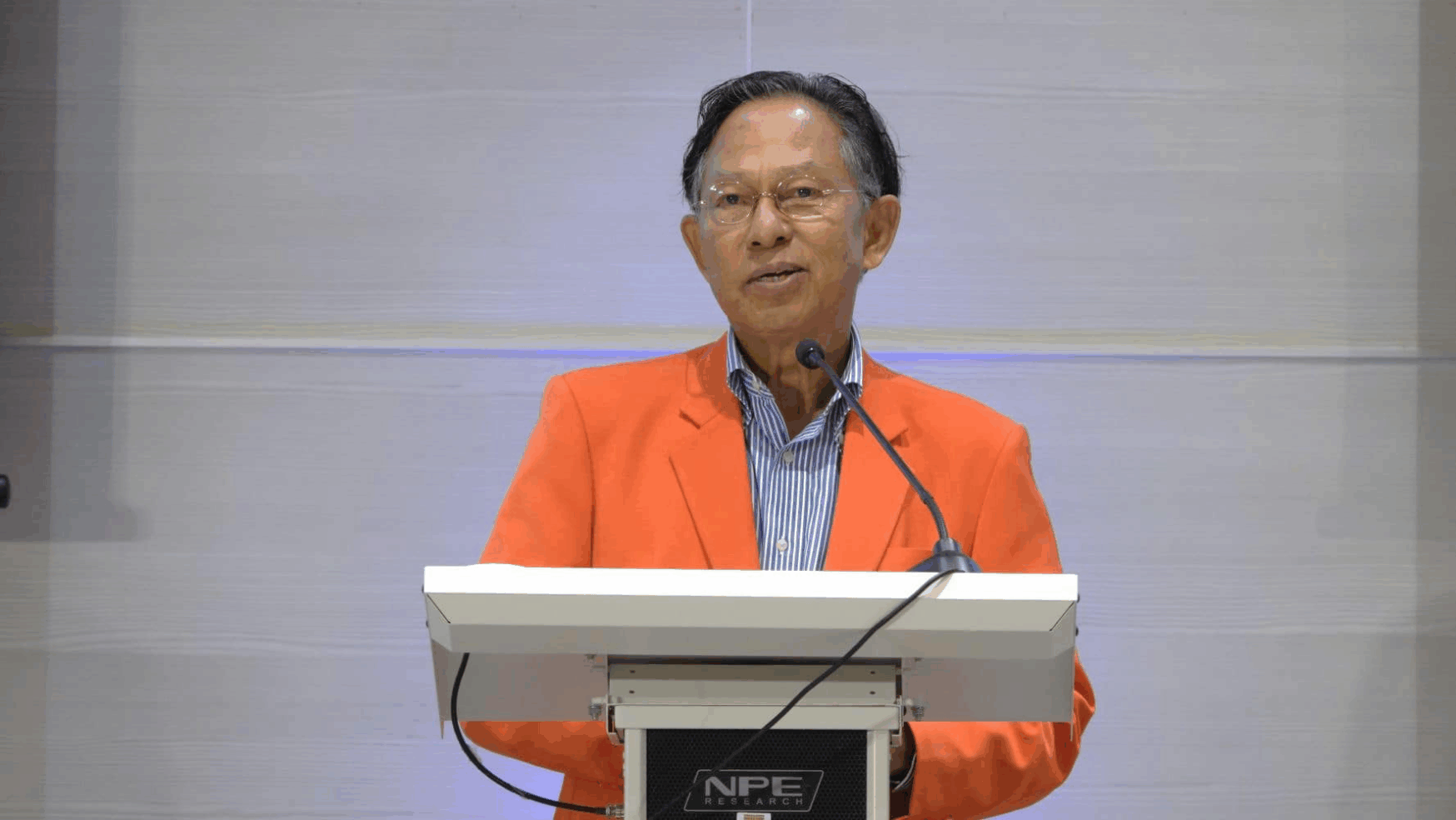
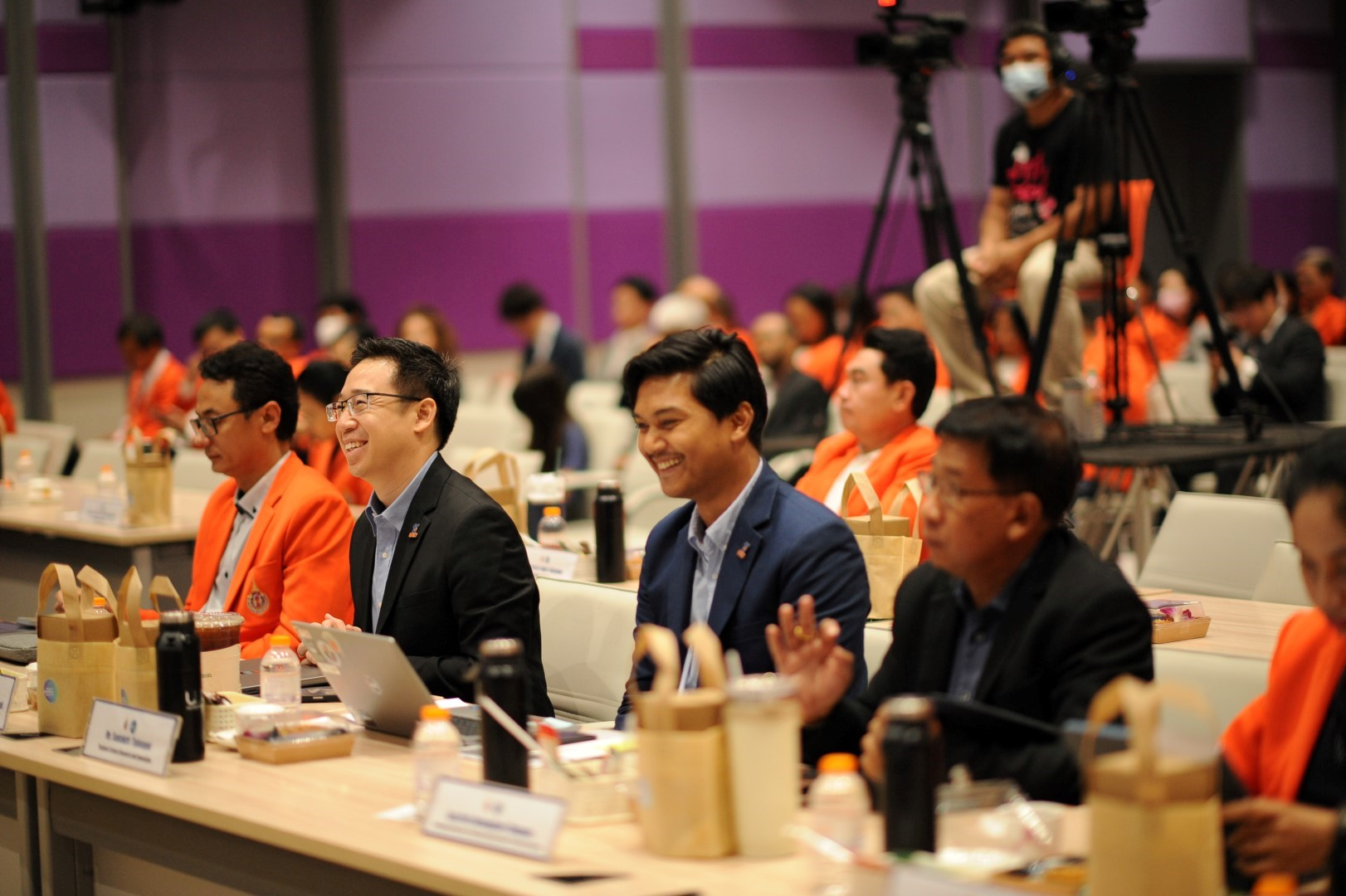
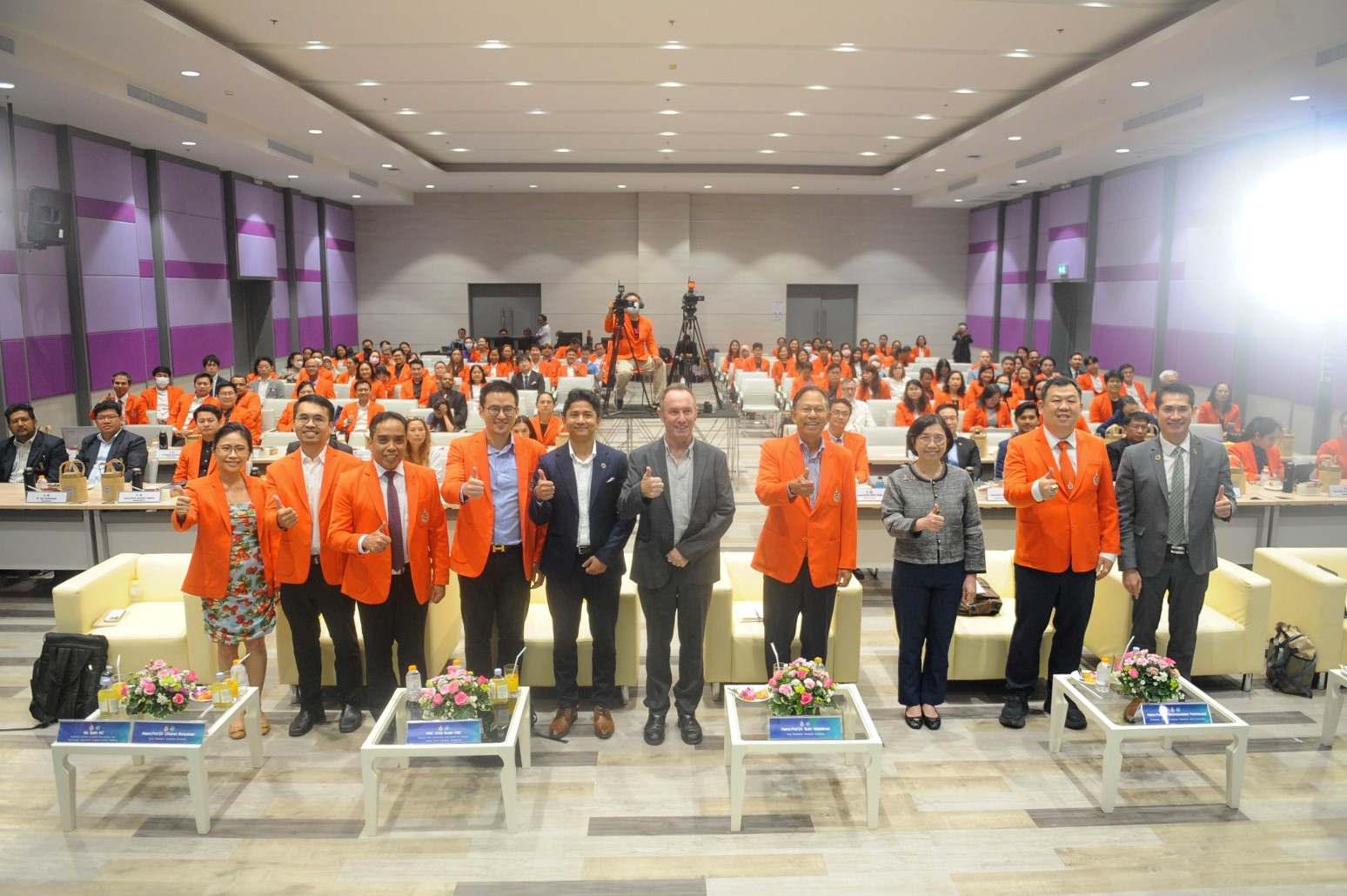
Figures: Keynote speakers delivering speeches and presentations during panel discussion
Associate Professor Dr. Pattamawadee Pochanukul, President of Thailand Science, Research, and Innovation (TSRI), emphasized the importance of transdisciplinary and multidisciplinary research in generating new knowledge, particularly during turbulent times when universities play a crucial role in developing a highly skilled workforce. She also stressed the significance of lifelong learning in addressing societal challenges such as an aging society, declining youth enrollment, changing attitudes towards education, and advancements in digital technology and online learning.
Professor Chris Rudd OBE, Deputy Vice Chancellor and Head of Campus, James Cook University Singapore, underscored the role of educational leaders in promoting truth, and transparency, and creating activities that support openness, internationalism, and freedom of speech.
In his address, Associate Professor Dr. Pongpan Kaewtatip, Vice President of TSRI, outlined TSRI’s 2023-2027 plan for Thai universities, focusing on promoting carbon neutrality and enhancing the quality of life for Thai people. He encouraged researchers to look at the broader societal picture and maximize their potential to create positive impacts on society.
During the panel discussion, Mr. Sarin KC, Technical Advisor at the Health Intervention and Technology Assessment Program (HITAP), emphasized the importance of research in informing decision-making processes and provided examples of how policies can influence public health outcomes.
The cross-sectoral dialogue aligned with the United Nations’ Sustainable Development Goals (SDGs) by addressing key global issues, including supporting aging societies, reversing declining youth enrollment, adapting to shifting educational perspectives, embracing digital innovation, and promoting values such as truth, transparency, and carbon neutrality.
20th Anniversary of the Violence in the Southern Border Provinces: Reassessing our Knowledge of What Happened
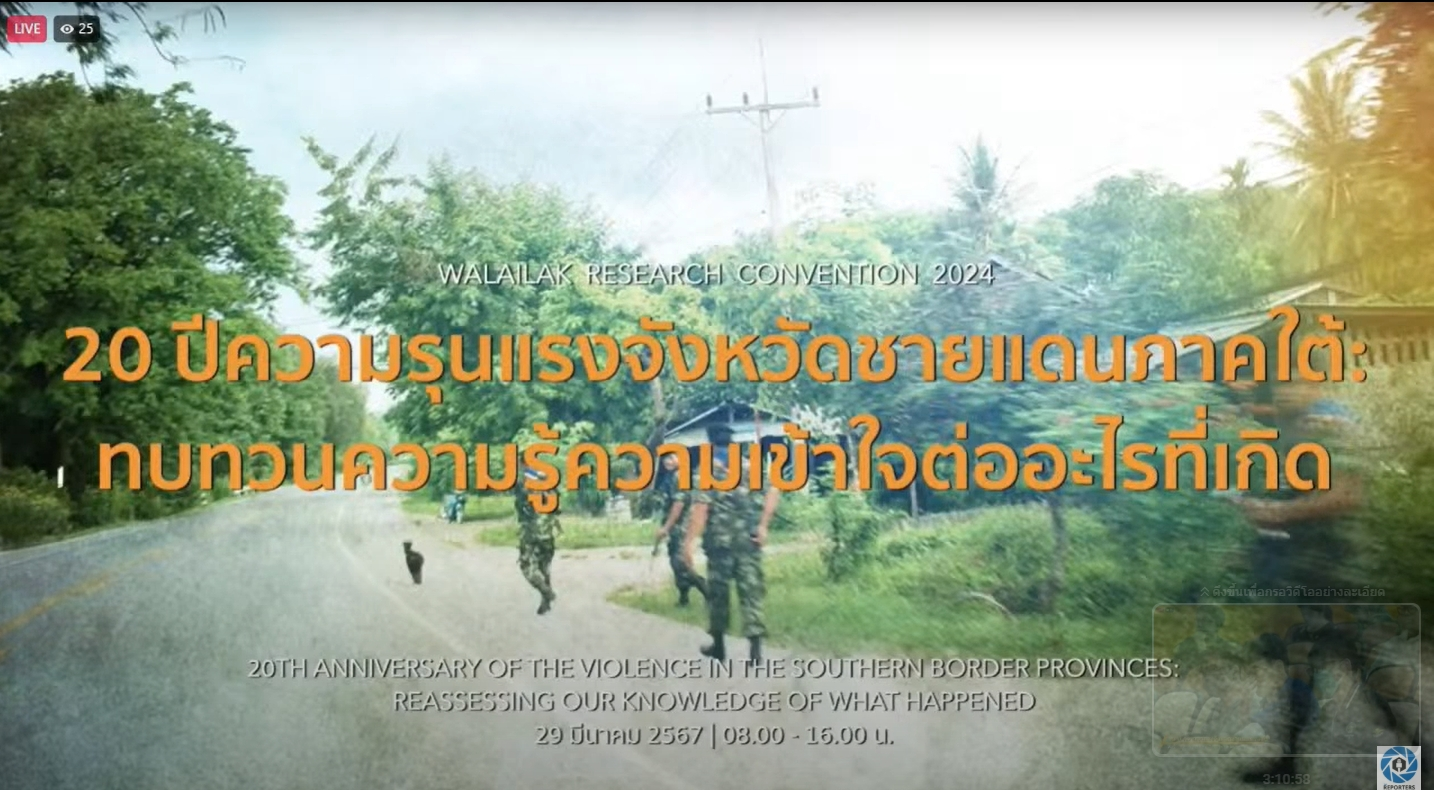
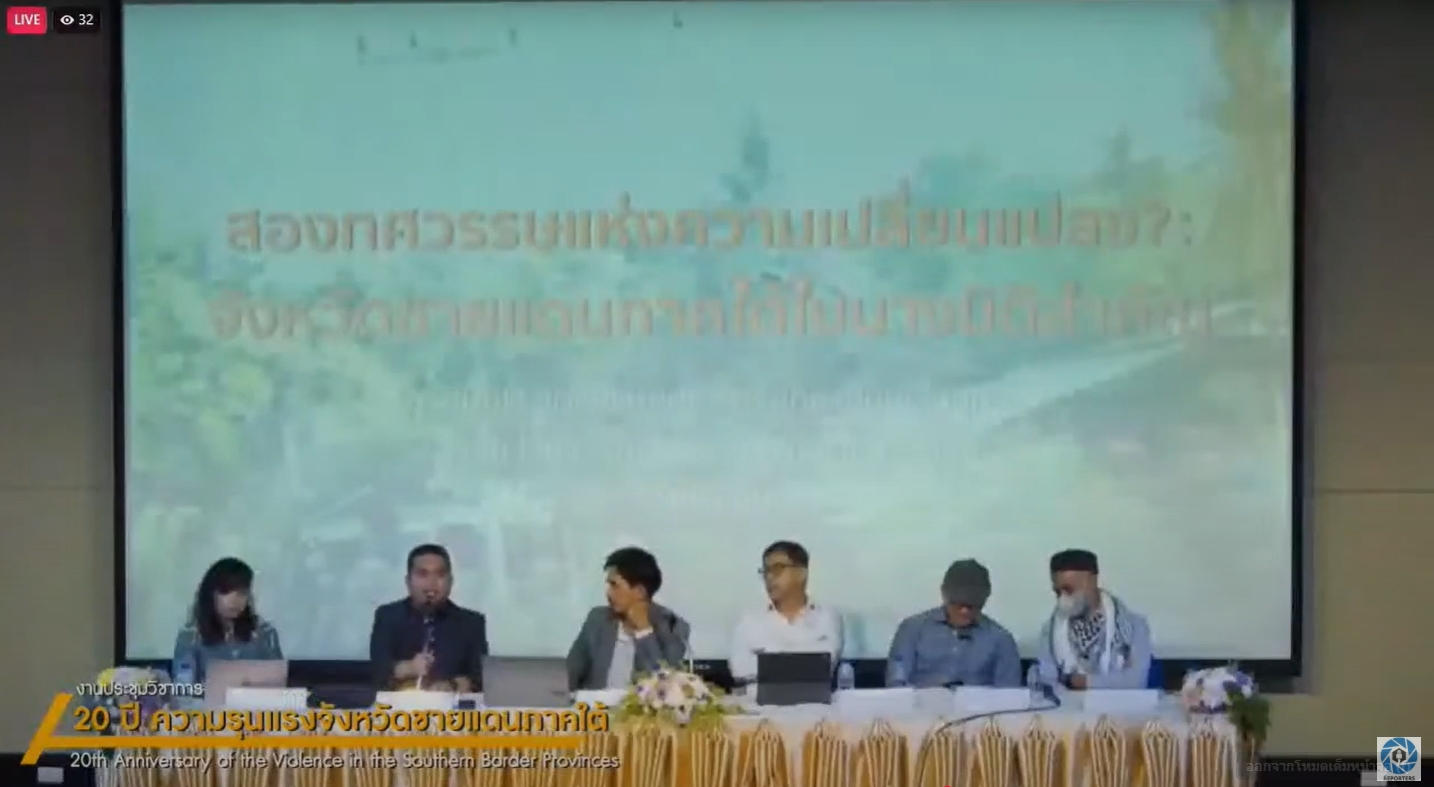
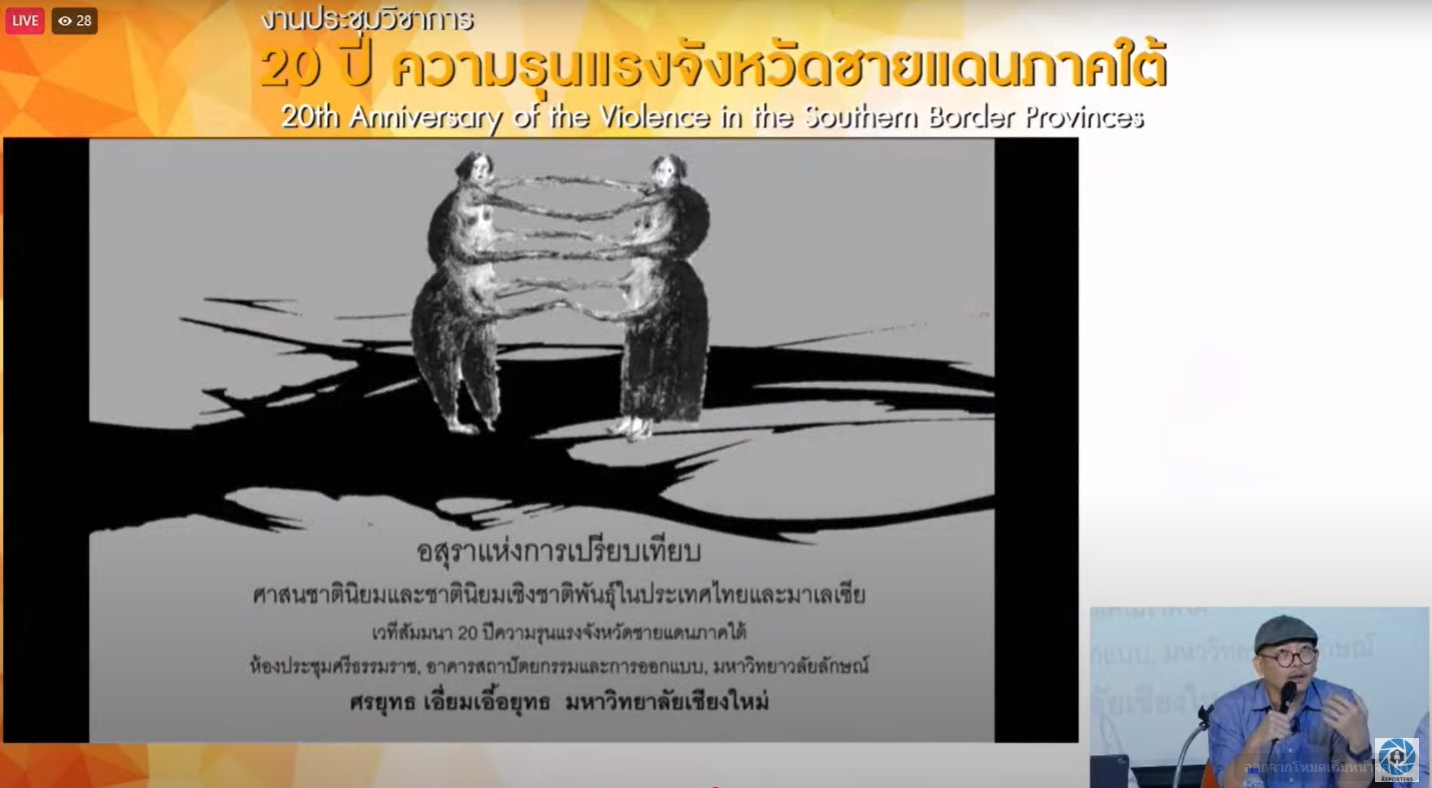
One of the key cross-sectoral dialogue events at the Walailak Research Convention 2024 was ” 20th Anniversary of the Violence in the Southern Border Provinces: Reassessing Our Knowledge of What Happened.” This event was organized by Walailak University through the School of Political Science and Public Administration, the School of Liberal Arts and Education, the Center of Excellence on Women and Social Security, and the Center of Geosocial and Cultural Research for Sustainable Development.
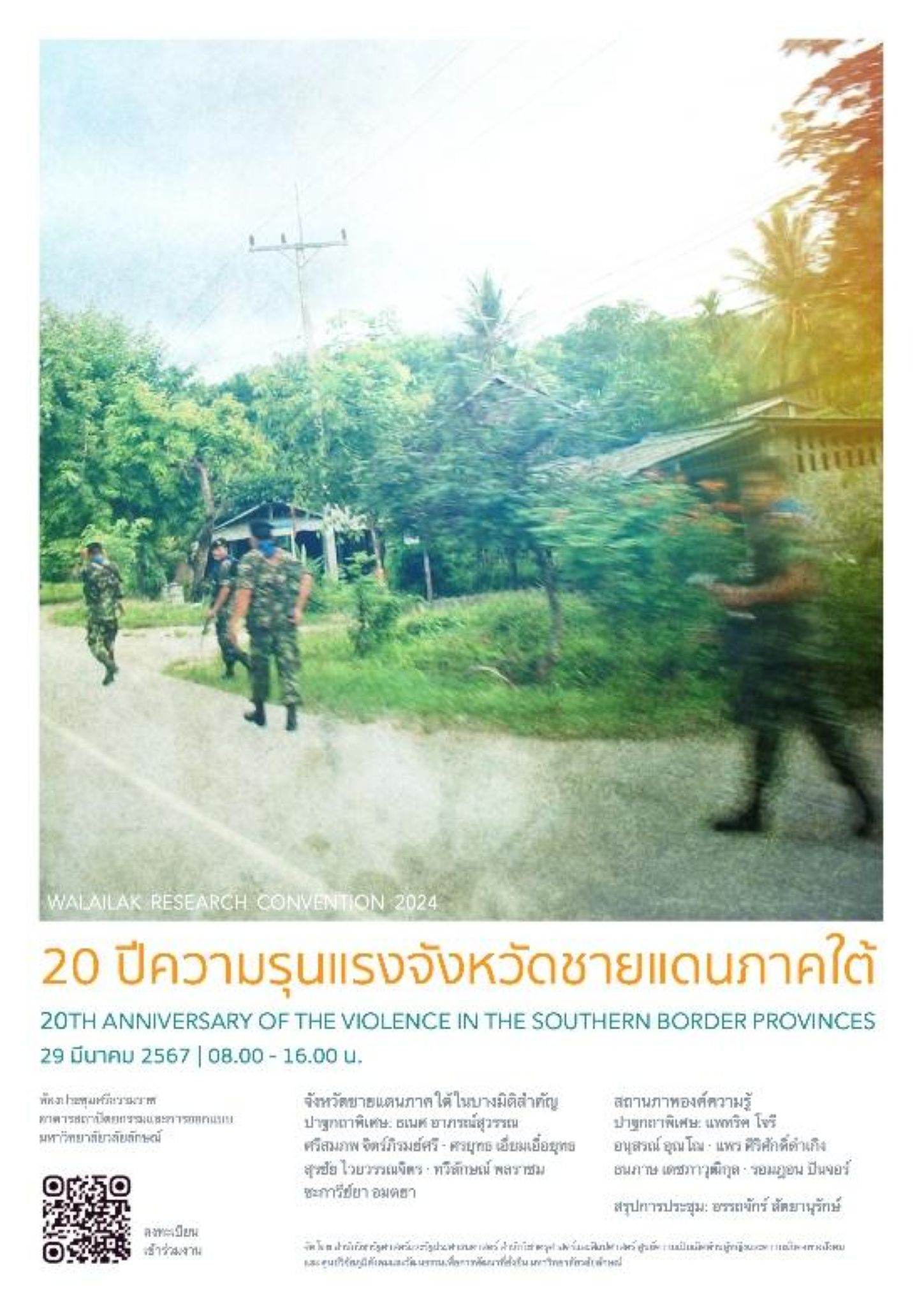
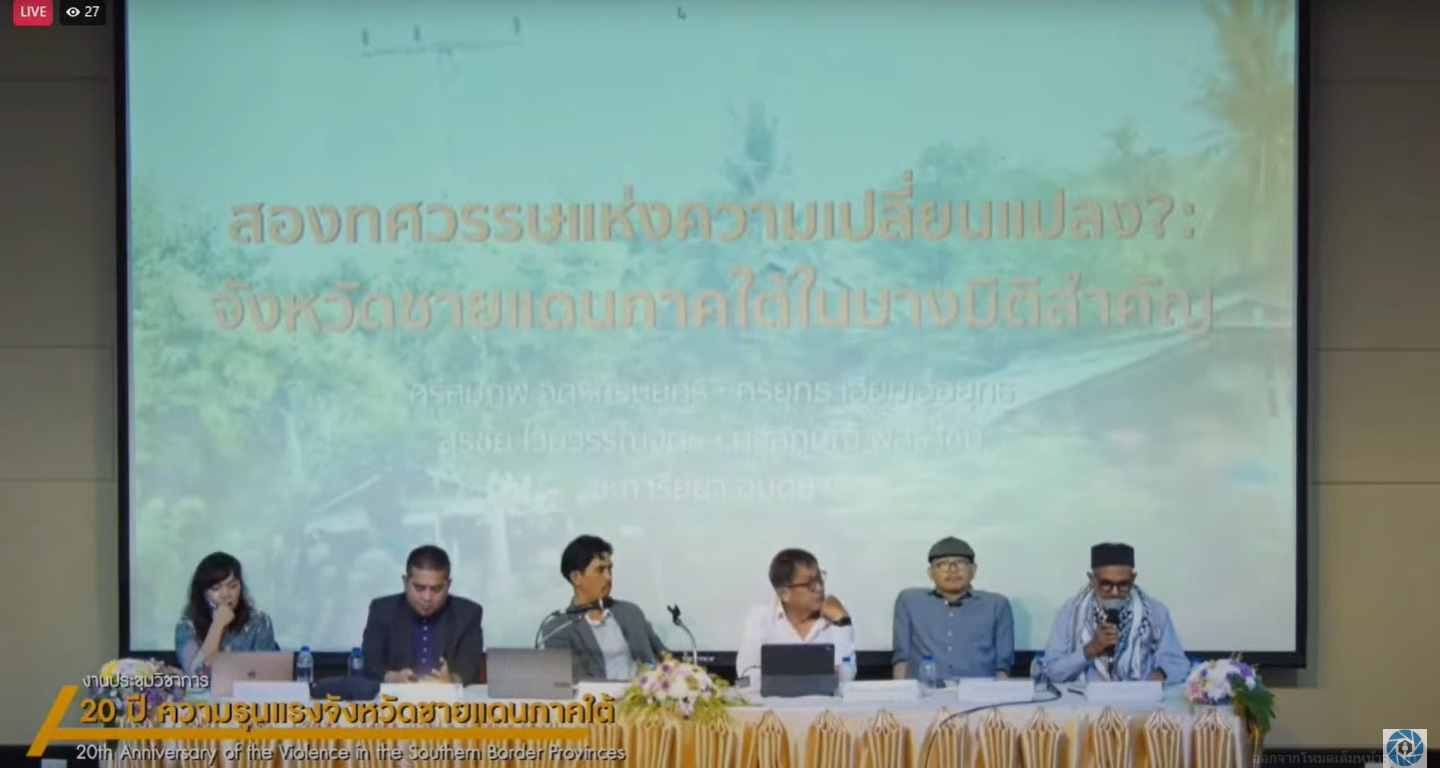
Figures : A poster of the cross-sectoral dialogue event “20th Anniversary of the Violence in the Southern Border Provinces: Reassessing our Knowledge of What Happened”
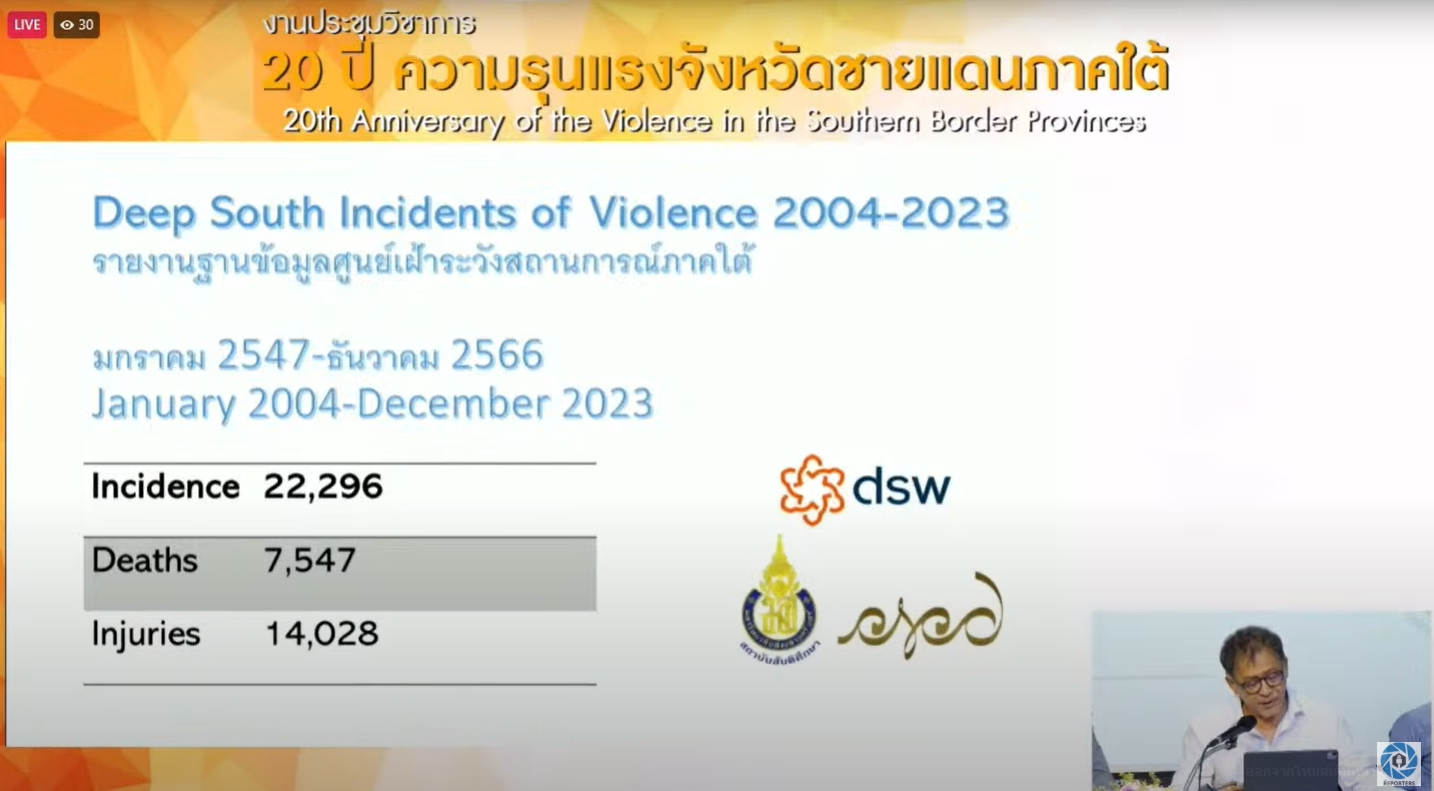
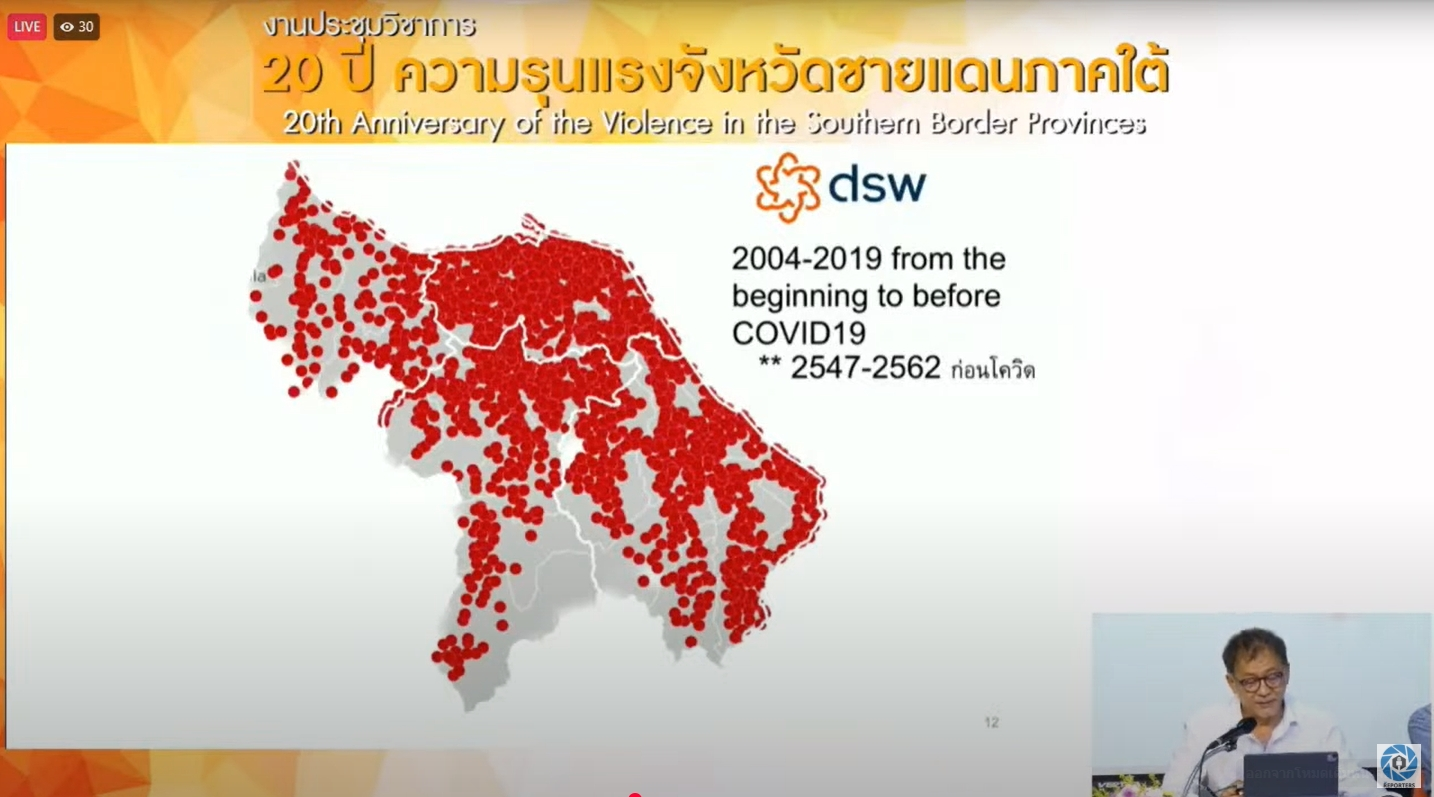
Since 2004, Thailand’s three southernmost provinces—Pattani, Yala, and Narathiwat—have experienced an ongoing insurgency, marked by violence against security forces, government officials, and moderate Muslim leaders. As of 2022, the conflict has resulted in 5,846 deaths, including 3,610 civilians and 2,236 officials. Researchers and policymakers continue to diagnose the root causes of the unrest to inform peacebuilding and reconciliation efforts.
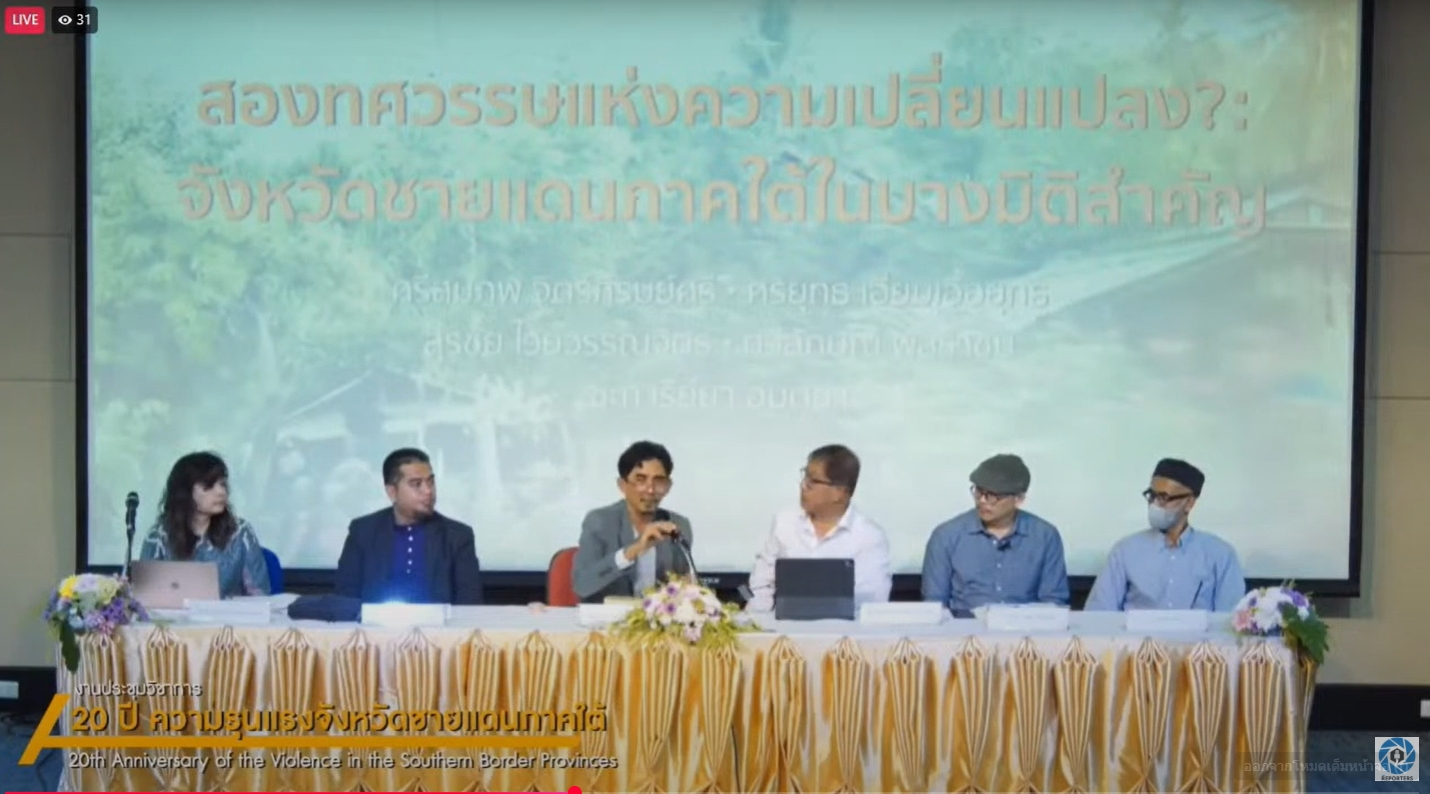
The event commemorated the 20th anniversary of the conflict, serving as a neutral platform for dialogue and engagement among experts from various sectors—including academia, politics, literature, and local education—to exchange insights on violence, social change, multiculturalism, and conflict resolution. Discussions focused on fostering peace among Buddhists, Muslims, and Christians in the region, contributing to SDG 16: Peace, Justice, and Strong Institutions.
Keynote Speakers:
Asst. Prof. Dr. Srisompob Jitpiromsri – Researcher, Center for Conflict Studies and Cultural Diversity (CSCD), Institute for Peace Studies, Prince of Songkhla University
Dr. Sorayut Aiemueayut – Researcher, Chiang Mai University
Dr. Surachai Waiwannachit – Executive, Rahmaniyah School
Asst. Prof. Dr. Taweeluck Pollachom – Researcher, Center of Excellence on Women and Social Security, Walailak University
Mr. Zakariya Amataya – S.E.A. Write Award-winning author
Associate Professor Patrick Jory – Researcher, University of Queensland, Australia
Assoc. Prof. Dr. Anusorn Unno – Researcher, Thammasat University
Asst. Prof. Dr. Phrae Sirisakdamkoeng – Researcher, Faculty of Archaeology, Silpakorn University
Asst. Prof. Dr. Thanaphas Dejpawuttikul – Researcher, Center of Geosocial and Cultural Research for Sustainable Development, Walailak University
Mr. Romadon Panjor – Member of Parliament (People’s Party) and staff member at Deep South Watch (DSW), an NGO monitoring conflict incidents in Thailand’s southernmost provinces.
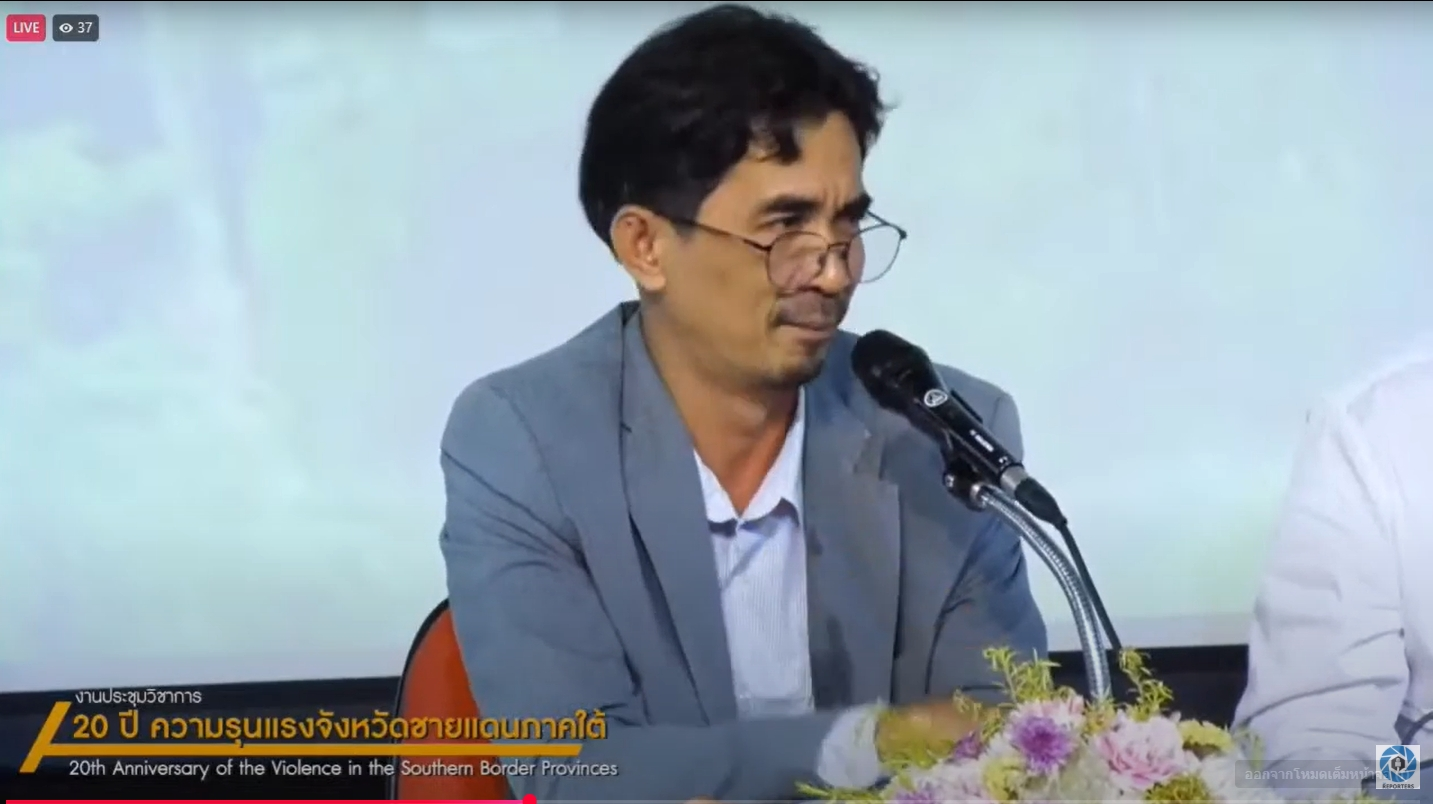
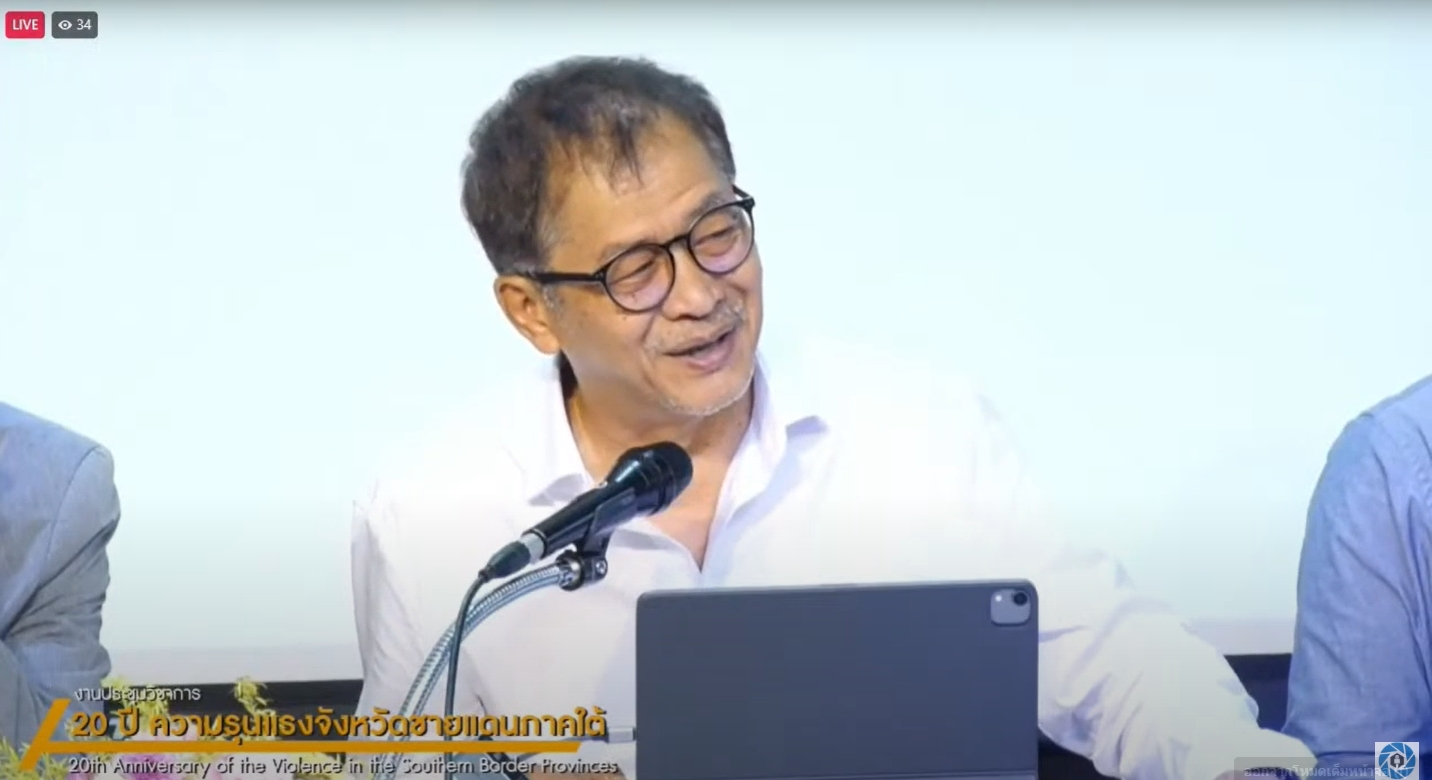
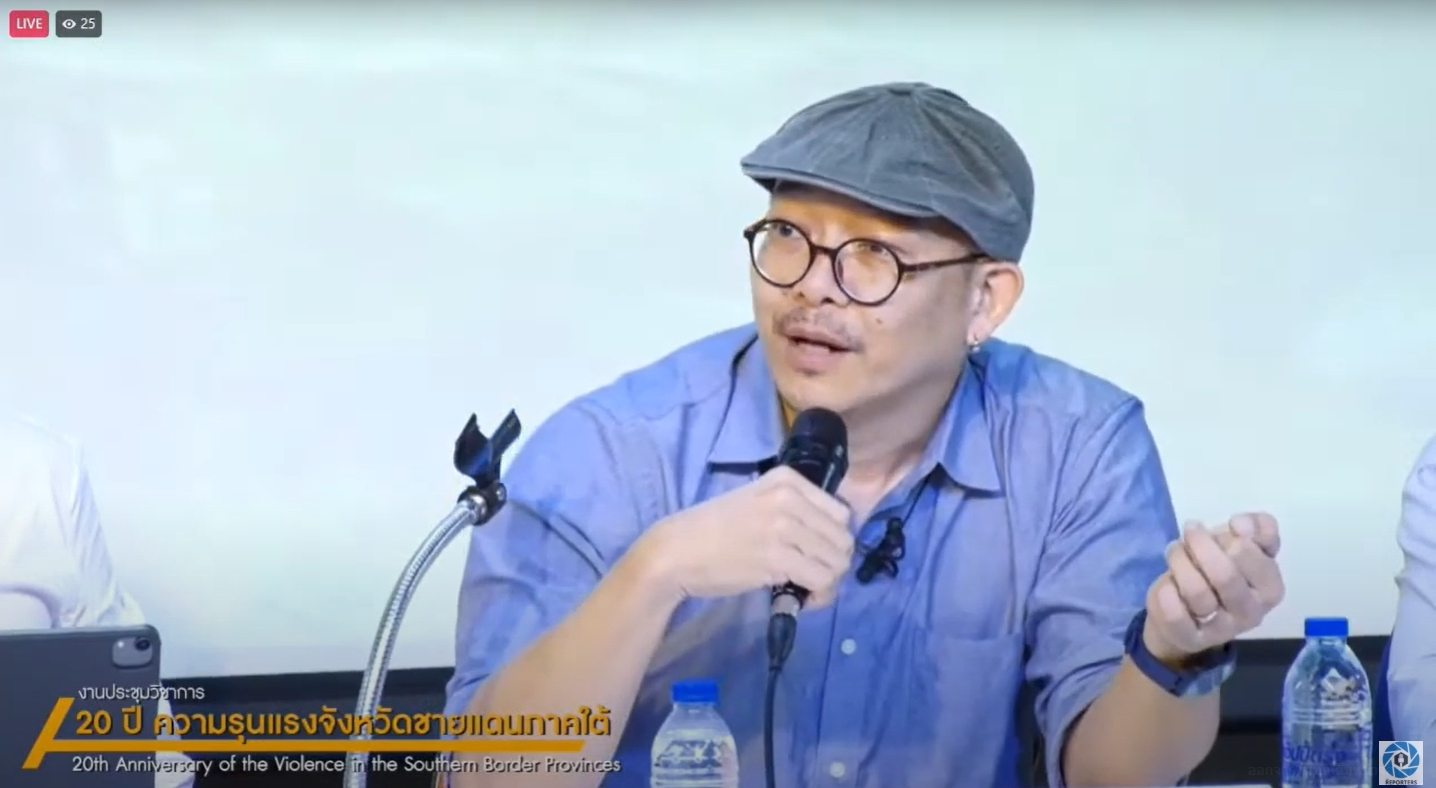
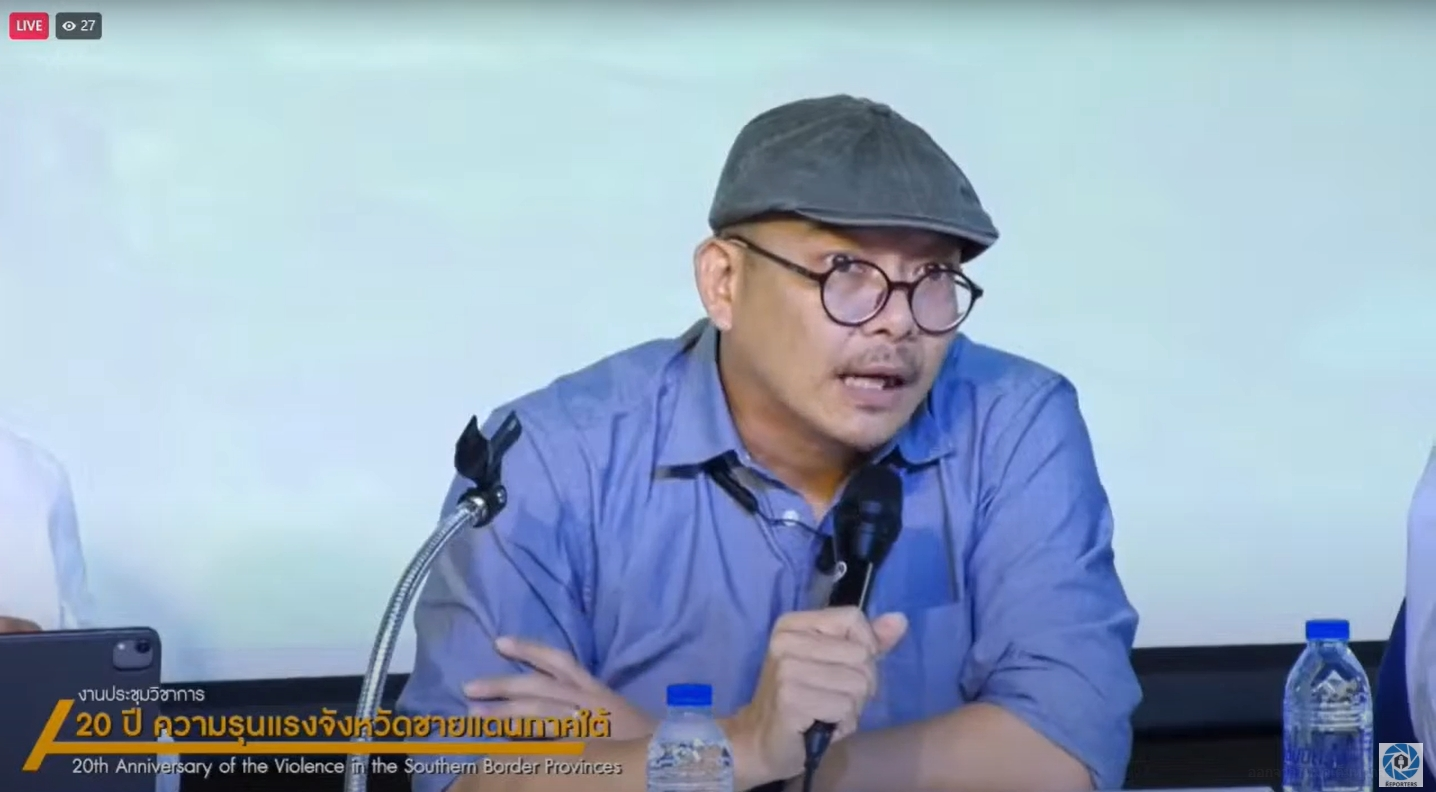
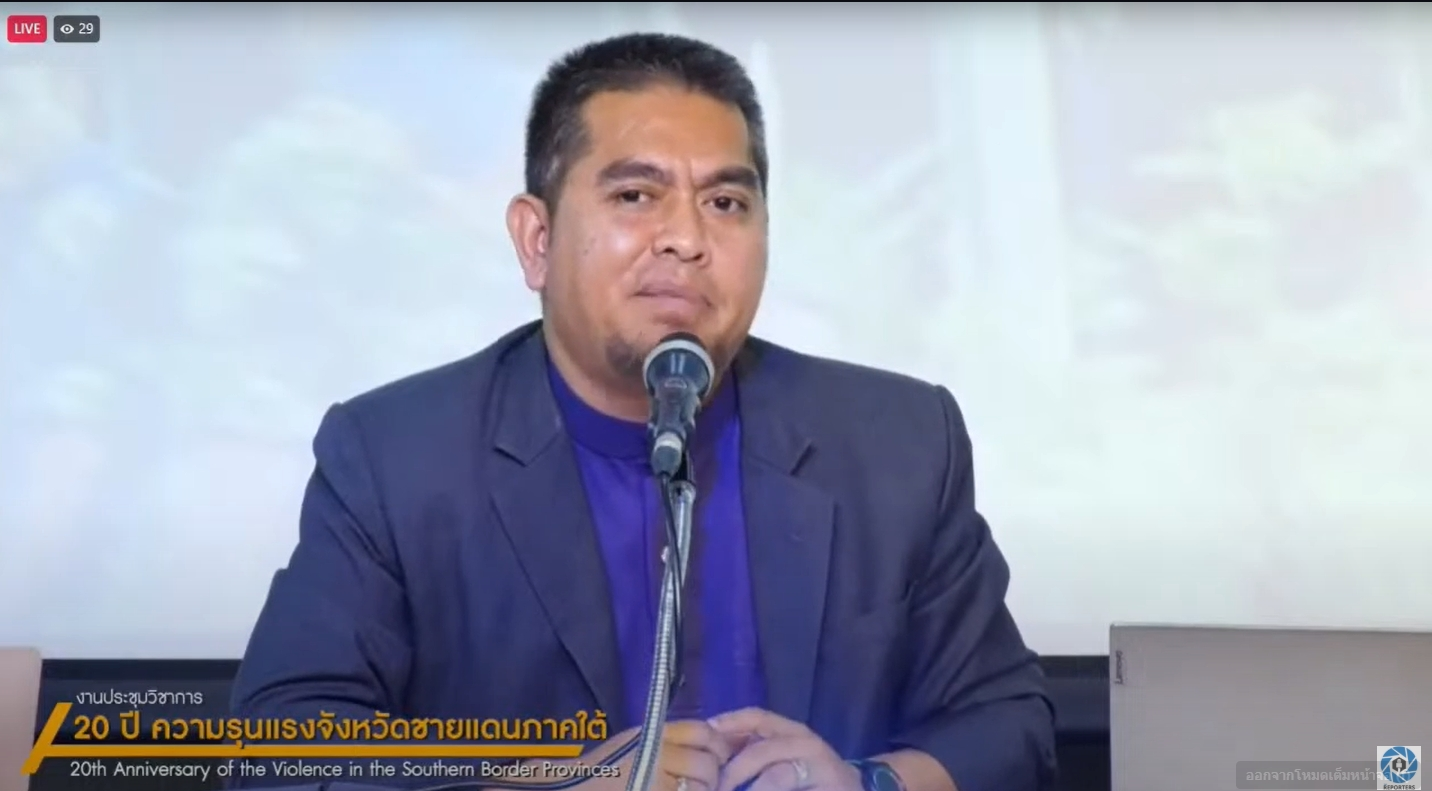
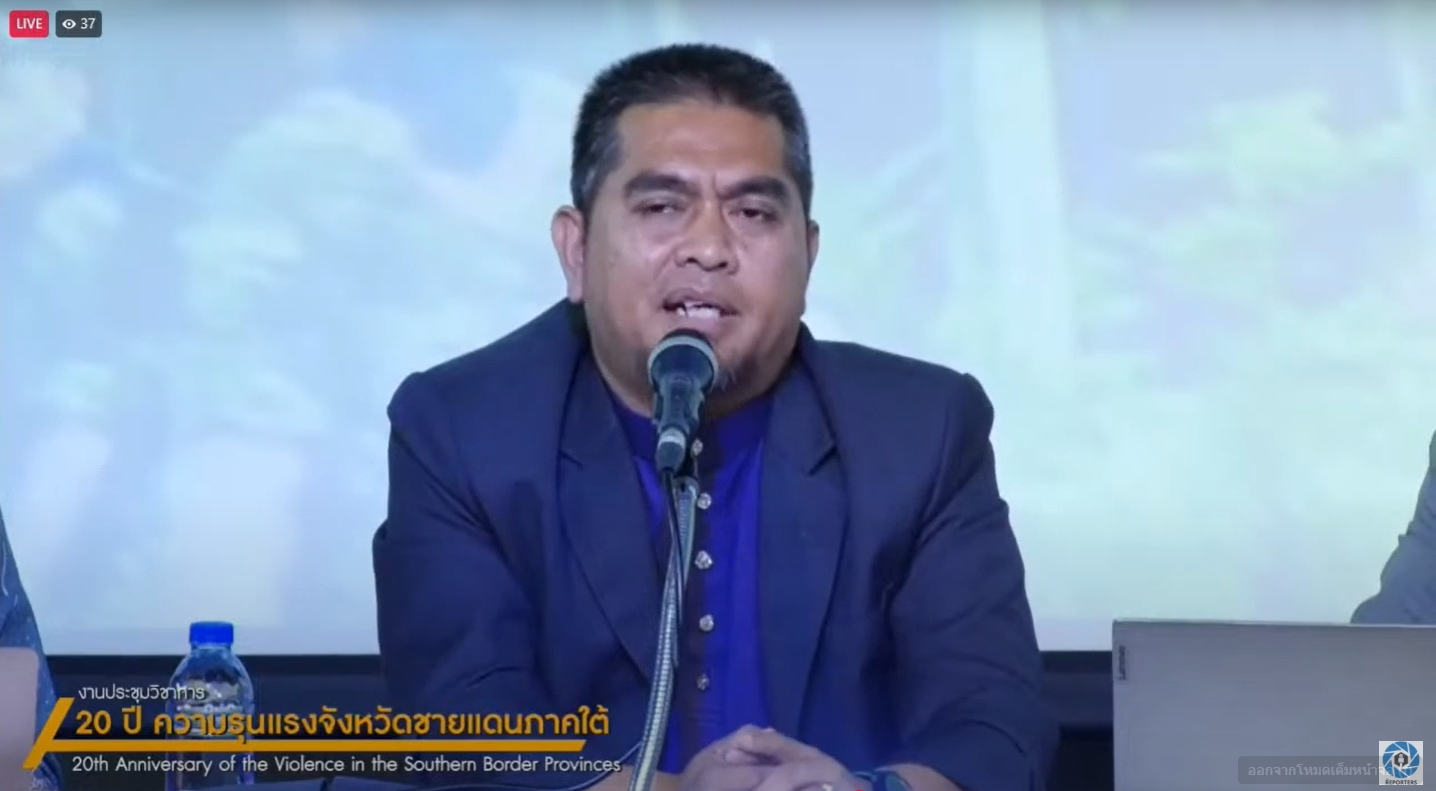
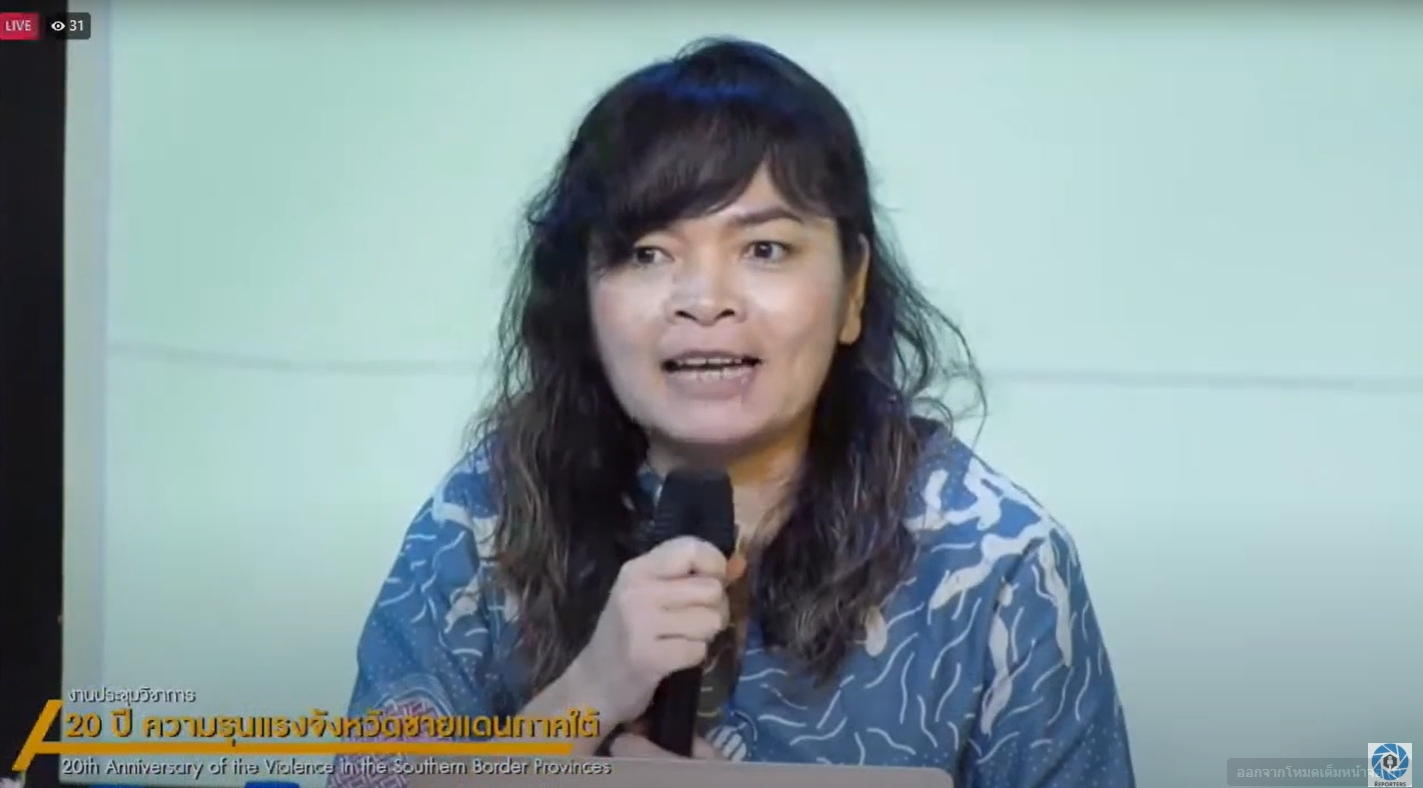
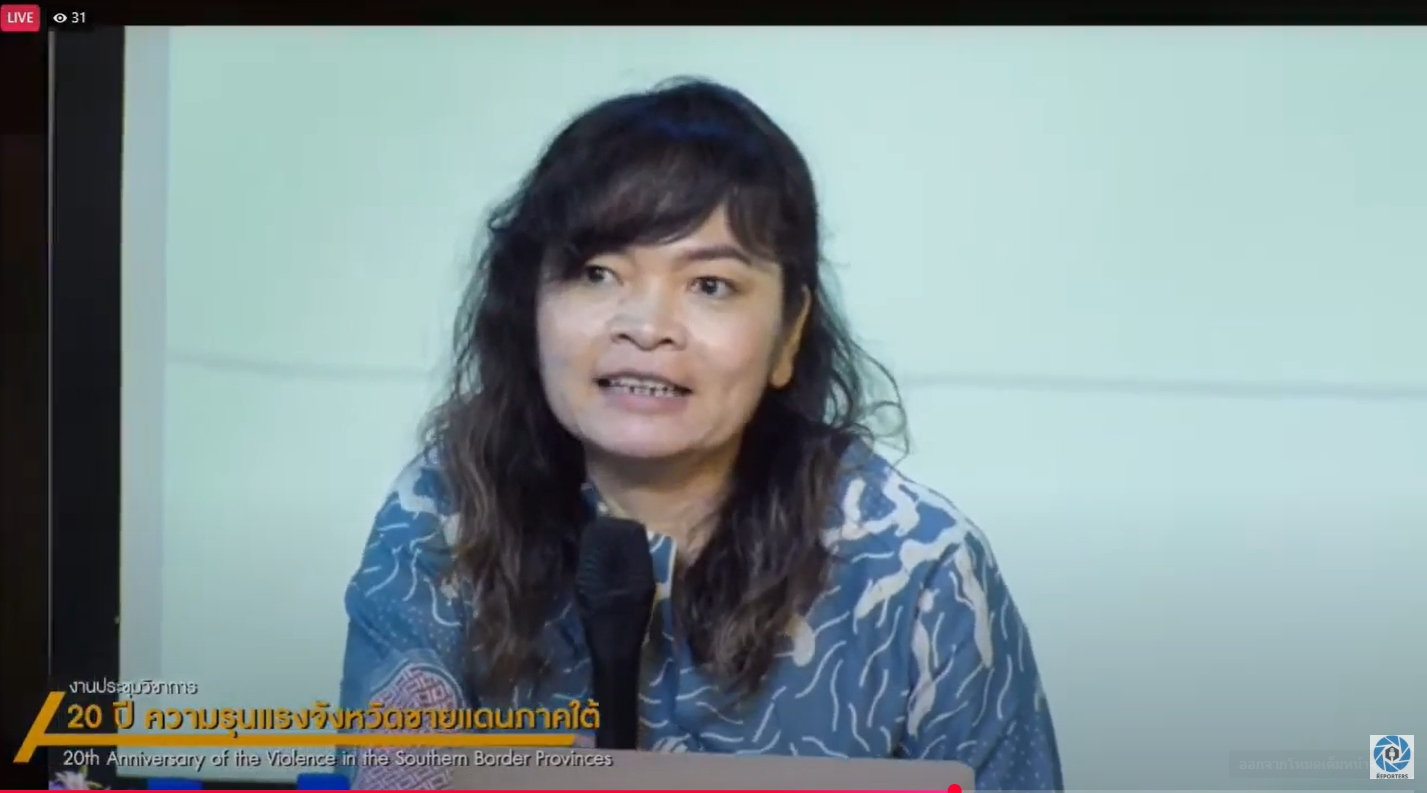
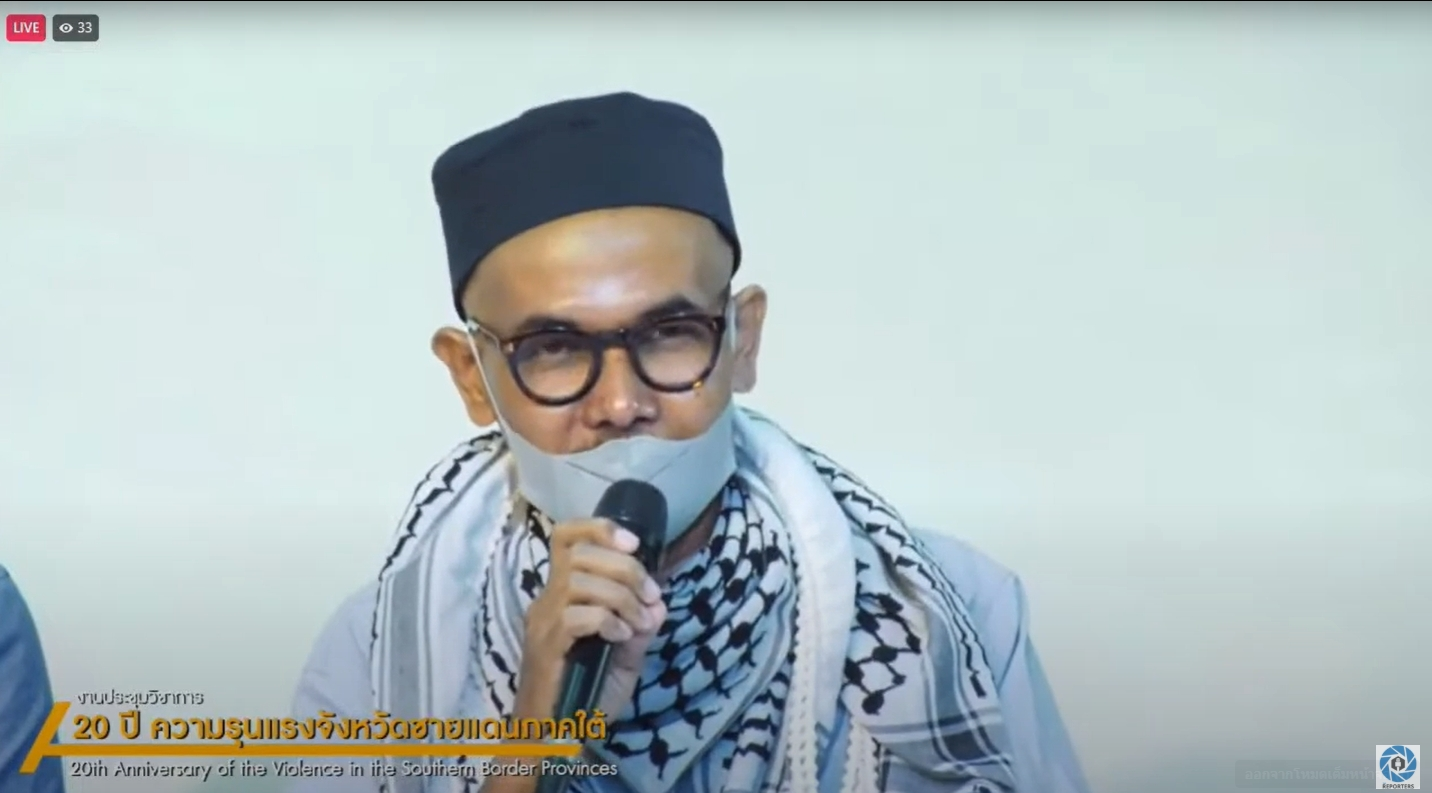
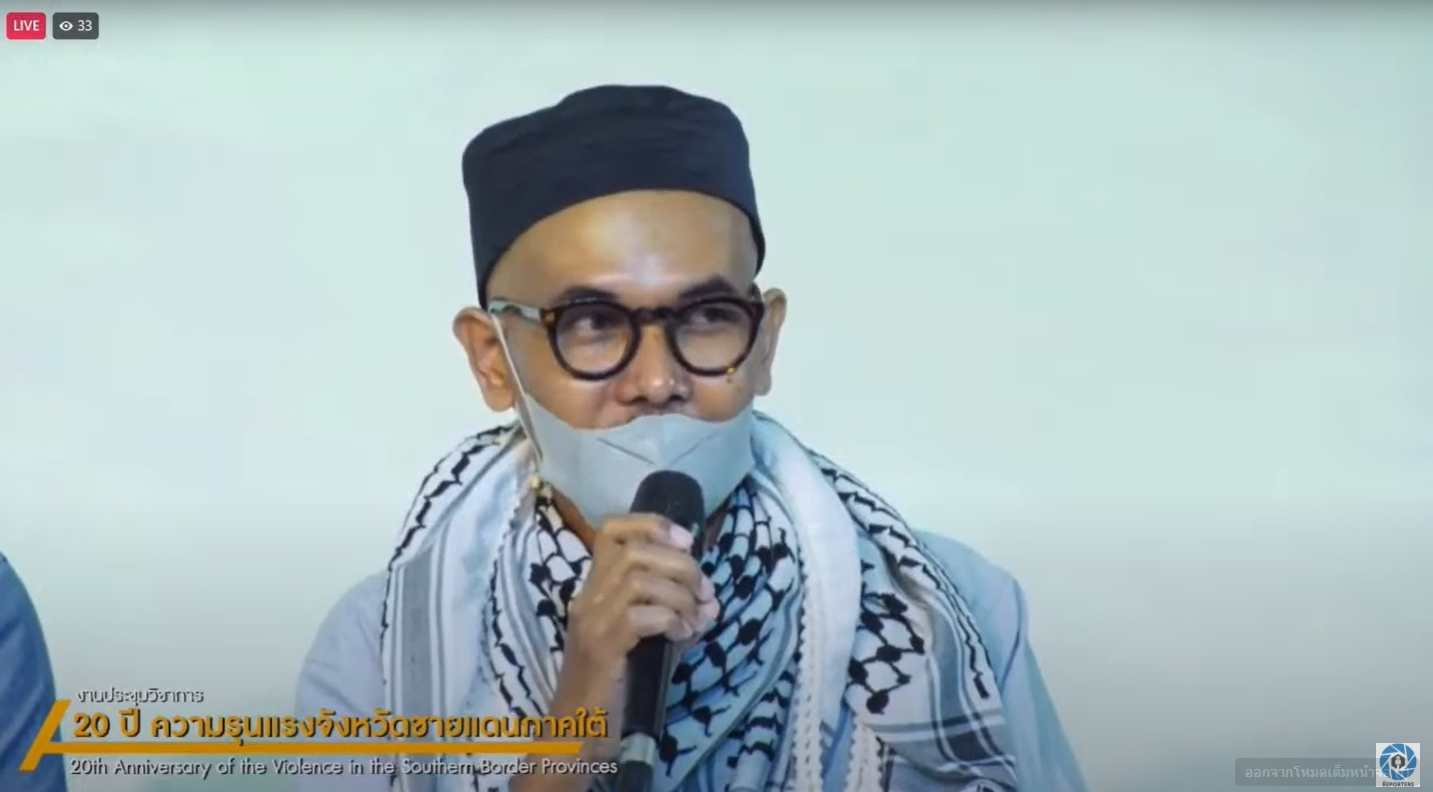
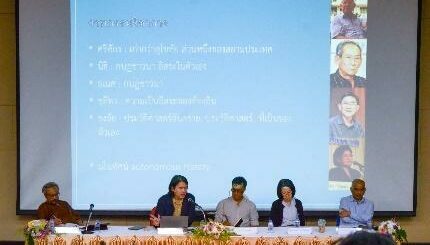
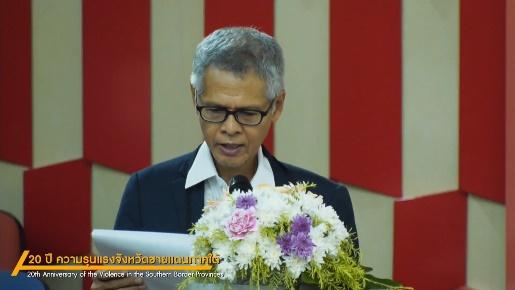
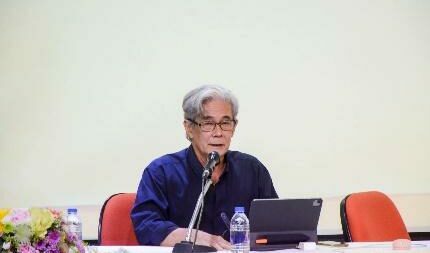
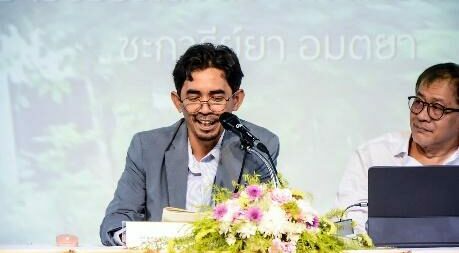
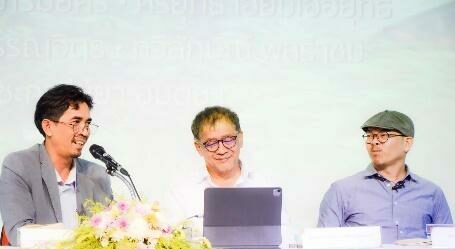
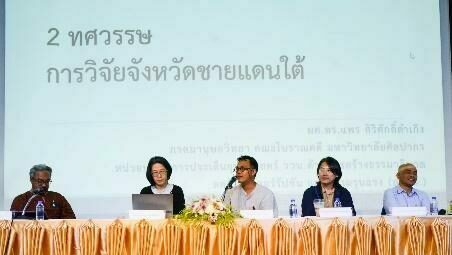
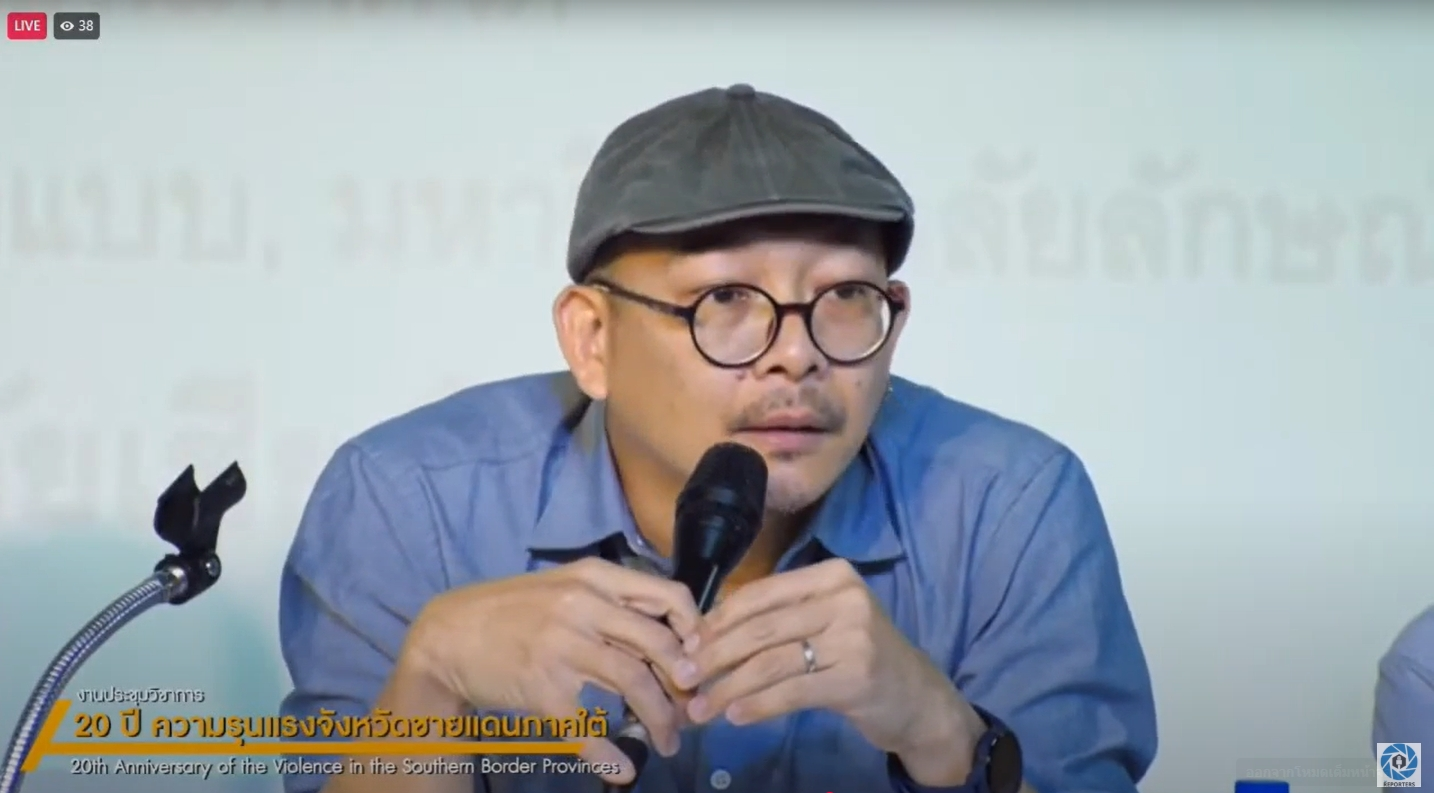
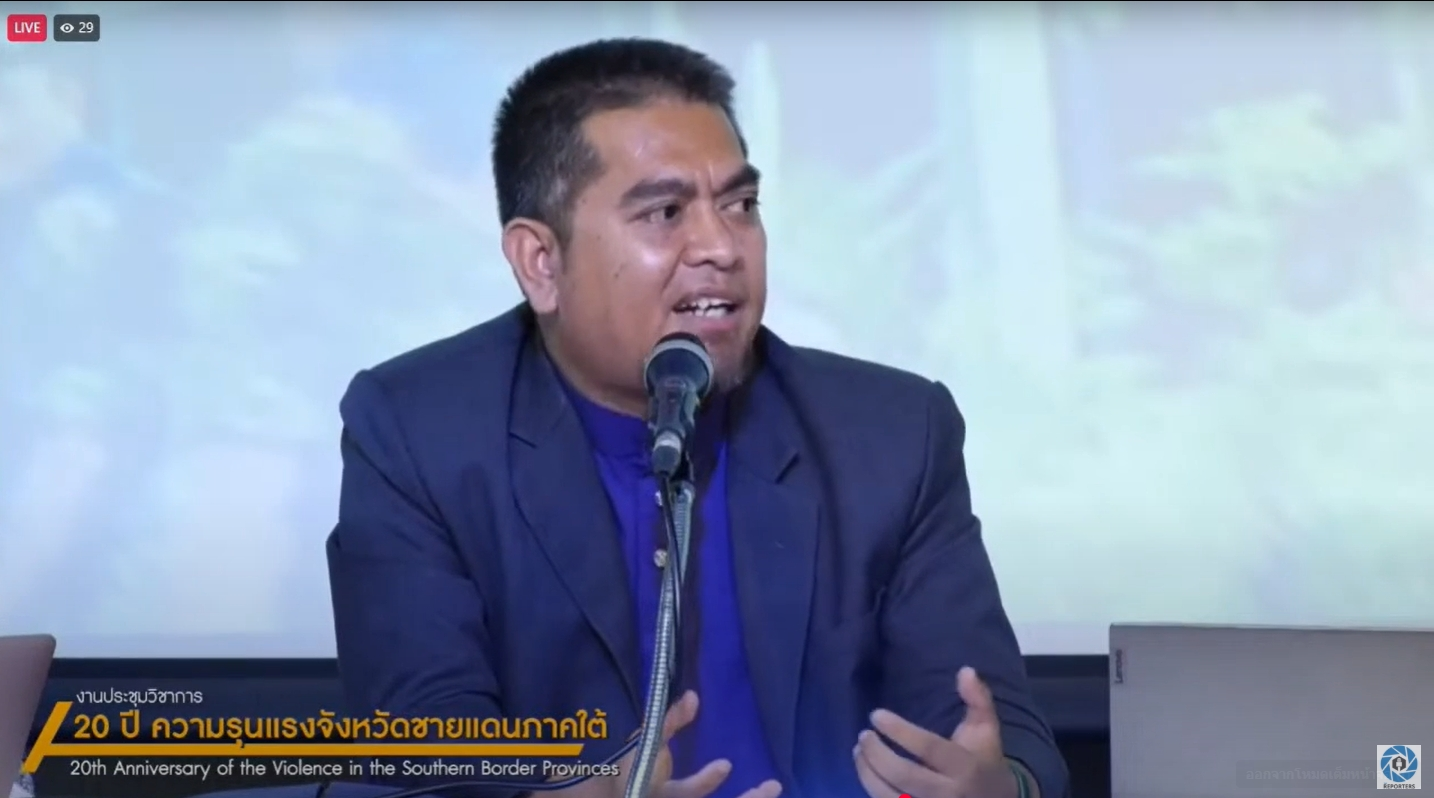
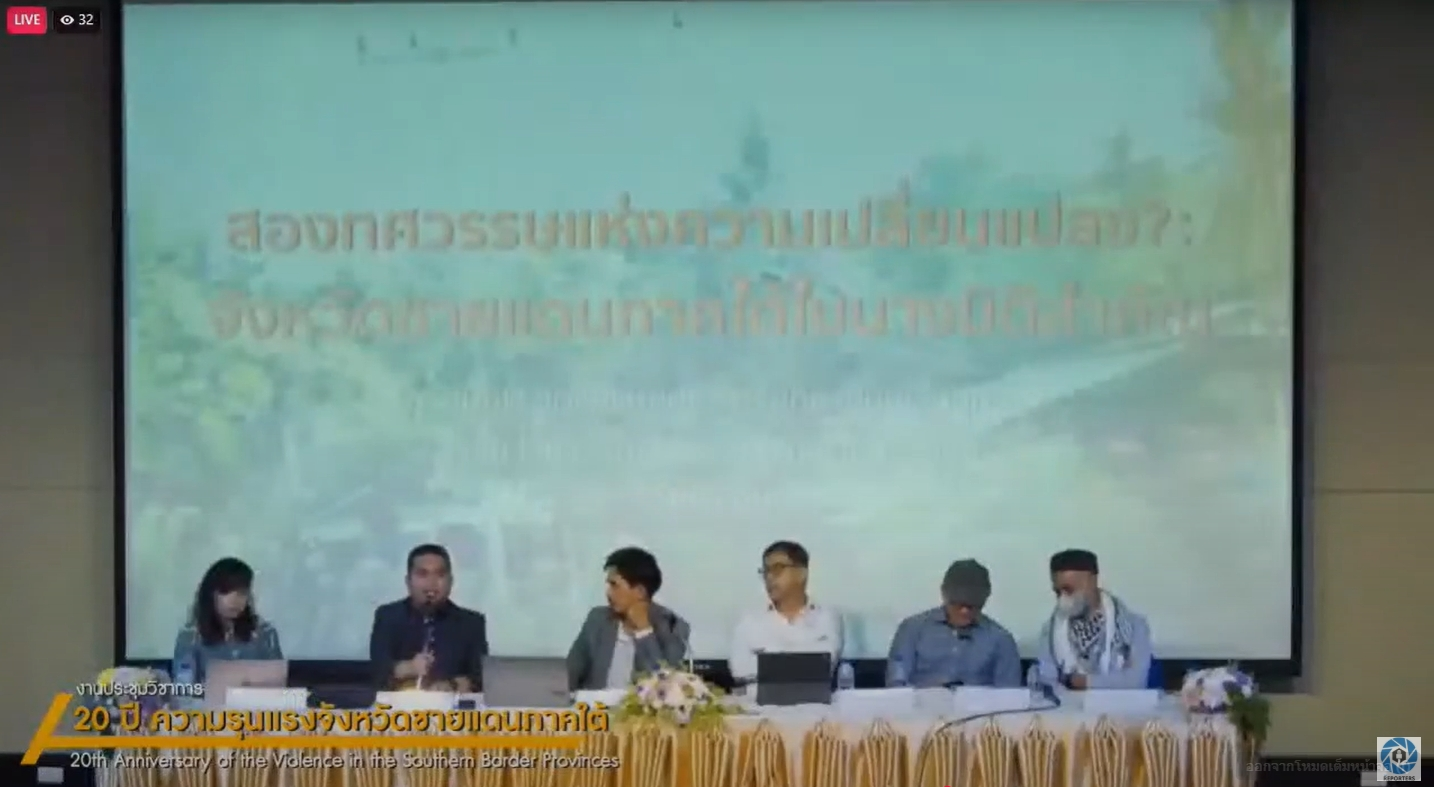
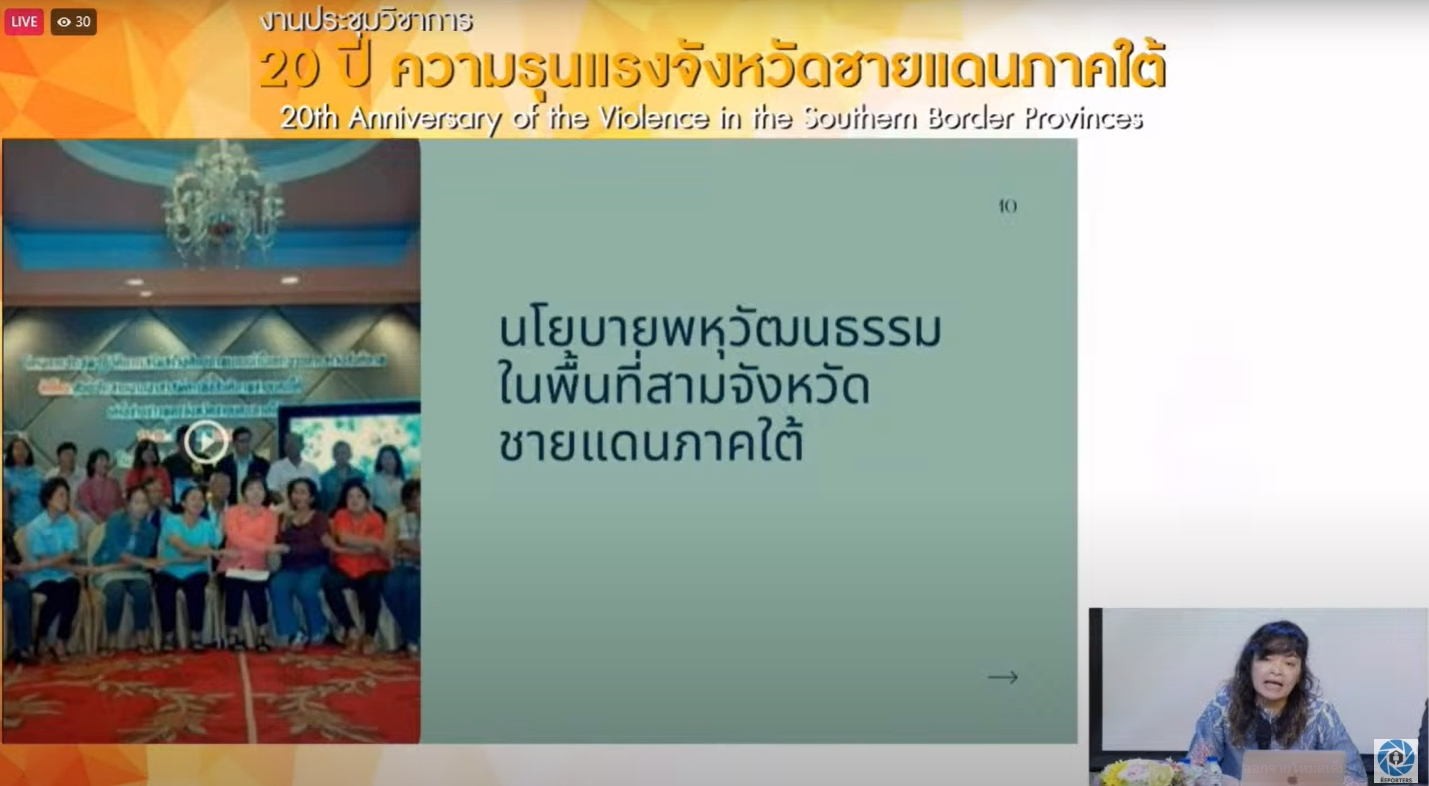
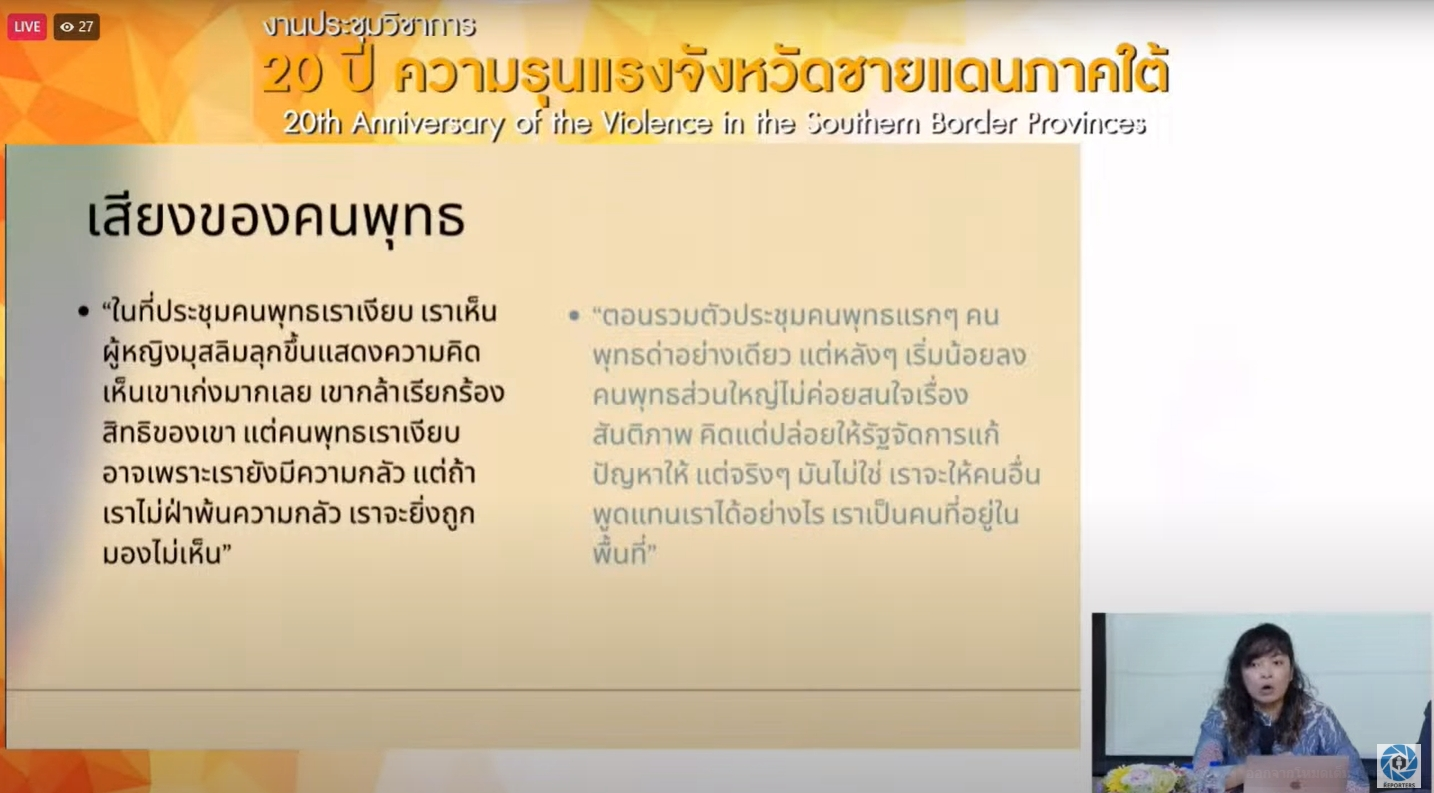
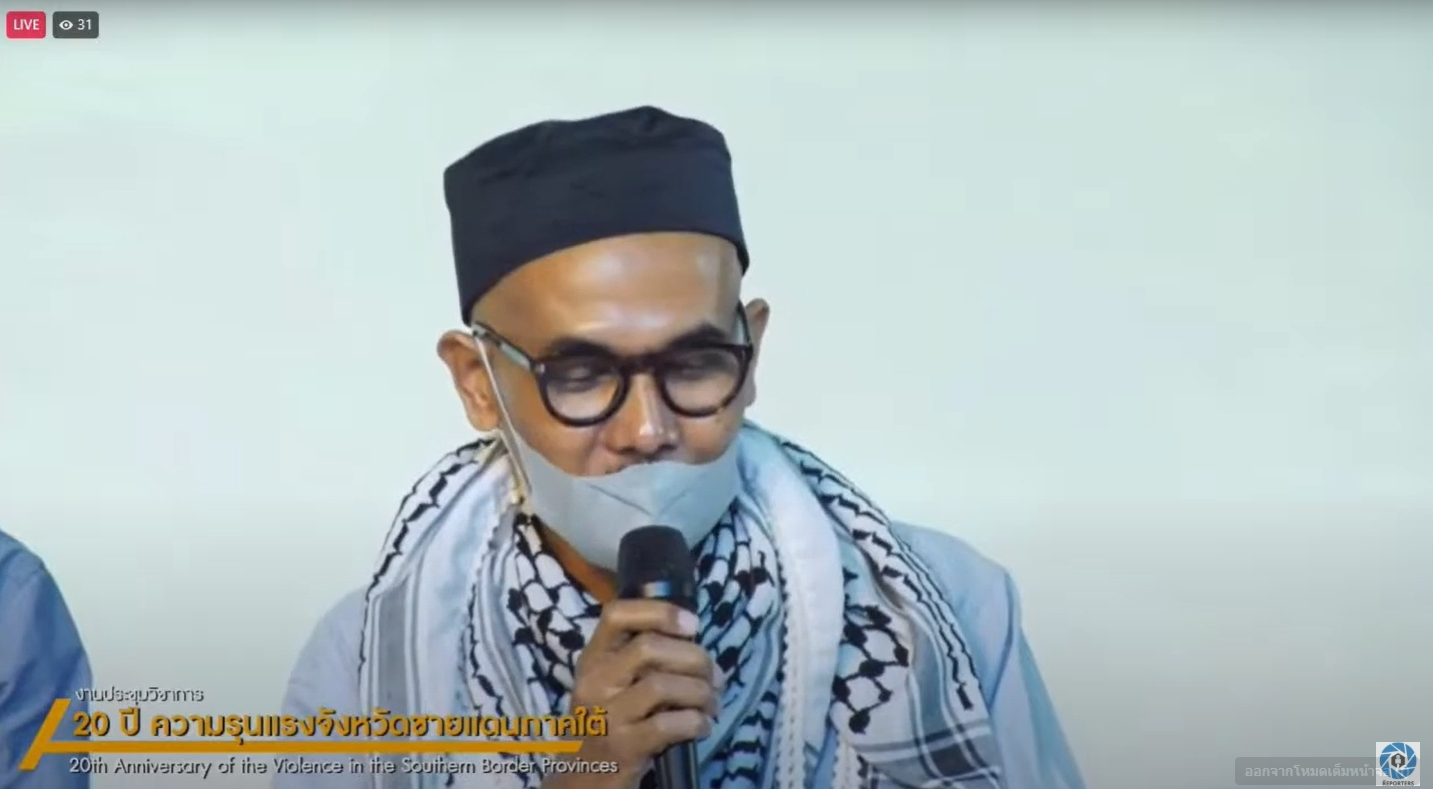
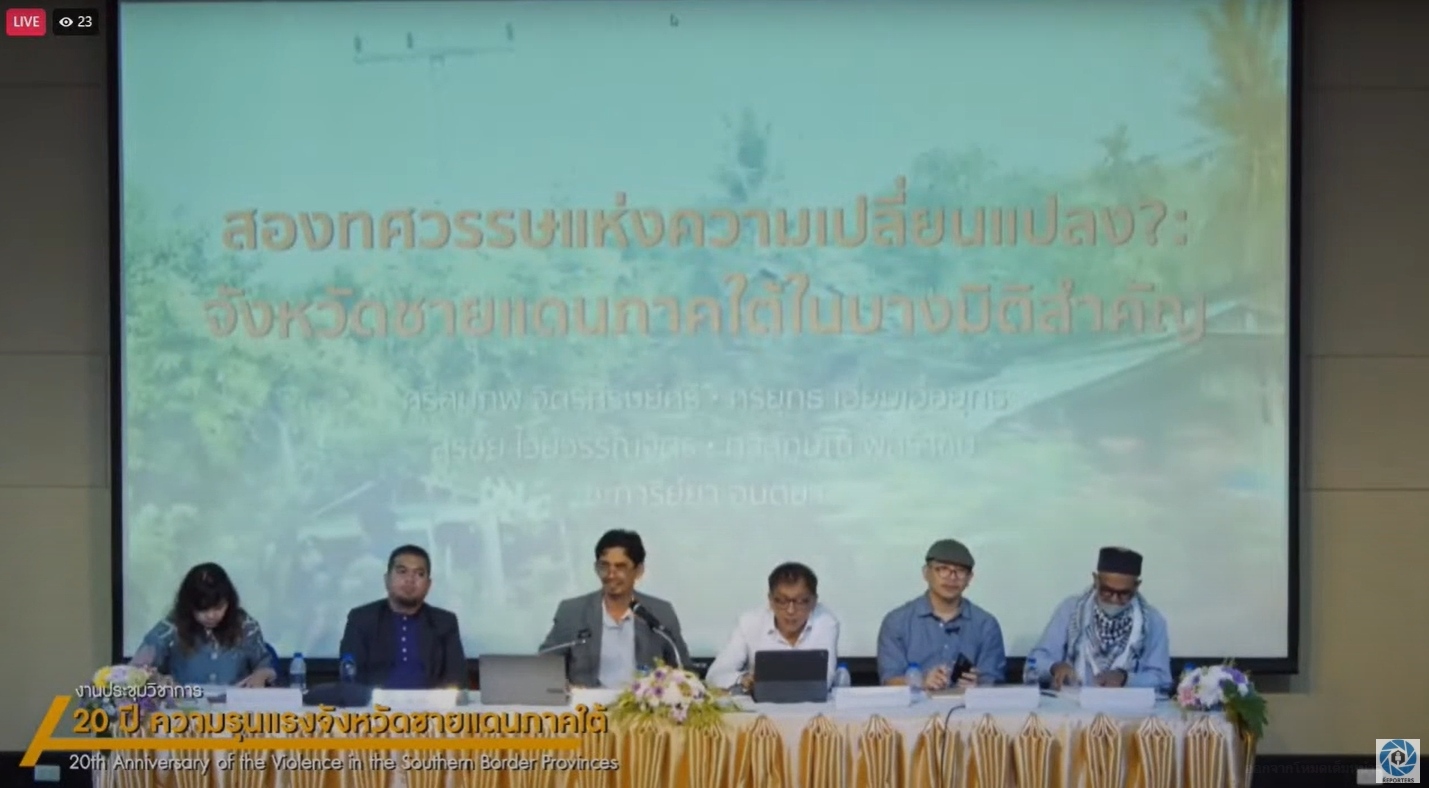
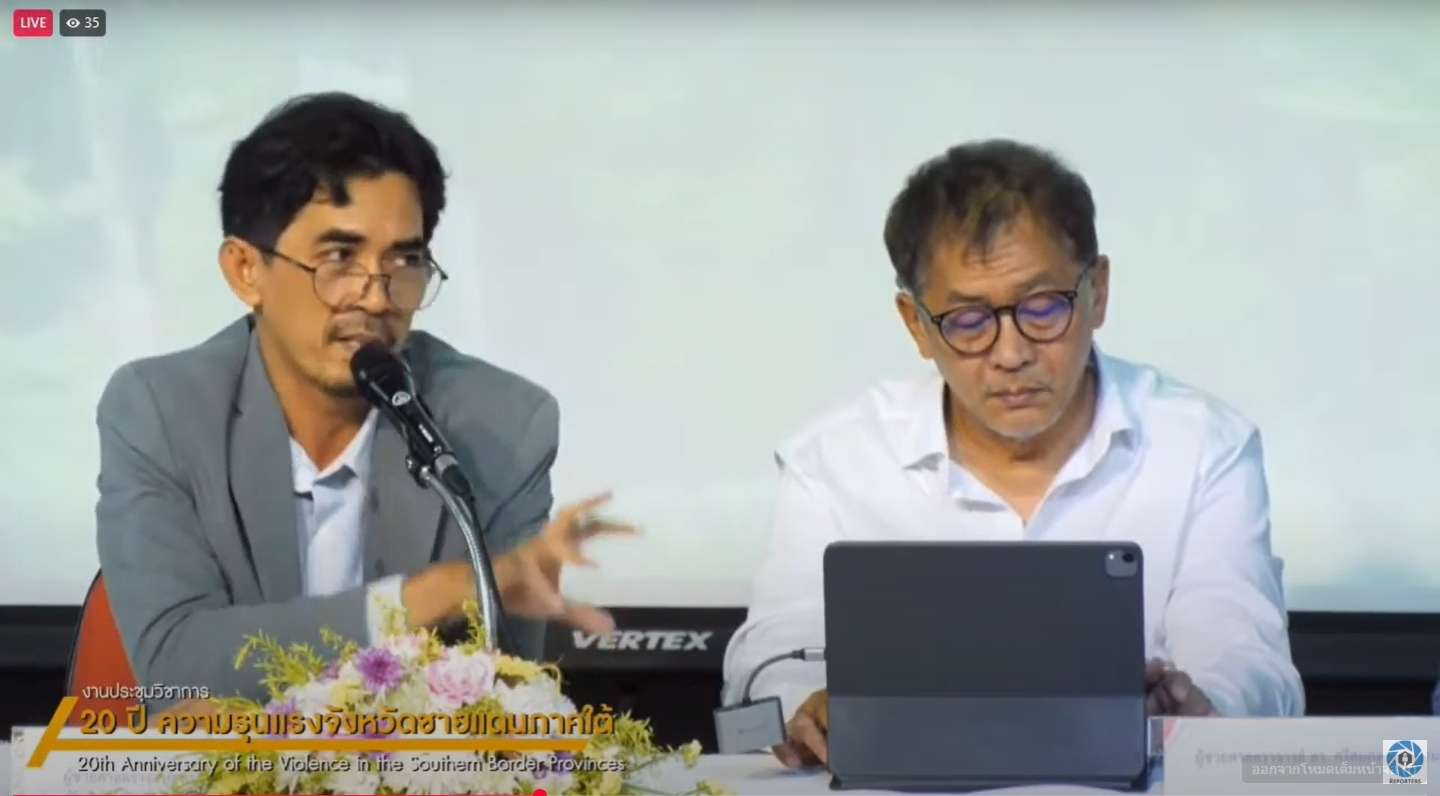
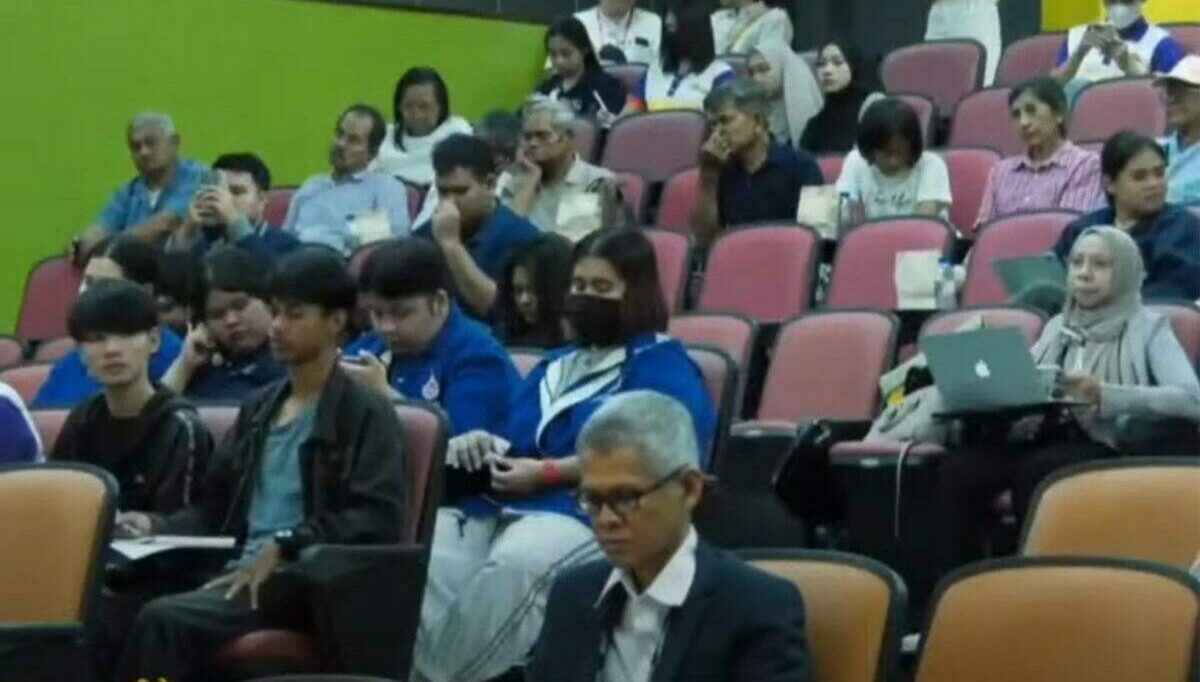
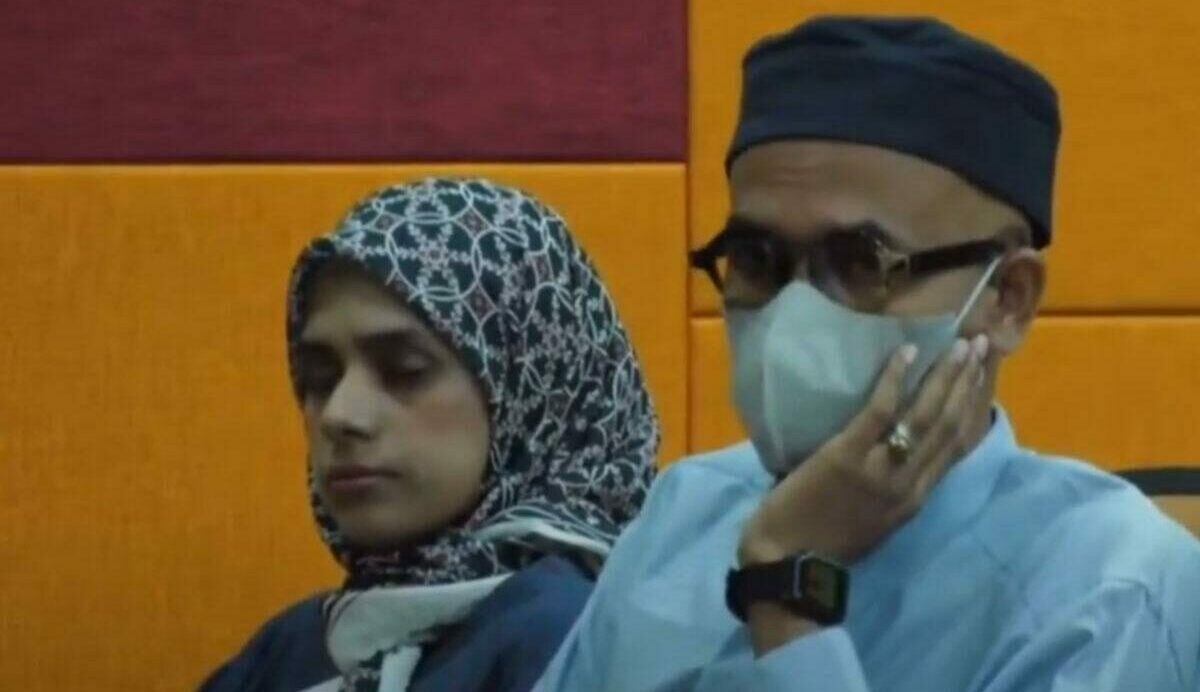
Figures : The keynote speakers discussing issues in the cross-sectoral dialogue event
Key Discussions at the Cross-Sectoral Dialogue
During the event, experts shared their insights on the complex dynamics of the ongoing conflict in Thailand’s southern border provinces.
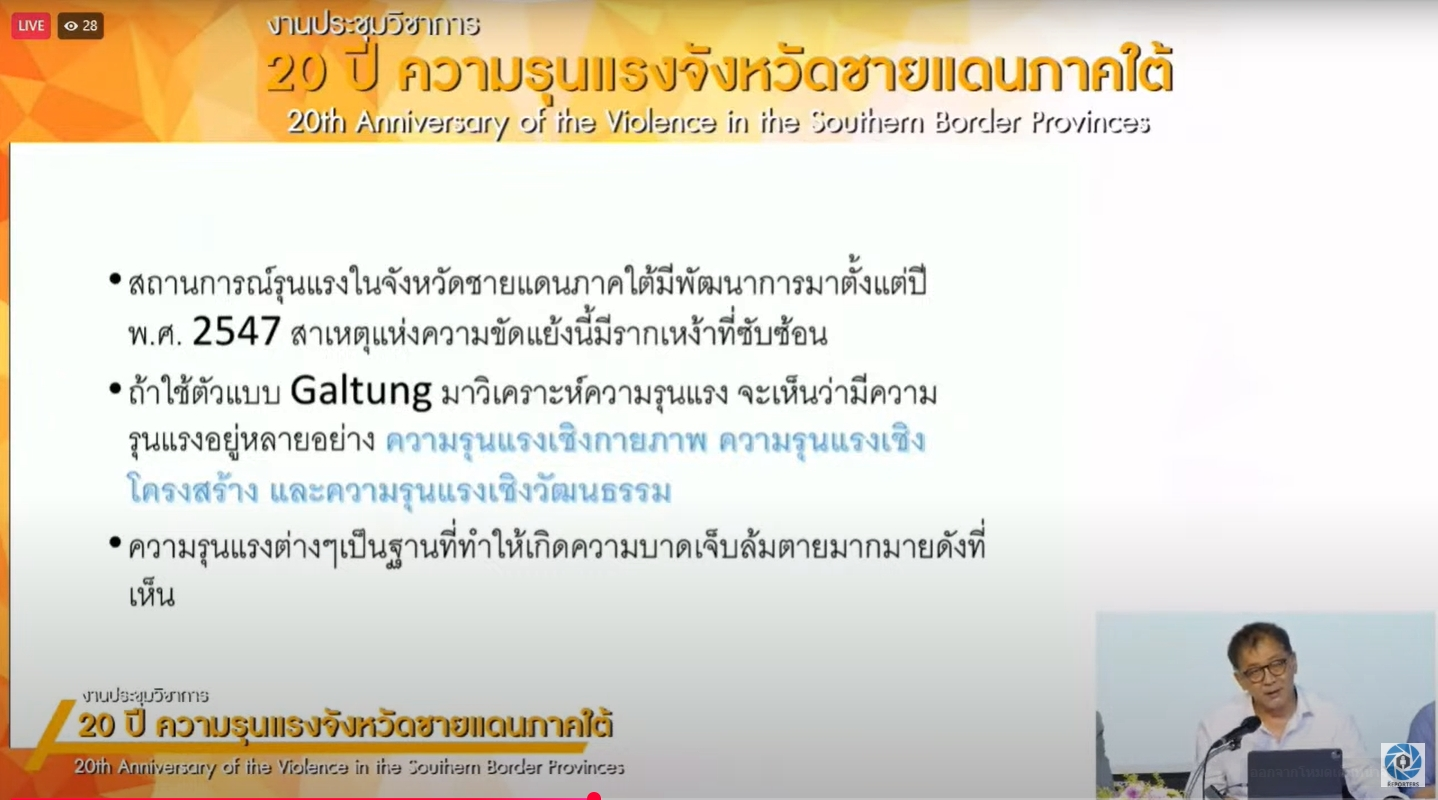
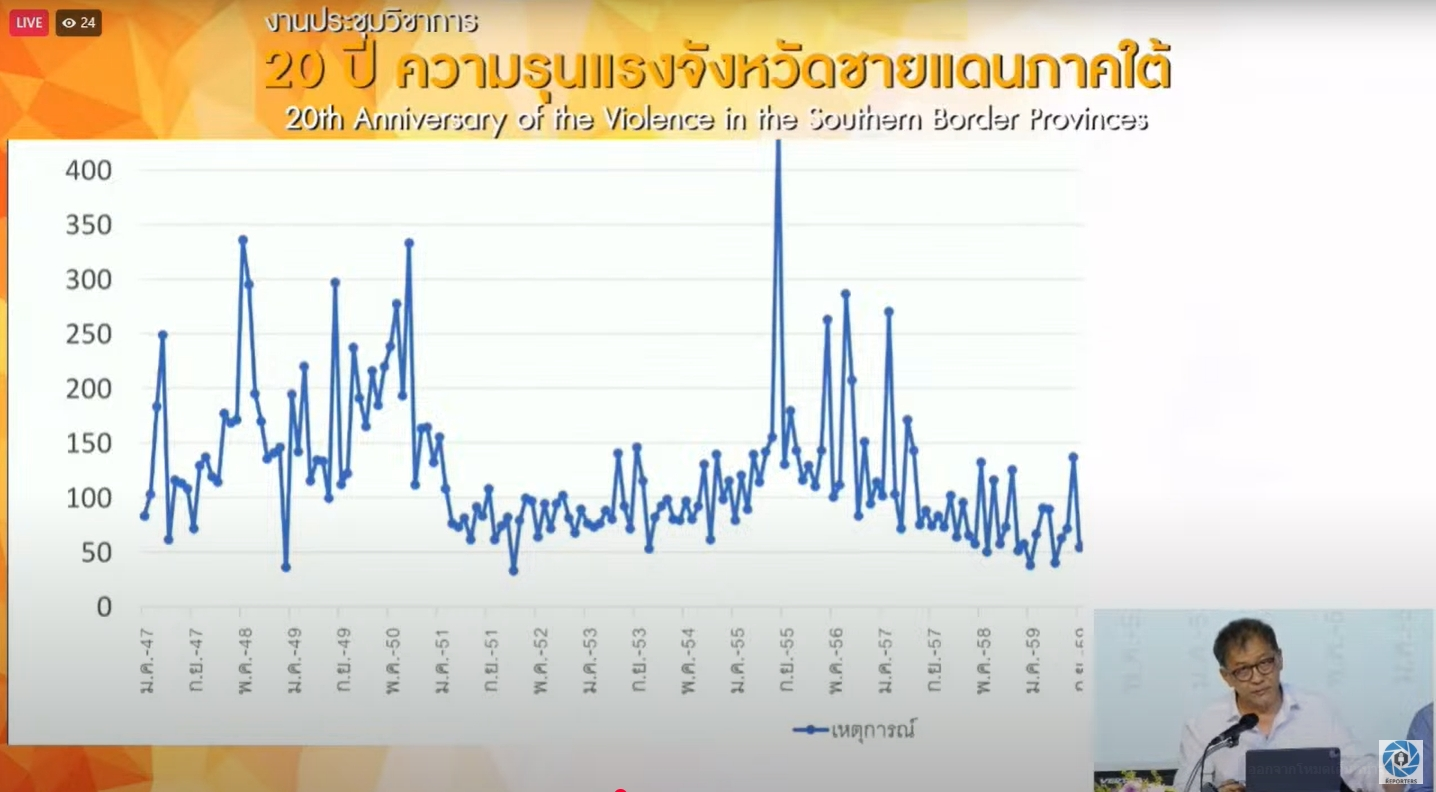
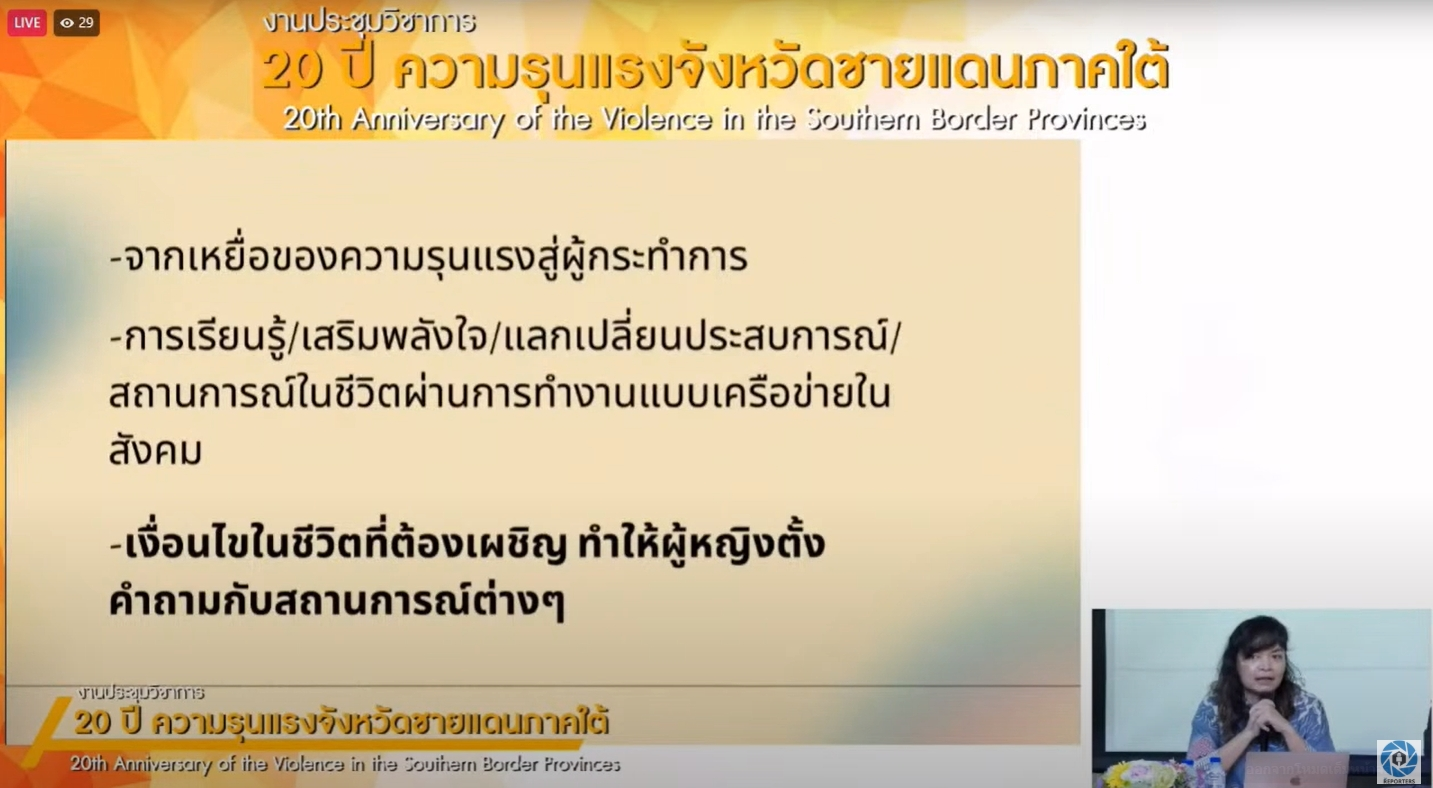
Asst. Prof. Dr. Srisompob Jitpiromsri explained that violence in the region can be categorized into three forms: physical violence, structural violence, and cultural violence. He noted that while conflict incidents had decreased over the past decade, they have risen again in the last three years. He emphasized that peace talks between the Thai government and insurgent groups remain a key factor in fostering long-term stability.
Dr. Sorayut Aiemueayut highlighted generational differences in perspectives on ethno-nationalism and ethno-religion. He suggested that individuals born after the 2004 Krue Se Mosque incident may have a different awareness of these issues compared to those born before, potentially complicating peace-building efforts.
Dr. Surachai Waiwannachit, a local school executive, argued that promoting Thai over Malay as the primary language in Pattani, Yala, and Narathiwat is not the solution to understanding the root causes of the conflict. He stressed that education should remain dynamic and inclusive rather than being restricted to a single perspective, as such limitations could exacerbate tensions.
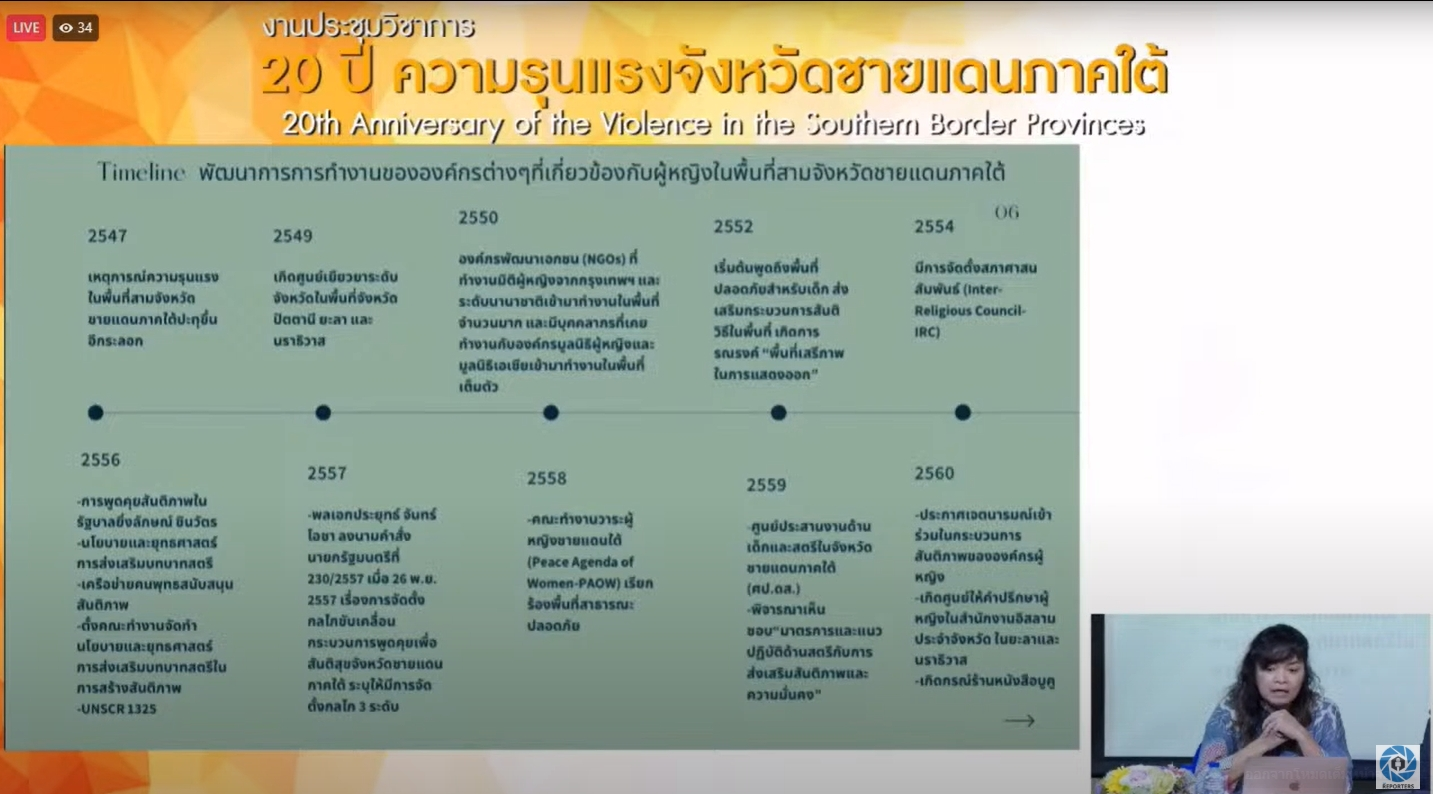
Asst. Prof. Dr. Taweeluck Pollachom addressed gender issues in the region, pointing out that women are often viewed as imperfect and excluded from peace-building efforts. She noted that since the 2004 Krue Se Mosque incident, women have increasingly participated in peace training programs. However, she questioned why women are not considered as capable as men in leading peace efforts. She urged the Thai government to address gender-related challenges, particularly those rooted in authoritarianism, patriarchy, and gender inequality in political and religious spheres.
Mr. Zakariya Amataya, an award-winning writer, discussed the role of literature in raising awareness of the conflict. He explained that many local writers have used novels and short stories to document violent incidents and share the realities of the conflict with a broader audience. He believes that literature can inspire both local communities and policymakers to work toward peace.
Associate Professor Patrick Jory criticized the Thai government’s past approach to the conflict, arguing that a lack of genuine understanding has led to inconsistent policies. He stressed the importance of field research in empowering local communities to take an active role in shaping peace-building strategies.
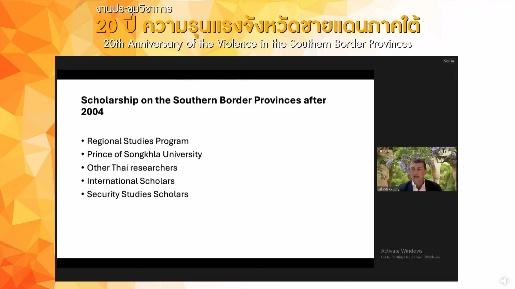
Asst. Prof. Dr. Phrae Sirisakdamkoeng observed that research on the southern border conflict has grown significantly since 2004. However, she noted gaps in key areas, such as integrating historical narratives into the education system, understanding local perspectives on governance, and studying non-Malay Muslim minority cultures. She warned that neglecting these aspects could lead to misunderstandings about multiculturalism and unsustainable peace efforts.
Assoc. Prof. Dr. Anusorn Unno emphasized the role of disciplines beyond political science and history in analyzing the conflict. He pointed out that economic factors, such as poor financial conditions and the migration of Buddhist populations, have contributed to tensions. He also called for greater involvement of NGOs, civil representatives, and local communities in media production to amplify civilian voices and perspectives on the conflict.
Mr. Romadon Panjor, a Member of Parliament and staff member at Deep South Watch, argued that government strategies for addressing violence have not been sufficiently discussed. He stressed the need for an open platform to debate differing interpretations of Patani’s history among the Thai government, scholars, and local civilians to establish more effective peace-building strategies.
These discussions underscored the complexity of the conflict and the necessity of a multi-faceted approach to fostering sustainable peace in the region.
16th Anniversary of the Alcoholic Beverage Control Act, B.E. 2551 (2008): A New Alcohol Control Act—Fulfilling Promises and Fixing Flaws
In 2024, Assoc. Prof. Dr. Udomsak Saengow was appointed as a member of the Advisors to the Ad-hoc Committee on Alcoholic Beverage Control Act Consideration. His role involves providing guidance and insights to support the committee in drafting a new alcoholic beverage control act.
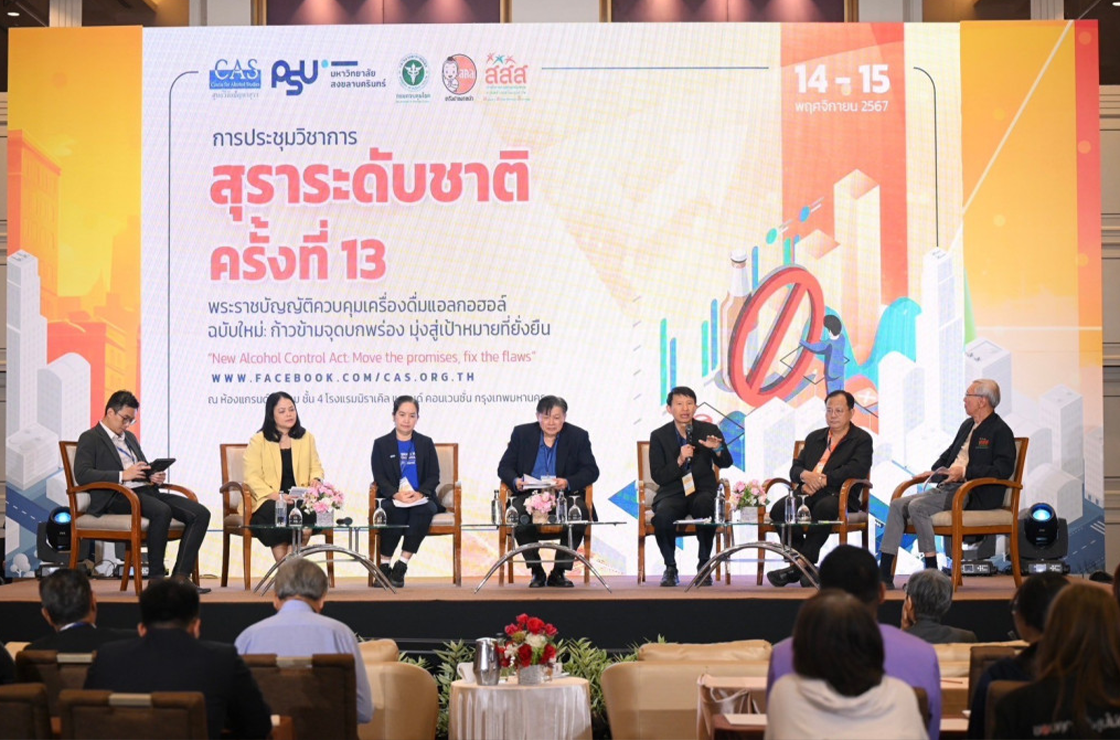
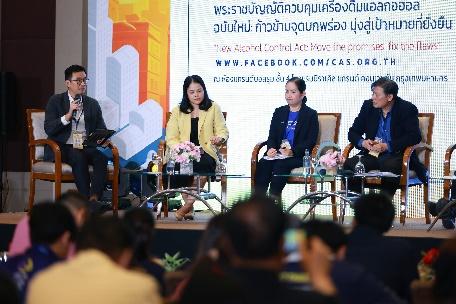
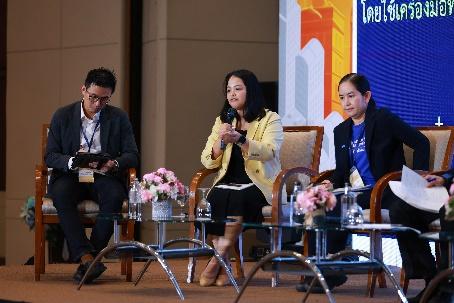
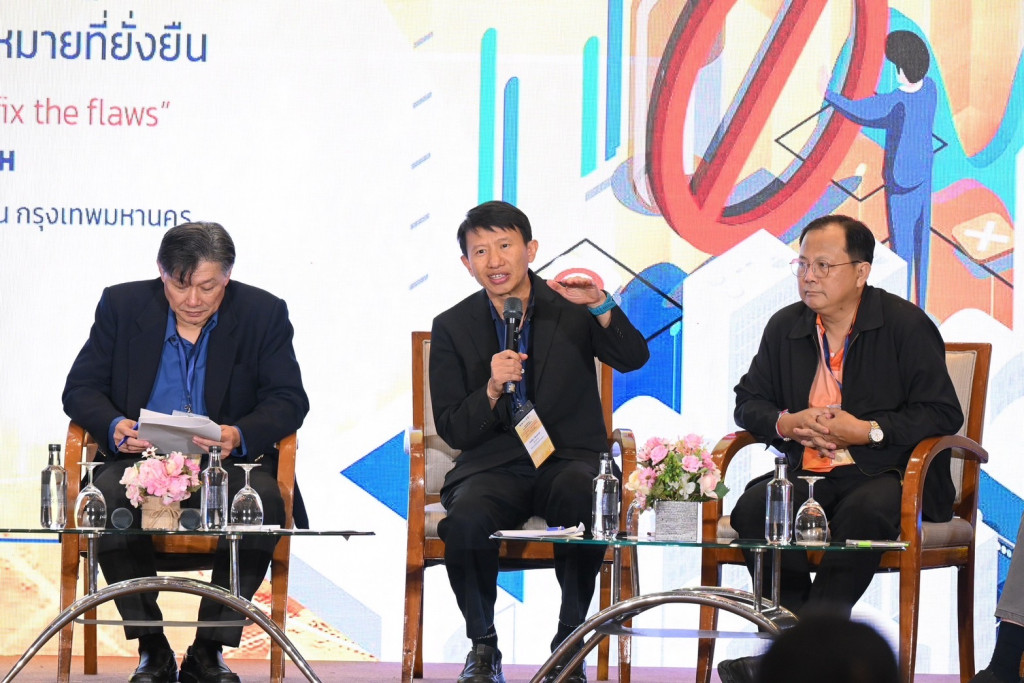
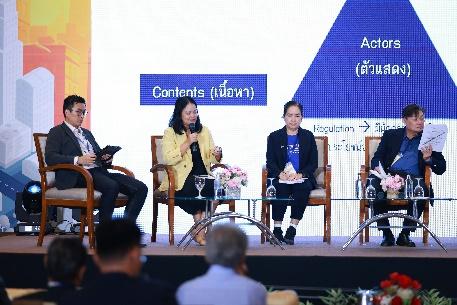
During the drafting process, the Center for Alcohol Studies (CAS), the Thailand Stop Drink Network, and the Health Promotion Movement Organization hosted a cross-sectoral dialogue titled “16th Anniversary of the Alcoholic Beverage Control Act, B.E. 2551 (2008): A New Alcohol Control Act—Fulfilling Promises and Fixing Flaws.” The event served as a platform for committee members and experts to discuss key issues in the development and measurement of policy impacts related to the new act.
During the drafting process, the Center for Alcohol Studies (CAS), the Thailand Stop Drink Network, and the Health Promotion Movement Organization hosted a cross-sectoral dialogue titled “16th Anniversary of the Alcoholic Beverage Control Act, B.E. 2551 (2008): A New Alcohol Control Act—Fulfilling Promises and Fixing Flaws.” The event served as a platform for committee members and experts to discuss key issues in the development of the new act.
Assoc. Prof. Dr. Udomsak Saengow participated in the discussion alongside prominent speakers, including:
Asst. Prof. Dr. Boonyou Khaopornprasert – Deputy Director, Institute of Research and Innovation, Krirk University
Dr. Sushera Bunluesin – National Professional Officer, WHO Thailand (International Representative)
Dr. Orratai Waleewong – Researcher, International Health Policy Program (IHPP)
Assoc. Prof. Dr. Udomsak Saengow – Director, Research and Innovation Institute of Excellence, Walailak University
During the event, Assoc. Prof. Dr. Udomsak Saengow highlighted concerns regarding the potential use of the new alcoholic beverage control act as a tool to stimulate tourism. He cautioned that while increased alcohol consumption could boost economic gains from tourism, it may also have significant negative social impacts.
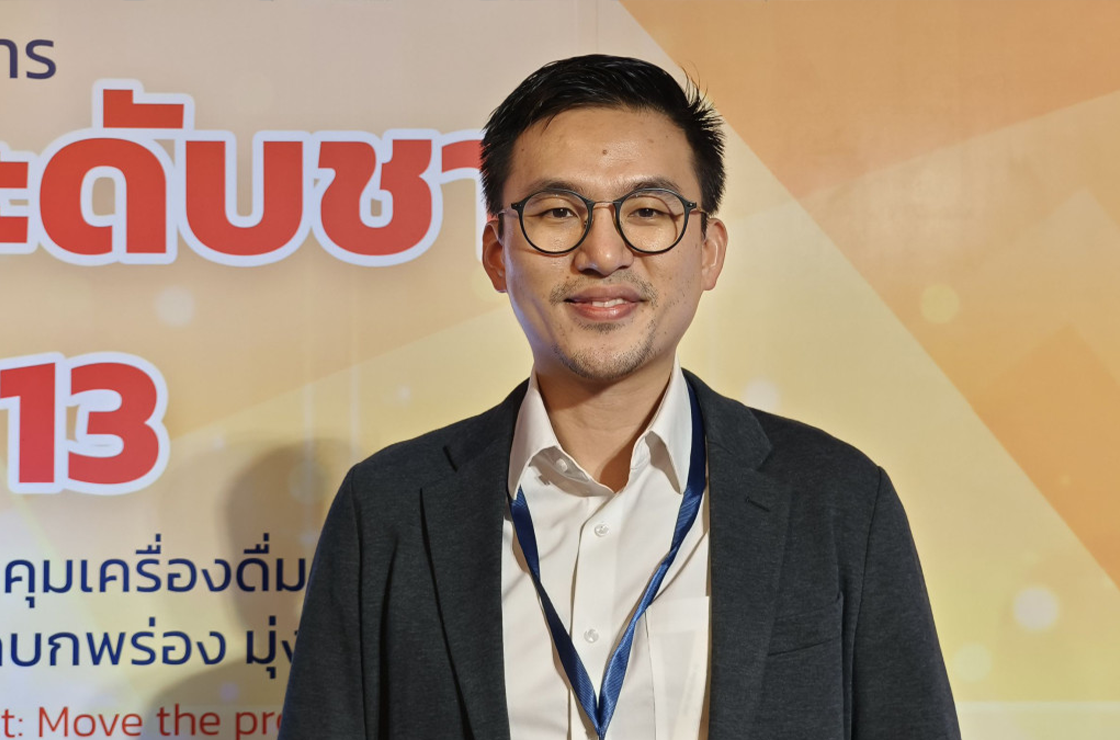
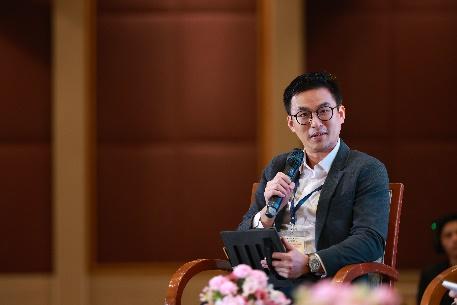
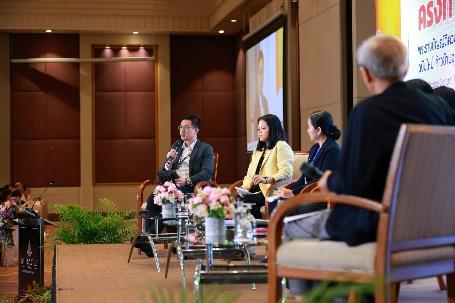
Figures : Assoc. Prof. Dr. Udomsak Saengow alongside prominent speakers discussing issues about the new alcoholic beverage control act at the cross-sectoral dialogue event
He further noted that government measures promoting drinking freedom could include extending sales hours, allowing nightclubs and pubs to operate later, easing advertising restrictions, and permitting alcohol sales on special holidays. He emphasized the importance of active participation from NGOs, researchers, parliamentarians, civil society, and the general public in raising awareness of the potential risks associated with such policies.