
Promoting Lifelong Learning Through Free Educational Resources
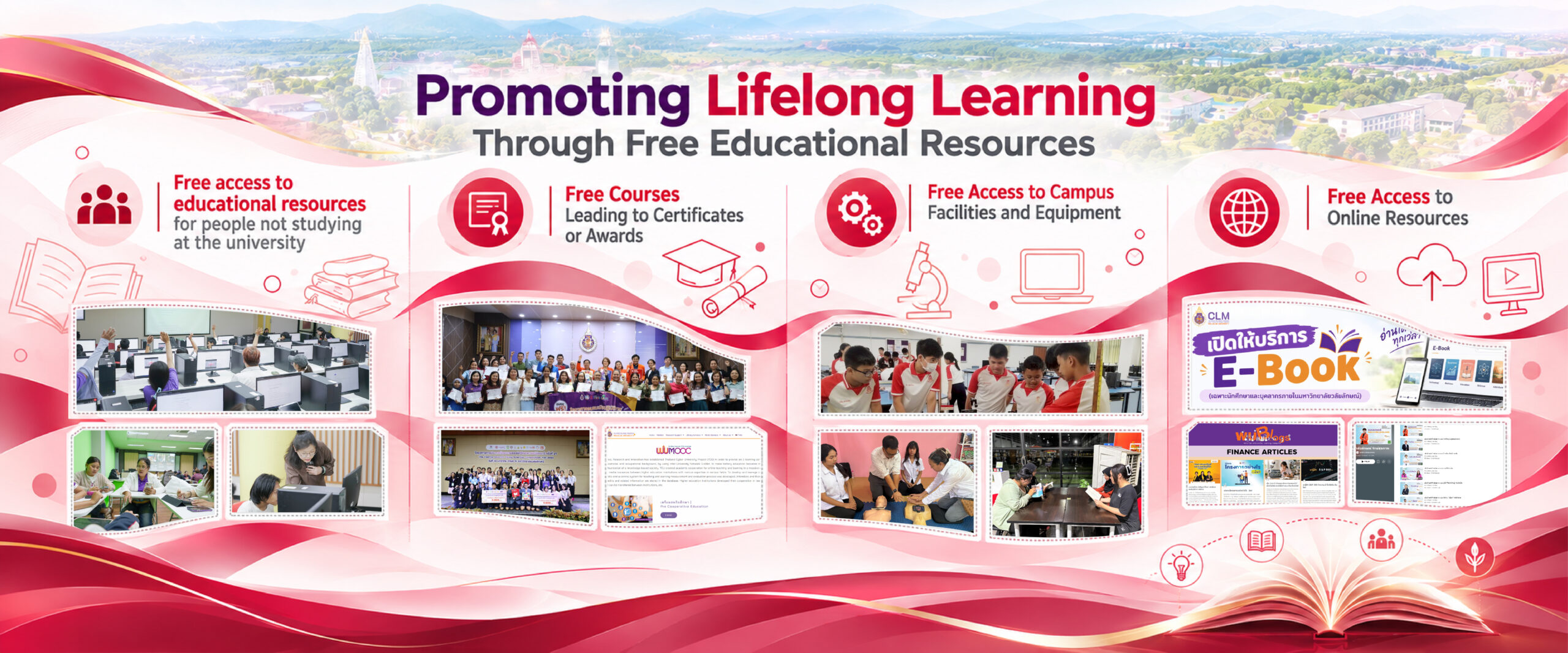
Walailak University provides free access to educational resources for people not studying at the university through projects that promote lifelong learning, skills development, practical training, and access to educational facilities and online resources. One example is the project “Strengthening Lifelong Learning and Local Cultural Storytelling Skills in Tha Sala Community to Promote Tourism and Community Ways of Life,” which aims to develop the capacity of local people to communicate community stories, identities, and local knowledge through different forms of media while promoting continuous learning and skills development.
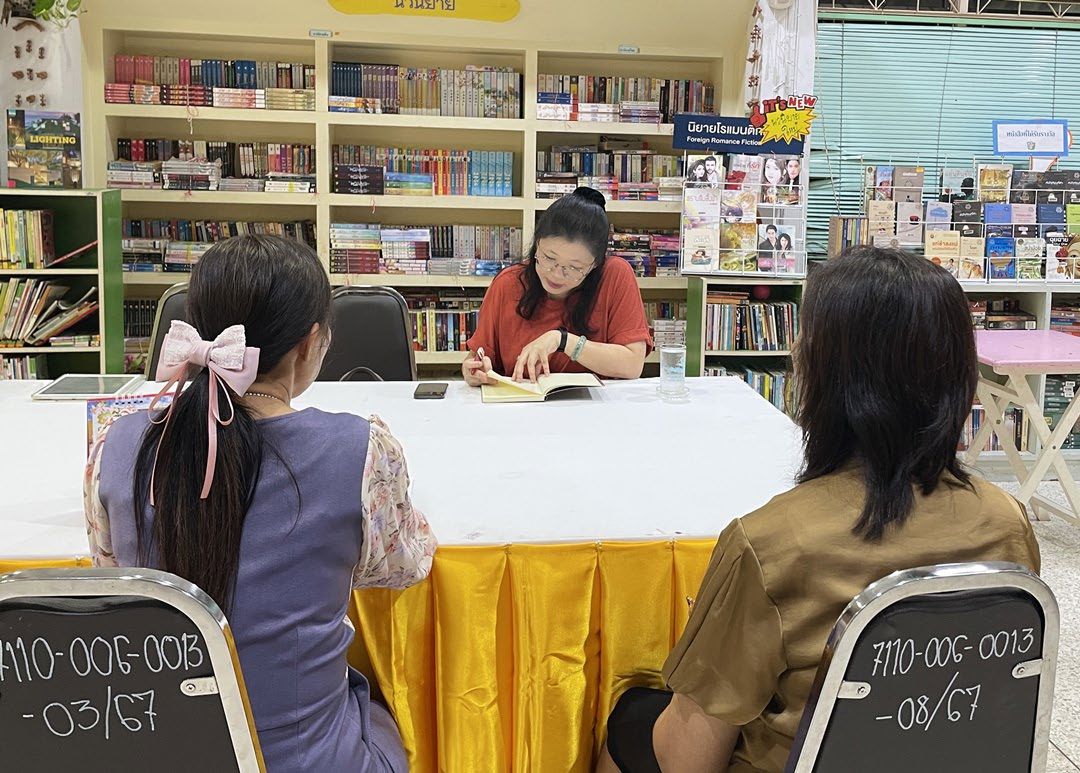
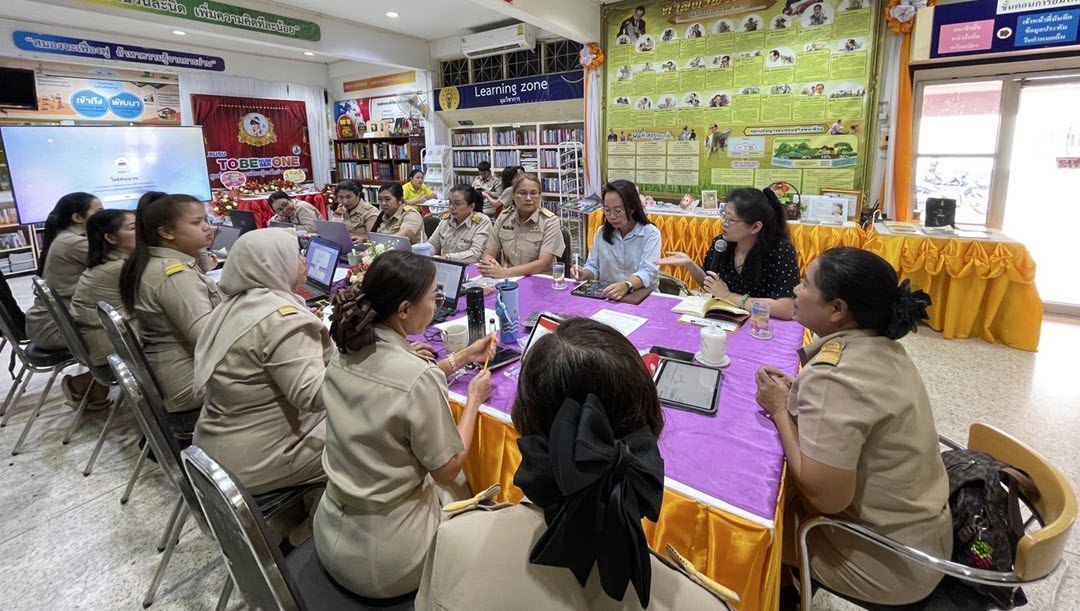
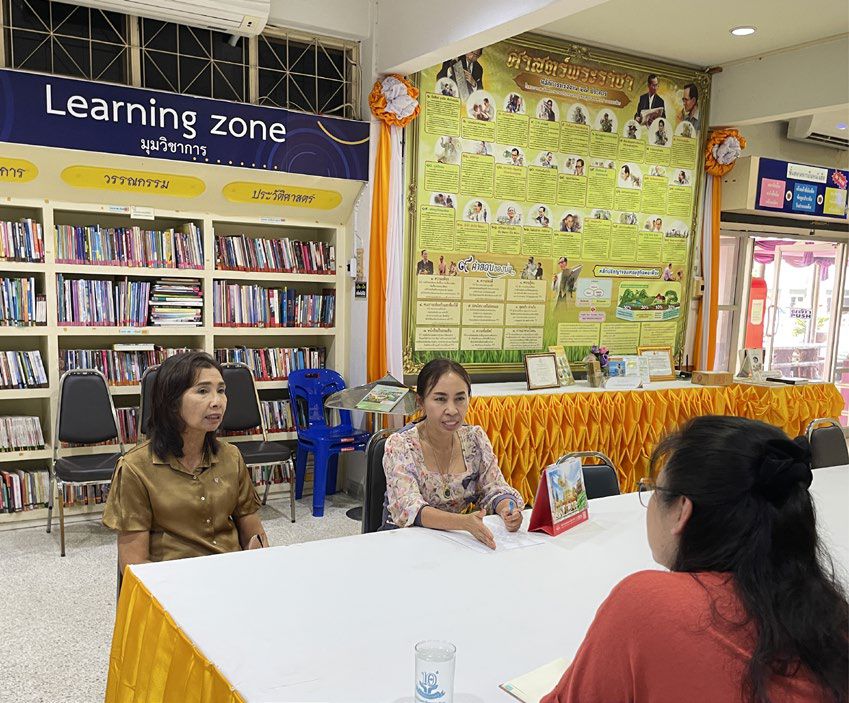
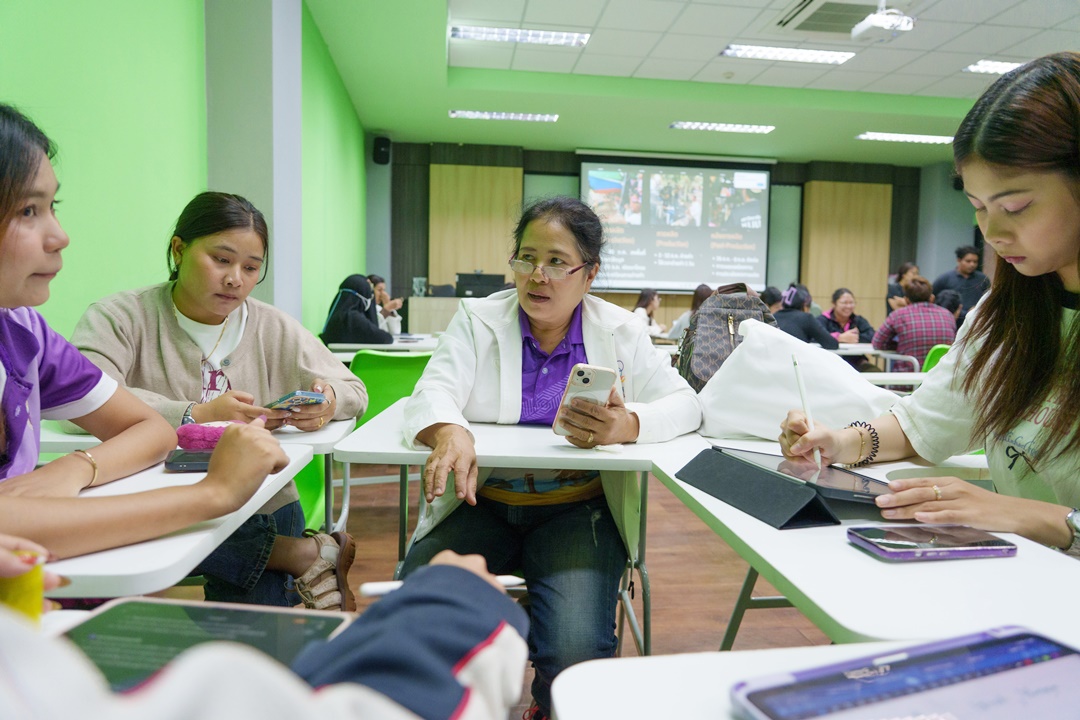
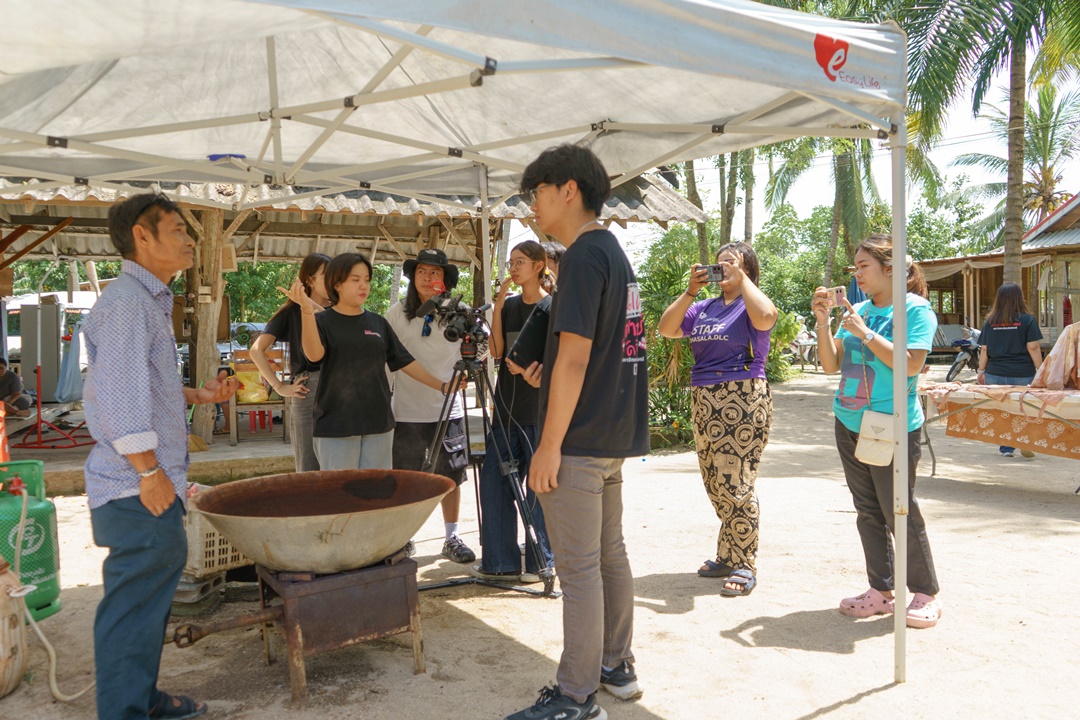
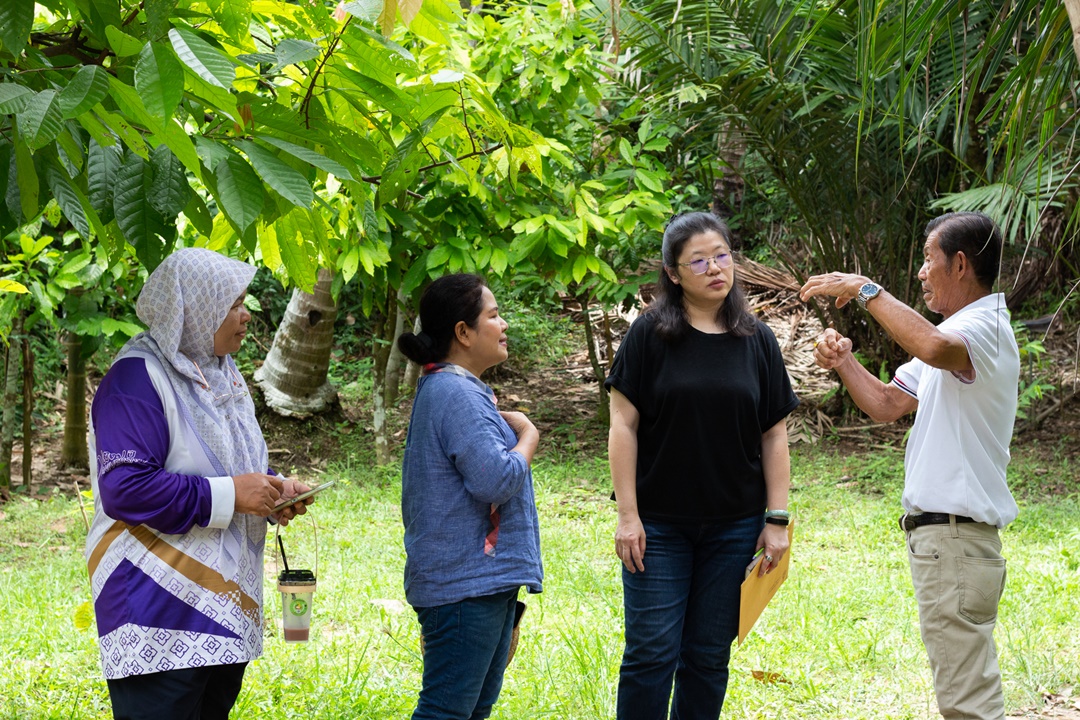
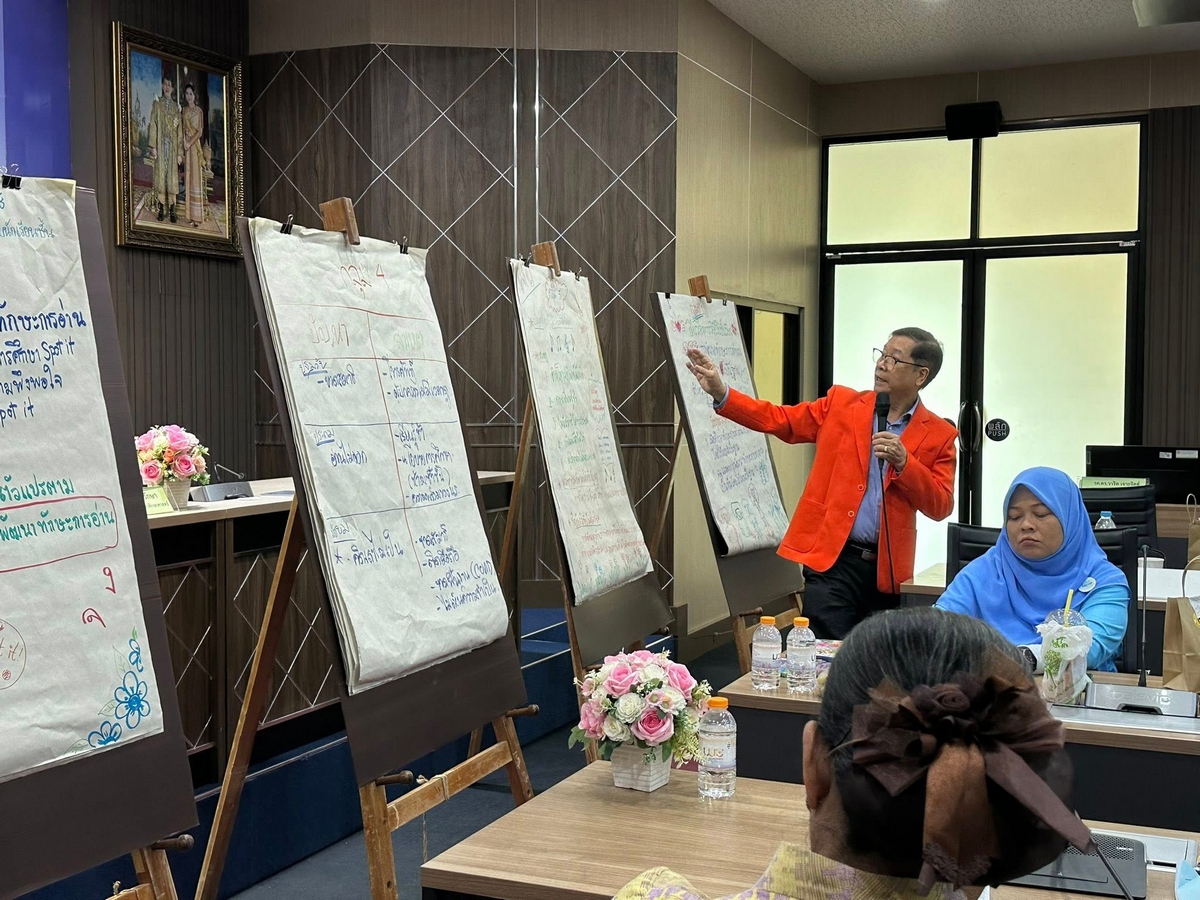
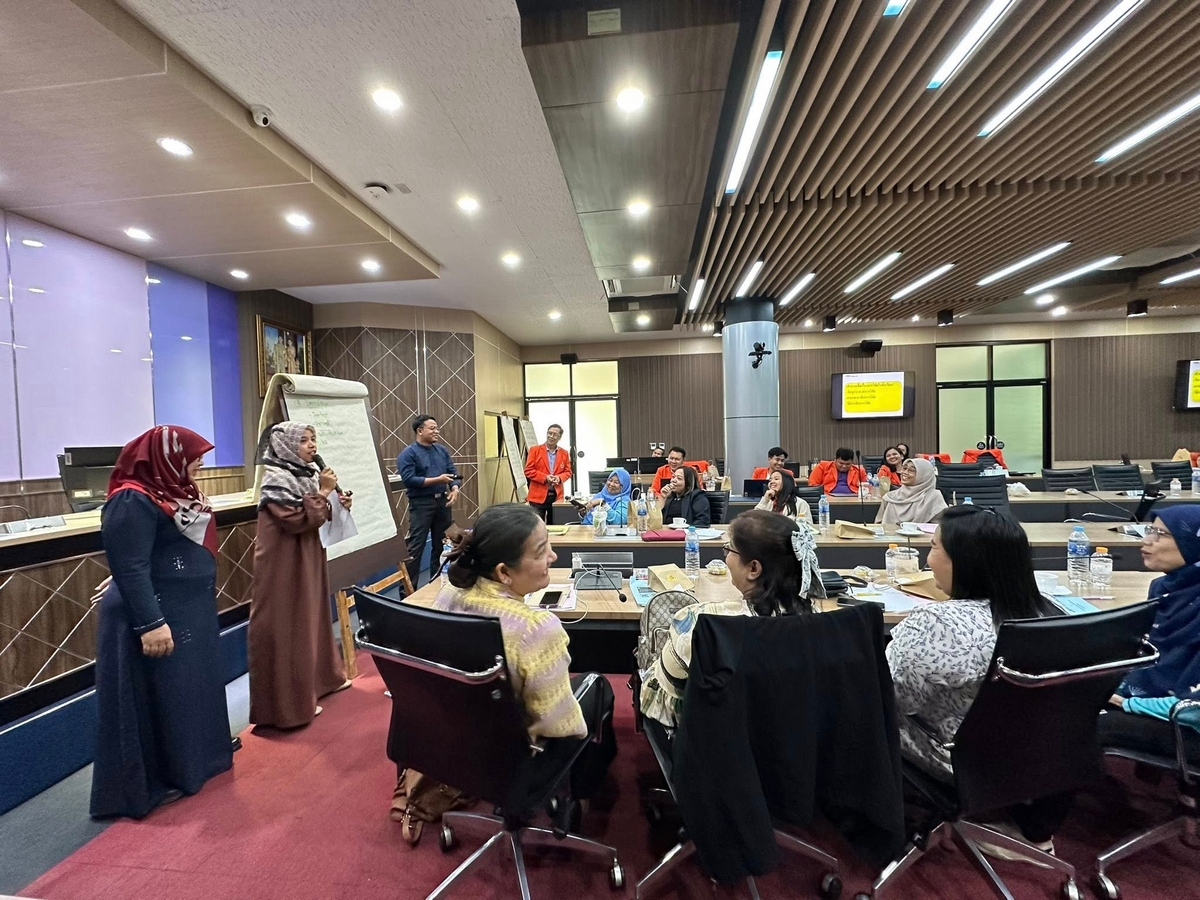
The project began with a diagnostic process through field visits and discussions with the Tha Sala District Learning Promotion Centre in Nakhon Si Thammarat Province. The process gathered information on local cultural content, community issues, and appropriate media formats for storytelling skills development. Engagement was further promoted through discussions with teachers representing learning promotion centres in all 10 subdistricts. These discussions helped identify communication objectives and key local issues that could be developed into stories representing each community.
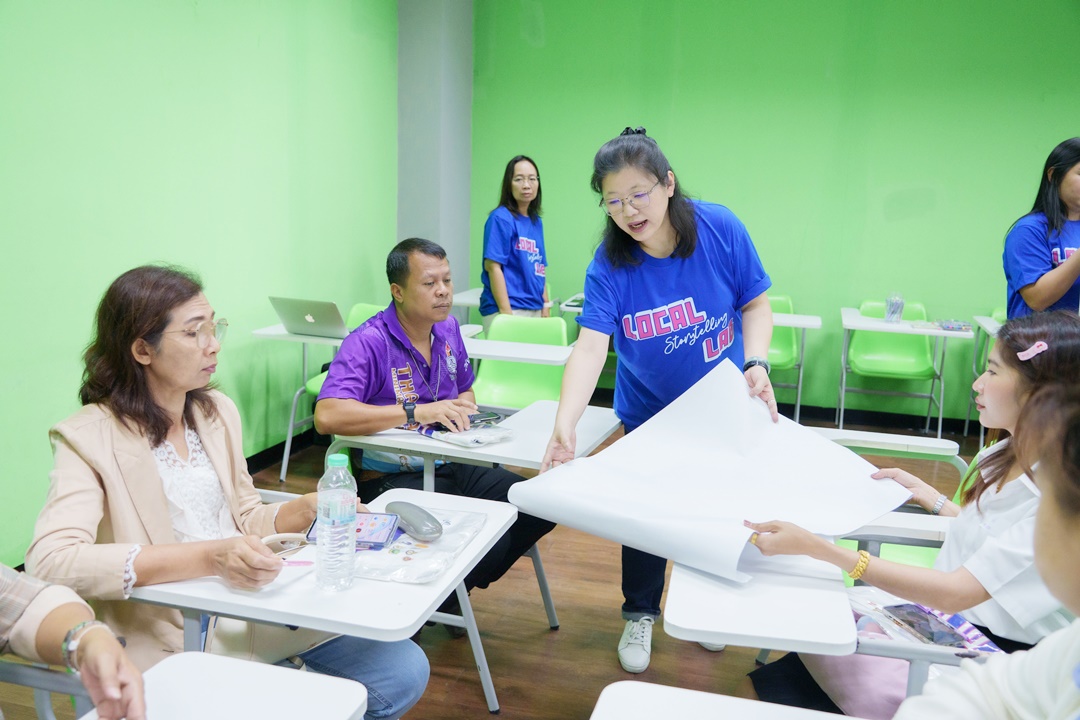
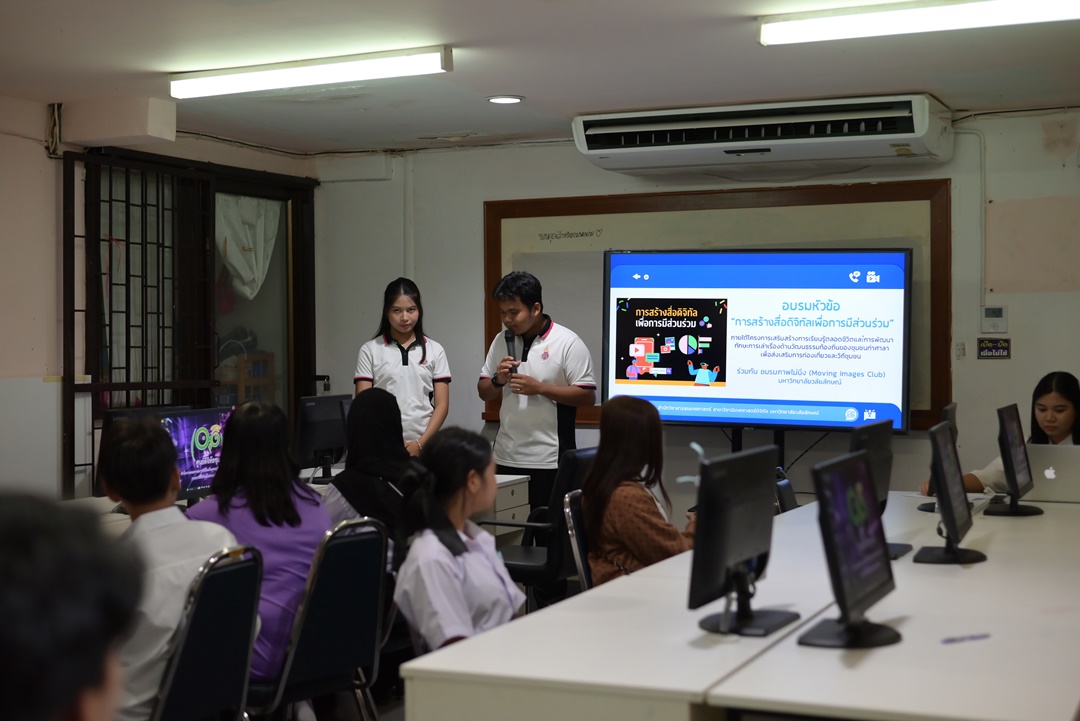
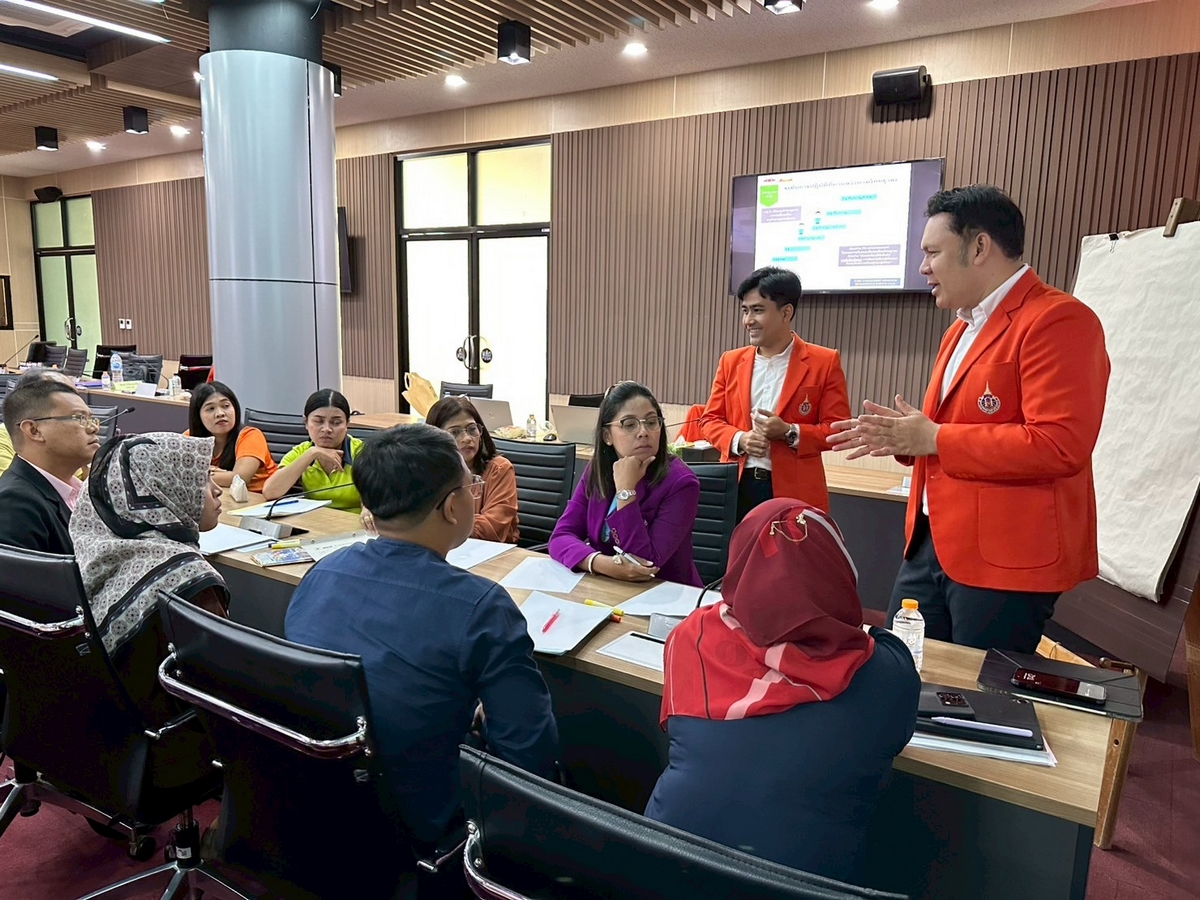
Based on the needs identified through the diagnostic process, the project developed the “Transmedia Storytelling” course and the “Local Storytelling Lab: Communicate – Storytelling – Locality (Nakhon Si Thammarat)” course. Both are free courses available to local people and those not studying at the university. The courses enable participants to transform local stories and cultural assets into creative media that can communicate community identities and local knowledge to a wider audience.
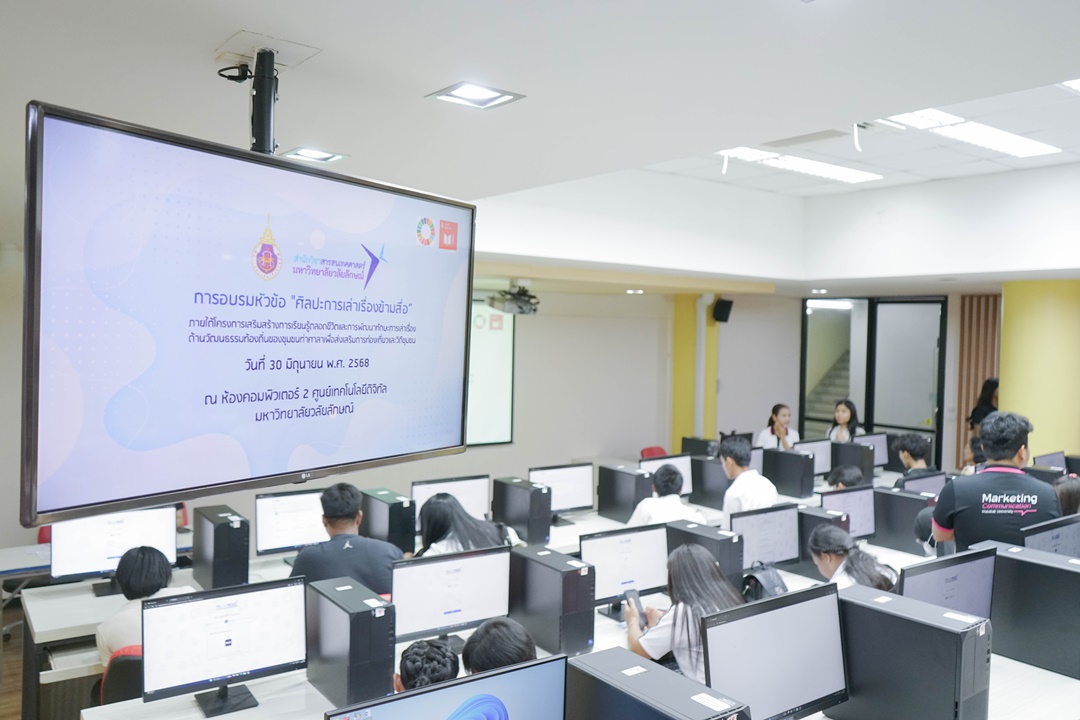
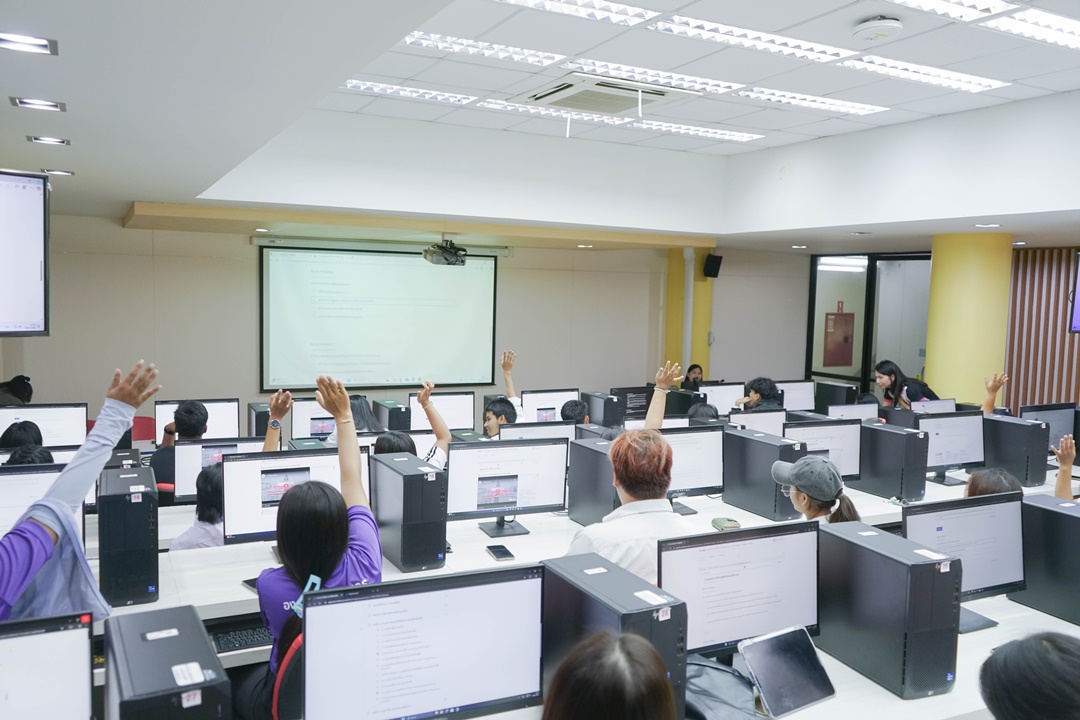
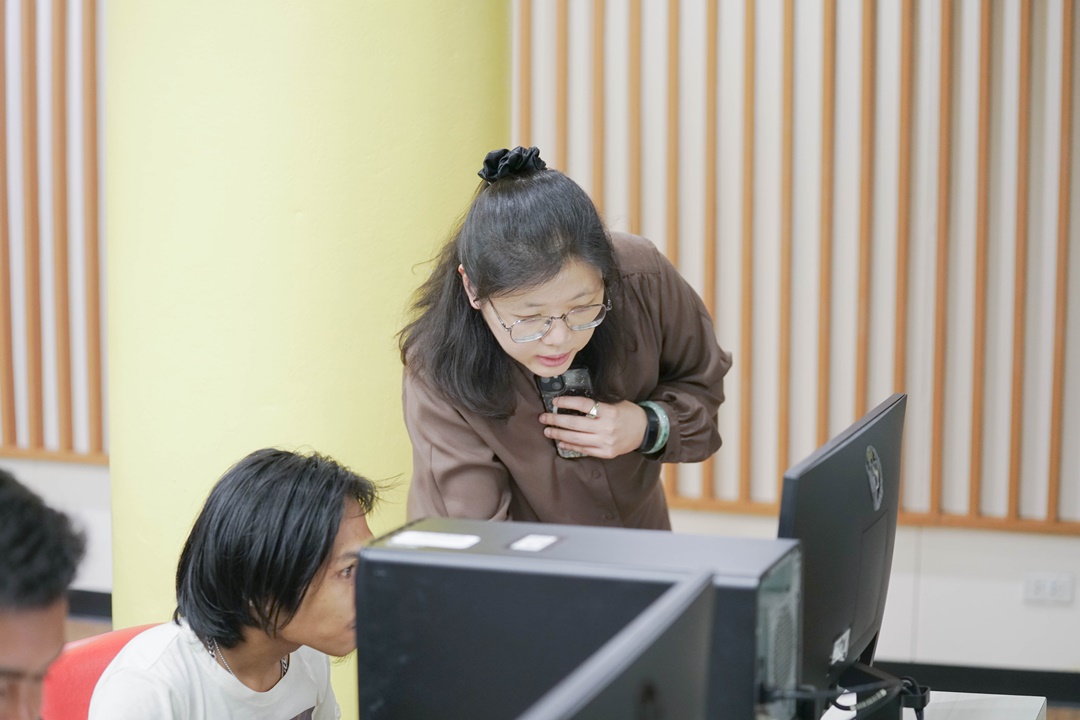
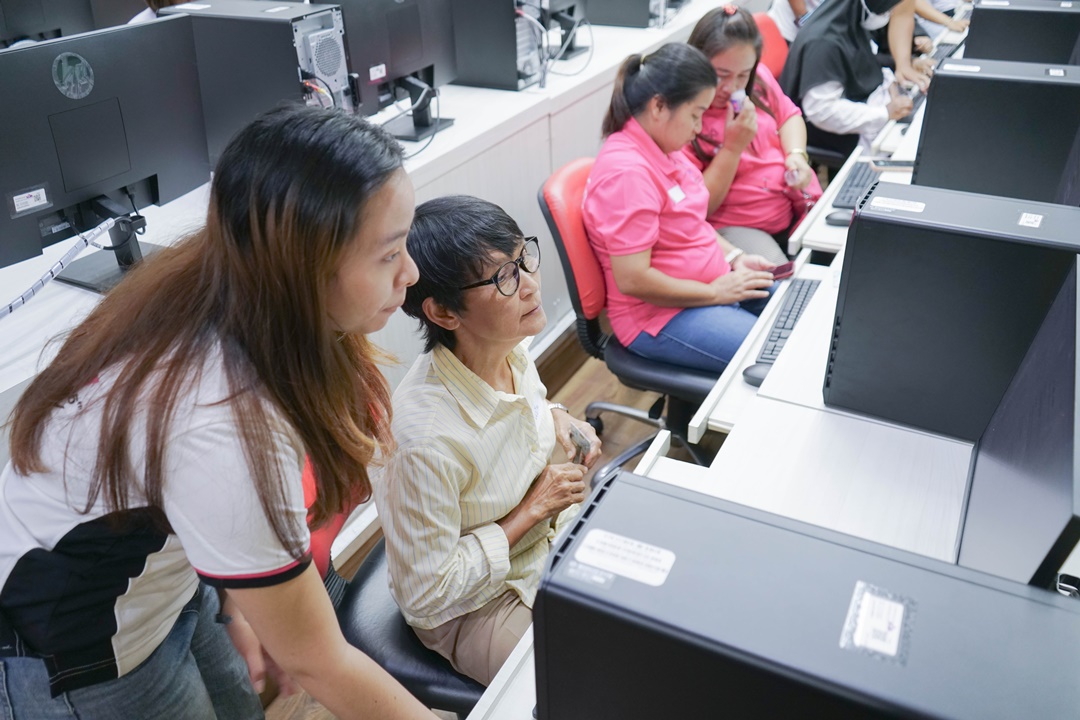
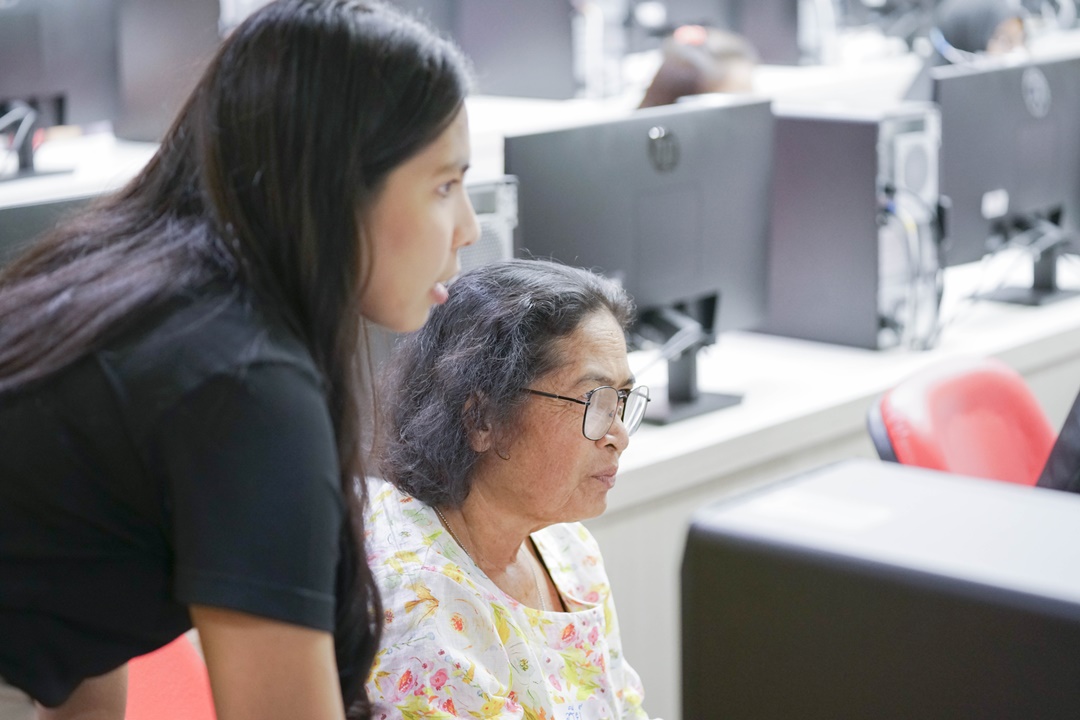
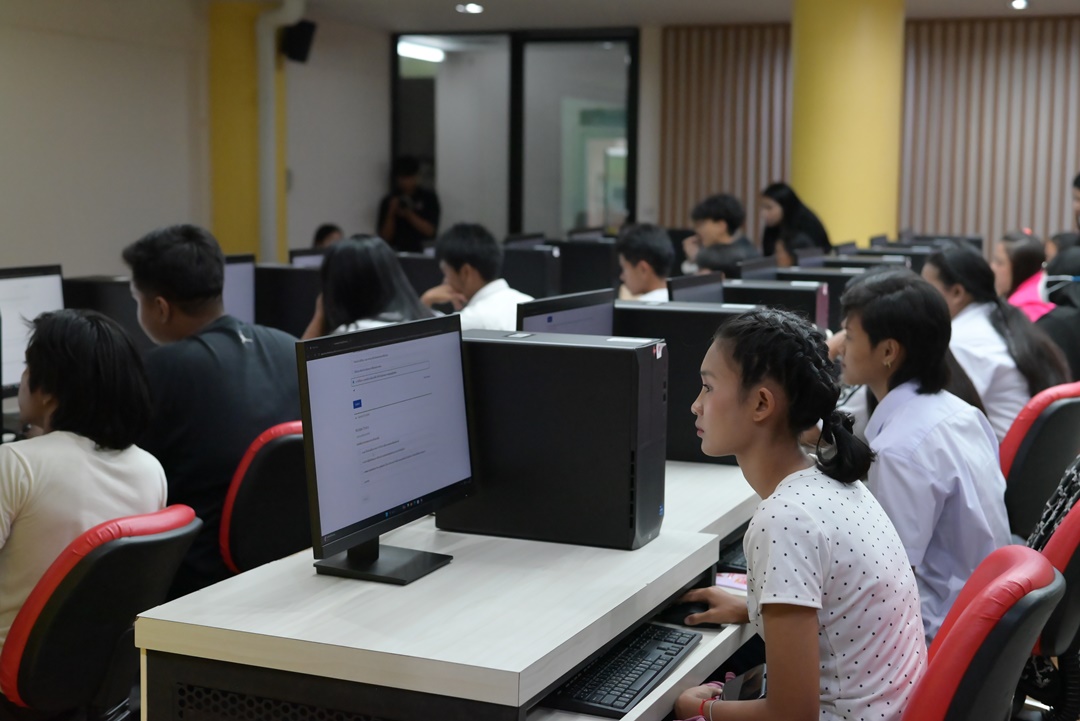
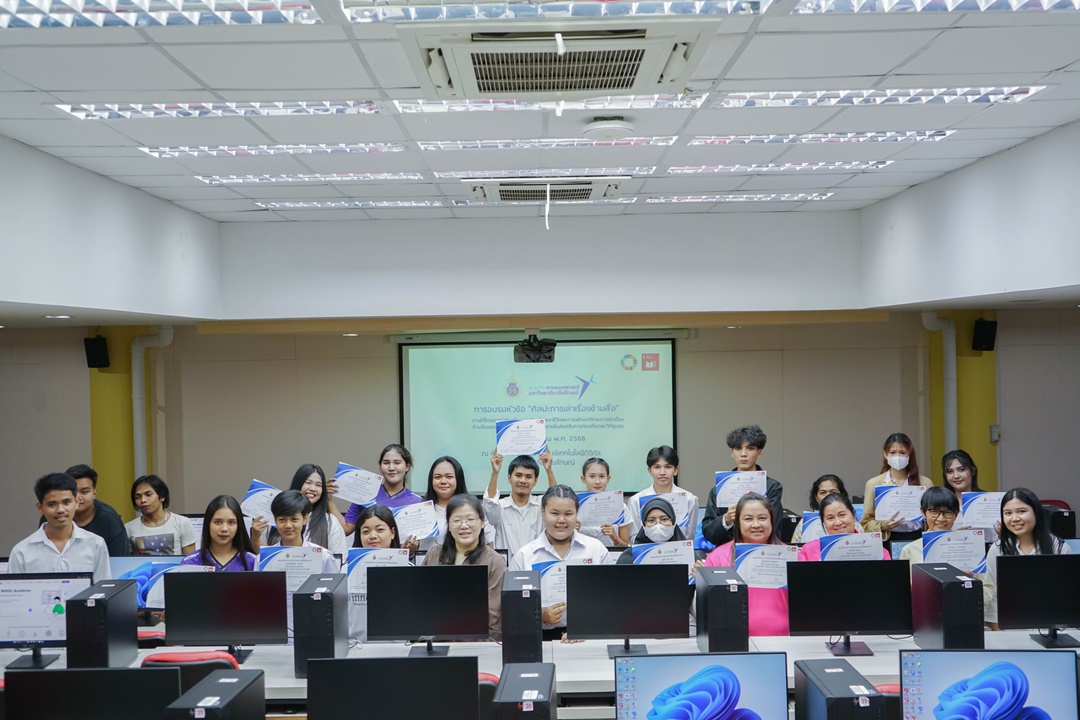
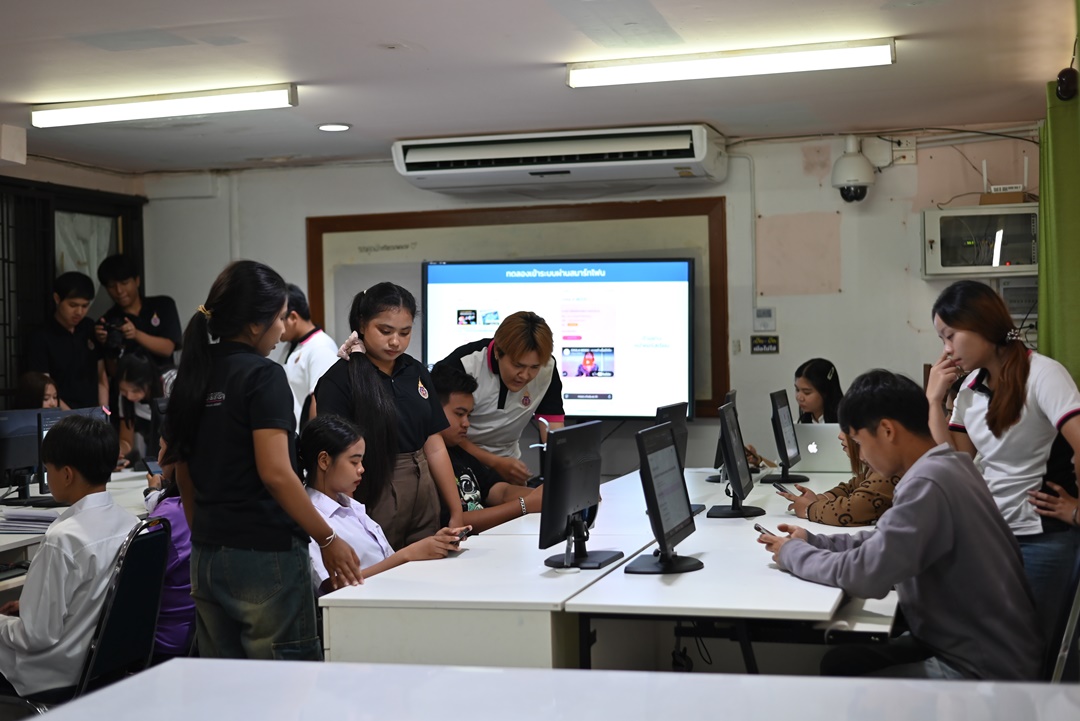
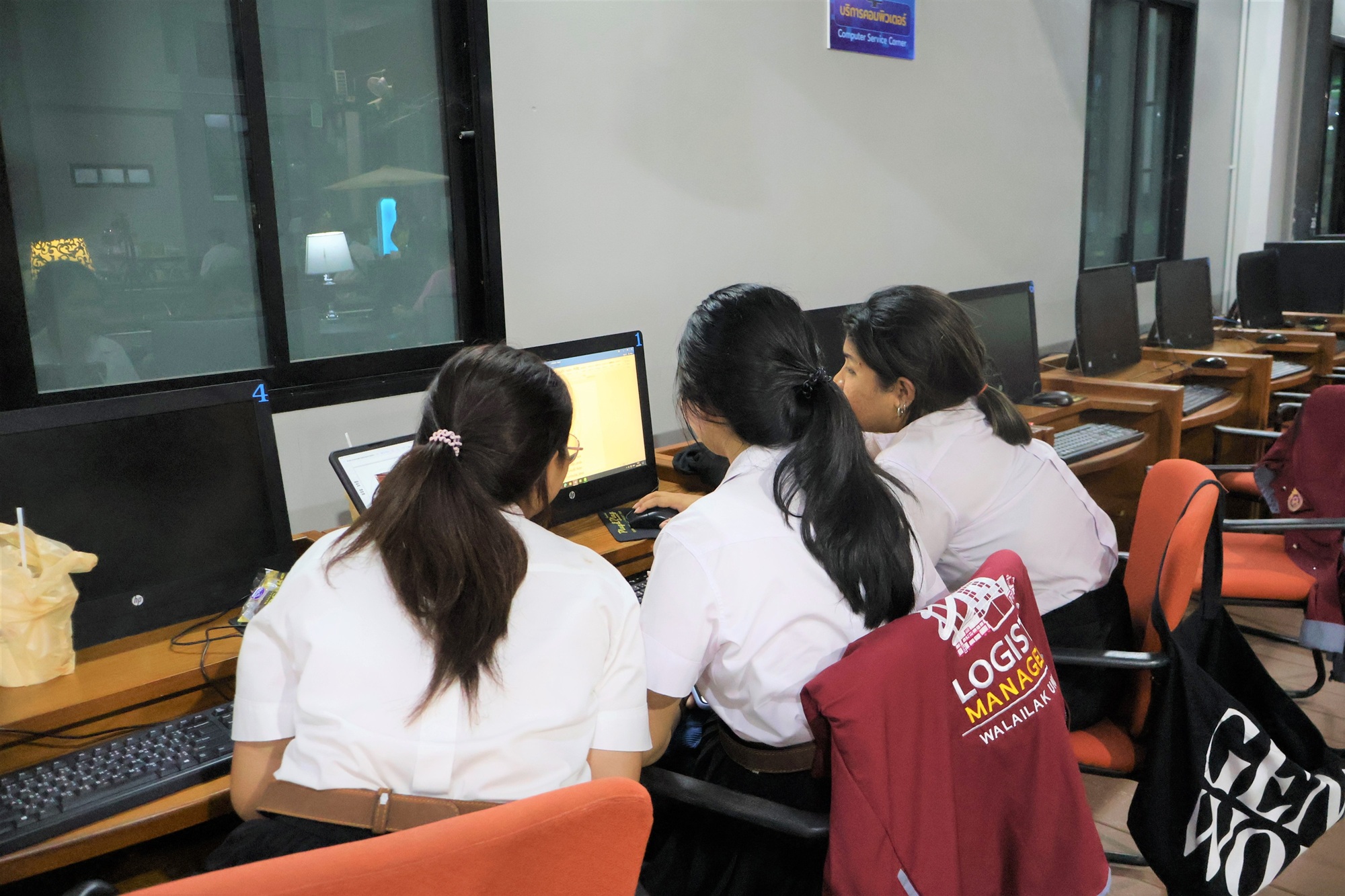
In addition to the learning activities provided through the courses, the project provides free access to campus facilities and equipment for learning and media production. Participants were able to use computers in Computer Room 2 at the Digital Technology Center to practise their skills and produce media presenting local stories. As a result, participants produced one initial video from each subdistrict, resulting in 10 videos in total. These videos serve both as learning outputs and prototypes that can be further developed and used by the respective communities.
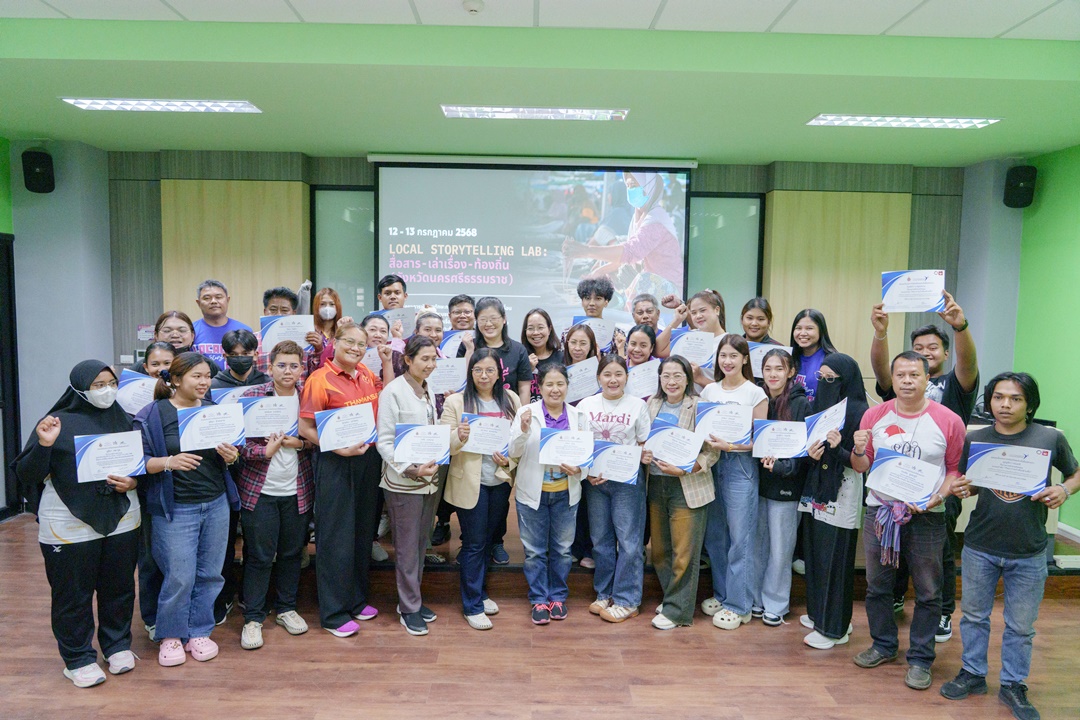
The project also promotes engagement with students from Walailak University’s Moving Images Club to support learning and access to the online resources prepared by the project. These resources are designed to be accessible through both computers and mobile phones, allowing participants to review lessons, learn additional content, and develop storytelling skills anytime and anywhere. The knowledge and media resources can also be shared with other members of the community to support continuous learning. All participants who completed the courses received certificates recognizing their participation and learning outcomes.
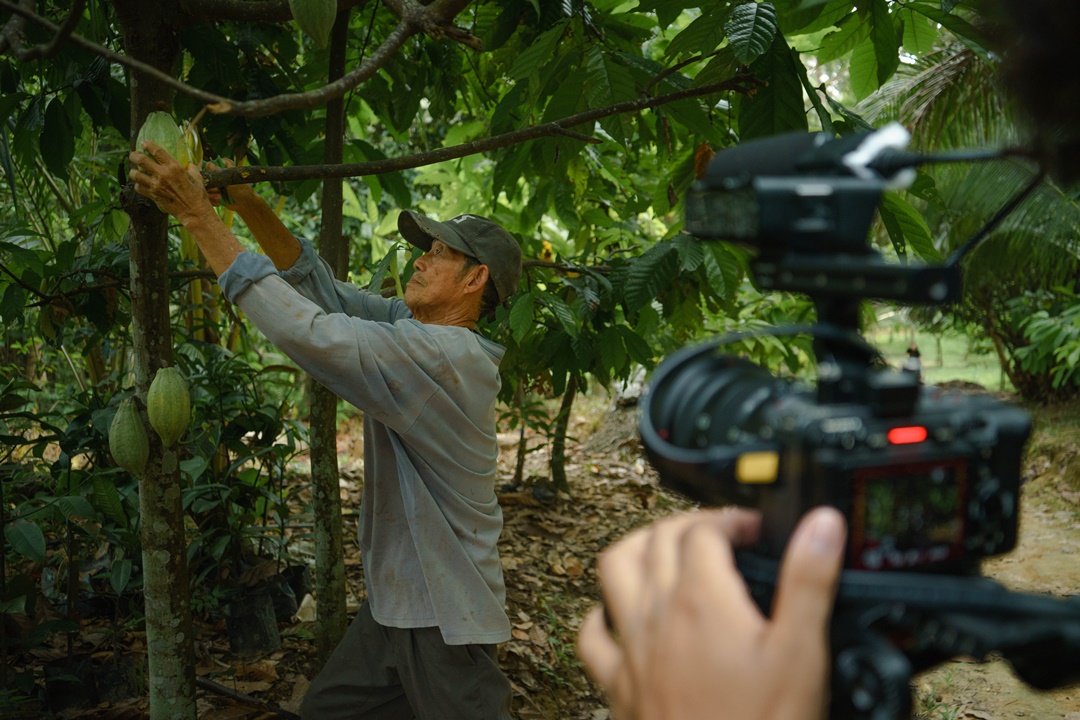
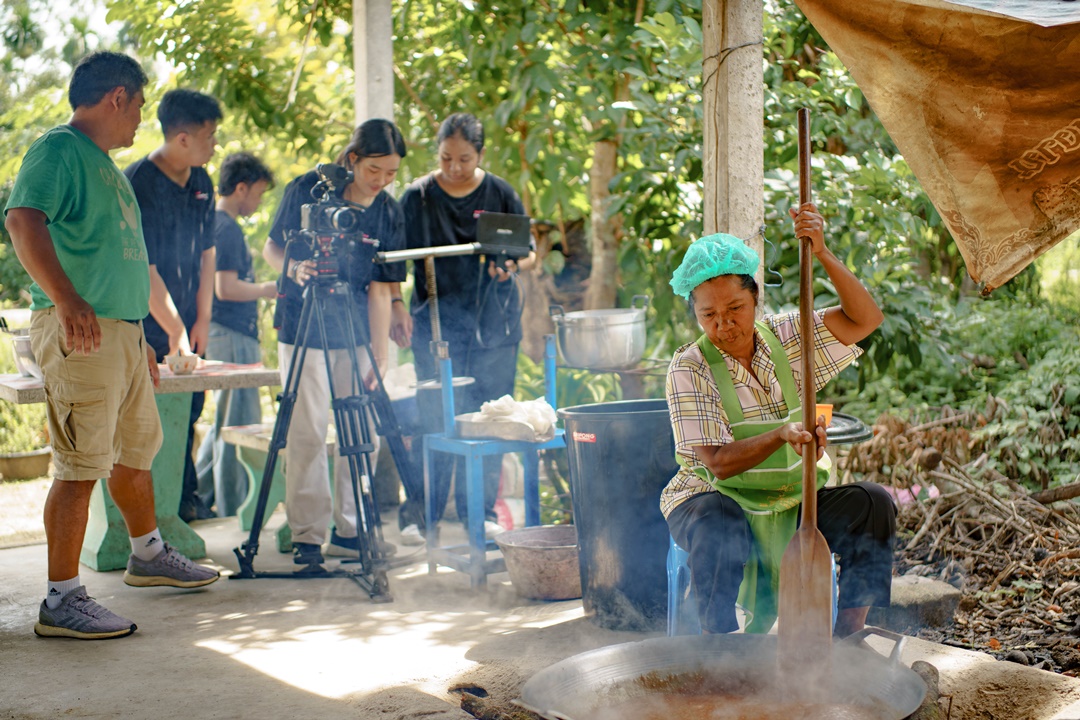
Following completion of the courses, the project conducted measurement of how participants applied their knowledge in each subdistrict. The results showed that participants applied the storytelling processes and skills gained from the courses to identify issues reflecting the identity and potential of their communities and independently develop them into stories and video content. The 10 participating subdistricts produced the following works:
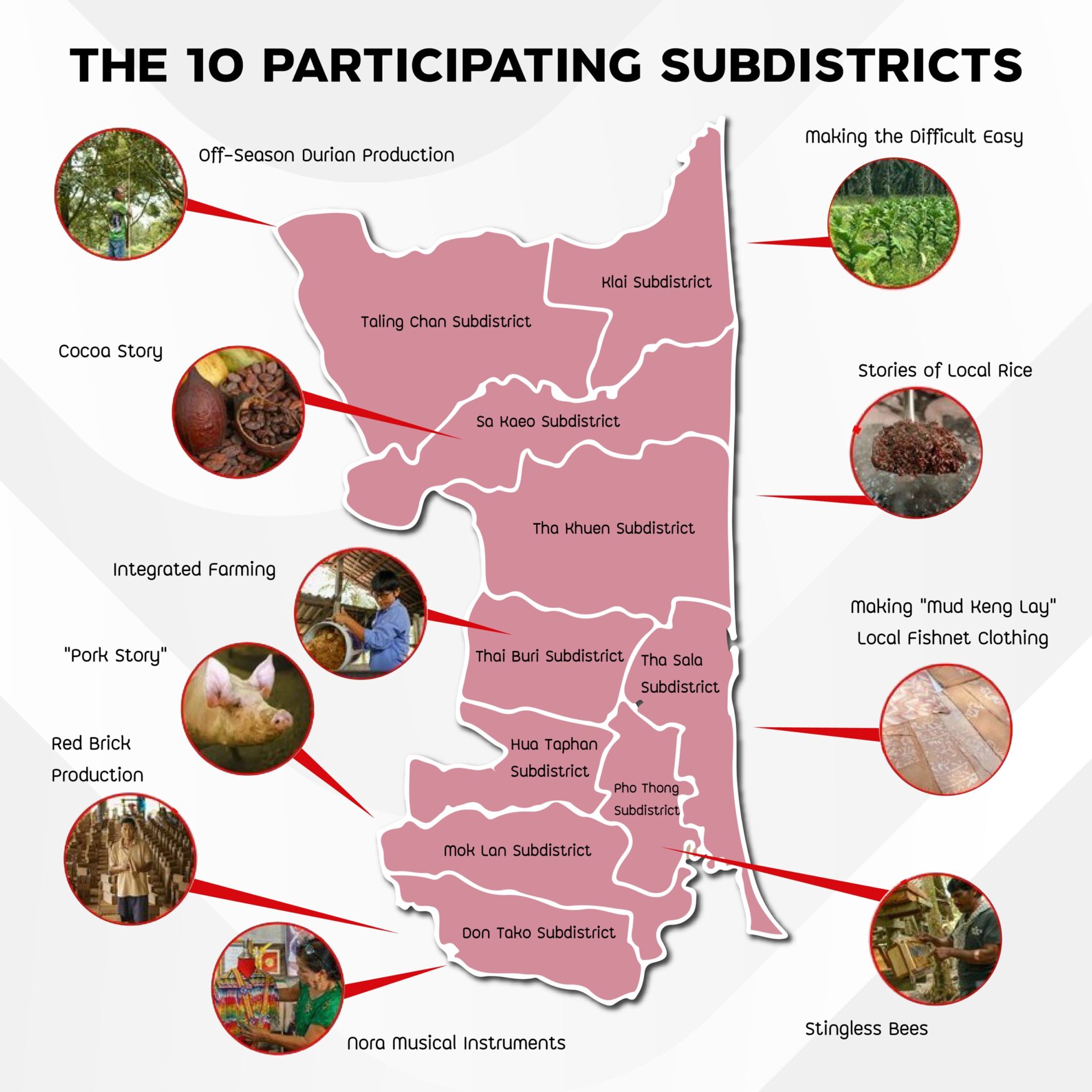
- Off-Season Durian Production – Taling Chan Subdistrict
- Making the Difficult Easy – Klai Subdistrict
- Cocoa Story – Sa Kaeo Subdistrict
- Stories of Local Rice – Tha Khuen Subdistrict
- Integrated Farming – Thai Buri Subdistrict
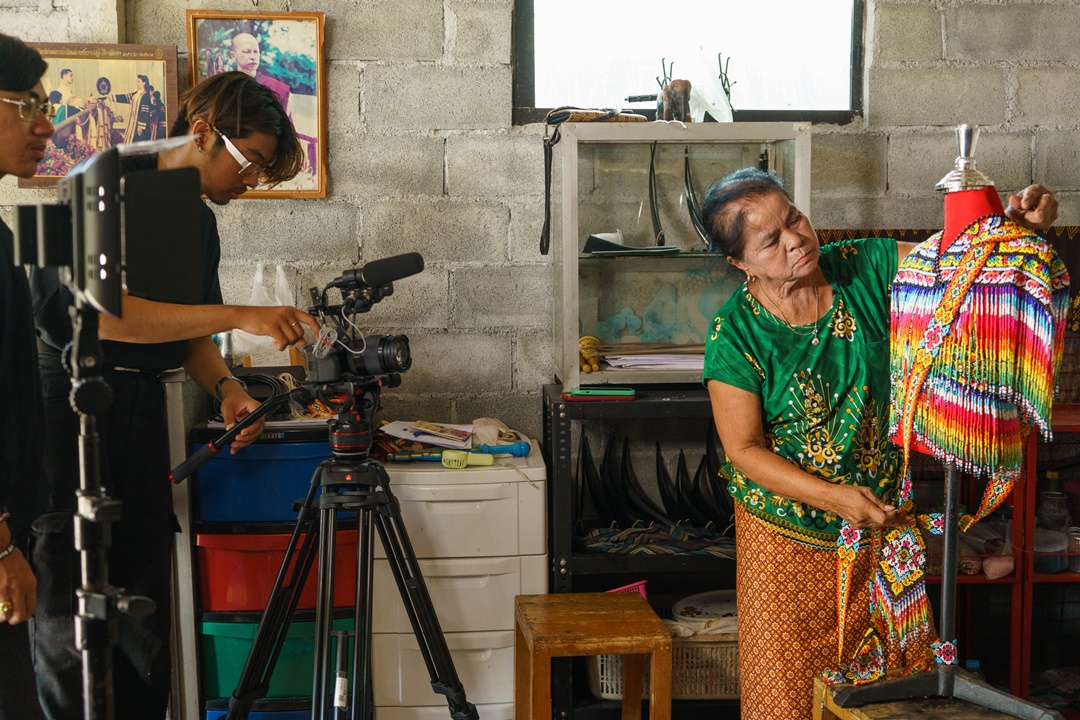
- Making “Mud Keng Lay” Local Fishnet Clothing – Tha Sala Subdistrict
- “Pork Story” – Hua Taphan Subdistrict
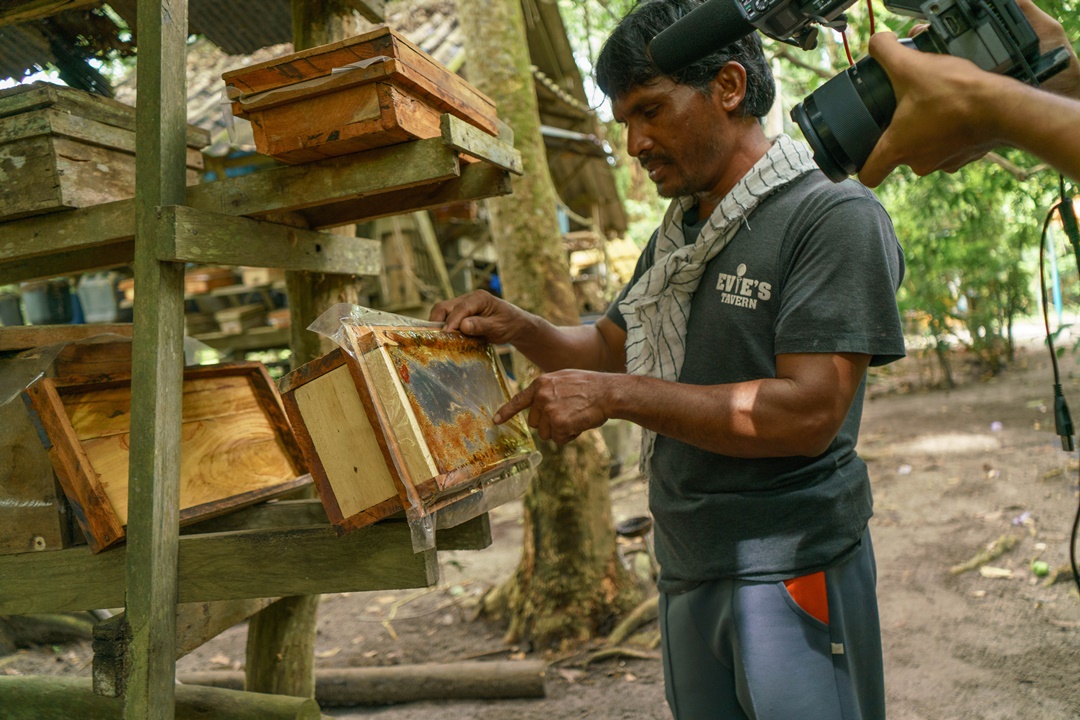
- Stingless Bees – Pho Thong Subdistrict
- Red Brick Production – Mok Lan Subdistrict
- Nora Musical Instruments – Don Tako Subdistrict
The 10 videos demonstrate the practical application of knowledge gained through the courses. Each subdistrict selected a different topic representing its local identity, including agriculture, food, local wisdom, handicrafts, products, and cultural heritage. The resulting media provide communities with resources for communicating their local identities and can be further used for educational, promotional, and community development purposes.
The project also supports the wider use of these educational resources. The Tha Sala District Learning Promotion Centre can use the videos as supplementary learning materials for students, while local communities can use them to promote their stories, products, cultural knowledge, and local potential. The media can also support tourism promotion, increase awareness of local products and wisdom, and create opportunities for further development of community livelihoods and income.
Through this approach, the project connects diagnosis of community needs, course development, free access to educational resources, engagement between the university and communities, and measurement of knowledge application. It therefore provides a practical mechanism for supporting lifelong learning and strengthening the capacity of people not studying at the university to communicate the value of their local communities through digital media.
Free Courses Leading to Certificates or Awards
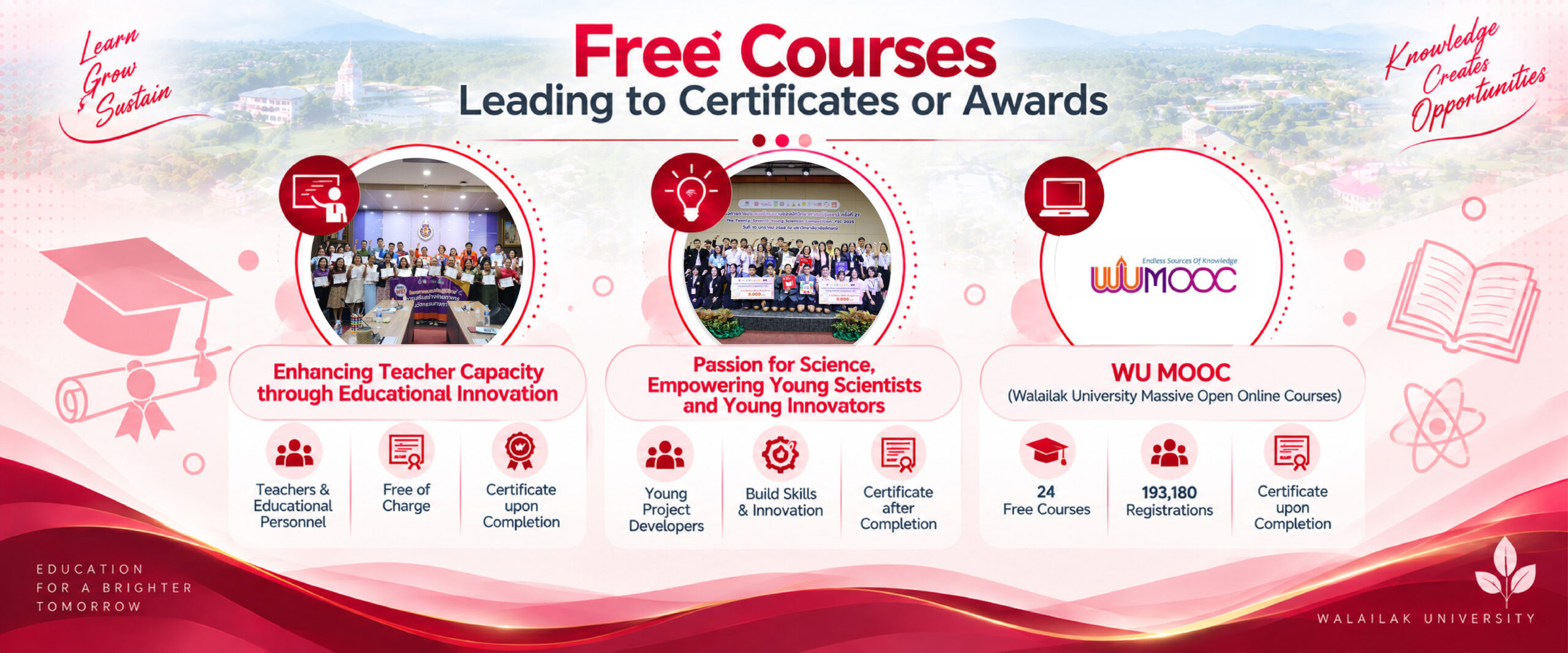
In addition to projects that provide free access to educational resources for people not studying at the university, Walailak University provides other learning opportunities in various forms. These include free courses leading to certificates or awards, free access to campus facilities and equipment, and free access to online resources. These initiatives expand educational opportunities for teachers, students, young people, educational personnel, and the general public.
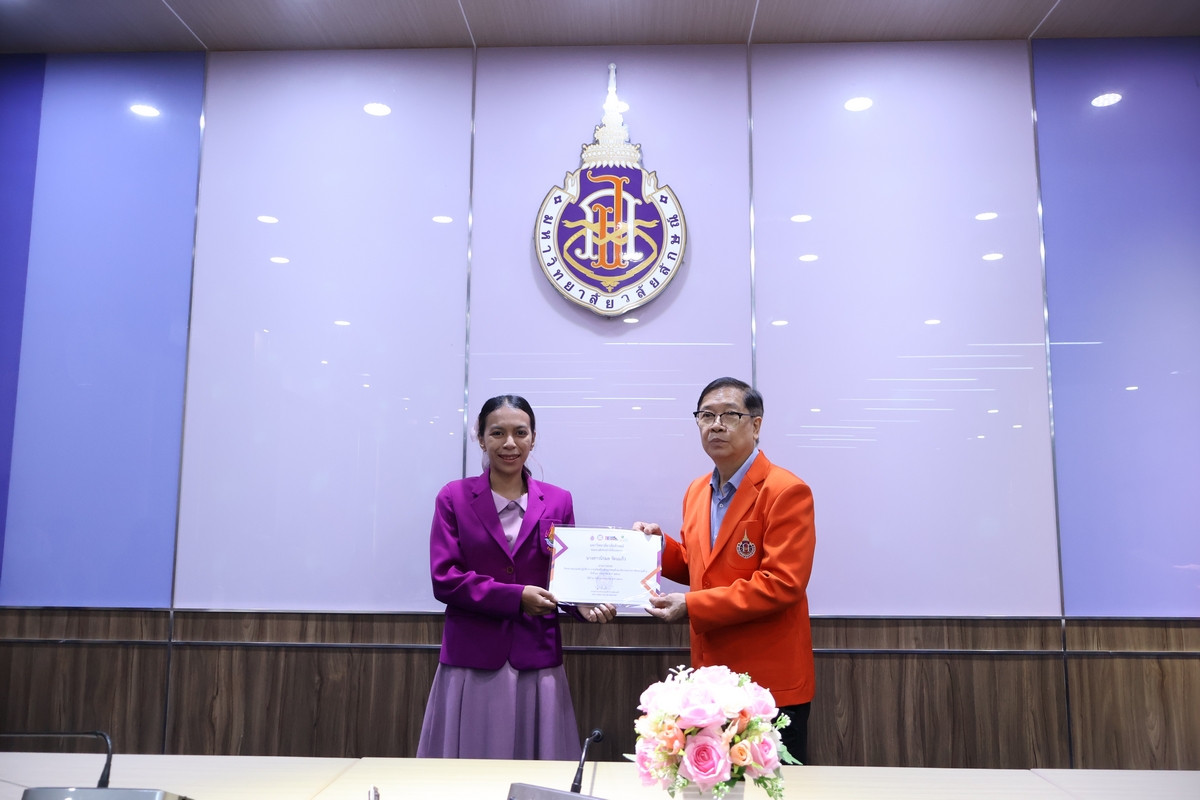
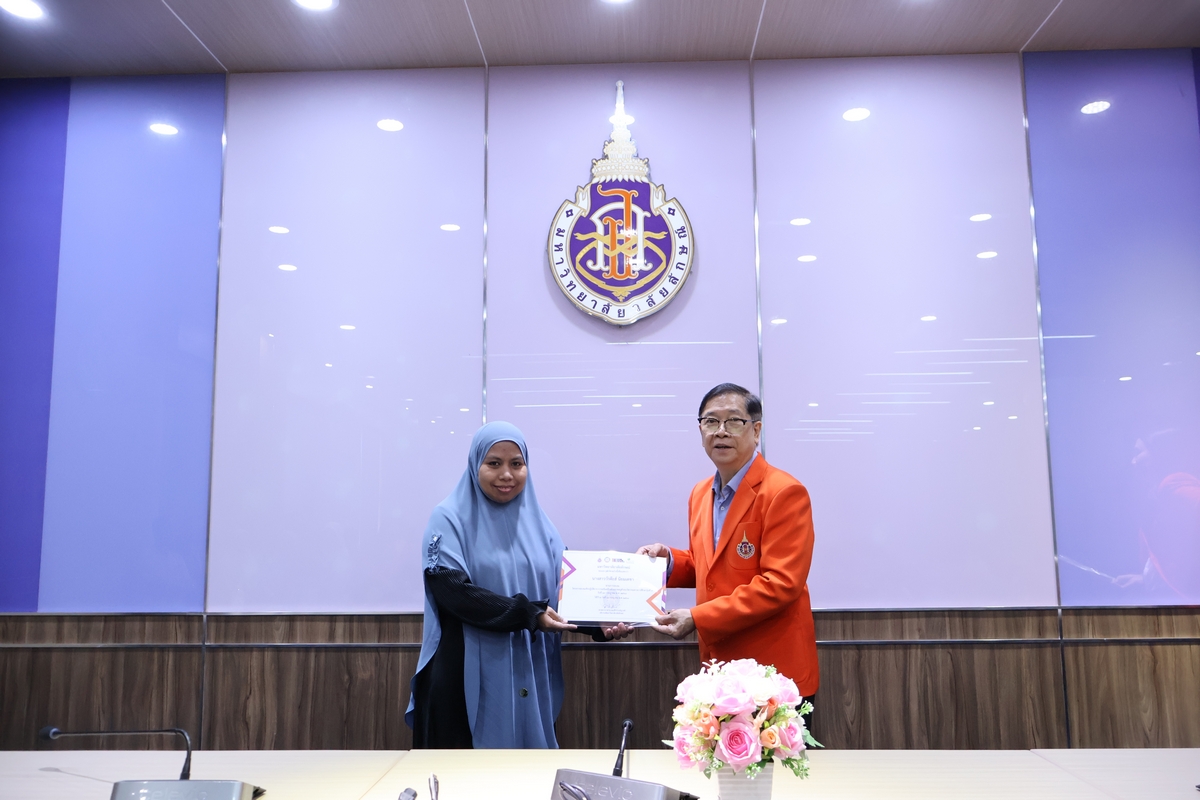
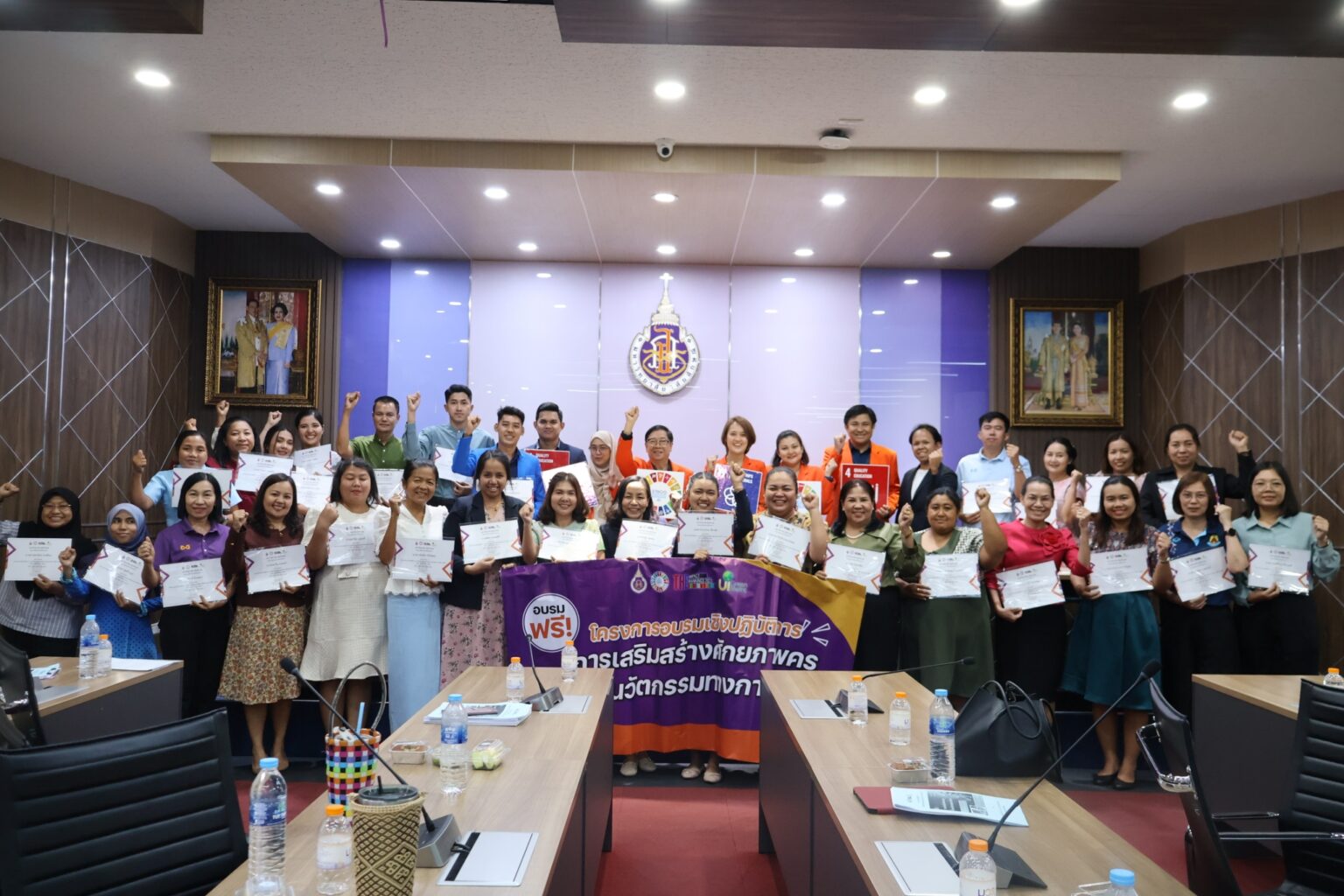
Walailak University provides training courses and learning activities free of charge, with certificates or awards provided to participants who complete the activities. The “Enhancing Teacher Capacity through Educational Innovation” courses, aim to strengthen the capacity of teachers and educational personnel through learning and application of educational innovations. The courses also support participants in applying the knowledge to research and developing professional work for academic promotion. The courses are provided free of charge, and participants receive certificates upon completion. Post-training evaluations also indicated positive responses from participants, together with suggestions and requests for additional learning topics.
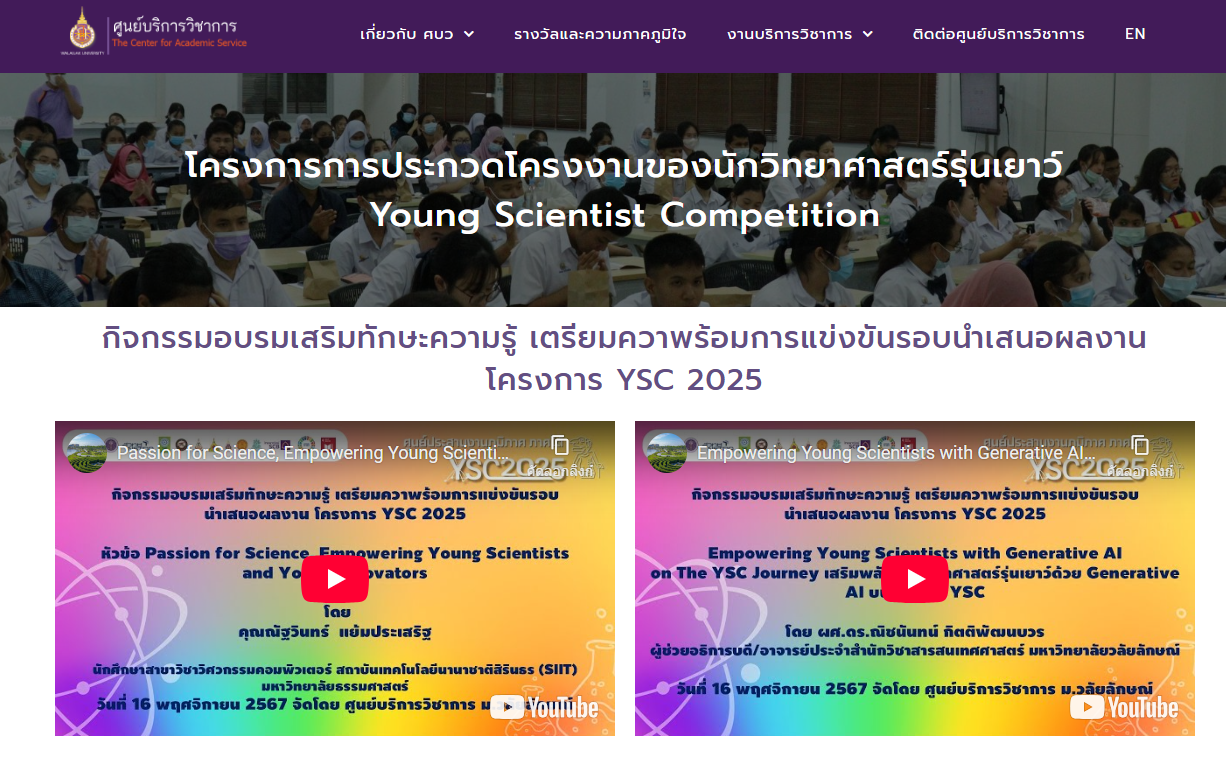
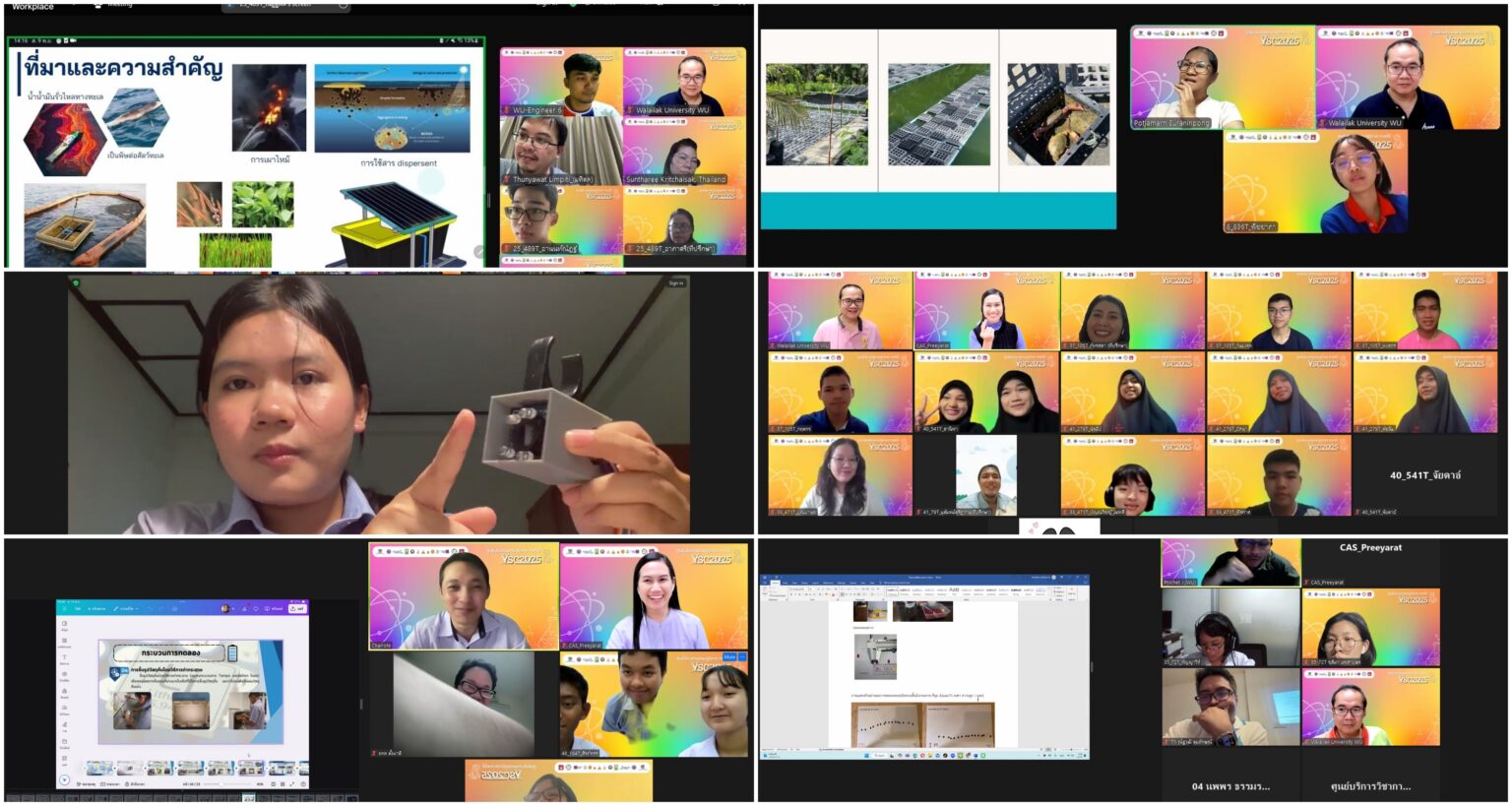
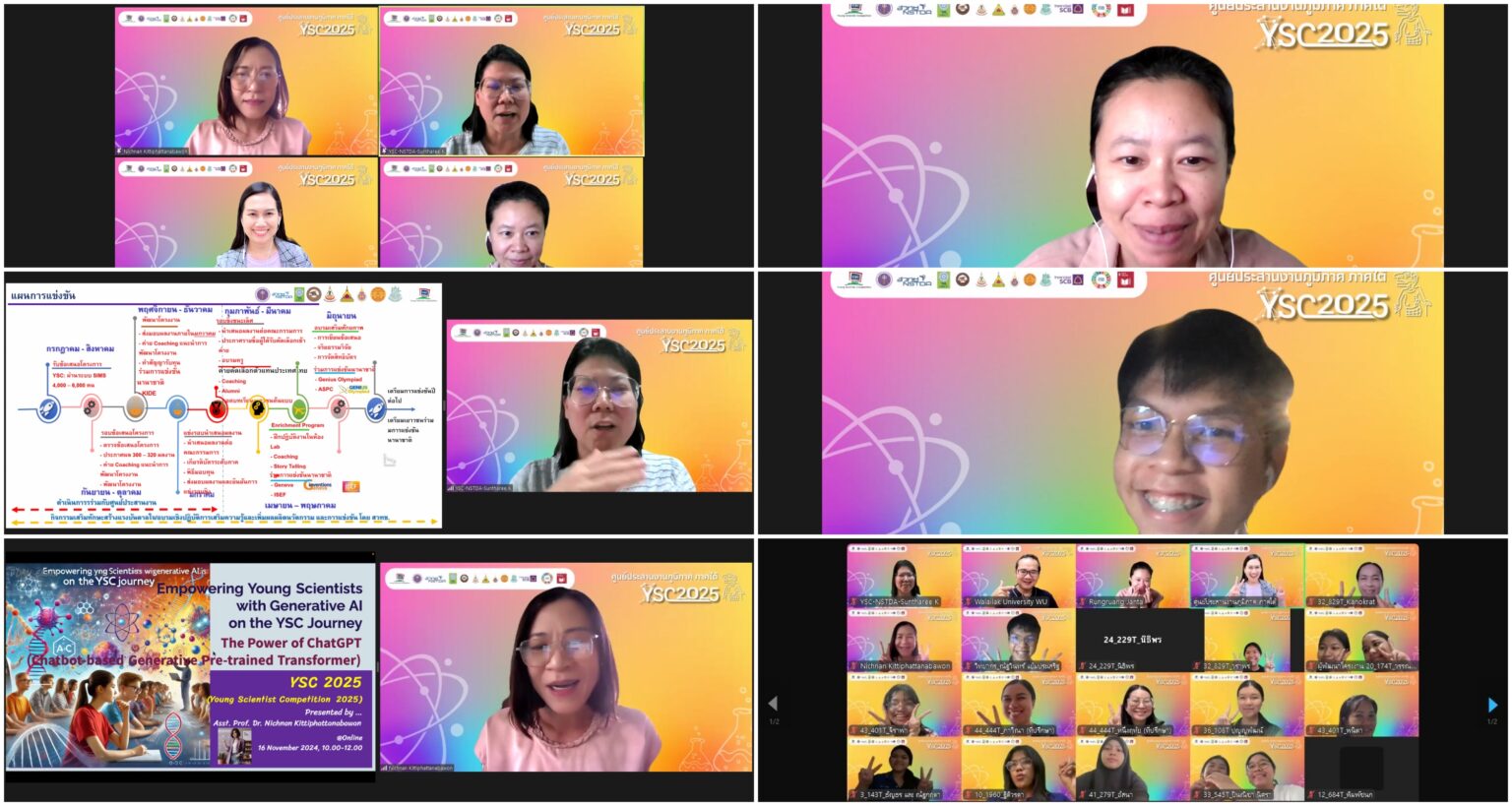
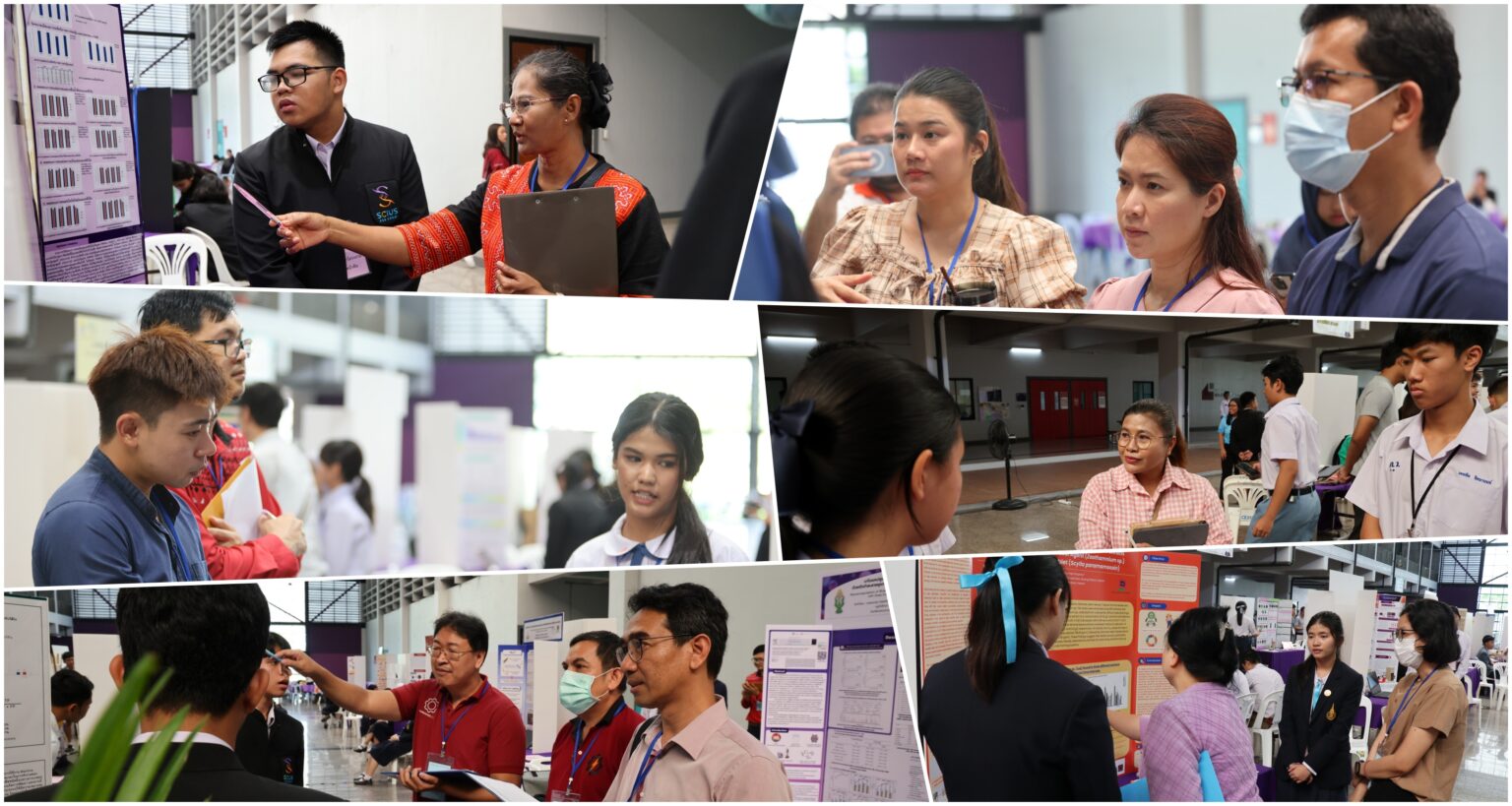
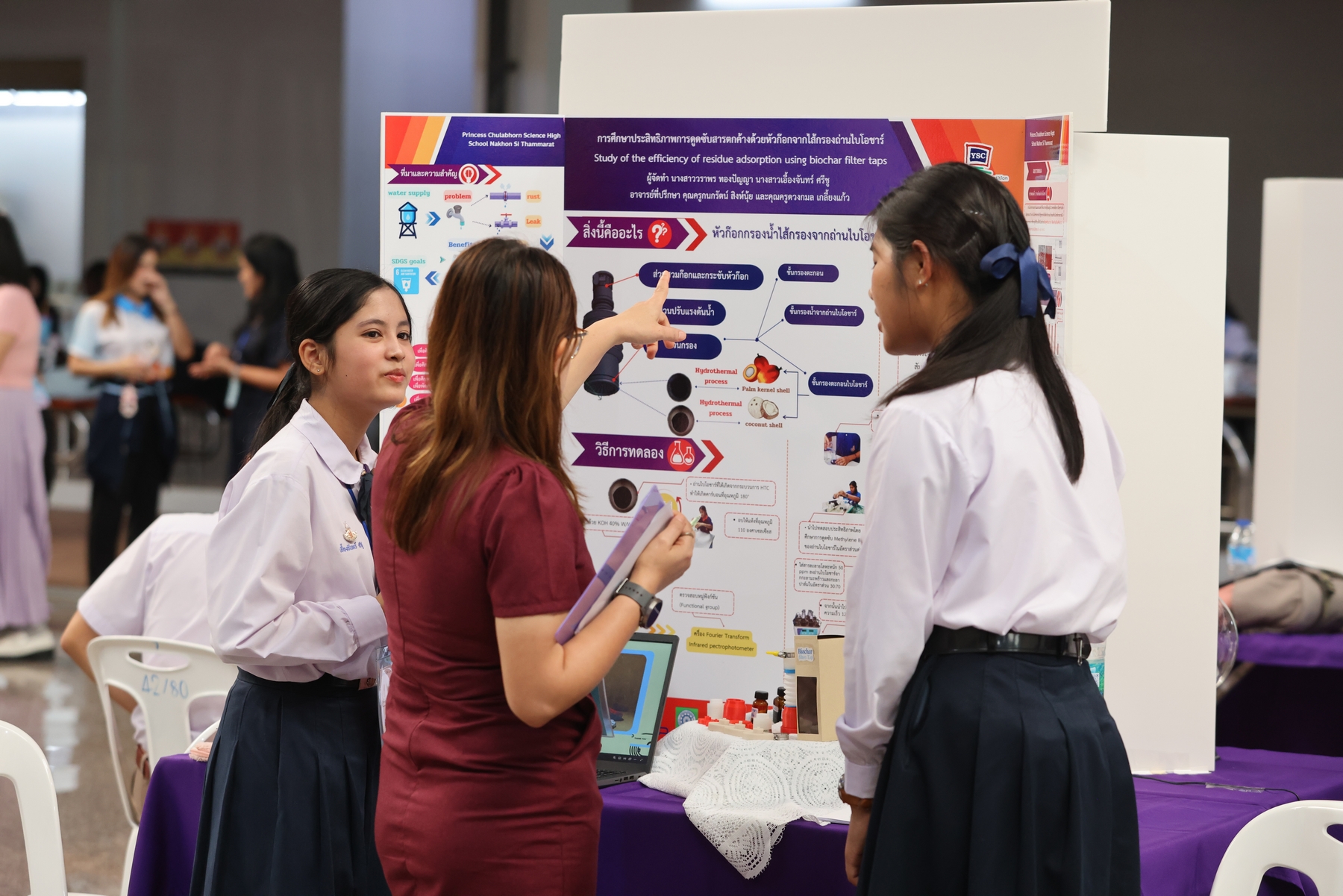
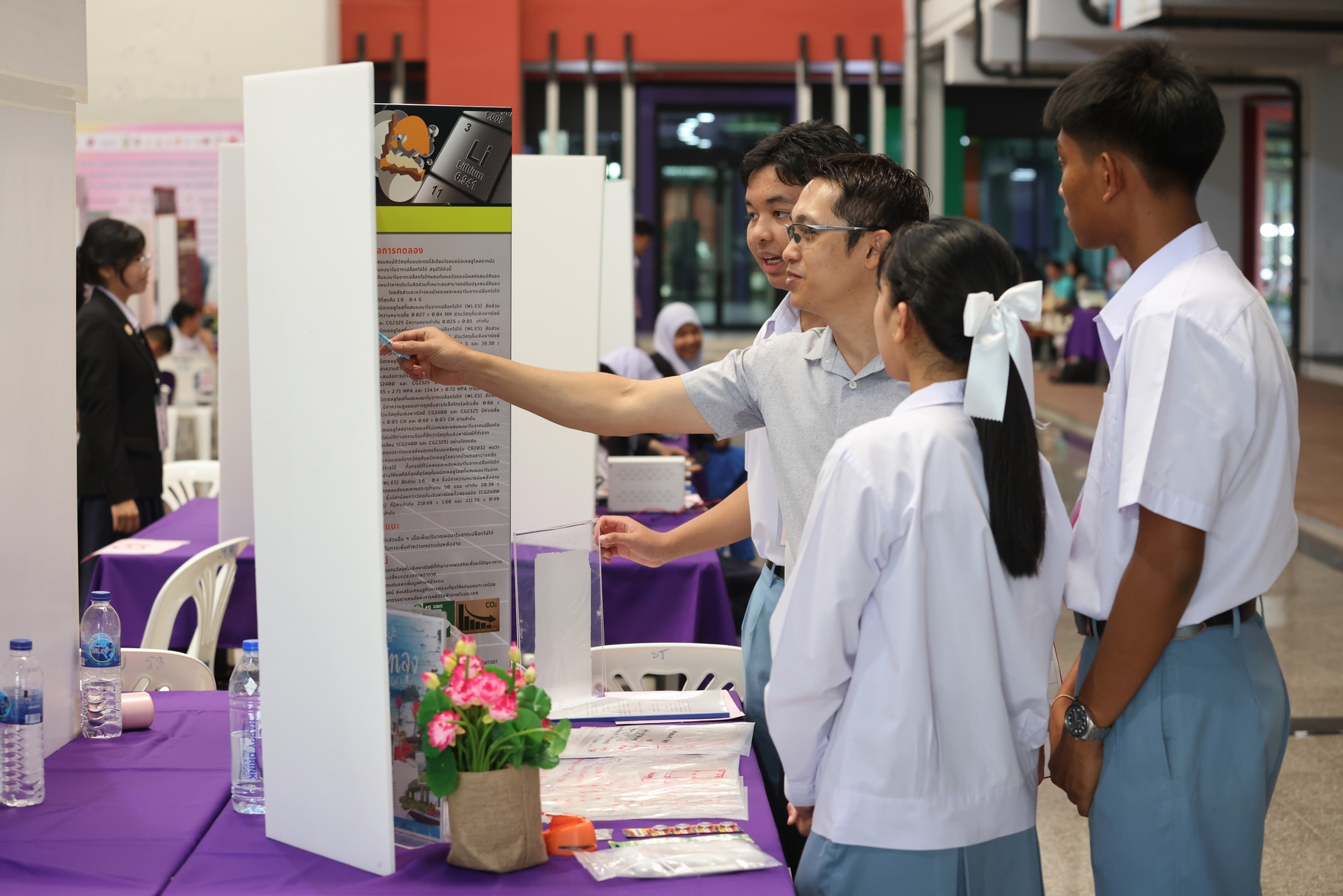
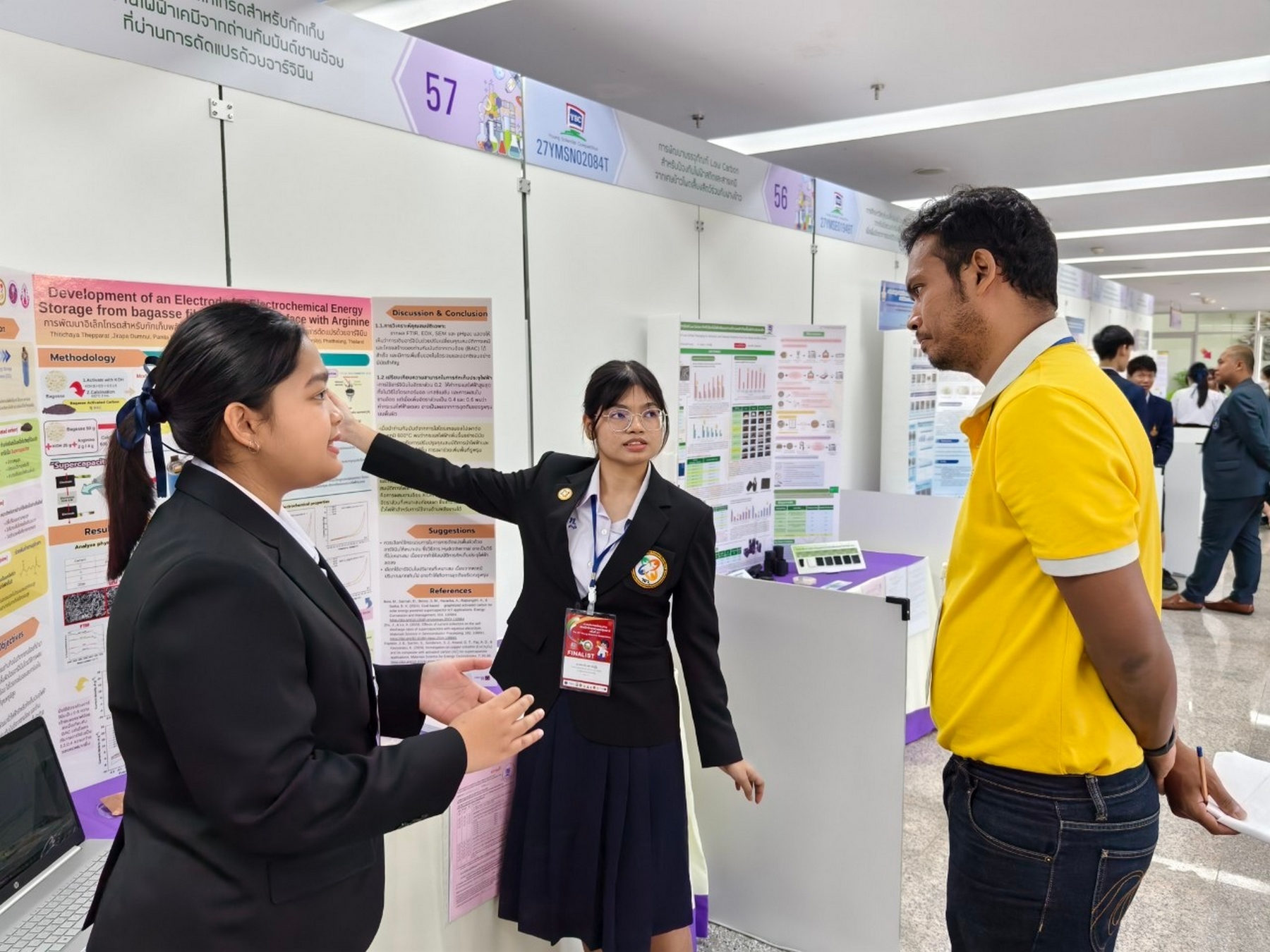
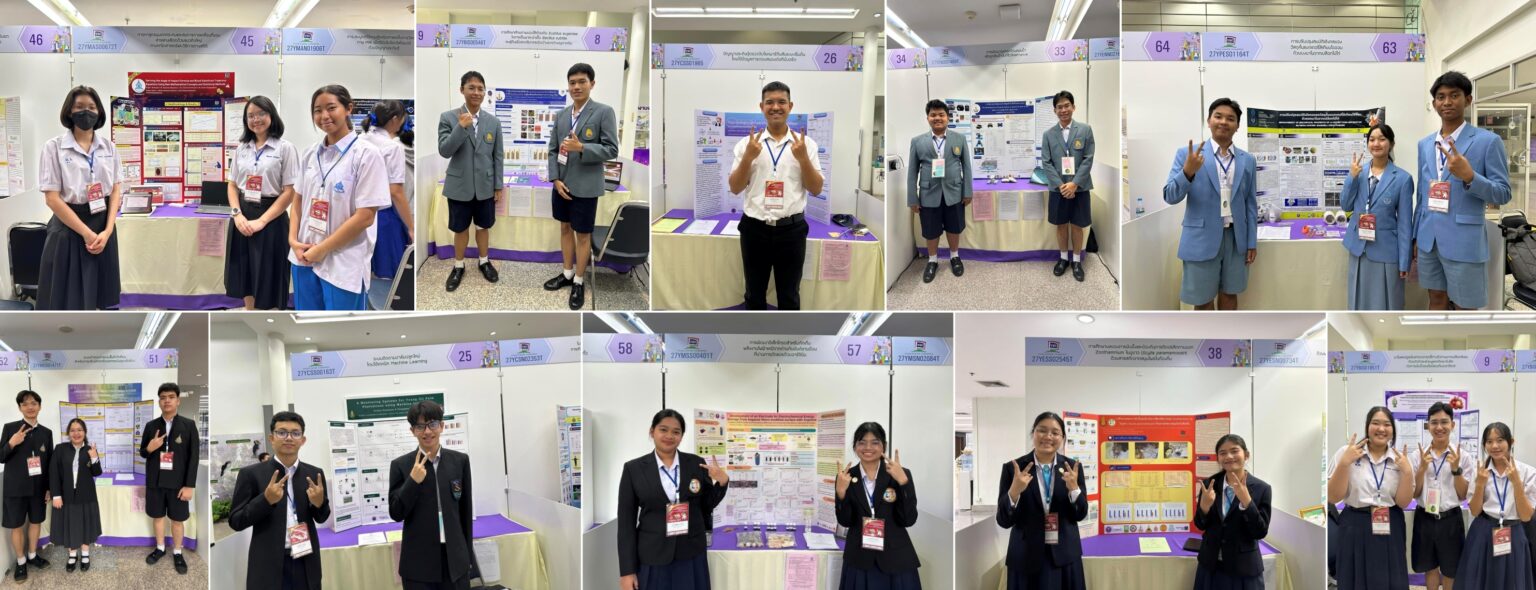
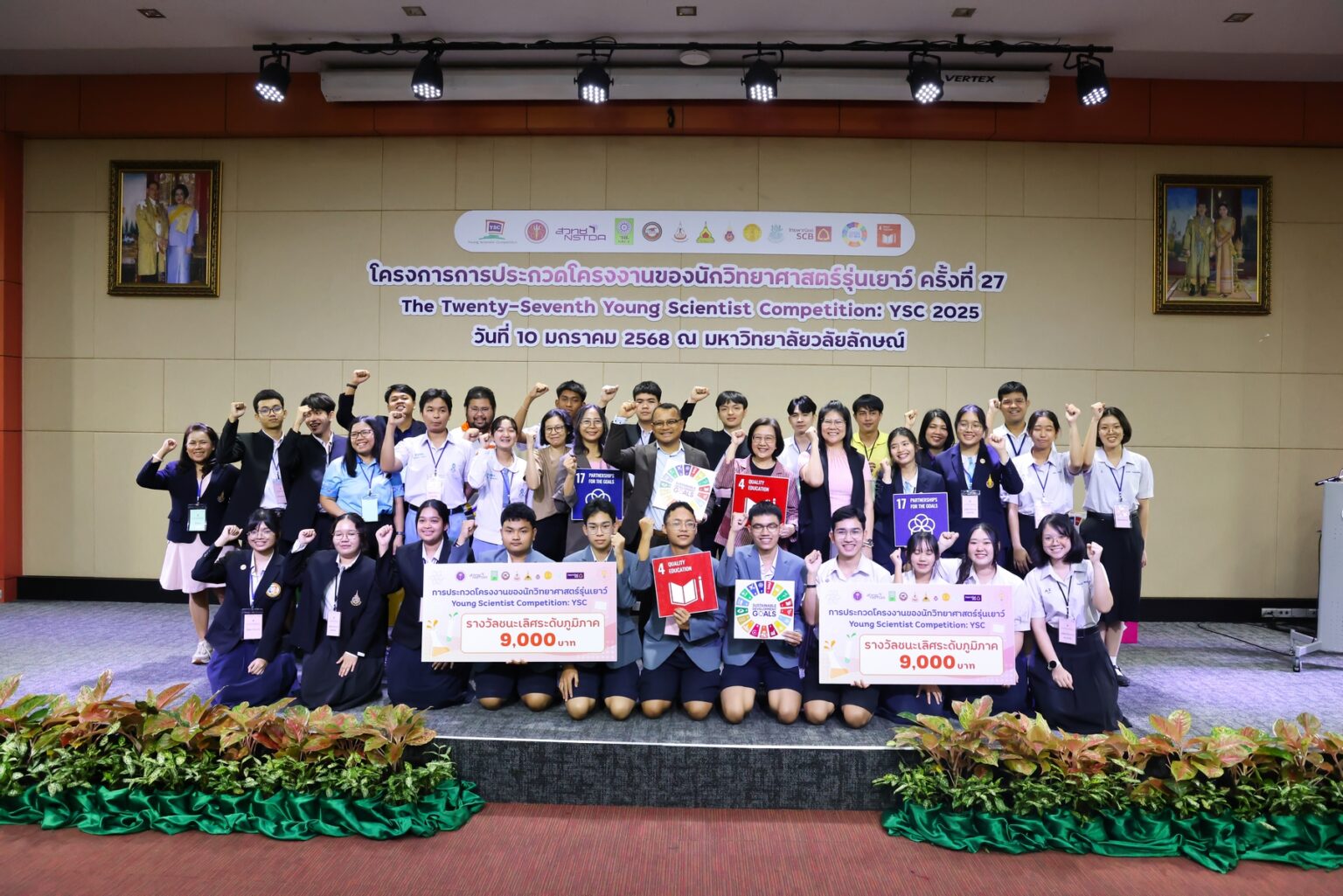
The university also provides the “Passion for Science, Empowering Young Scientists and Young Innovators” and “Empowering Young Scientists with Generative AI on the YSC Journey” courses under the 27th Young Scientist Competition (YSC 2025). These courses aim to increase knowledge and skills among young project developers so that they can apply knowledge and innovation to solve problems, improve their projects, and further develop their work. The activities also promote knowledge sharing and inspiration from previous YSC participants who have achieved success at international competitions. Participants receive certificates after completing the training and activities.
Another important channel is WU MOOC (Walailak University Massive Open Online Courses), an online learning platform developed by the university to provide access to learning anytime and anywhere. WU MOOC currently provides 24 free courses, with a total of 193,180 registrations. Learners who complete the courses receive certificates recognizing the knowledge gained through their learning. This platform provides flexible opportunities for people to develop knowledge and skills according to their interests and learning needs.
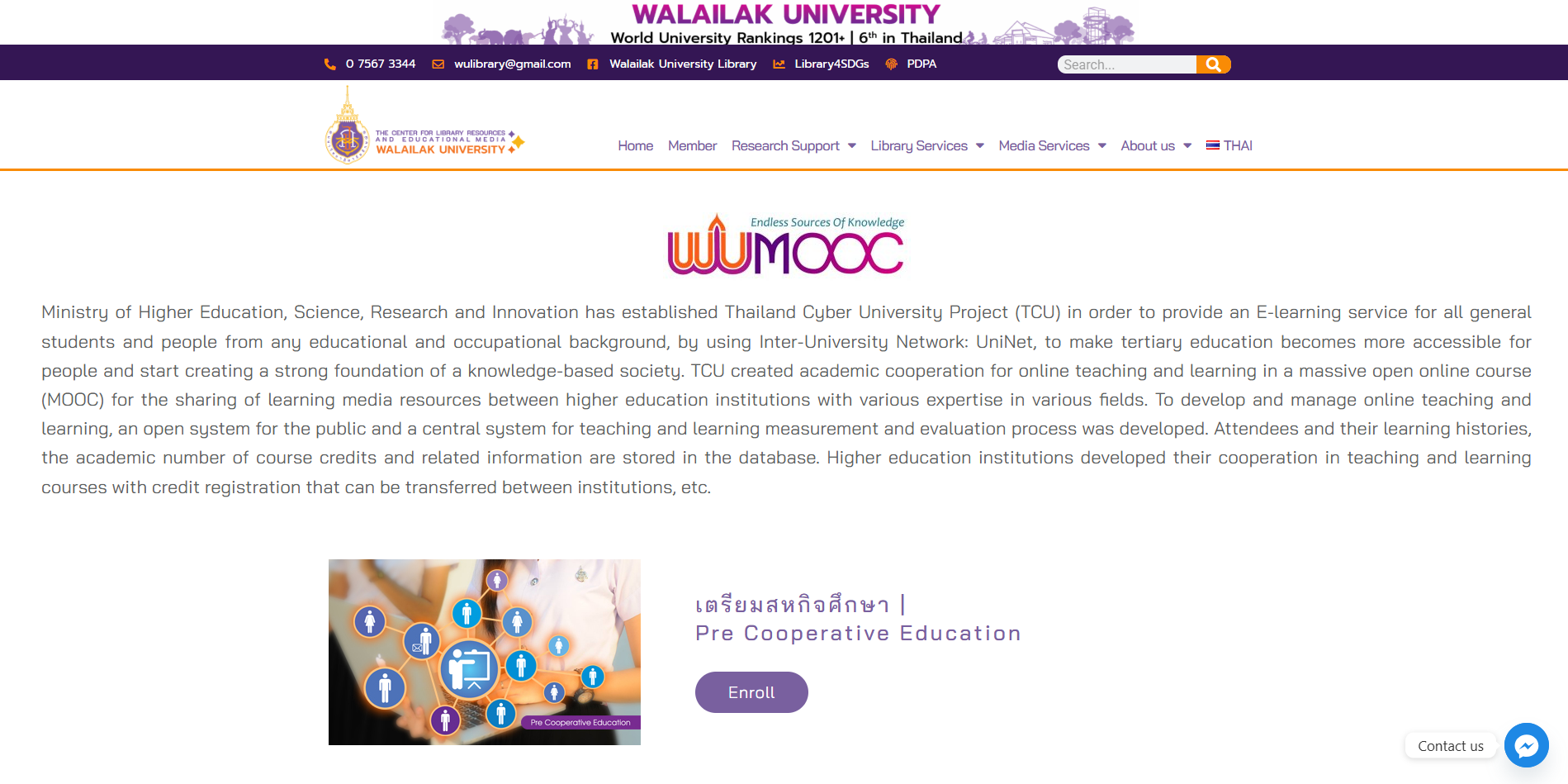
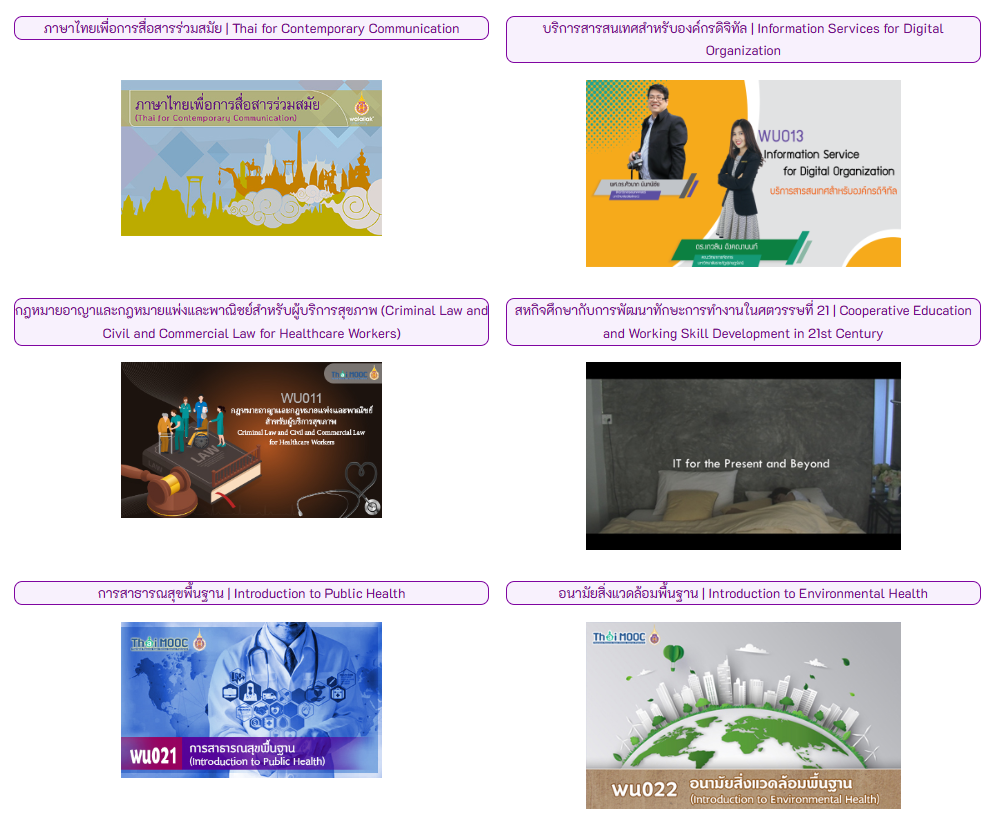
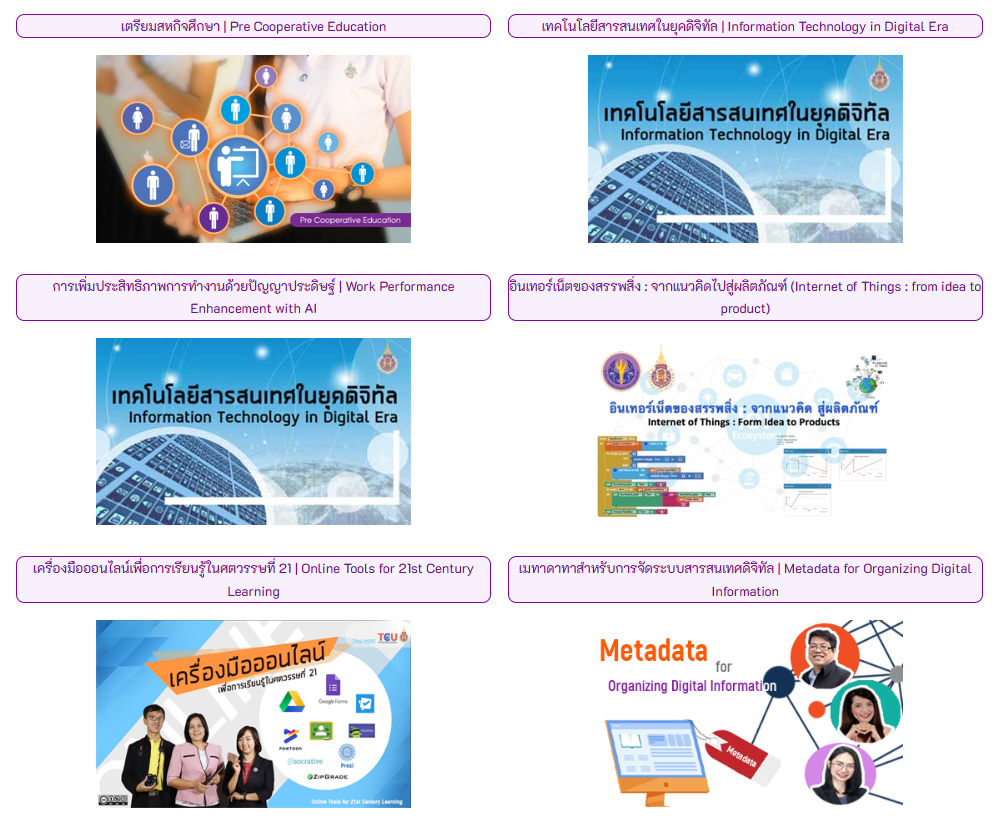
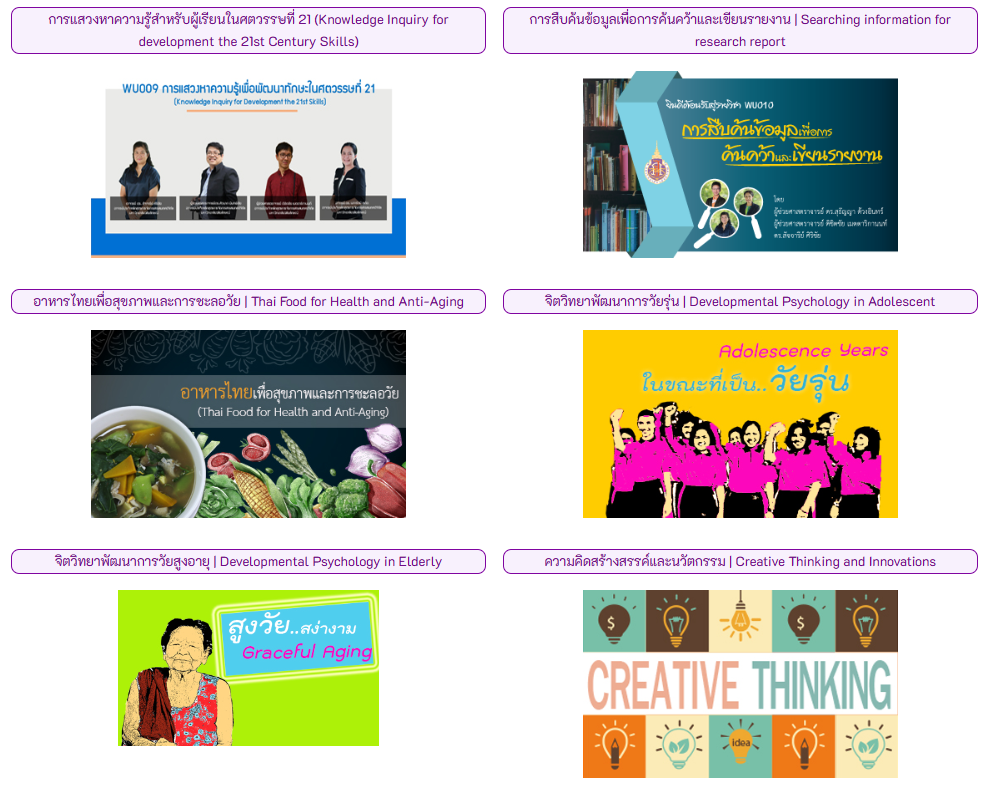


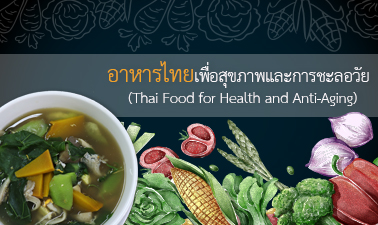
Figures : The exemples of free online course leading to certificates
Free Access to Campus Facilities and Equipment
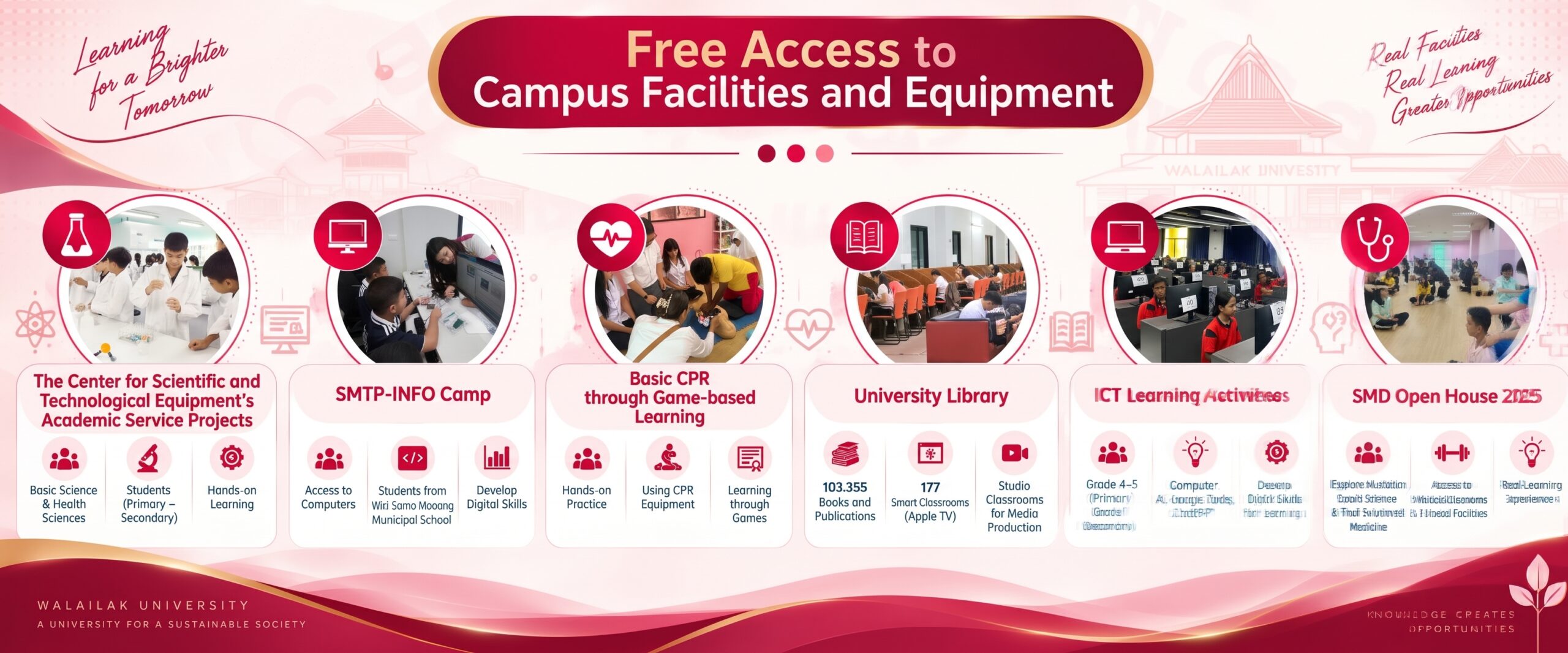
Walailak University also provides free access to campus facilities and equipment for students and young people from outside the university to support learning, particularly in science, technology, and health.
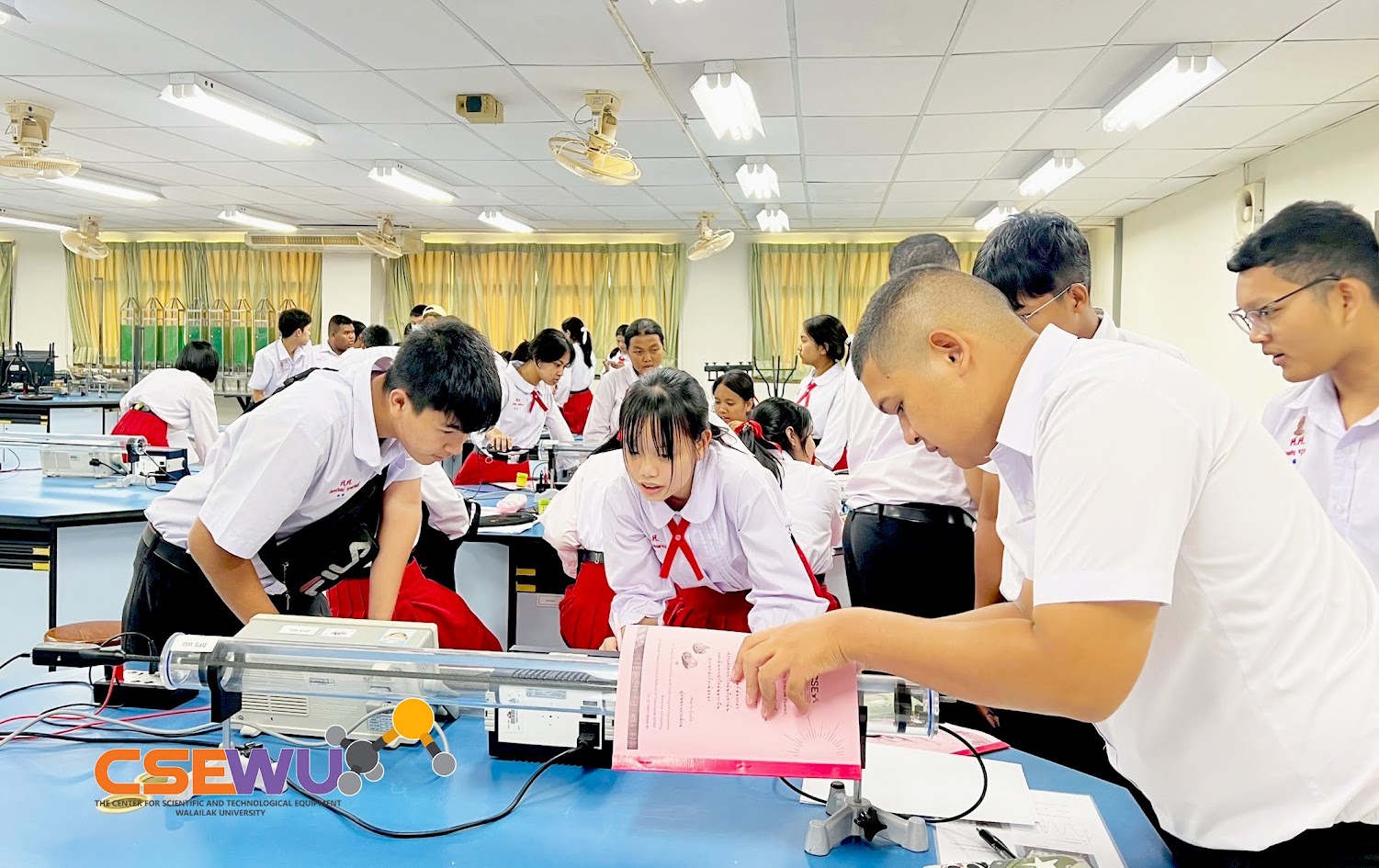
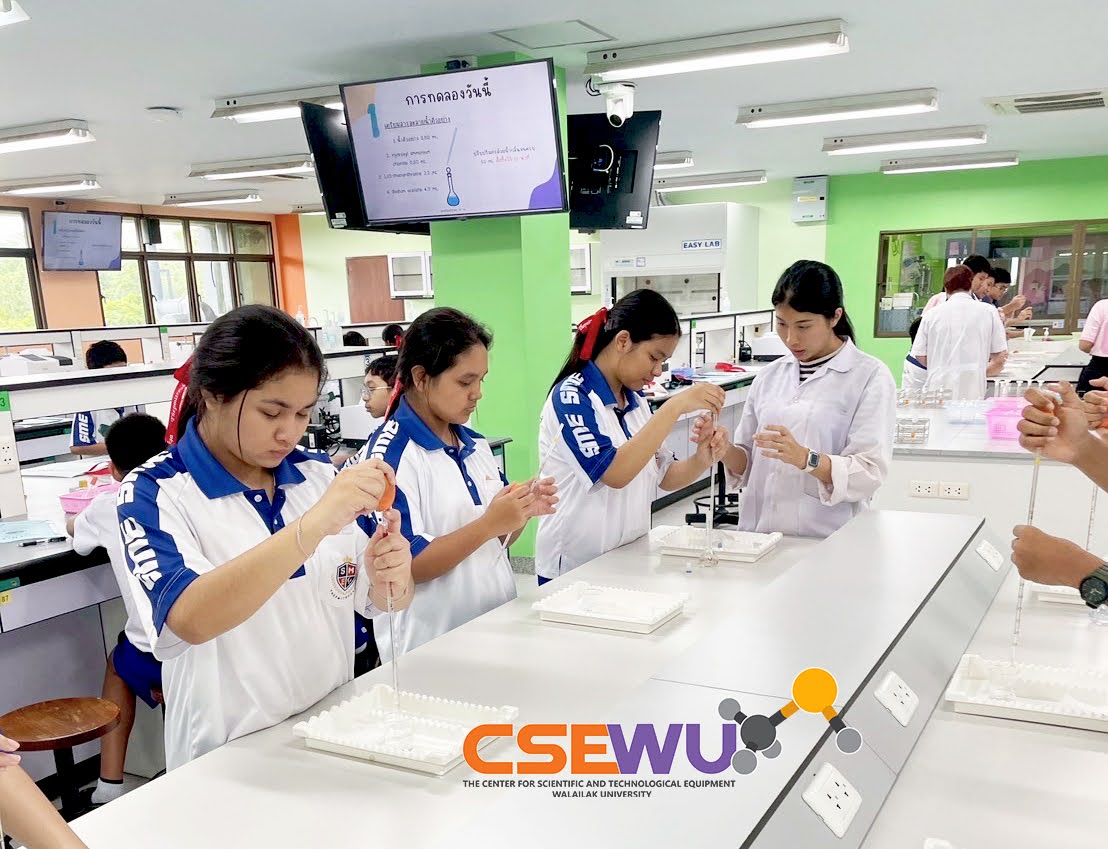
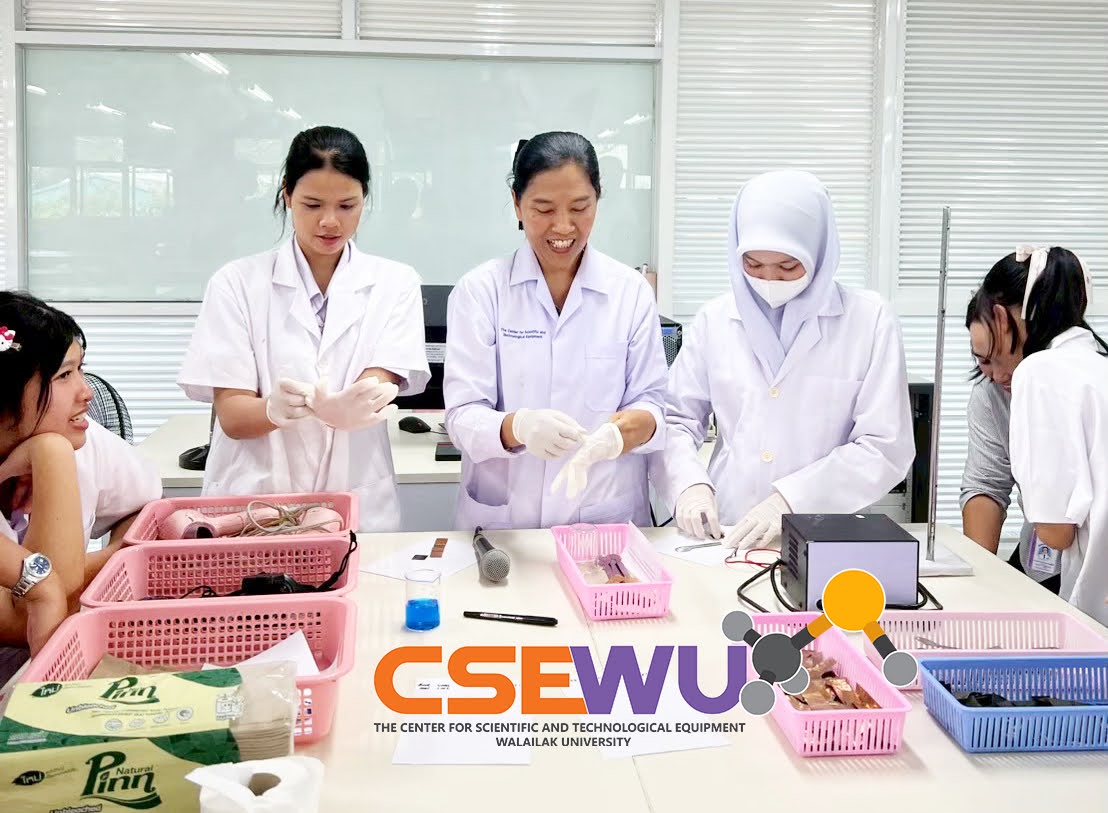
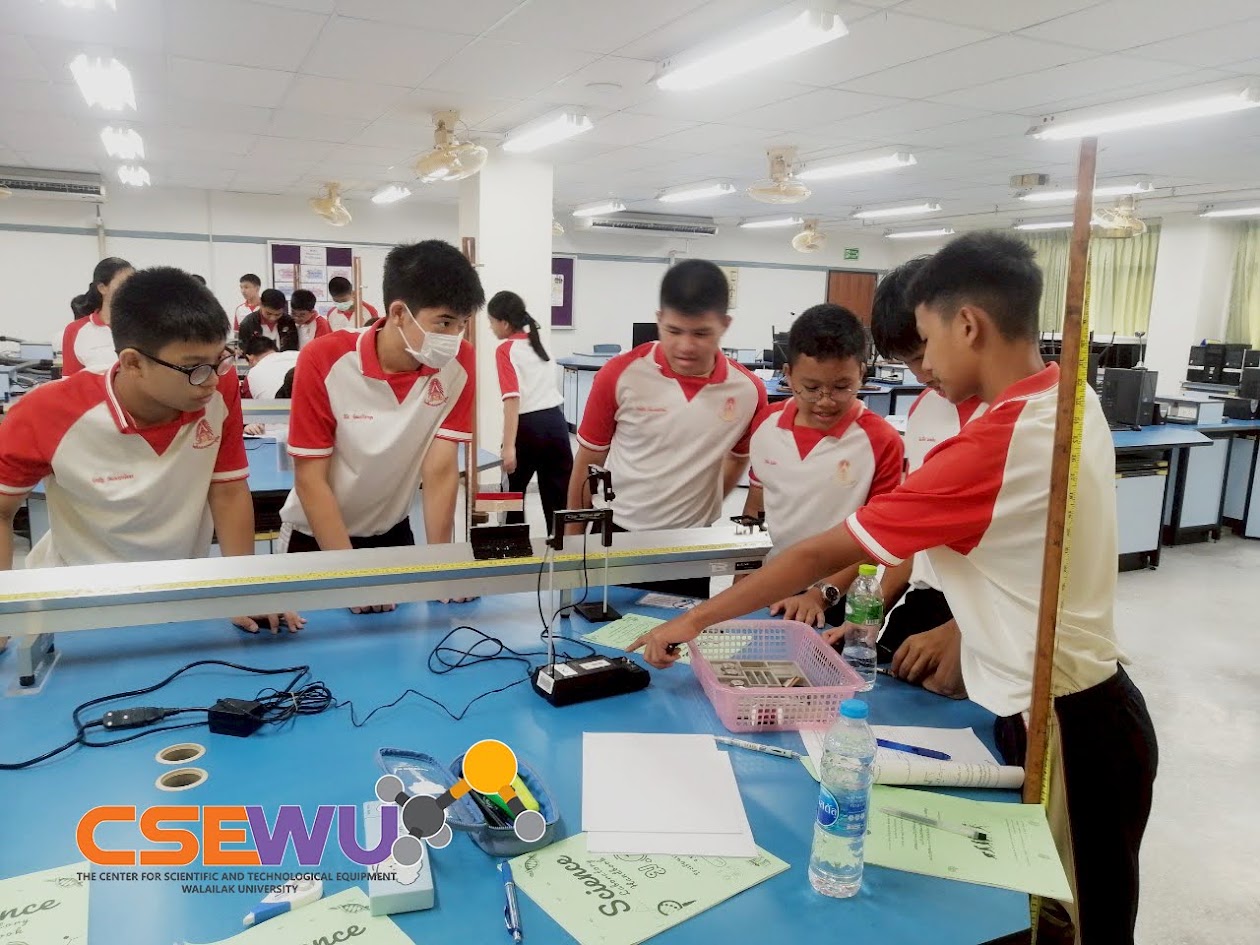
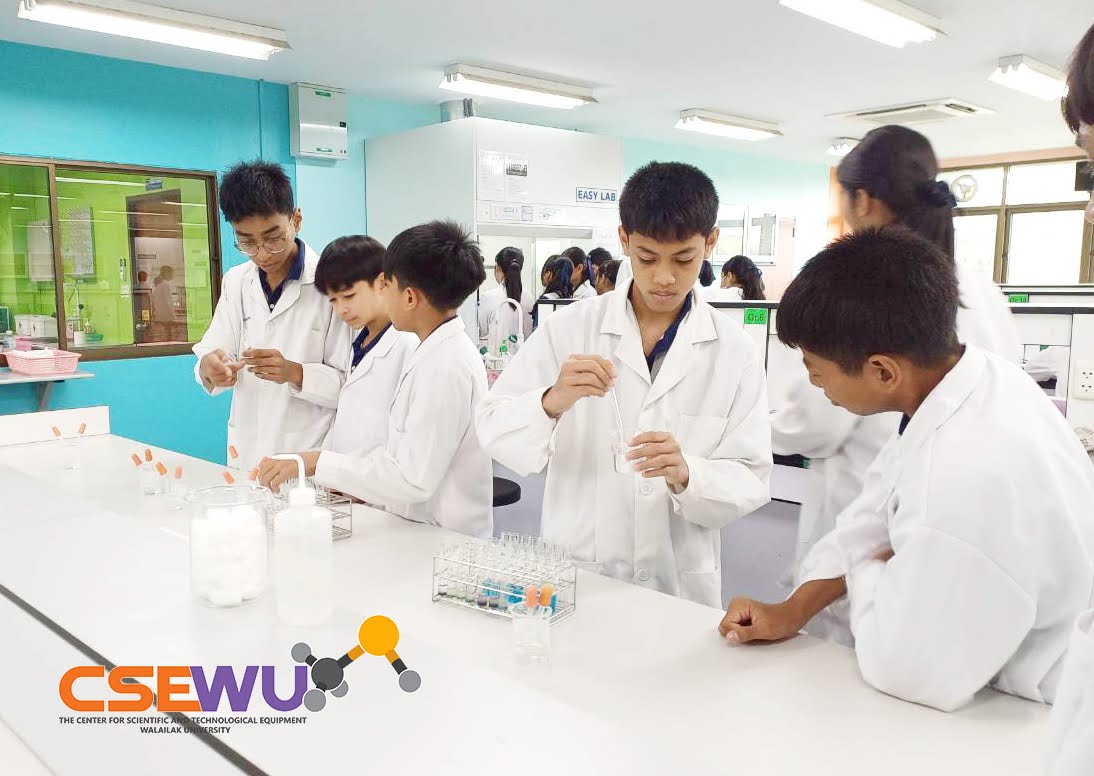
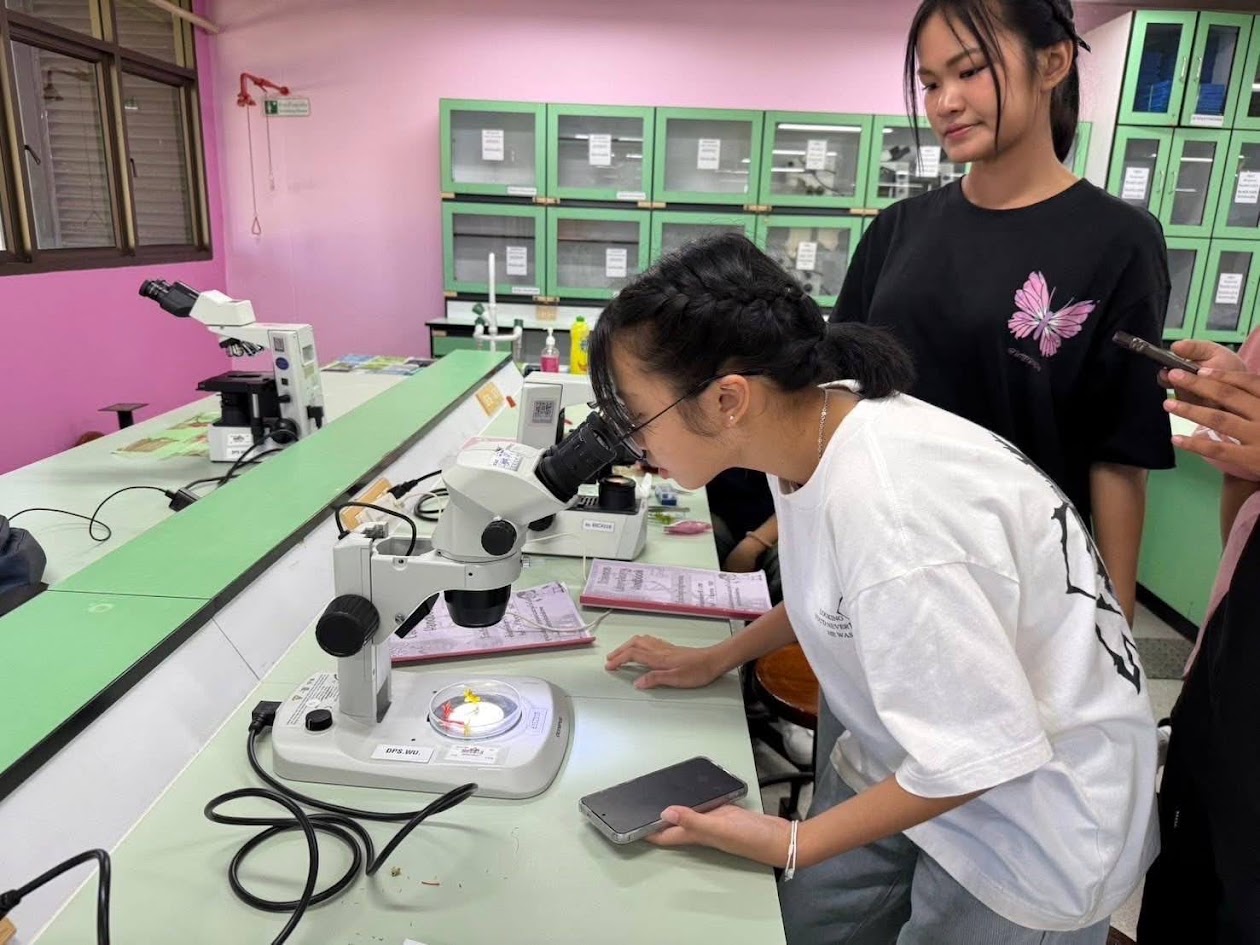
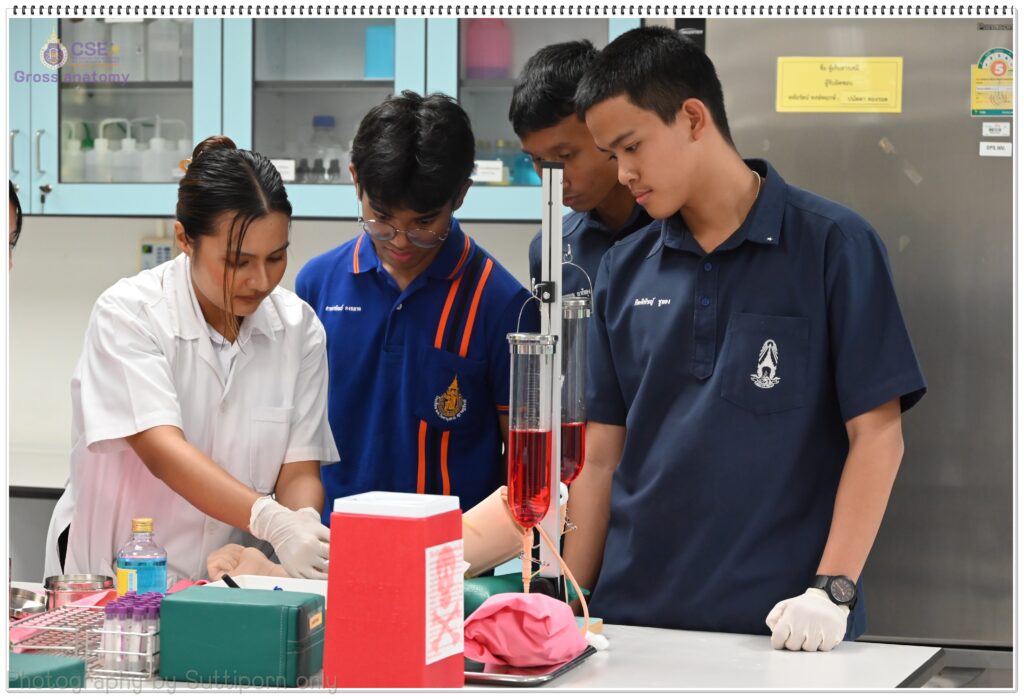
Through the Center for Science and Technological Instrument’s Academic Service Project, the university provides academic services that promote knowledge in basic science, health sciences, science and technology. The facilities and equipment are available to students from outside the university, including upper primary, lower secondary, and upper secondary school levels. These services promote students’ interest in and understanding of science while providing opportunities to access university facilities and educational equipment for hands-on learning.
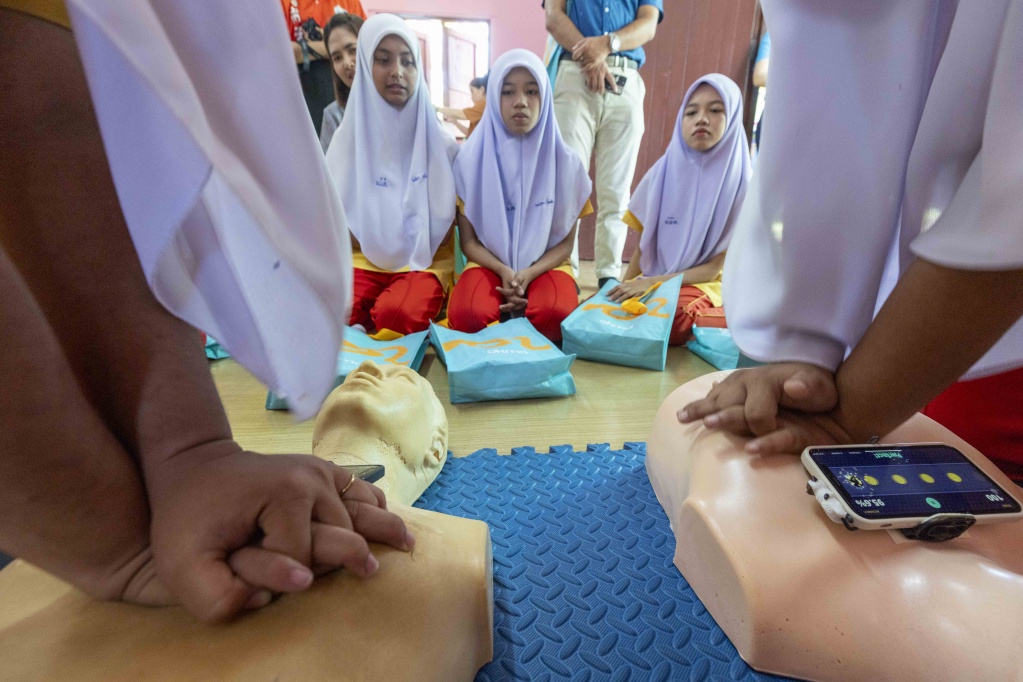
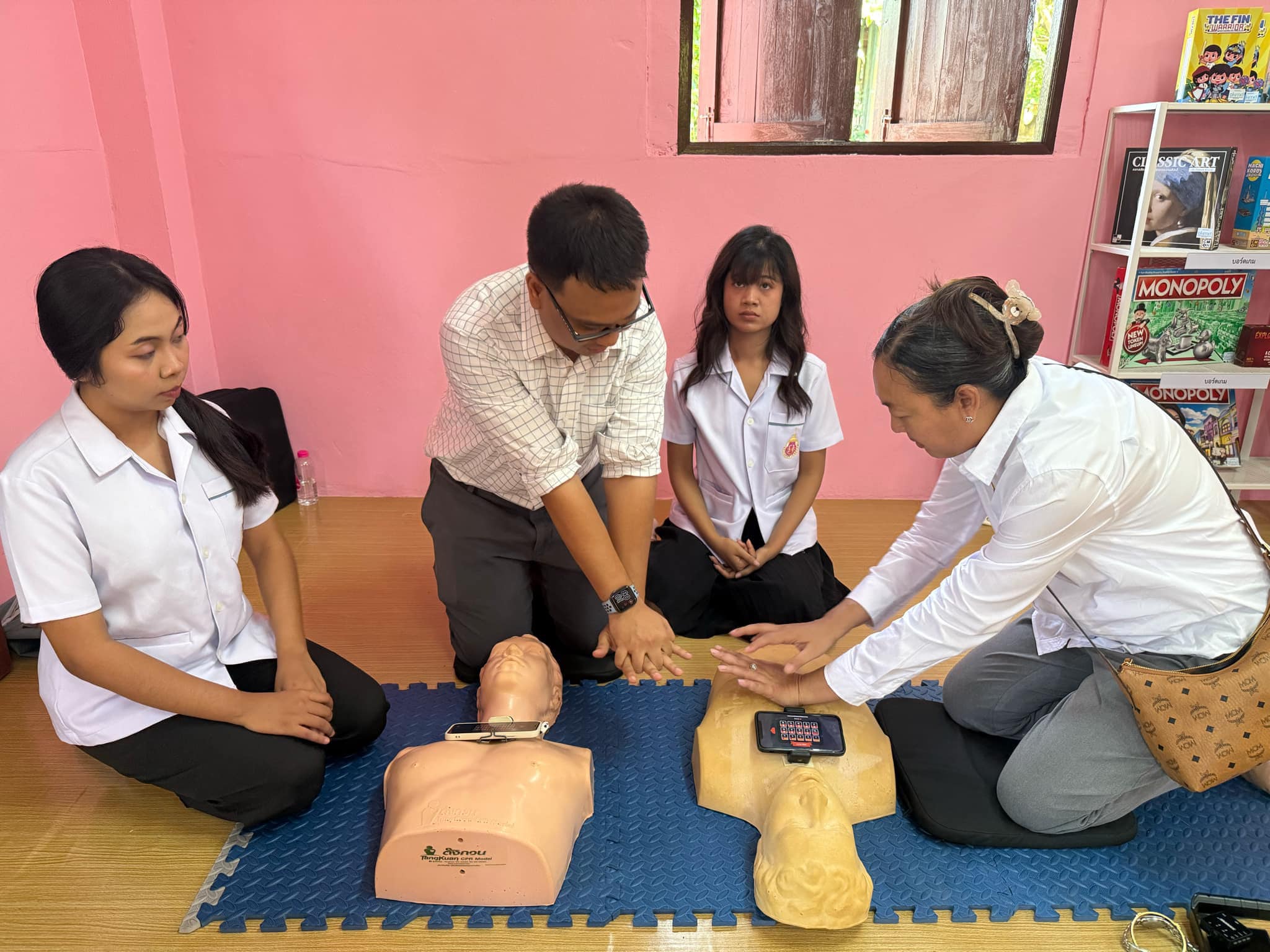
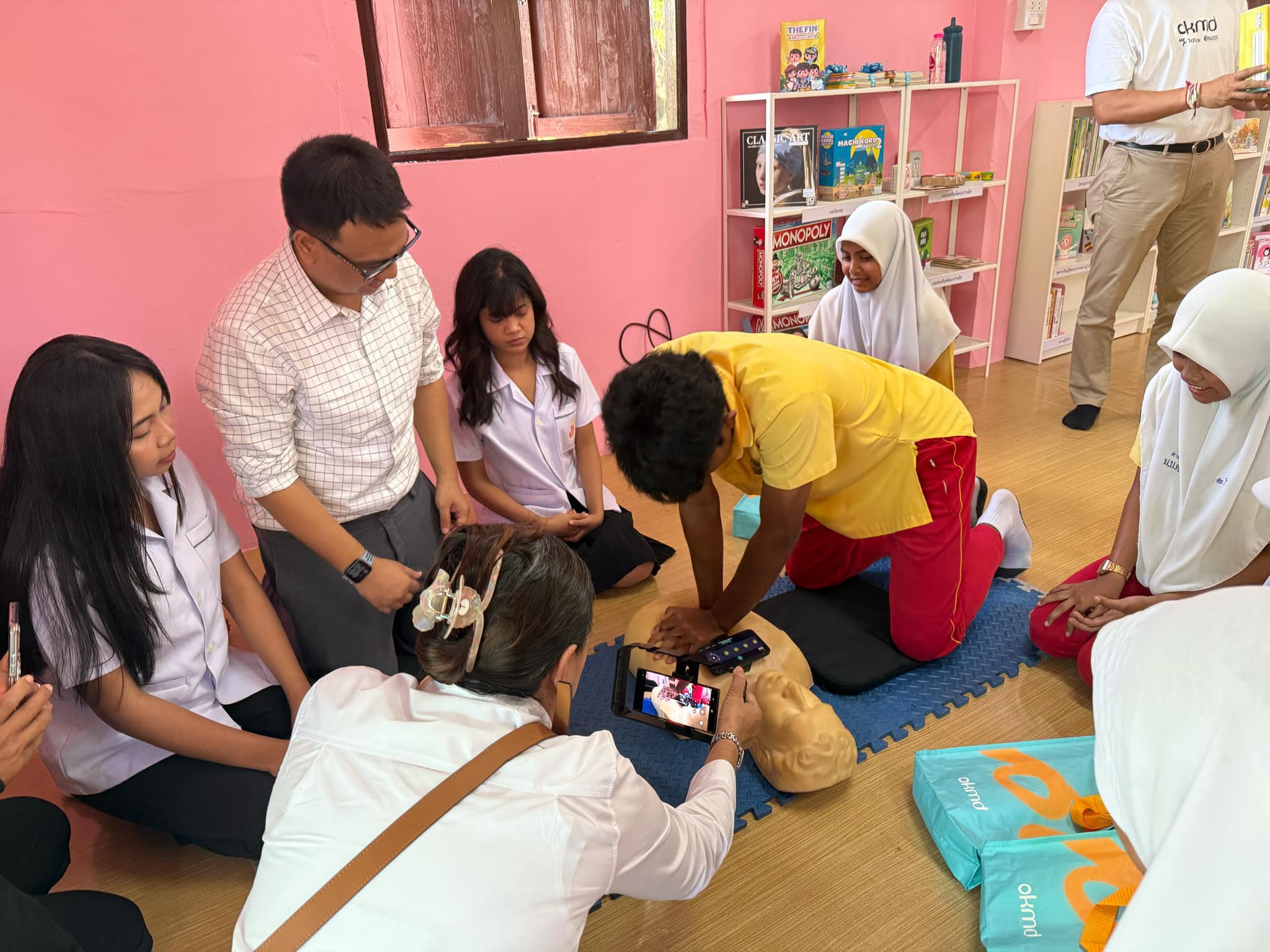
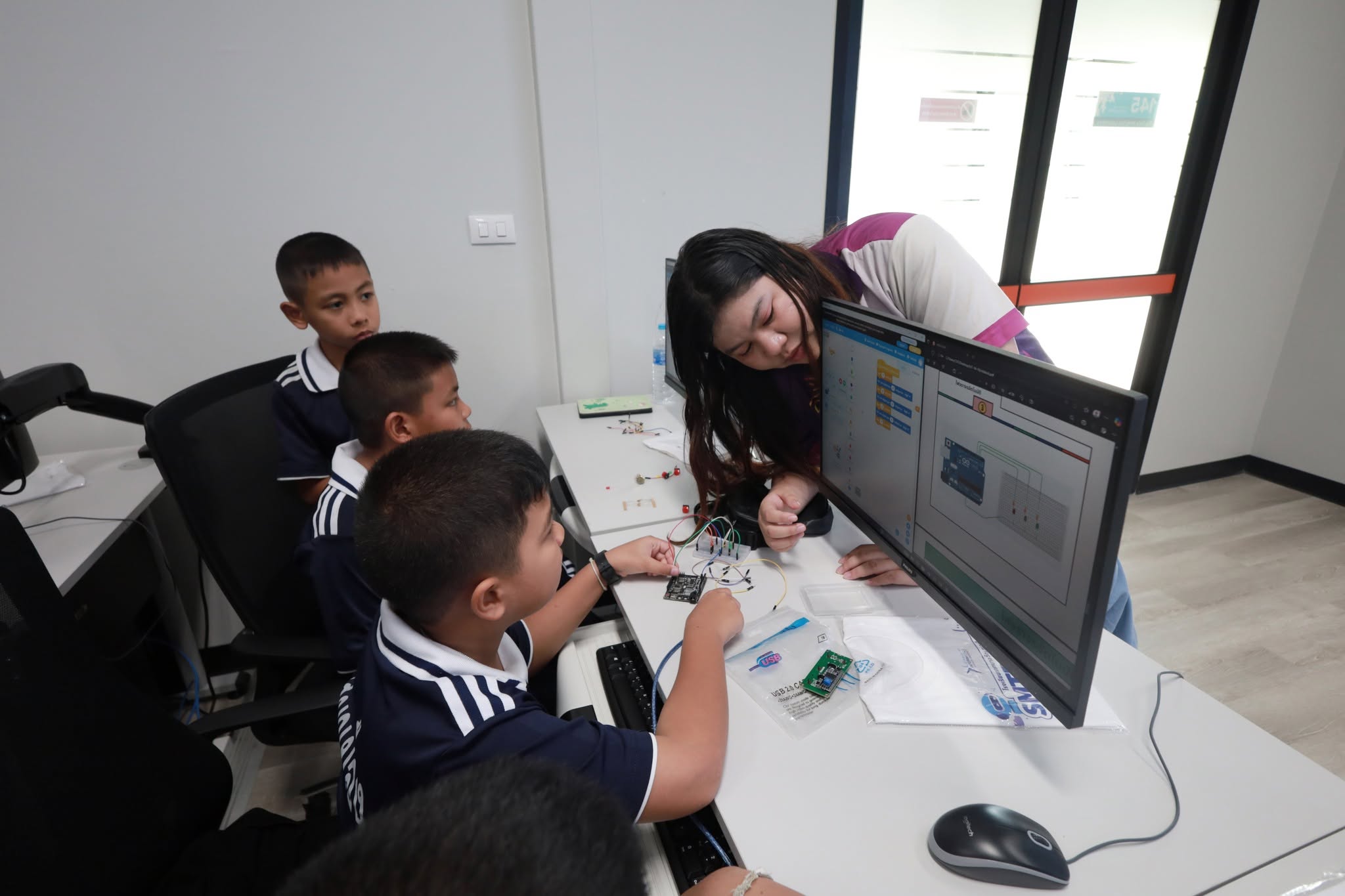
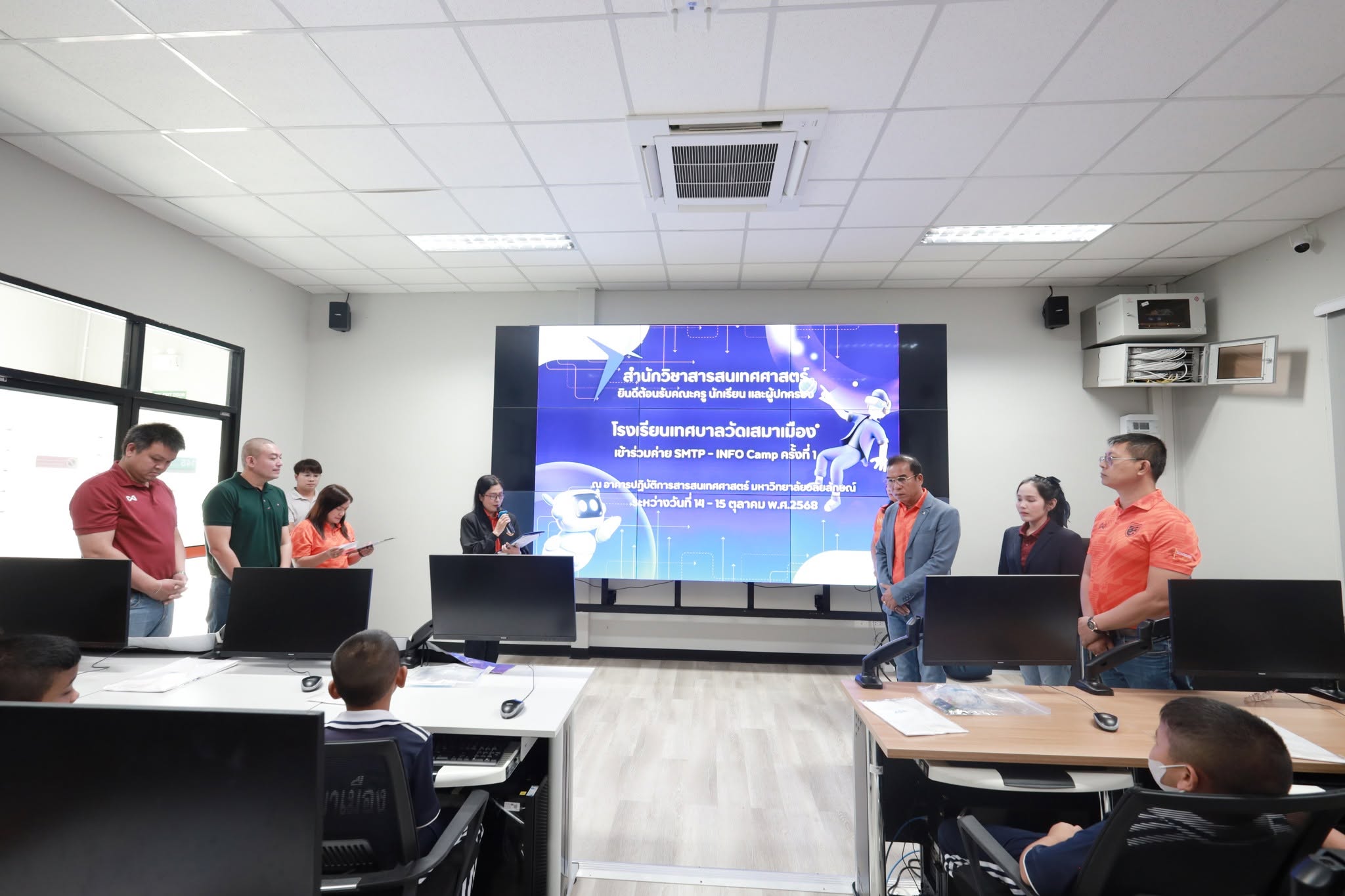
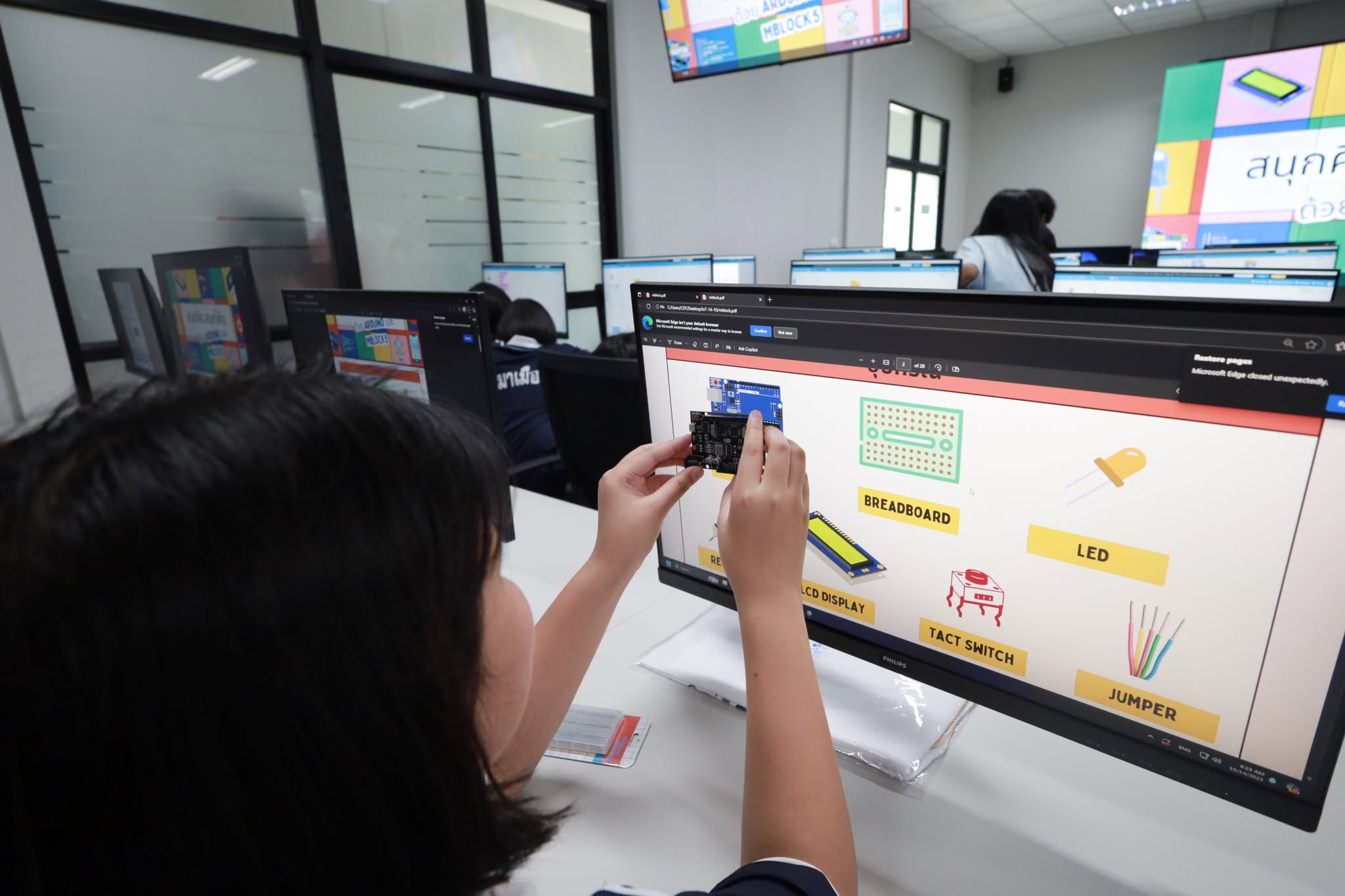
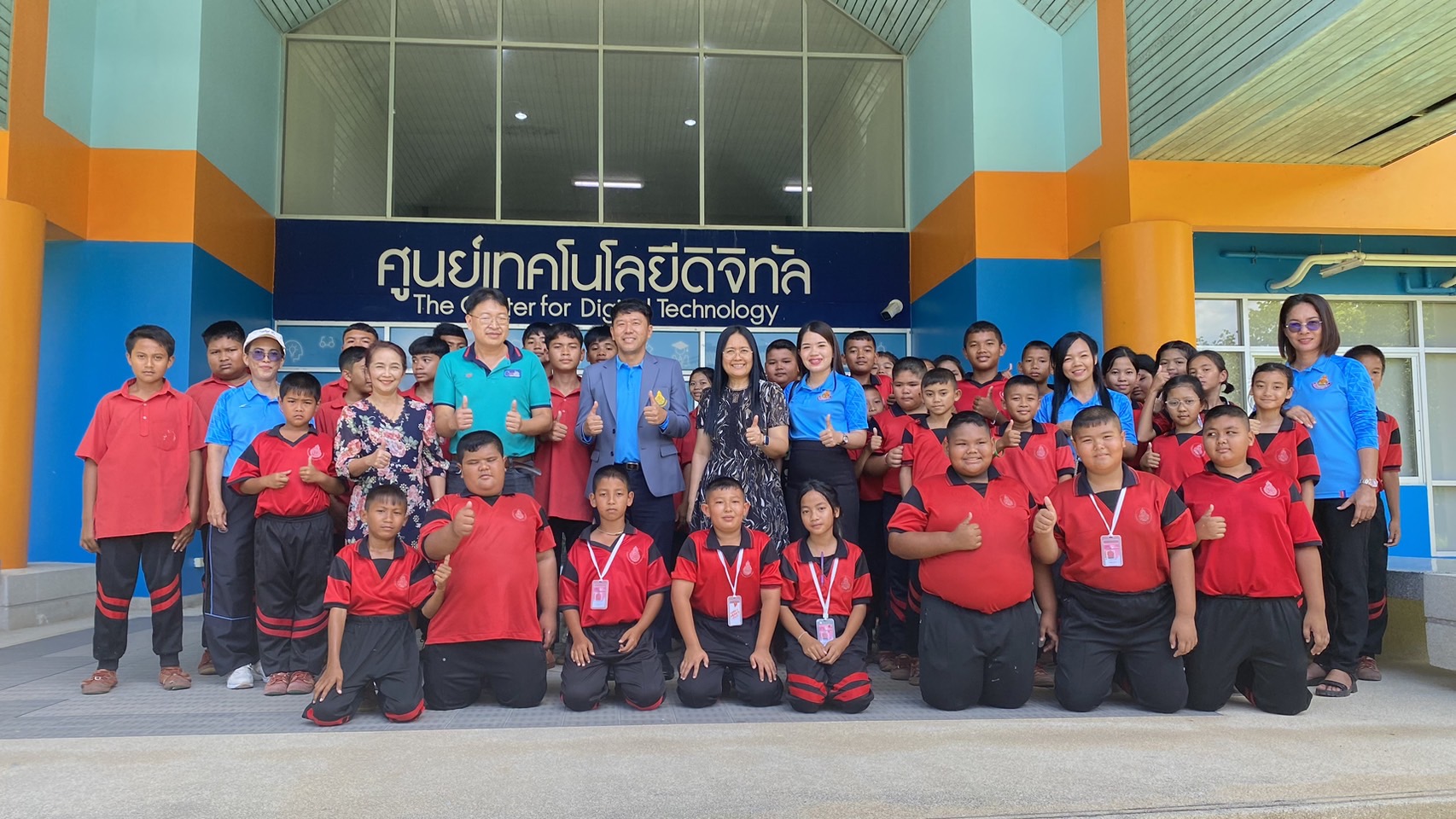
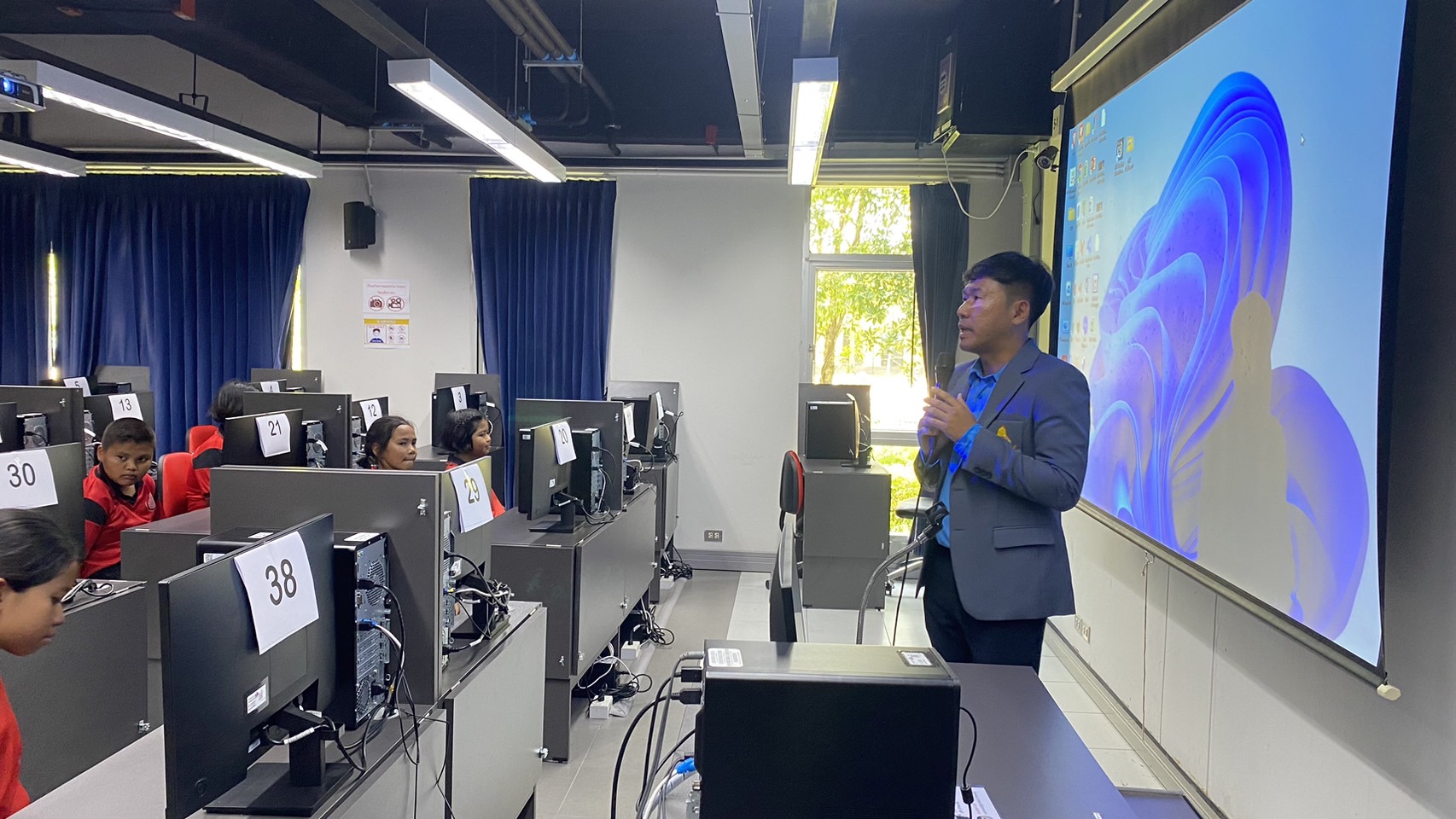
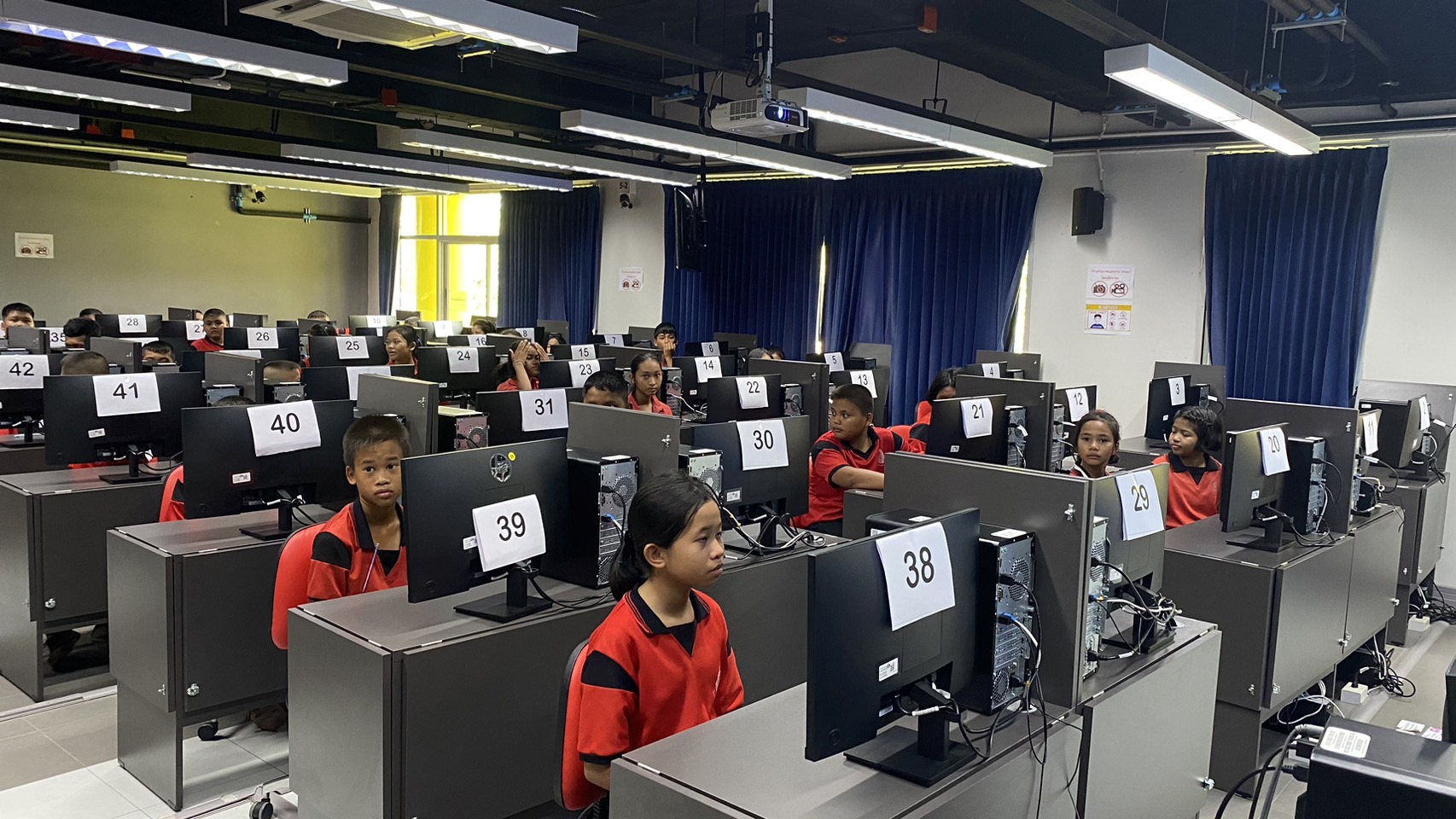
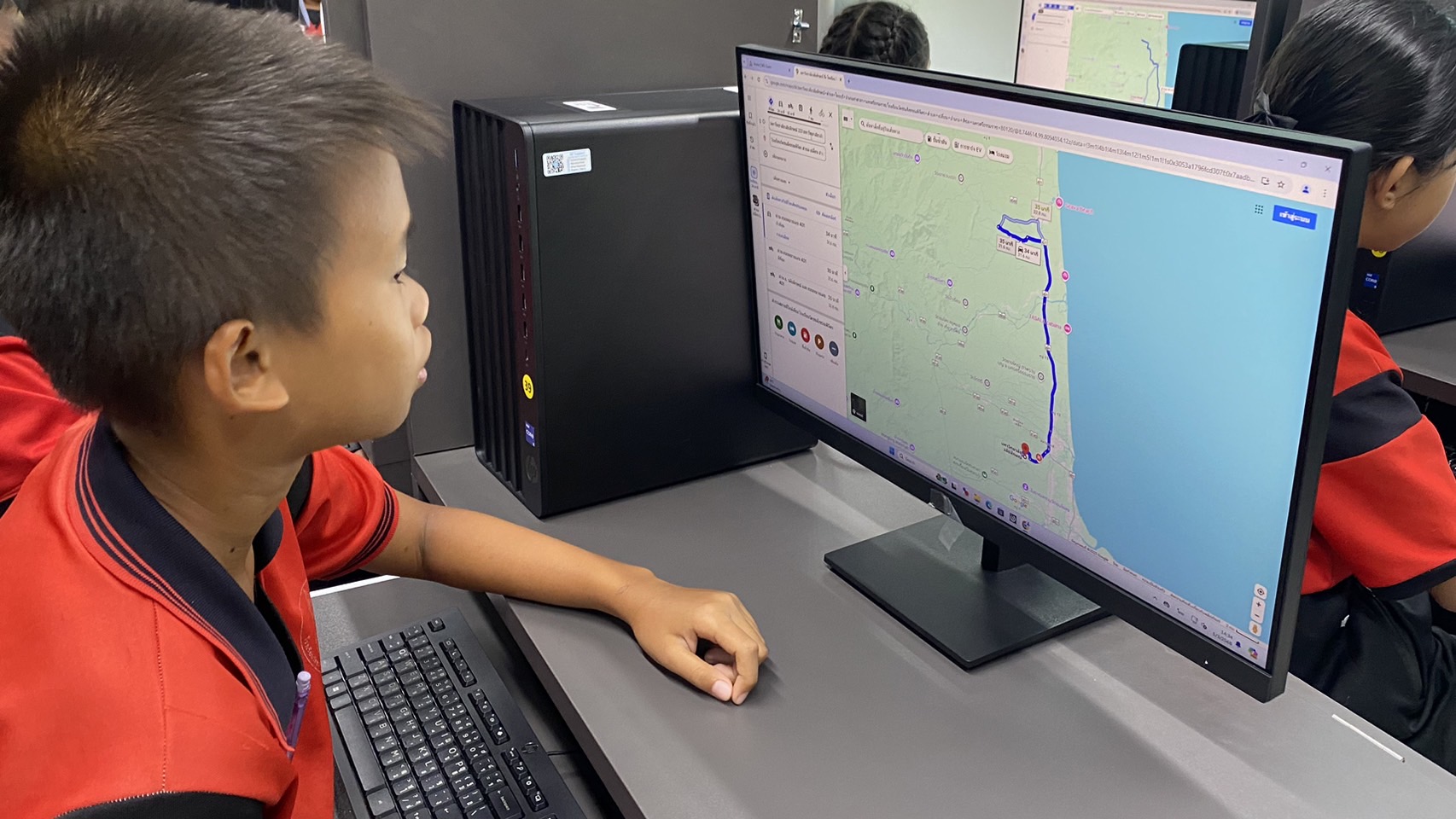
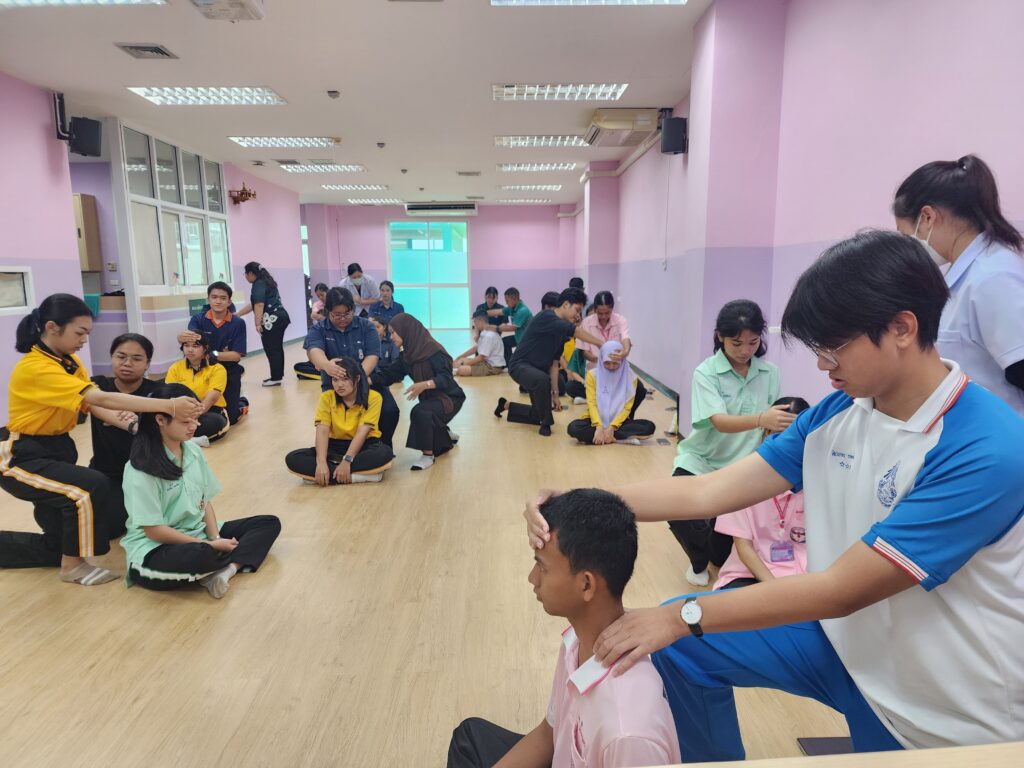
In information technology, the SMTP-INFO Camp provided students from Wat Sema Mueang Municipal School with access to information technology equipment, including computers, to support learning and the development of digital technology skills. The university also organized a lecture and workshop on “Basic CPR through Game-based Learning,” which provided participants with opportunities to learn and practise basic cardiopulmonary resuscitation using CPR equipment and hands-on learning activities.
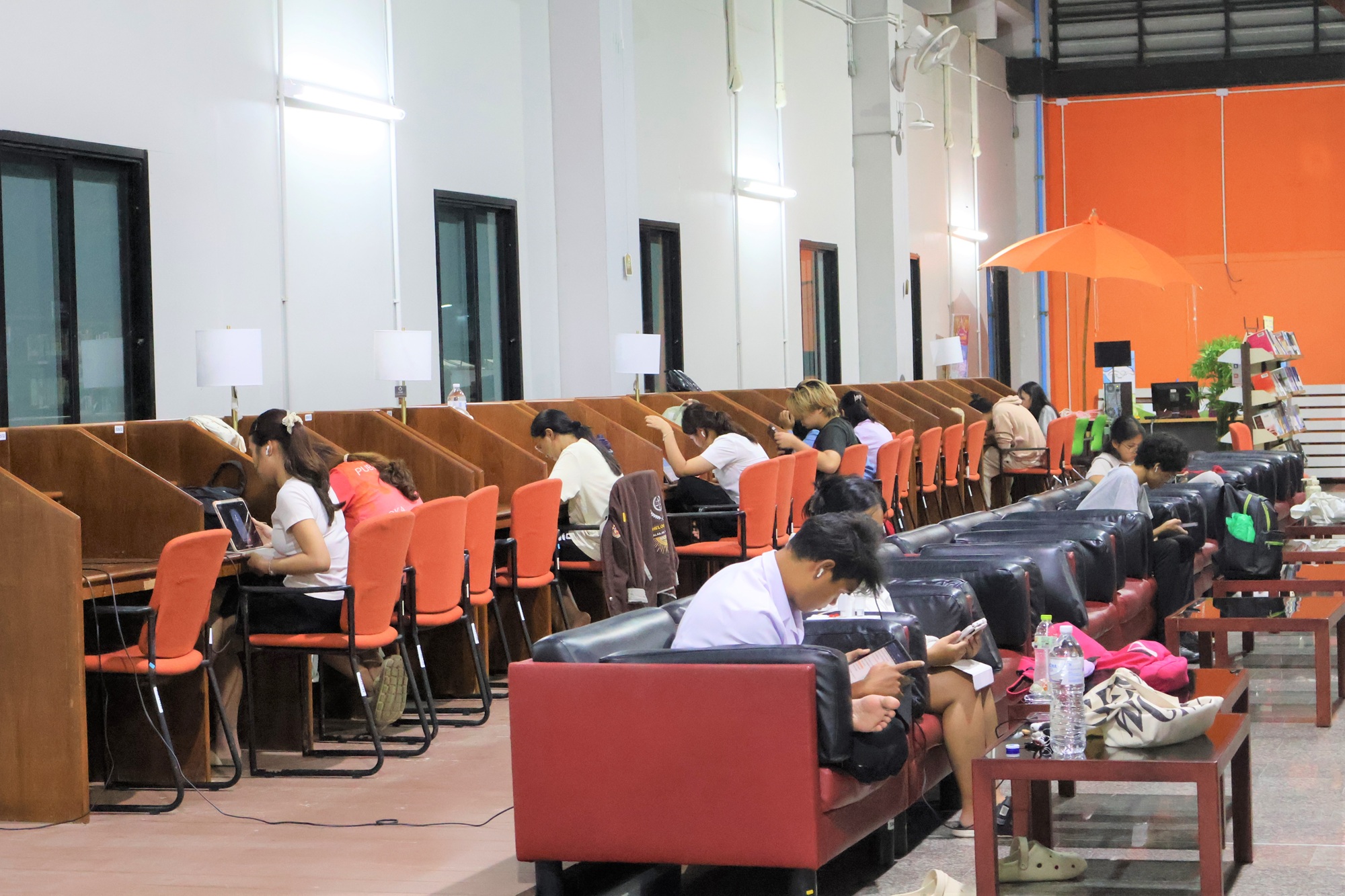
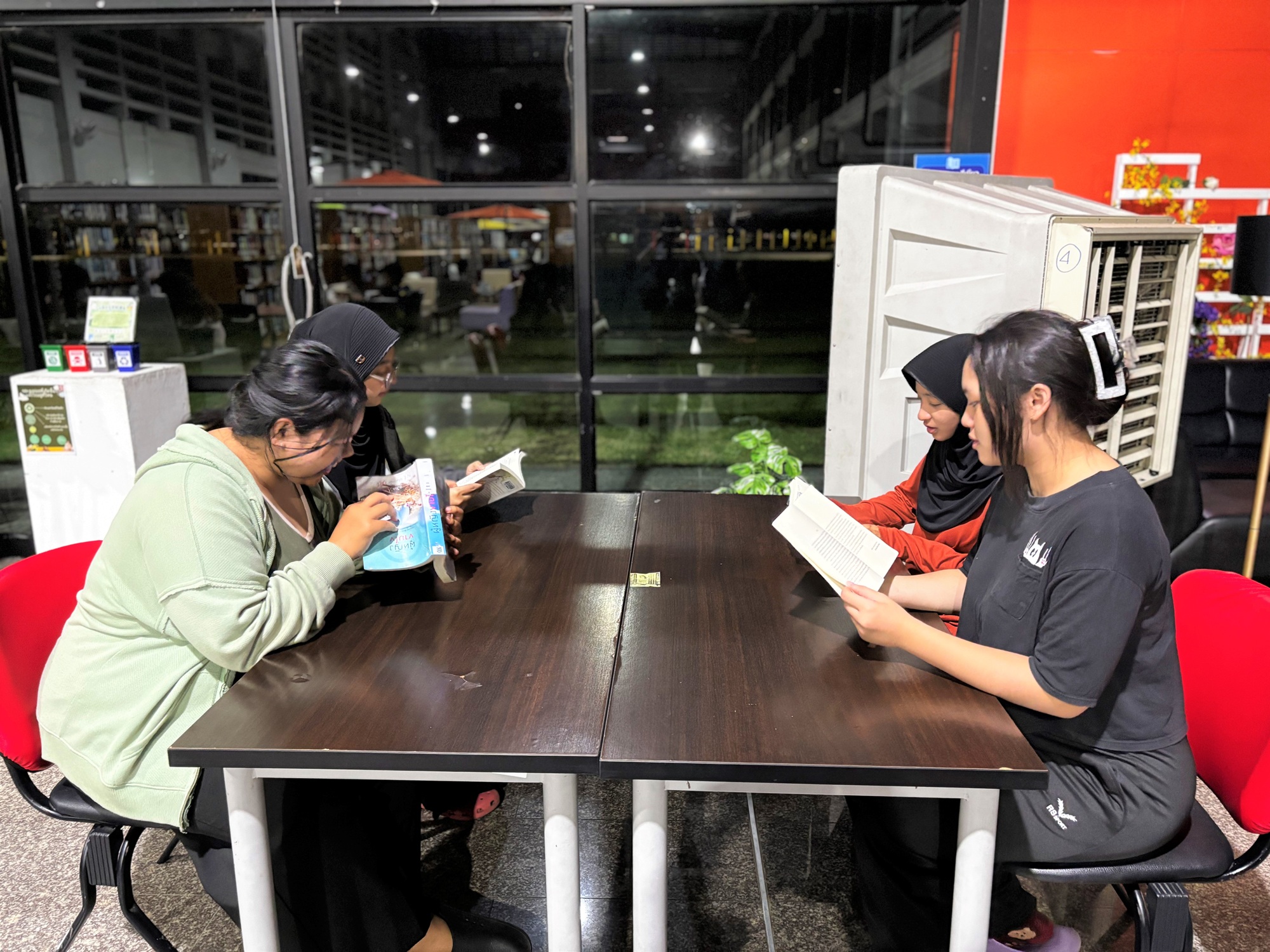
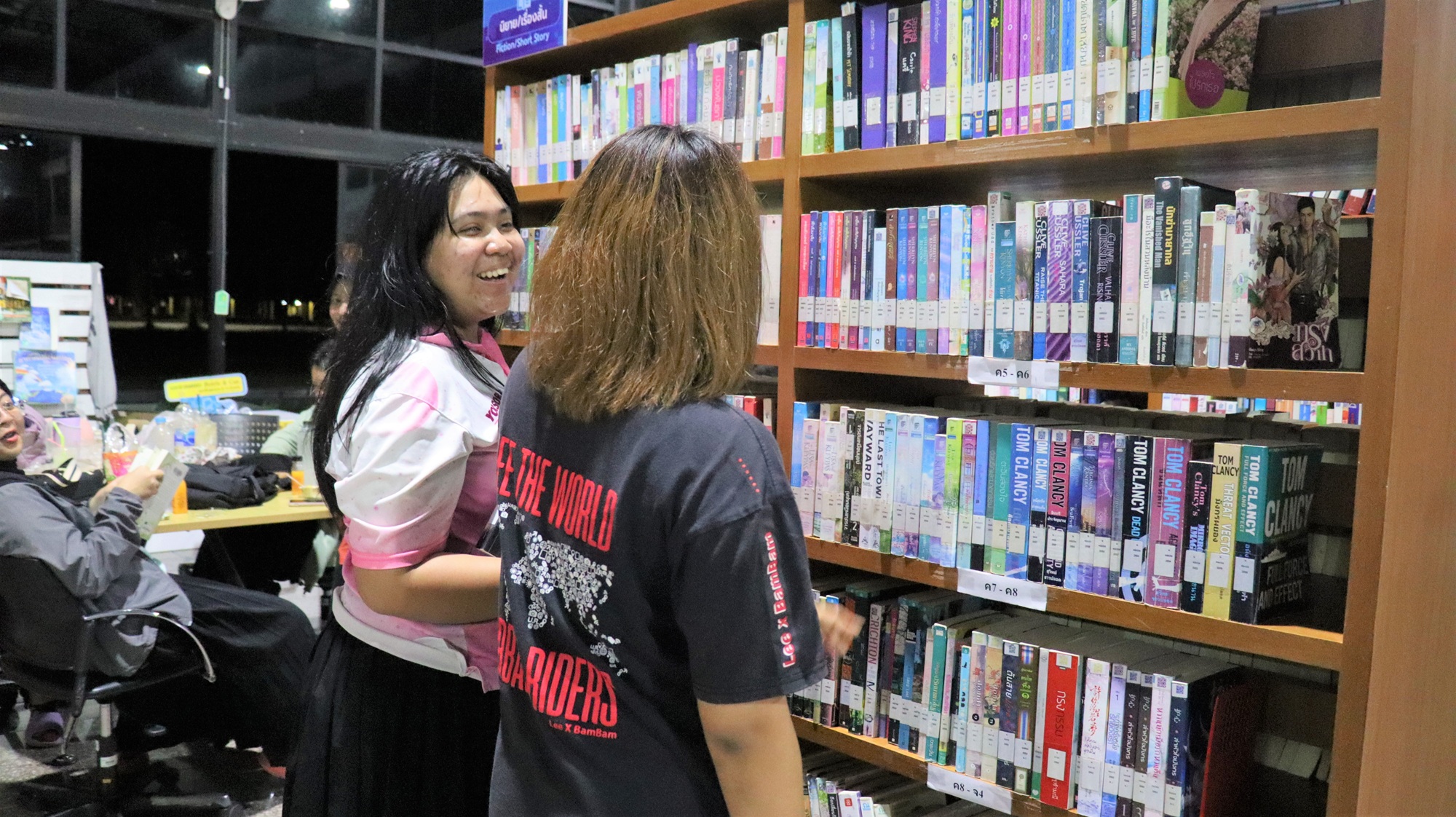
The university library also provides educational infrastructure that supports learning, including 103,355 books and publications, 177 Smart Classrooms equipped with Apple TV systems, and Studio Classrooms for educational media production. These facilities provide an infrastructure for learning and the production of educational media in different formats.
The university also provides information and communication technology learning activities for Grade 4–5 primary school students and Grade 7 lower secondary school students from Wat Chon Sangkhornphichit School under a learner development project. Students learn through computer programs covering topics such as computer hardware, AI image generation, Google tools, and ChatGPT, helping them develop digital skills and use technology for learning.
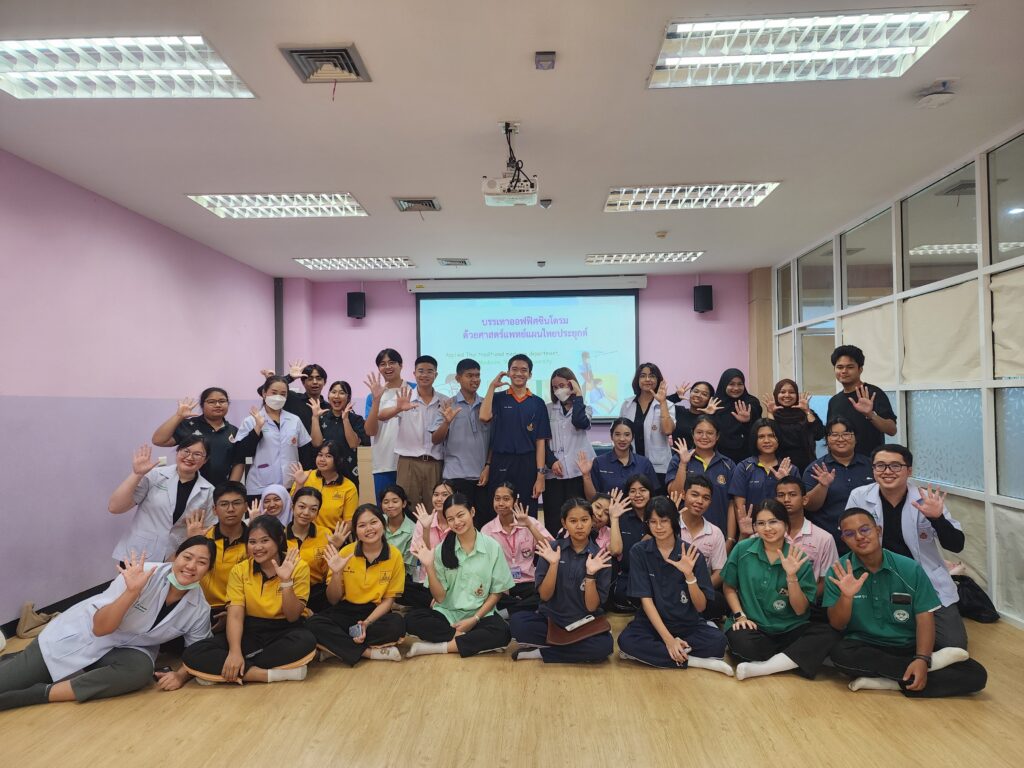
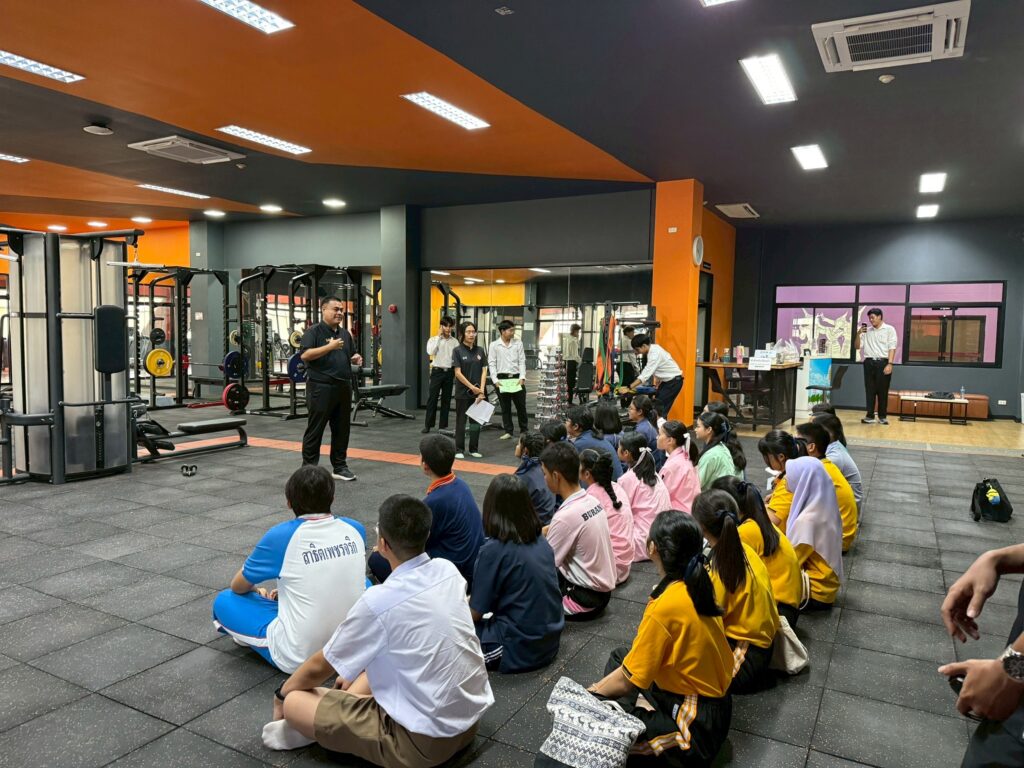
In health sciences, the SMD Open House 2025 provides students with opportunities to learn about medicine, sports science, and applied Thai traditional medicine. Participants can access equipment used for scientific and medical science testing, as well as fitness facilities, allowing them to gain learning experiences through real facilities, equipment, and learning environments.
Free Access to Online Resources
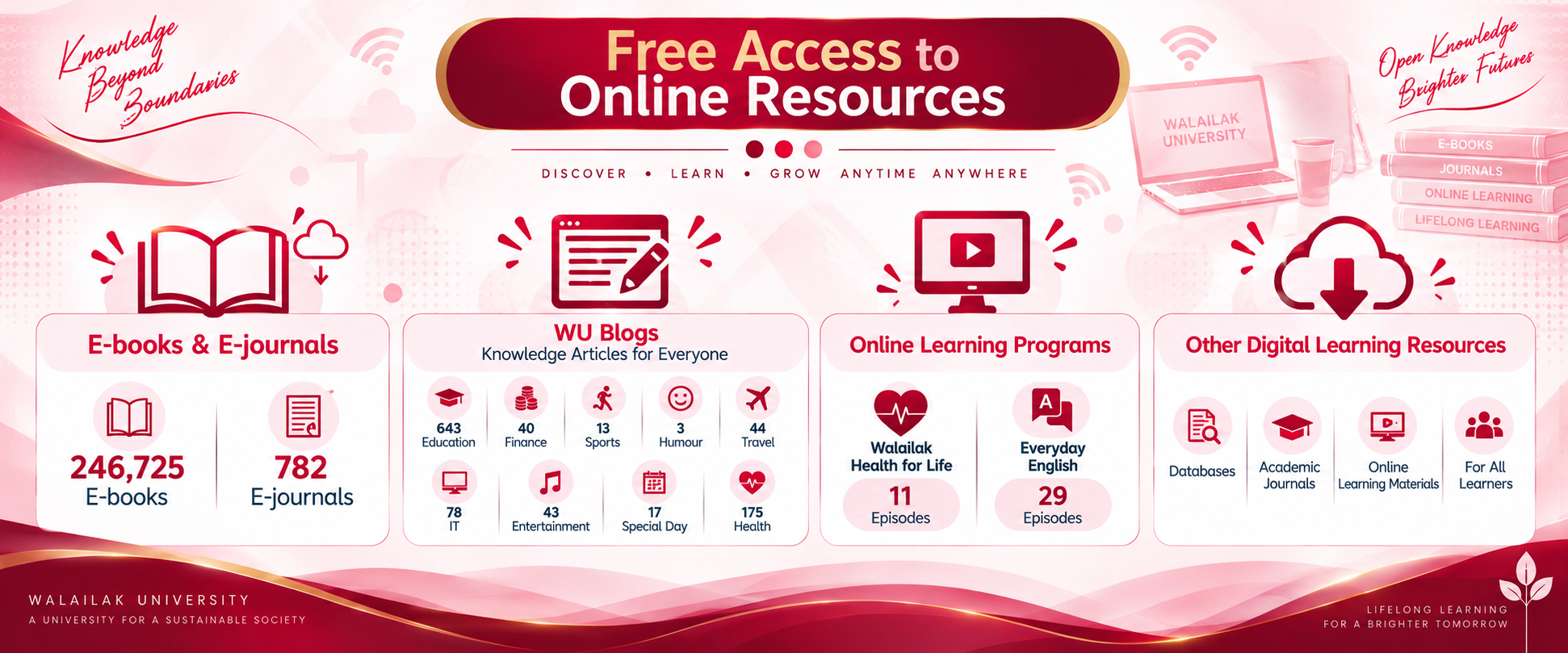
Walailak University also expands educational opportunities through free access to online resources. These resources include e-books, article databases, journals, and other digital learning materials that support independent study and lifelong learning. The university currently provides 246,725 e-books and 782 e-journals, providing users with access to a wide range of educational and academic resources.
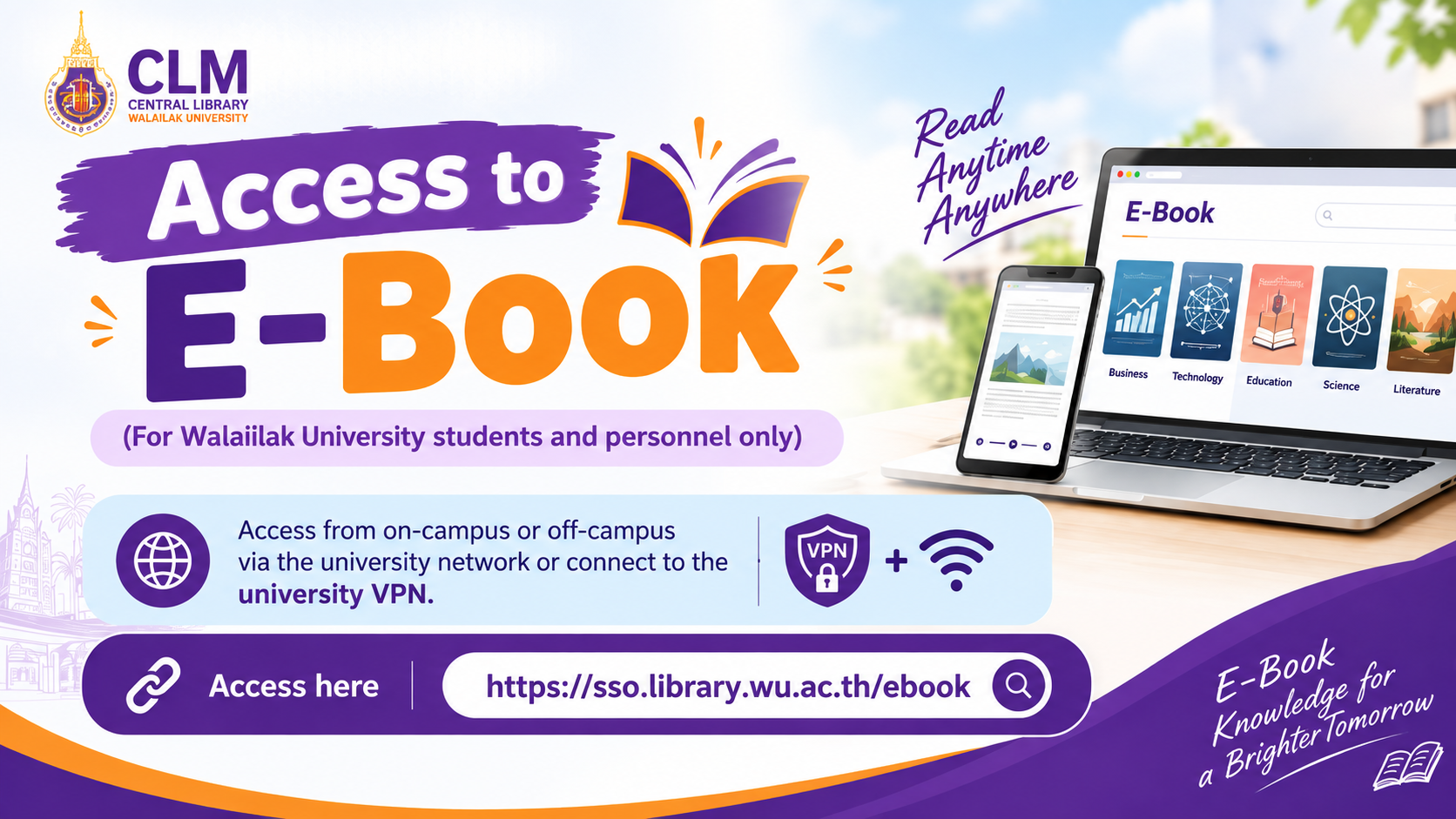
Figures : https://library.wu.ac.th/?page_id=2559
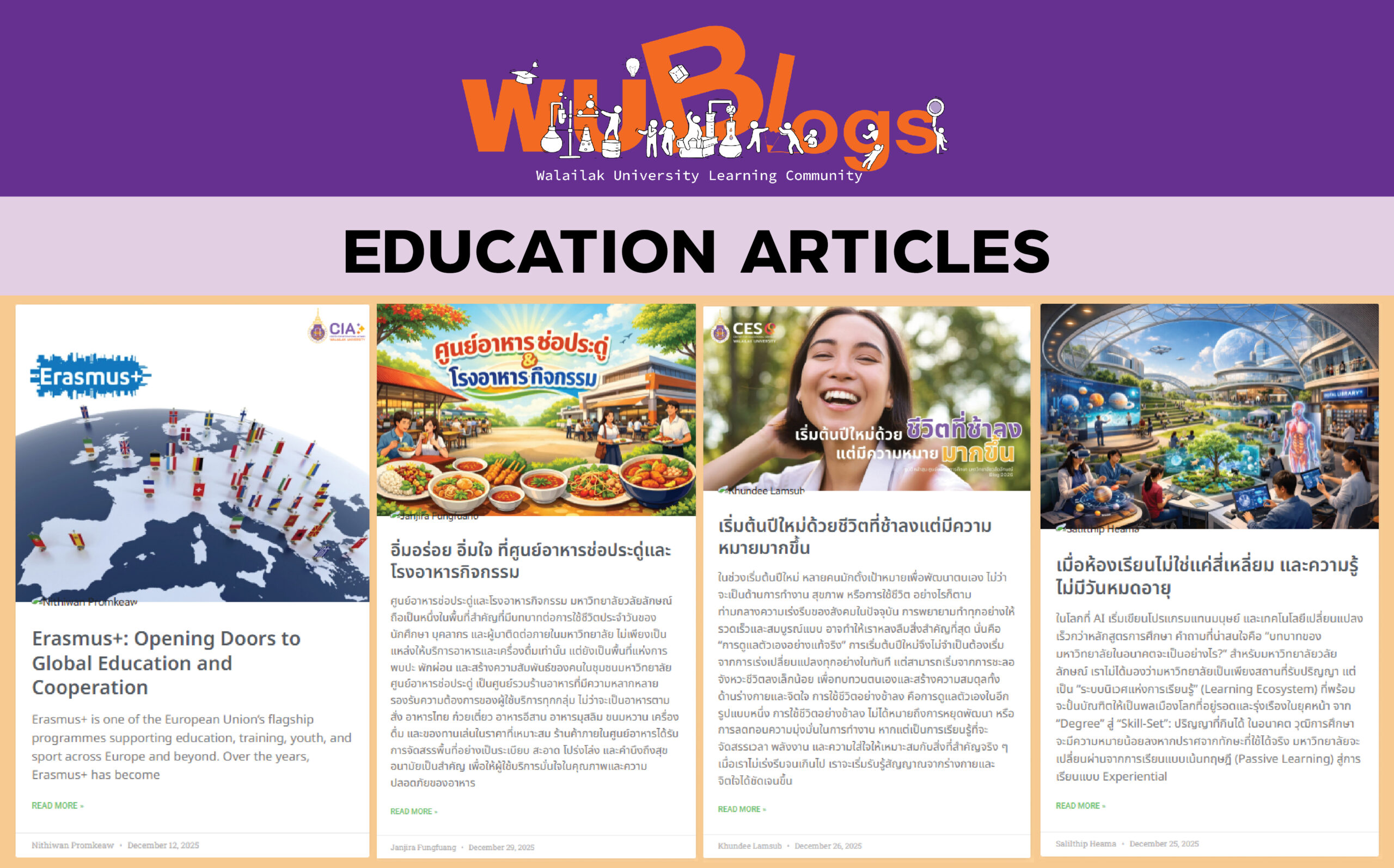
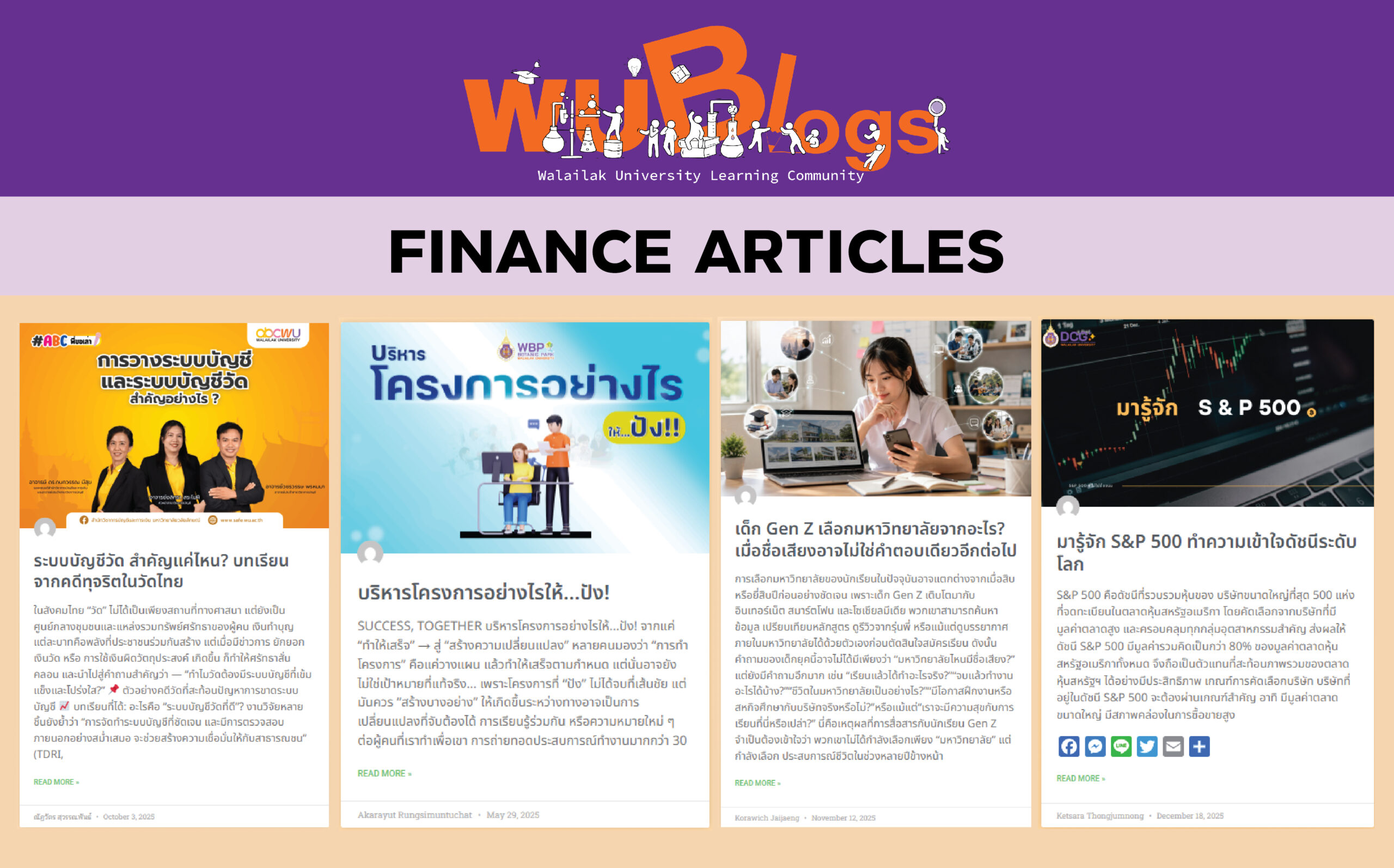
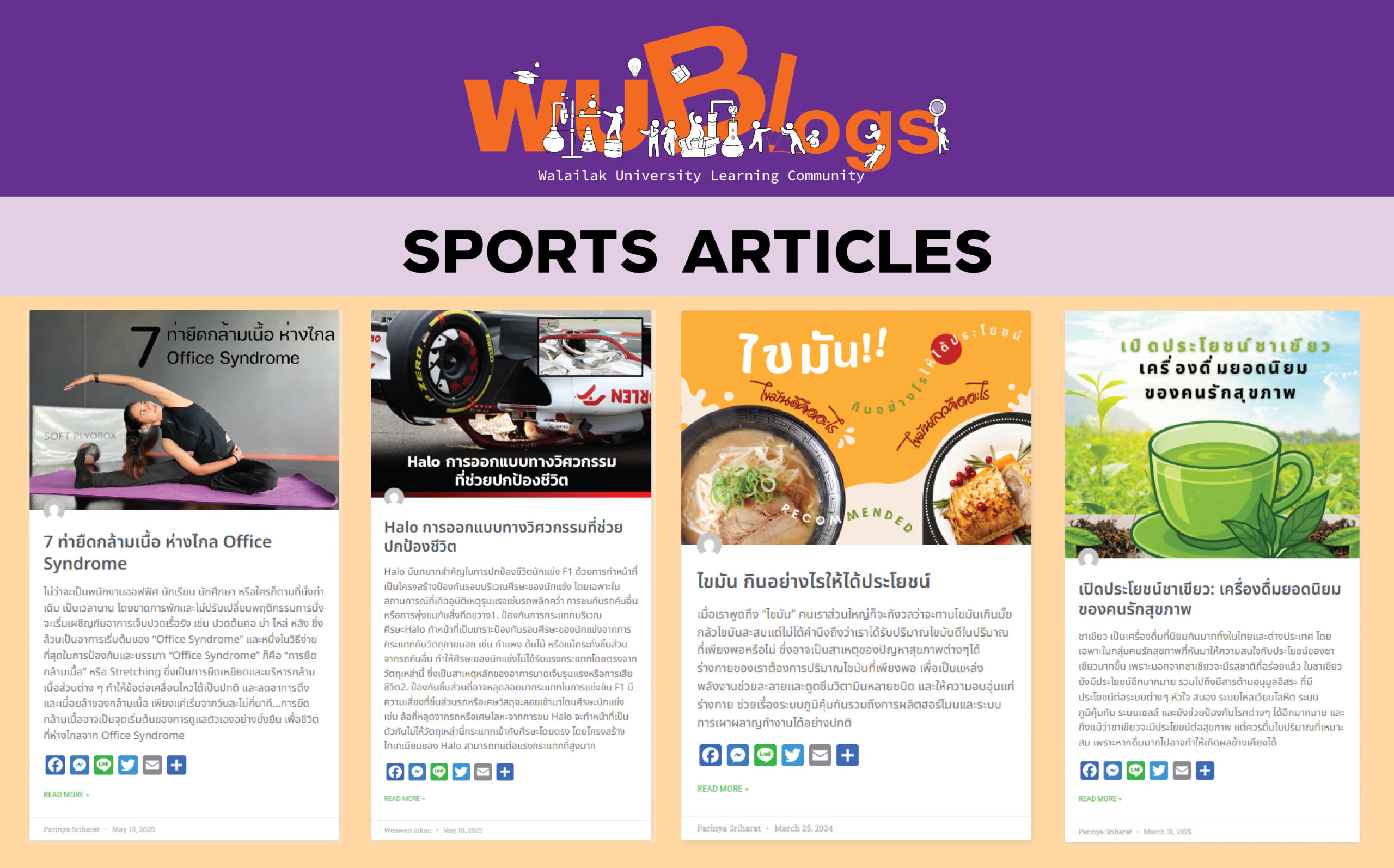
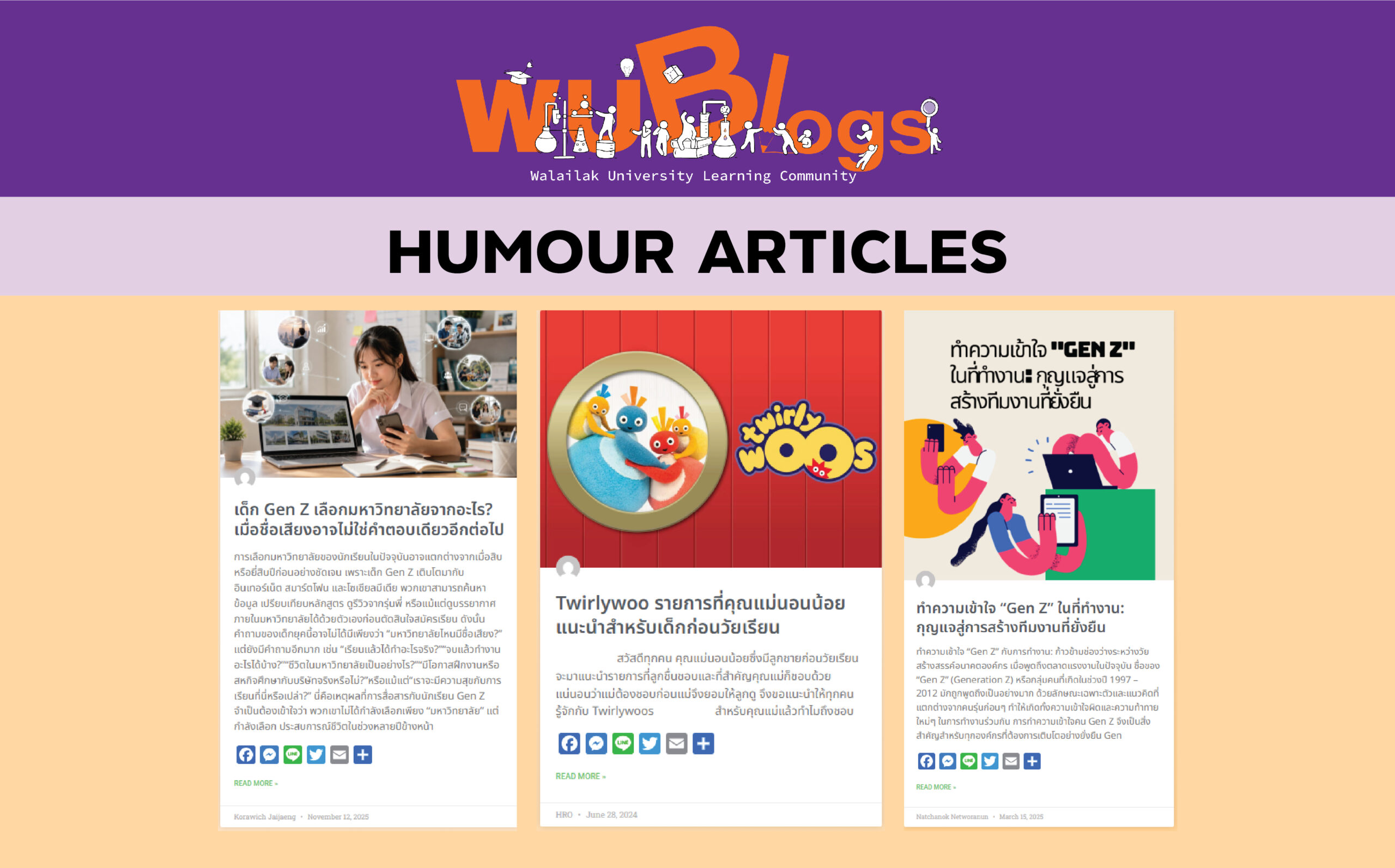
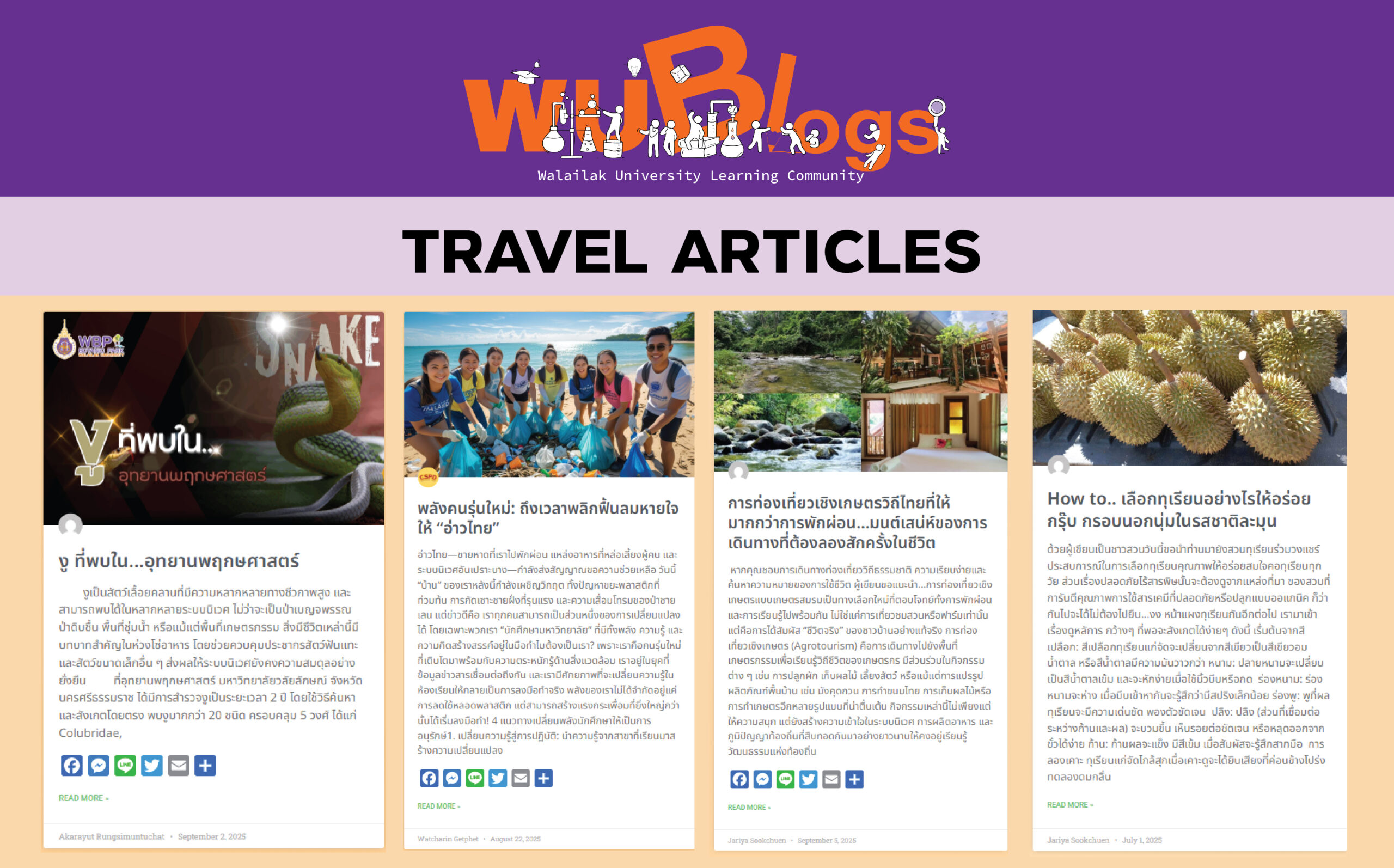
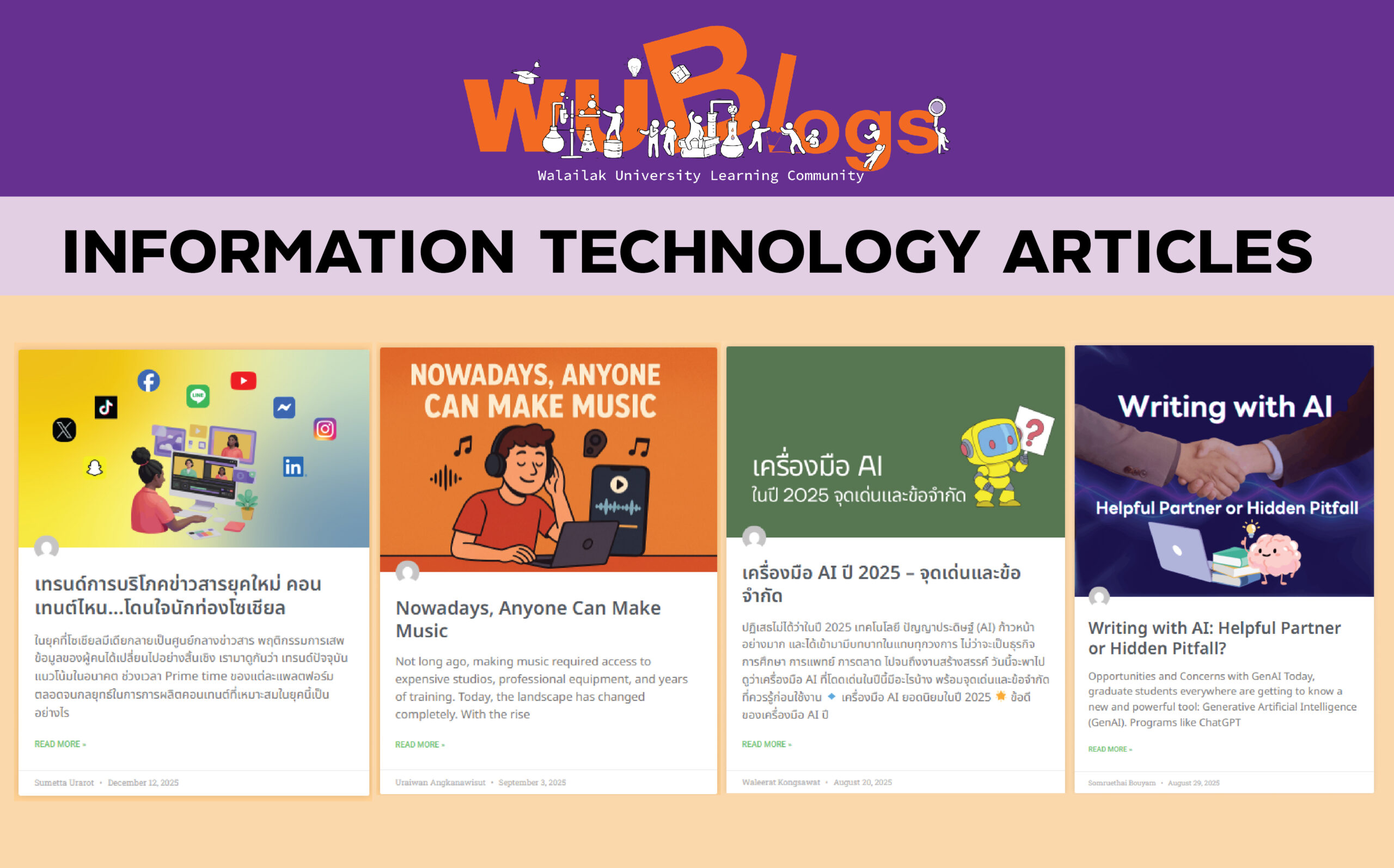
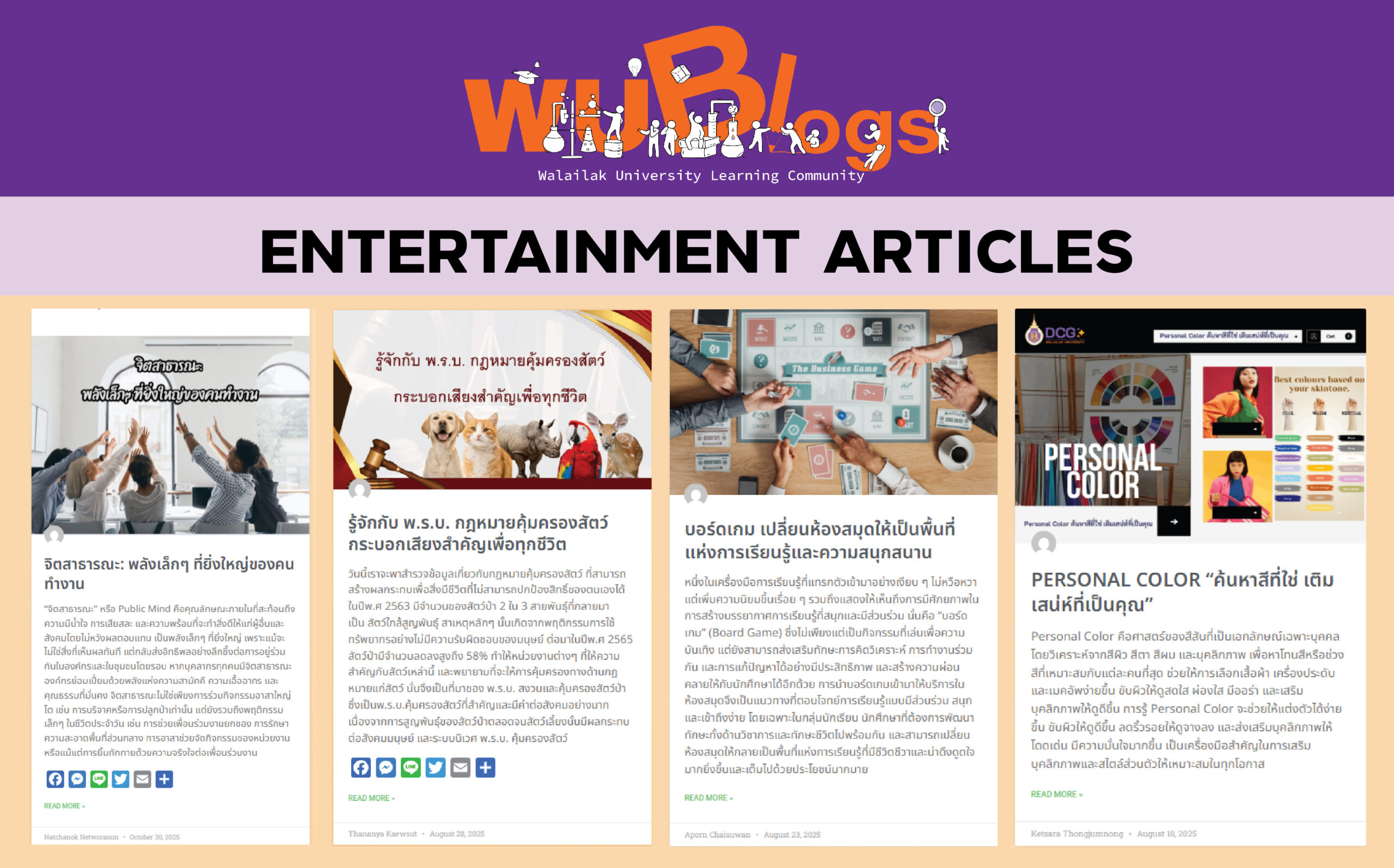
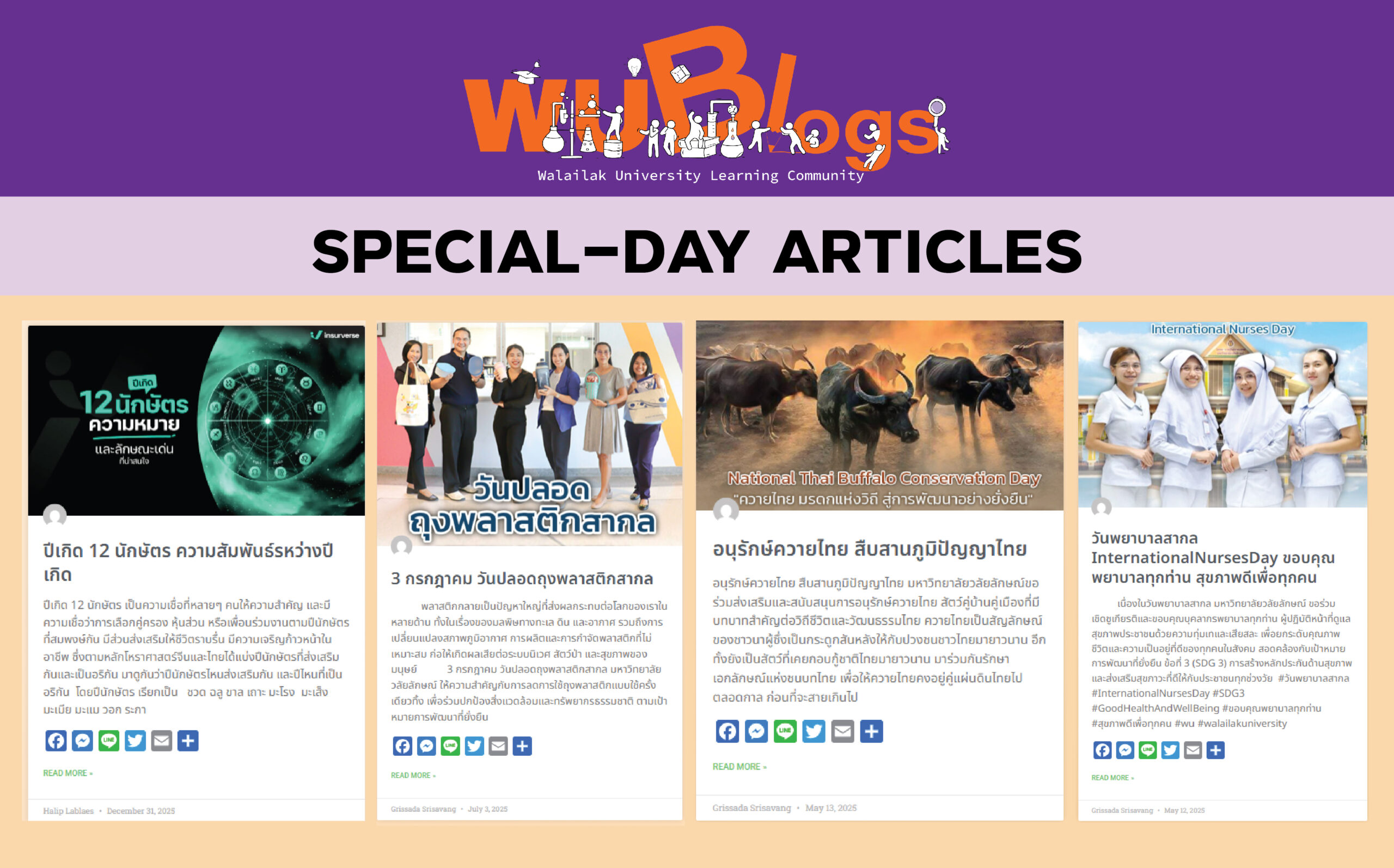
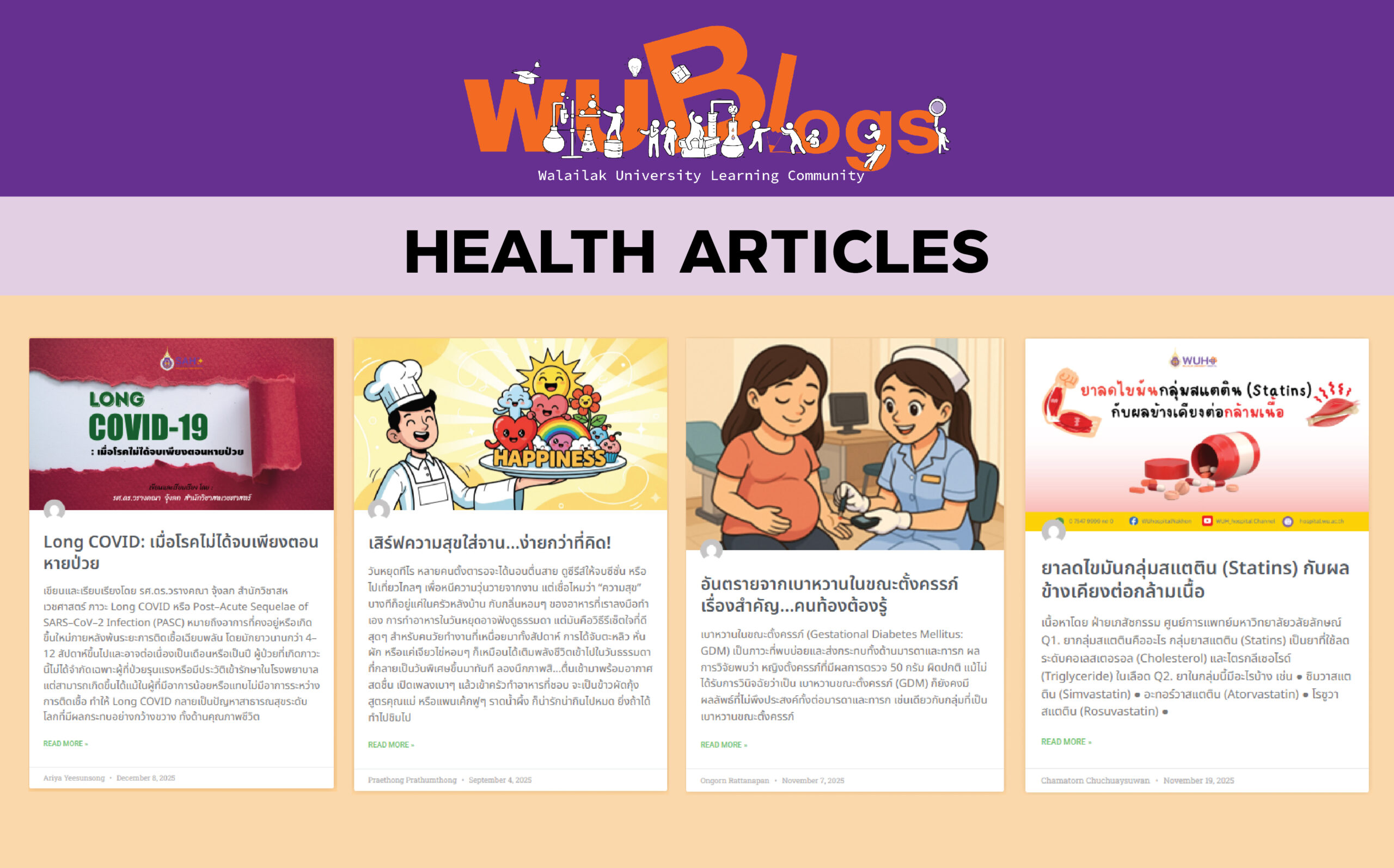
In addition, WU Blogs provides knowledge articles covering a wide range of subjects, including 643 education articles, 40 finance articles, 13 sports articles, 3 humour articles, 44 travel articles, 78 information technology articles, 43 entertainment articles, 17 special-day articles, and 175 health articles. The university also provides online programs including “Walailak Health for Life,” with 11 episodes, and “Everyday English,” with 29 episodes, to promote access to health knowledge and English-language learning through online media.
WU Blogs
Figures : WU Blogs
Walailak Health for Life

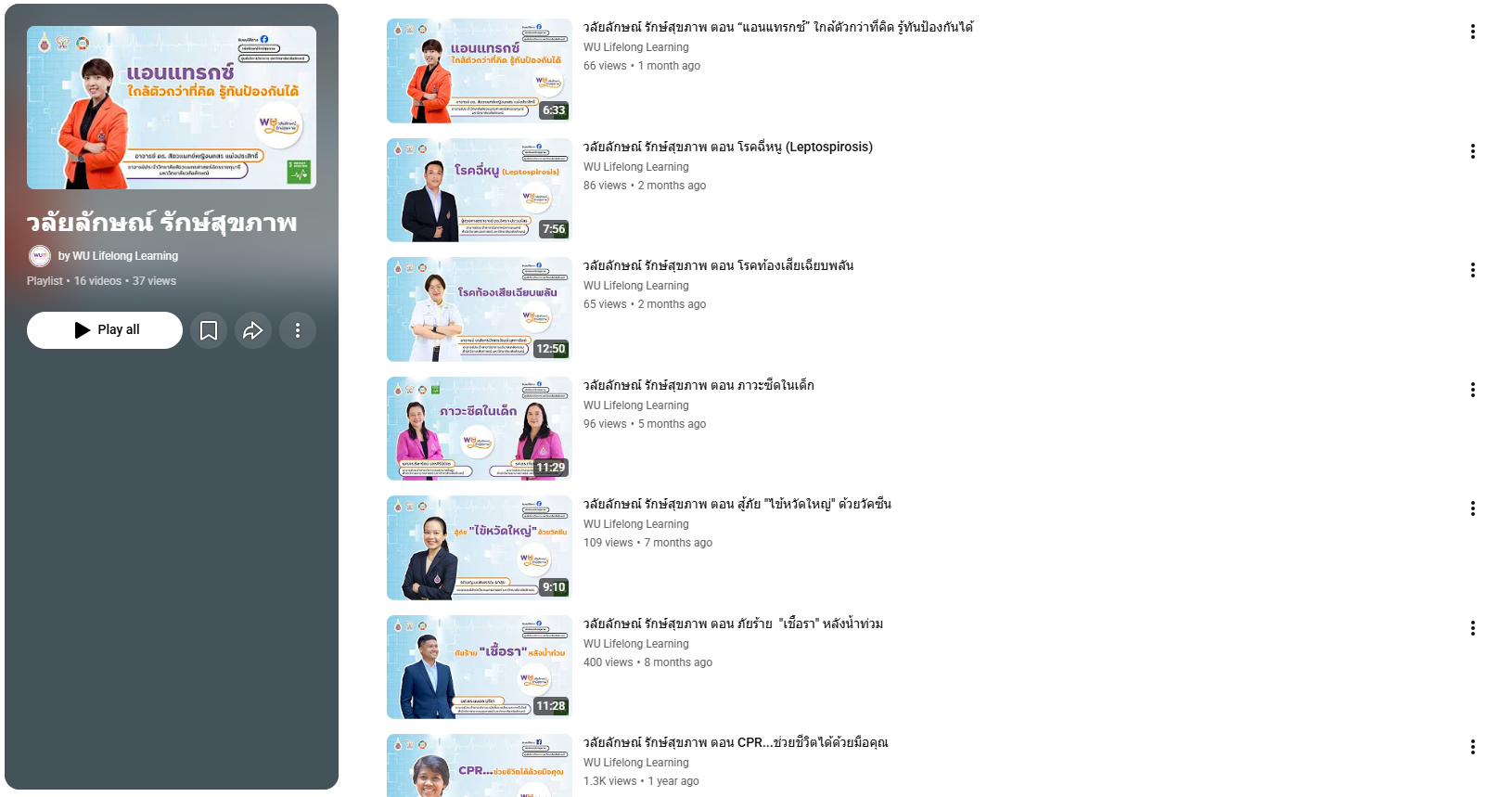
Figures : Walailak Health for Life
Everyday English
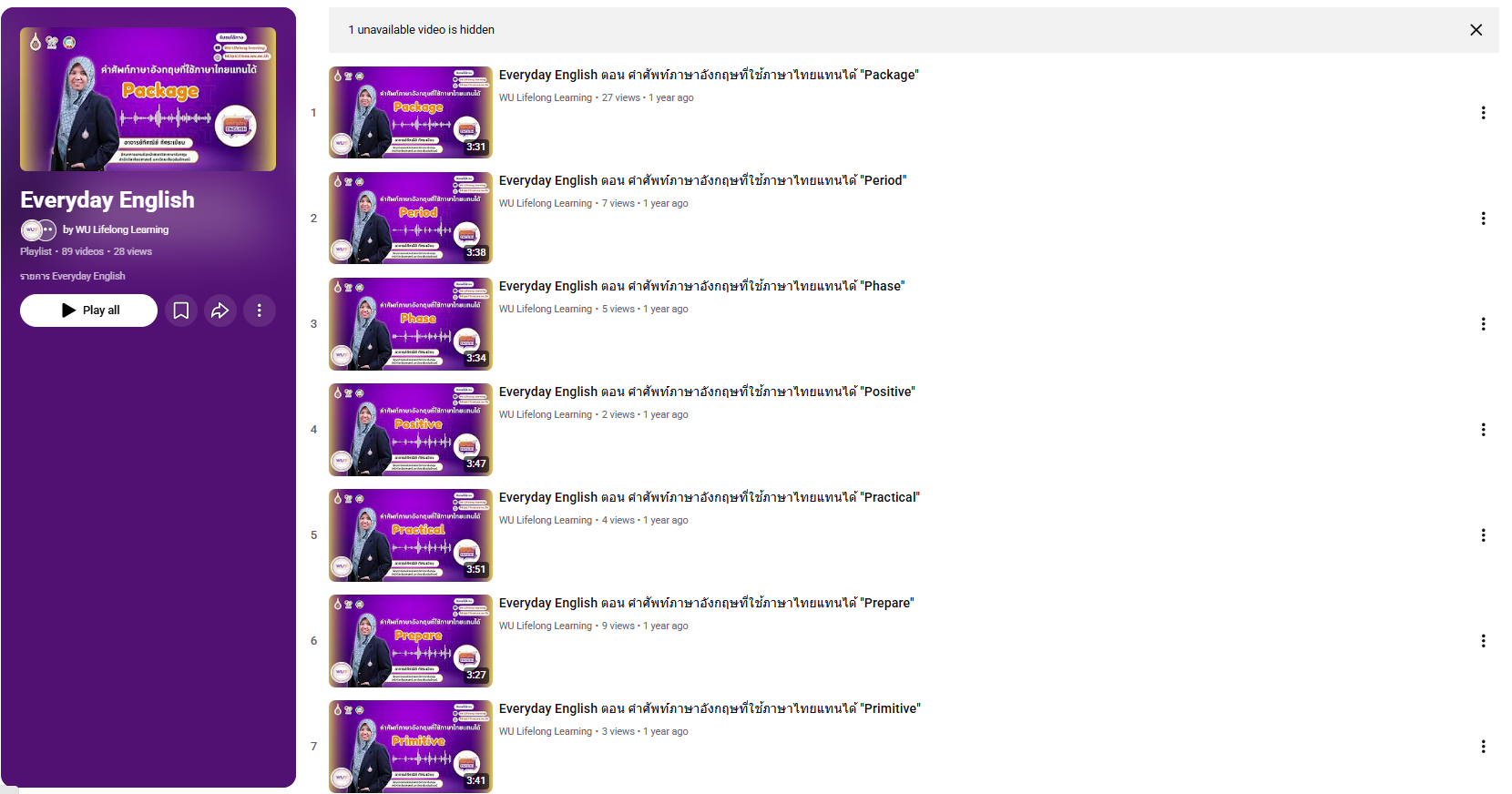
Figures : The Everyday English Program
Walailak moving forward
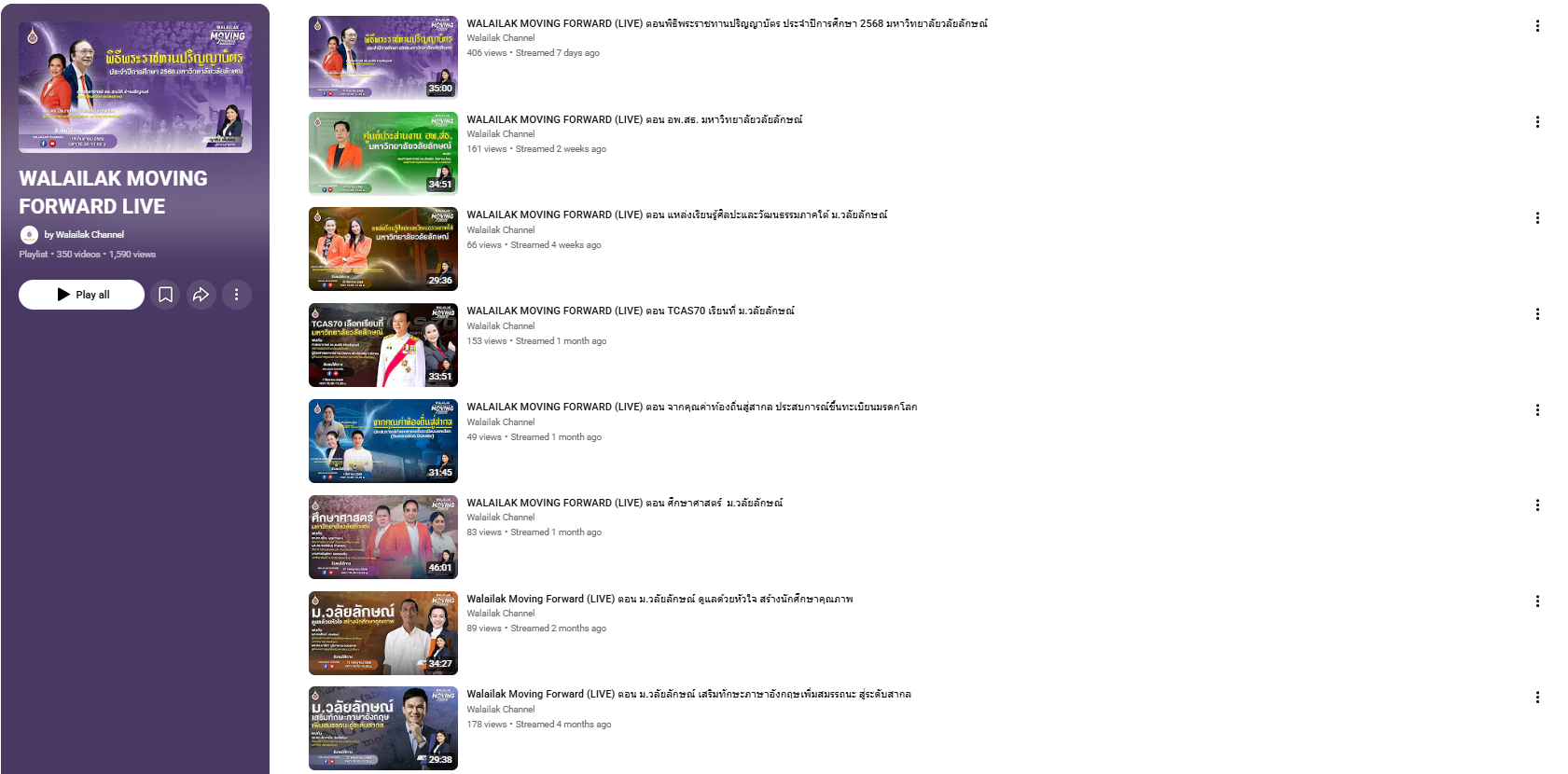
Figures : Walailak Moving Forward
Overall, these initiatives demonstrate Walailak University’s commitment to expanding educational opportunities beyond its enrolled students by providing free access to courses, certificates and awards, campus facilities and equipment, and online resources. Through both practical and online learning, the university enables teachers, students, young people, educational personnel, and the general public to access educational resources and develop knowledge and skills throughout their lives. These activities directly support lifelong learning by extending the university’s educational resources to those not studying at the university.
Related Links
- https://informatics.wu.ac.th/sustainable-development-goals/thasala-cultural-storytelling-project-1-th/
- https://informatics.wu.ac.th/storytelling-comm_arts-2025-th/
- https://cas.wu.ac.th/archives/30580
- https://cas.wu.ac.th/archives/30661
- https://cas.wu.ac.th/archives/31601
- https://cas.wu.ac.th/archives/32017
- https://library.wu.ac.th/?page_id=2516
- https://thaimooc.ac.th/courses/?filter-instructor%5B%5D=99
- https://cas.wu.ac.th/archives/34969
- https://cas.wu.ac.th/archives/35206
- https://informatics.wu.ac.th/storytelling-comm_arts-2025-th/
- https://informatics.wu.ac.th/sustainable-development-goals/thasala-cultural-storytelling-project-1-th/
- https://informatics.wu.ac.th/sustainable-development-goals/thasala-cultural-storytelling-project-2-th/
- https://cse.wu.ac.th/?page_id=20314
- https://informatics.wu.ac.th/%e0%b8%81%e0%b8%b2%e0%b8%a3%e0%b8%9a%e0%b8%a3%e0%b8%a3%e0%b8%a2%e0%b8%b2%e0%b8%a2%e0%b9%81%e0%b8%a5%e0%b8%b0%e0%b9%80%e0%b8%a7%e0%b8%b4%e0%b8%a3%e0%b9%8c%e0%b8%84%e0%b8%8a%e0%b8%ad%e0%b8%9b%e0%b9%83/
- https://library.wu.ac.th/wp-content/uploads/2025/12/CLM_%E0%B8%82%E0%B8%B1%E0%B8%9A%E0%B9%80%E0%B8%84%E0%B8%A5%E0%B8%B7%E0%B9%88%E0%B8%AD%E0%B8%99%E0%B8%A2%E0%B8%B8%E0%B8%97%E0%B8%98%E0%B8%A8%E0%B8%B2%E0%B8%AA%E0%B8%95%E0%B8%A3%E0%B9%8C-2568.pdf
- https://library.wu.ac.th/
- https://cdi.wu.ac.th/?p=105848&lang=th
- https://smd.wu.ac.th/?p=76711
- https://informatics.wu.ac.th/%e0%b8%ab%e0%b8%a5%e0%b8%b1%e0%b8%81%e0%b8%aa%e0%b8%b9%e0%b8%95%e0%b8%a3%e0%b9%80%e0%b8%97%e0%b8%84%e0%b9%82%e0%b8%99%e0%b9%82%e0%b8%a5%e0%b8%a2%e0%b8%b5%e0%b8%94%e0%b8%b4%e0%b8%88%e0%b8%b4%e0%b8%97/
- https://library.wu.ac.th/wp-content/uploads/2025/12/CLM_%E0%B8%82%E0%B8%B1%E0%B8%9A%E0%B9%80%E0%B8%84%E0%B8%A5%E0%B8%B7%E0%B9%88%E0%B8%AD%E0%B8%99%E0%B8%A2%E0%B8%B8%E0%B8%97%E0%B8%98%E0%B8%A8%E0%B8%B2%E0%B8%AA%E0%B8%95%E0%B8%A3%E0%B9%8C-2568.pdf
- https://blog.wu.ac.th/
- https://opac.wu.ac.th/results?Ntt=e-journal&defend_wp_firewall_nonce=16fffe0252
- https://www.youtube.com/@caswu9587
- https://dcc.wu.ac.th/walailakchannel/
- https://www.youtube.com/@caswu9587
- https://cas.wu.ac.th/ysc
- https://www.facebook.com/infomatics.wu/posts/pfbid02tj4udtcs5PqJovussmcX1JEsLtgt2G7v8fjVNpCeArJrBcHetgqHjTHu7B8NewjWl
Goal 4:
Quality Education
Goal 5:
Gender Equality
Goal 17:
Partnerships for the Goals