Impactful university program(s) on climate change (EC.10)

Impactful university program(s) on climate change (EC.10)

Energy and Climate Change (EC)
Energy and Climate Change (EC) Impactful university program(s) on climate change Walailak University's programs on climate change risks, impacts, mitigation, adaptation, impact reduction, and early warning for 2024 include training, educational media, seminars and conferences, as well as community-based activities at the international level.Training Previous Next educational materials Previous Next Seminars/ConferencesThe university participated in a meeting and presented knowledge about climate change and the current situation at the provincial climate change working group meeting (Nakhon Si Thammarat). The focus was on preparations for carbon neutrality by 2050 and achieving net-zero emissions by 2070, which is part of a workshop aimed at driving the greenhouse gas reduction plan. Previous Next Walailak University organized a seminar on training courses related to climate change and greenhouse gas reduction measures in the industrial sector,…
Read More
Planning, implementation, monitoring and/or evaluation of all programs related to Energy and Climate Change through the utilization of Information and Communication Technology (ICT).

Planning, implementation, monitoring and/or evaluation of all programs related to Energy and Climate Change through the utilization of Information and Communication Technology (ICT).

Energy and Climate Change (EC)
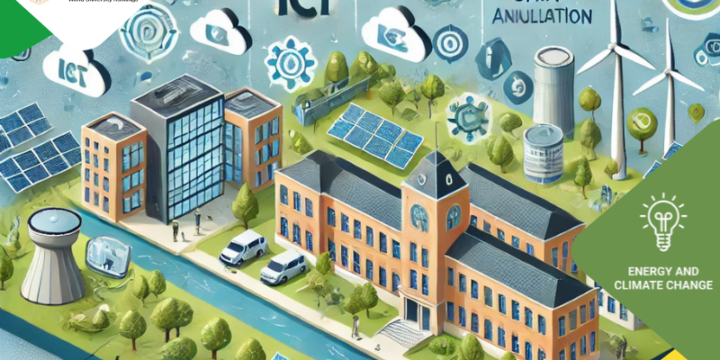
Energy and Climate Change (EC) Planning, implementation, monitoring and/or evaluation of all programs related to Energy and Climate Change through the utilization of Information and Communication Technology (ICT) Walailak University has integrated Information and Communication Technology (ICT) into its planning, implementation, monitoring, and evaluation of programs related to energy and climate change. Planning, implementation, monitoring and/or evaluation of all programs related to Energy and Climate Change through the utilization of Information and Communication Technology (ICT) The Establishment of the Carbon Neutrality Steering Committee at Walailak University. This committee leads the planning process, setting goals and strategies for reducing the university's carbon footprint and achieving carbon neutrality. ICT plays a role in data collection and analysis for decision-making. Meeting on turning on - off air conditioners with Wi-Fi system and air…
Read More
Elements of green building implementation as reflected in all construction and renovation policies (EC.6)

Elements of green building implementation as reflected in all construction and renovation policies (EC.6)

Energy and Climate Change (EC)
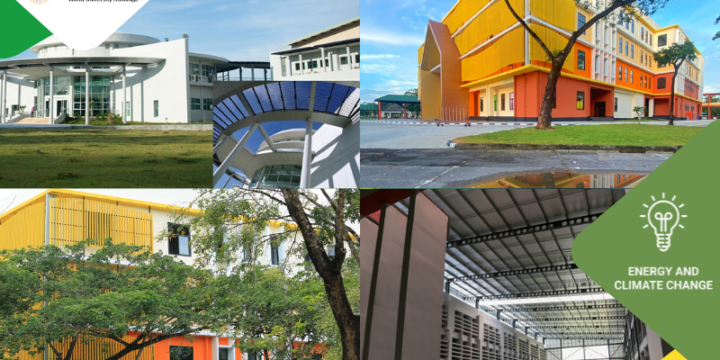
Energy and Climate Change (EC) Elements of Green Building Implementation as Reflected in All Construction and Renovation Policies. Walailak University is deeply committed to sustainability, a commitment that is reflected in all its building construction and renovation policies. The university has integrated multiple elements of green building practices to minimize environmental impact, enhance energy efficiency, and create healthy living and learning environments. These green building components encompass more than 3 elements 1. Sun-shading are designed by fin and shade. The design and installation of sun-shading systems using fins and shades on the university's buildings are crucial for developing sustainable and energy-efficient structures. These systems help control the amount of sunlight entering the buildings, thereby reducing heat accumulation and enhancing comfort for occupants.Installation of Fins : Fins, which can be oriented…
Read More
Total electricity usage divided by total campus’ population (kWh per person) (EC.4)

Total electricity usage divided by total campus’ population (kWh per person) (EC.4)

Energy and Climate Change (EC)
Energy and Climate Change (EC) Electricity Usage per Year (in Kilowatt hour) The total electricity consumption of Walailak University in 2024 is 14,520,499.93 kWh. Within the main campus area, the top three highest electricity consumption areas are the shops that charge electricity fees, various building groups such as canteens and gardens, the Integrated Academic Building group, and student dormitories, respectively. When comparing electricity consumption to the number of people on campus (15,860), The electricity usage per capita is 915.54 kWh per person. Source of data : Division of Service Central. Related SDGs 7 Goal 7: Affordable and clean energy 13 Goal 13: Climate action
Read More
Number of renewable energy sources on campus (EC.3)

Number of renewable energy sources on campus (EC.3)

Energy and Climate Change (EC)
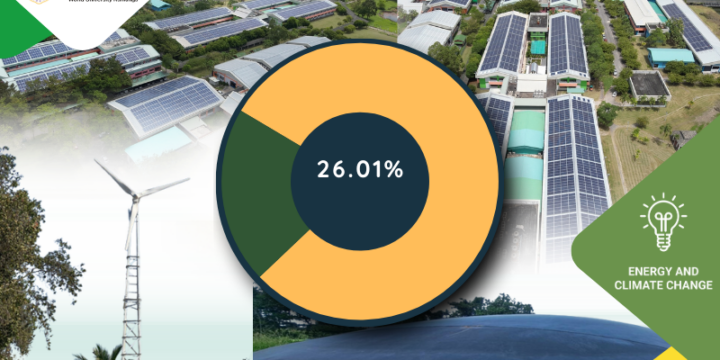
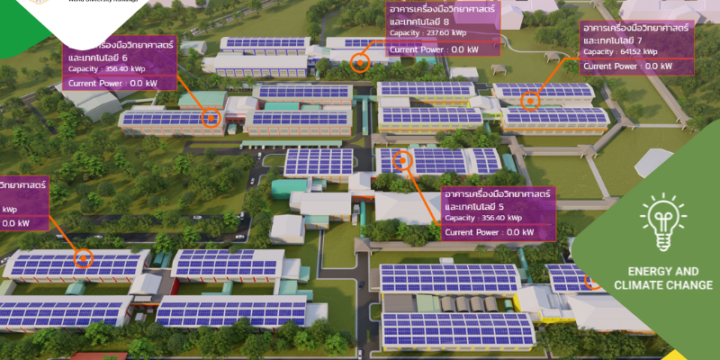
Energy and Climate Change (EC) Renewable Energy Sources in Campus Walailak University is a leader in integrating multiple renewable energy sources into its operations, showcasing a strong commitment to sustainability and reducing its carbon footprint. The university’s renewable energy portfolio includes more than 3 sources : solar power, clean biomass, hydropower, combined heat and power, and wind power. Each of these sources plays a vital role in creating a balanced and sustainable energy system that supports the university’s long-term environmental goals. Solar Power Solar power is a cornerstone of the university’s renewable energy strategy. Photovoltaic systems are installed on rooftops and open spaces across the campus, converting sunlight into electricity. This clean energy source significantly reduces the university’s reliance on fossil fuels, lowering greenhouse gas emissions and operating costs. Clean…
Read More
Smart Building Implementation (EC.2)

Smart Building Implementation (EC.2)

Energy and Climate Change (EC)
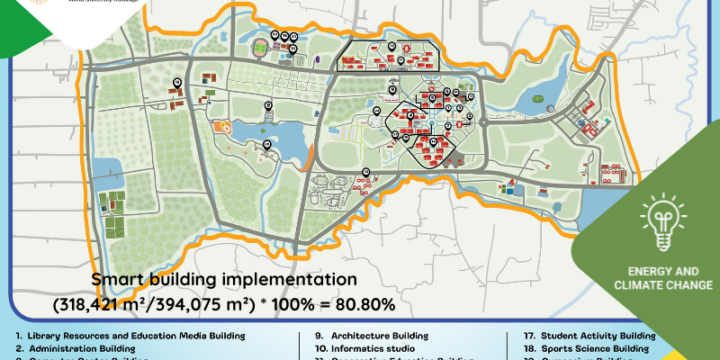
Energy and Climate Change (EC) Walailak University’s Smart Buildings: A Commitment to Sustainability Source of data : Division of Landscaping ang Building Walailak University is at the forefront of sustainable campus development, with 80.80% of its buildings classified as Smart Buildings. These structures are equipped with advanced technology systems that optimize energy consumption, reduce carbon emissions, and enhance overall campus operations. By integrating intelligent systems such as automated lighting, climate control, real-time energy monitoring, intruder alarms, fire suppression systems, CCTV, LED lighting, se n nsors, and natural lighting, these Smart Buildings play a crucial role in achieving the university’s goal of minimizing environmental impact and promoting sustainable practices. This initiative highlights Walailak University’s dedication to creating an environmentally friendly and sustainable campus that adheres to global standards and sets a…
Read More