Educational Outreach: Strengthening Lifelong Learning in Local Communities and Schools

Educational Outreach Programme in the Communities and Local Schools
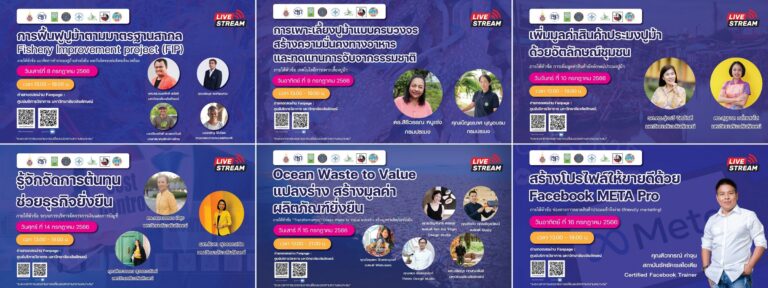
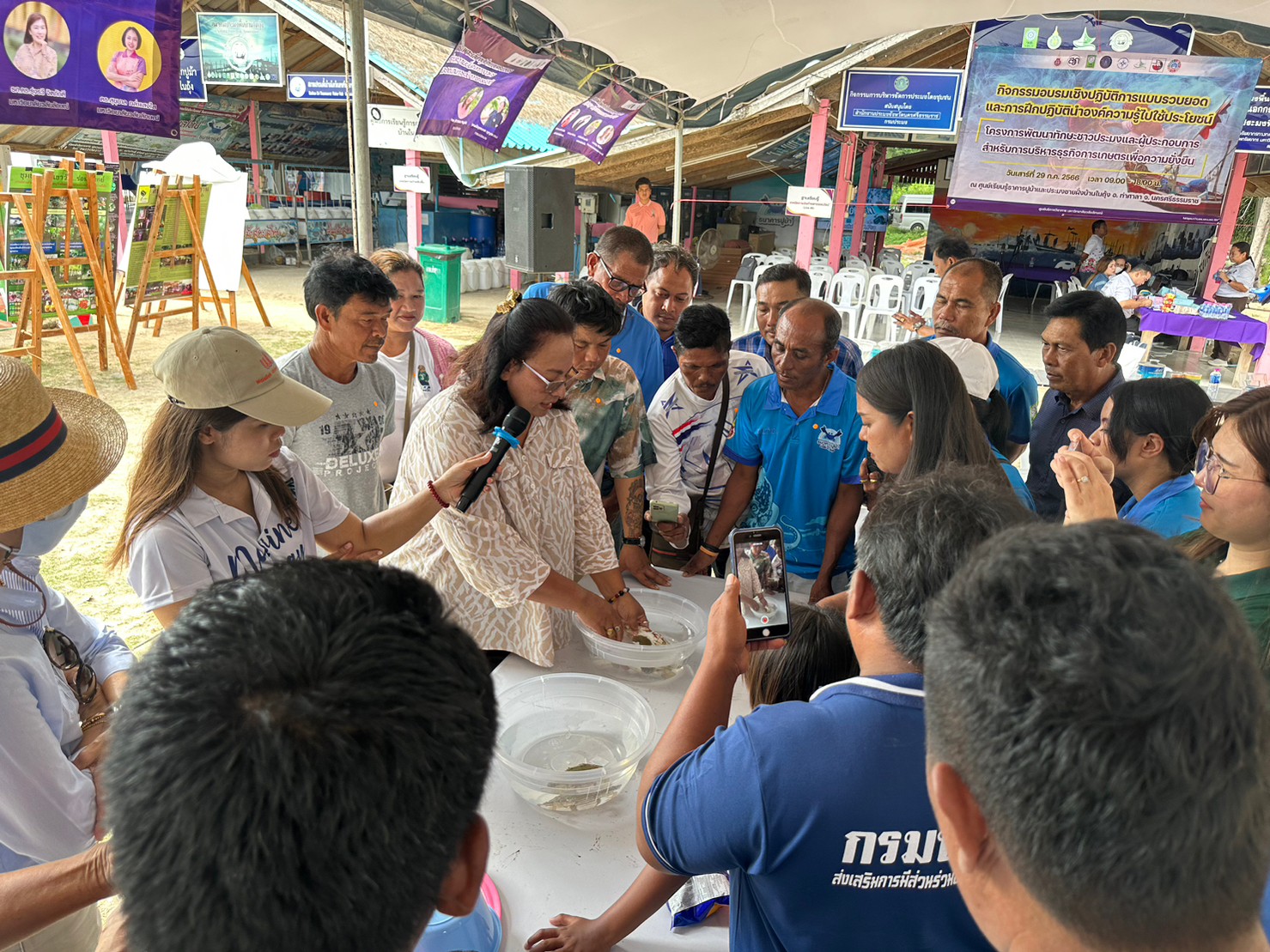
Additionally, there are resource knowledge promotion activities aimed at enhancing the skills and expertise of local fishermen through six specialized courses, designed by experts in each respective field:
- Sustainable and Socially Responsible Blue Crab Fishing – This course teaches sustainable fishing methods in line with international FIP (Fishery Improvement Project) standards, with an emphasis on environmental responsibility.
- Blue Crab Aquaculture Technology – Fishermen will learn modern techniques in blue crab farming to boost production.
- Adding Value to Local Identity Blue Crab Products – This course provides knowledge on how to add value to fishery products that reflect the unique identity of local blue crab fishing.
- Financial and Accounting Management – The content covers effective financial management for fishing businesses.
- Sustainable Product Design – Focuses on designing fishery products with long-term sustainability in mind.
- Accessible Marketing Channels – Teaches fishermen effective ways to market their products using simple and user-friendly approaches.
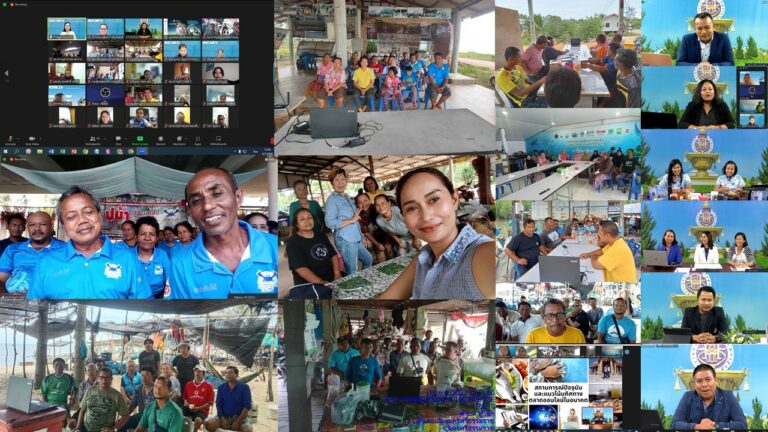
These courses are available online, allowing fishermen to learn at their convenience, aligning with the government’s Lifelong Learning policy. This program not only enhances the skills of local fishermen but also strengthens the community by promoting knowledge and understanding of sustainable practices, both economically and environmentally.
Financial issues have also been a key focus for the university, especially considering that many community enterprises in Phrom Khiri District, Nakhon Si Thammarat Province, lack knowledge in business management. Specifically, they face challenges in calculating costs, financial planning, product pricing, and bookkeeping, which are critical factors for running a successful and sustainable business. The lack of such knowledge has prevented many community enterprises from increasing their income or developing their businesses sustainably.
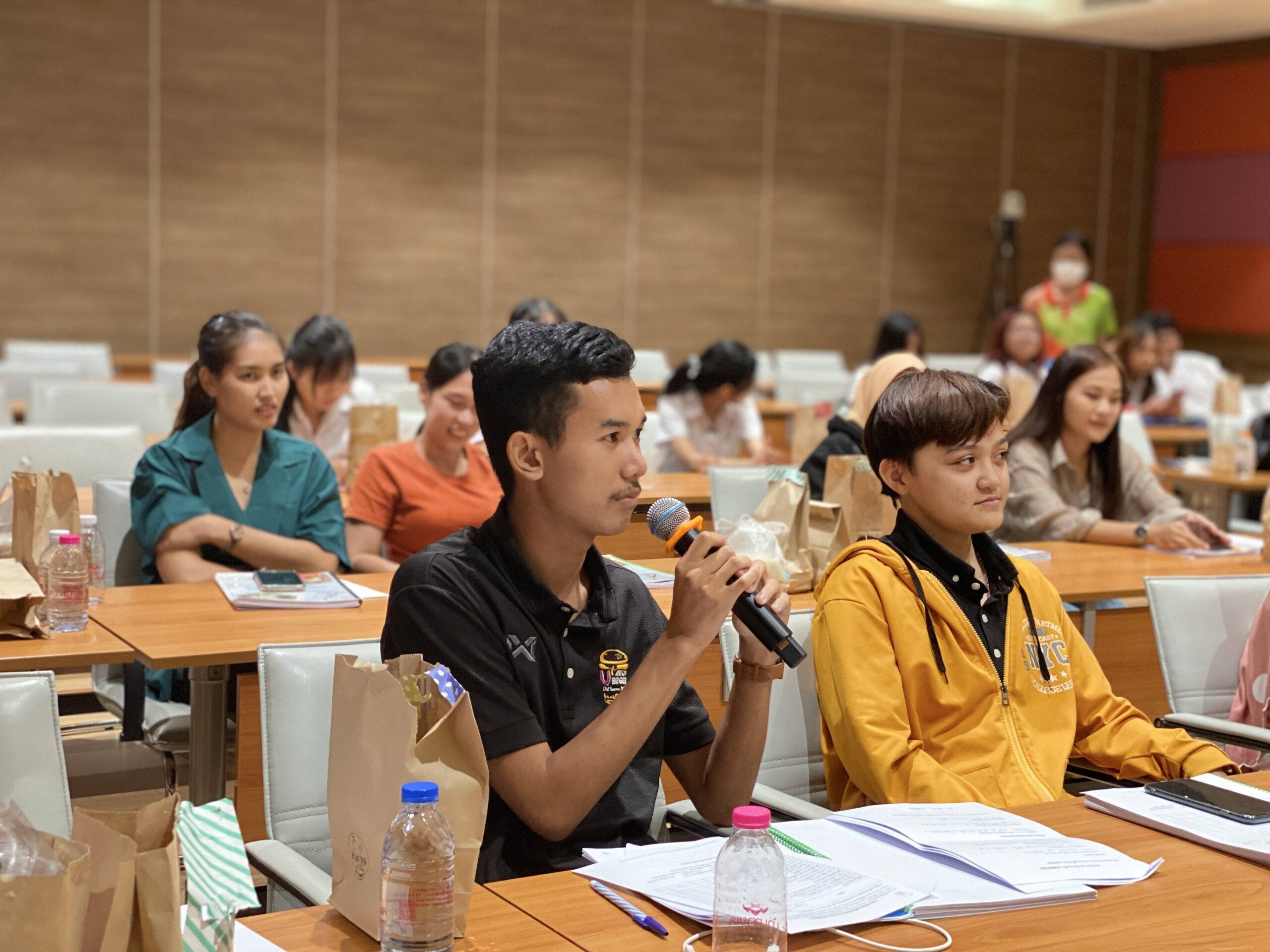
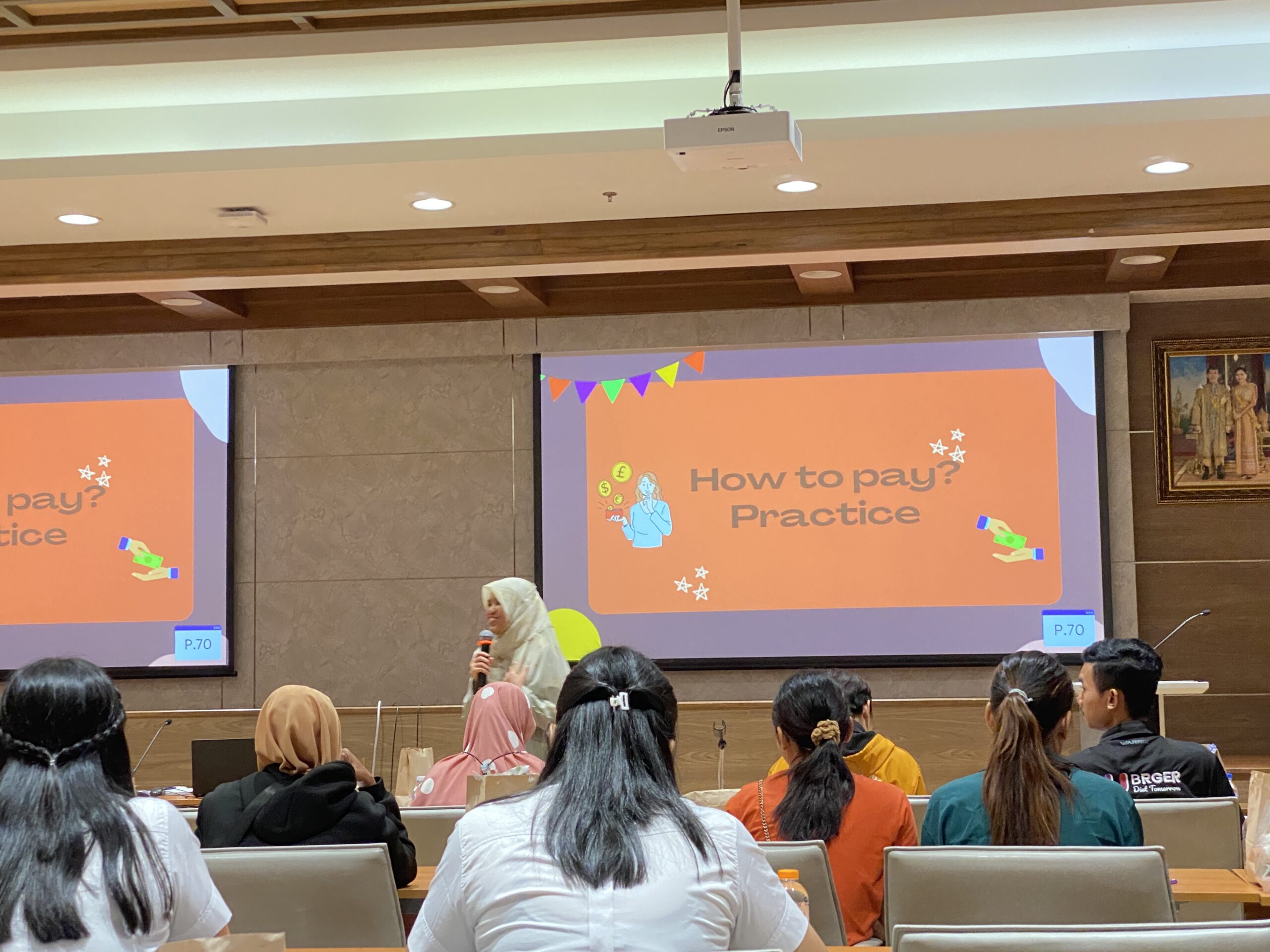
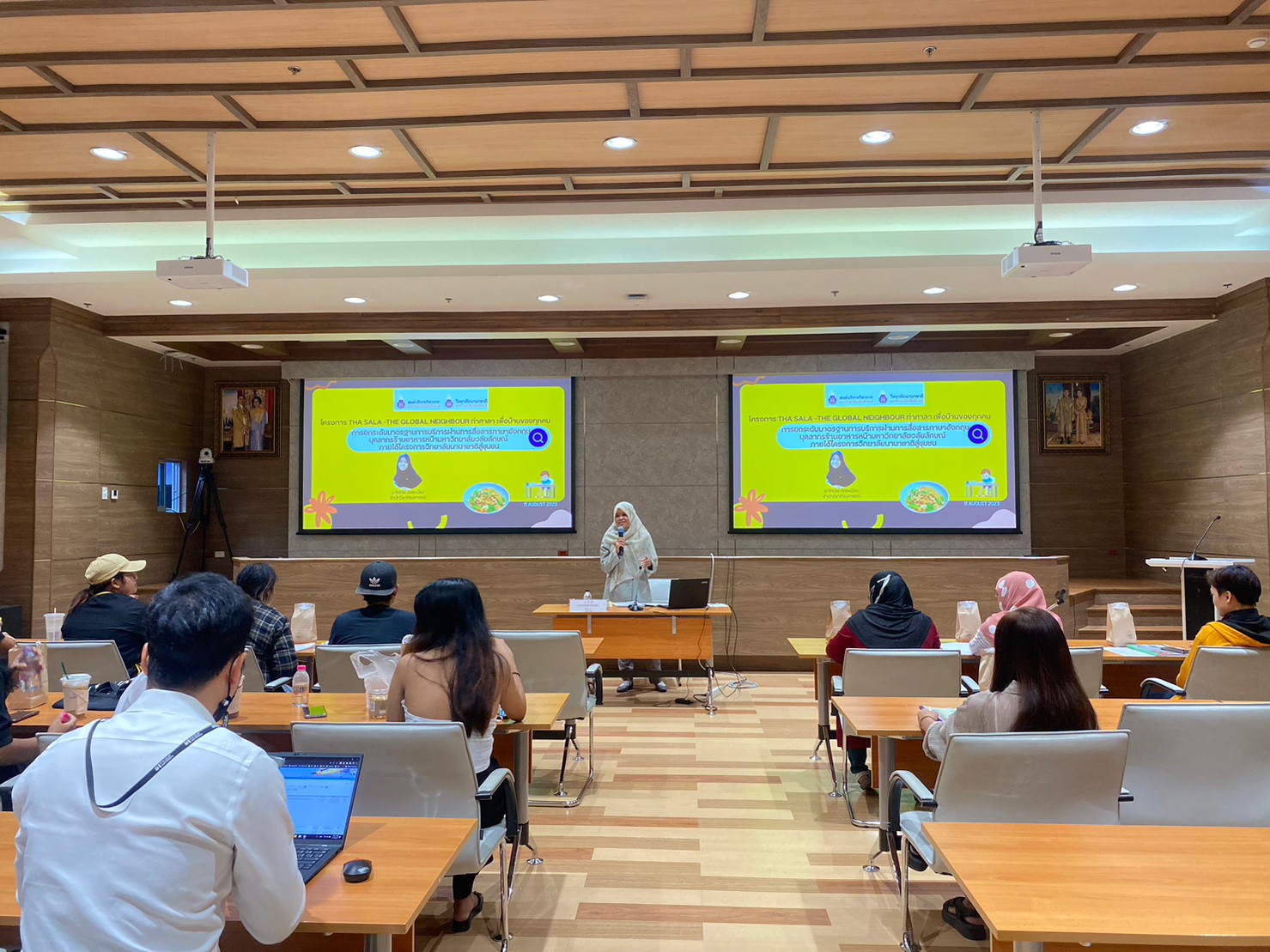
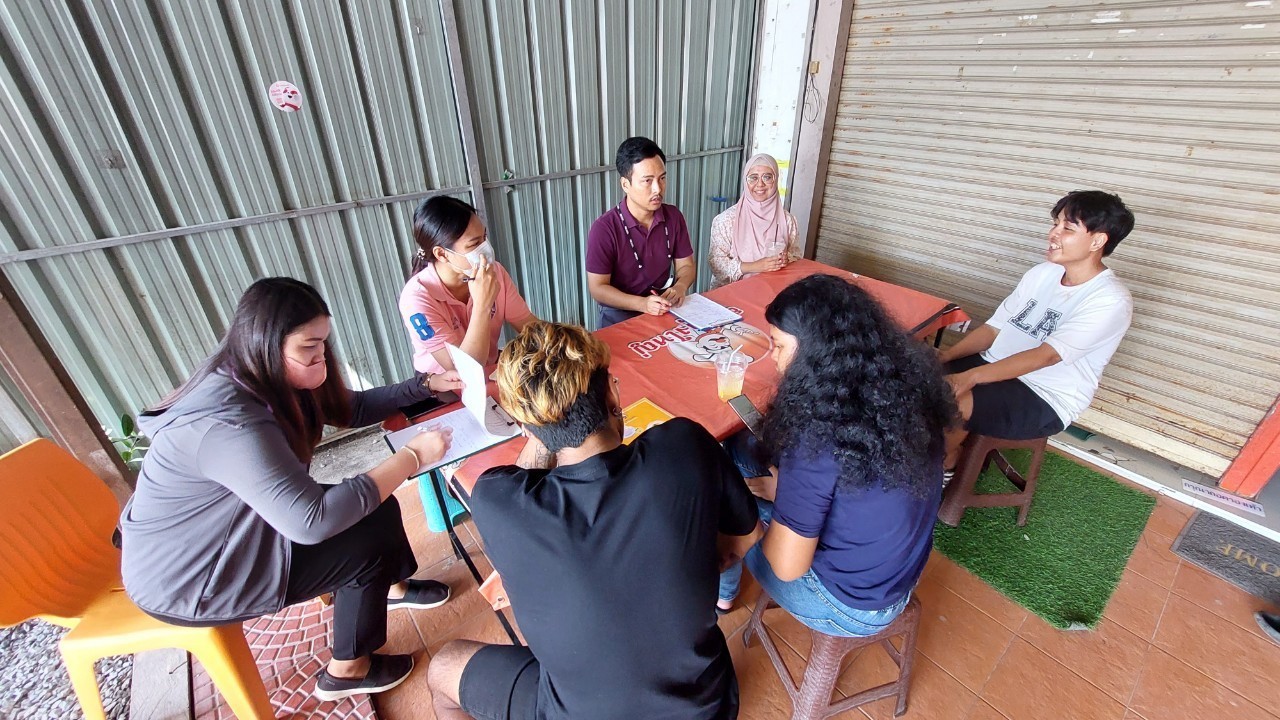
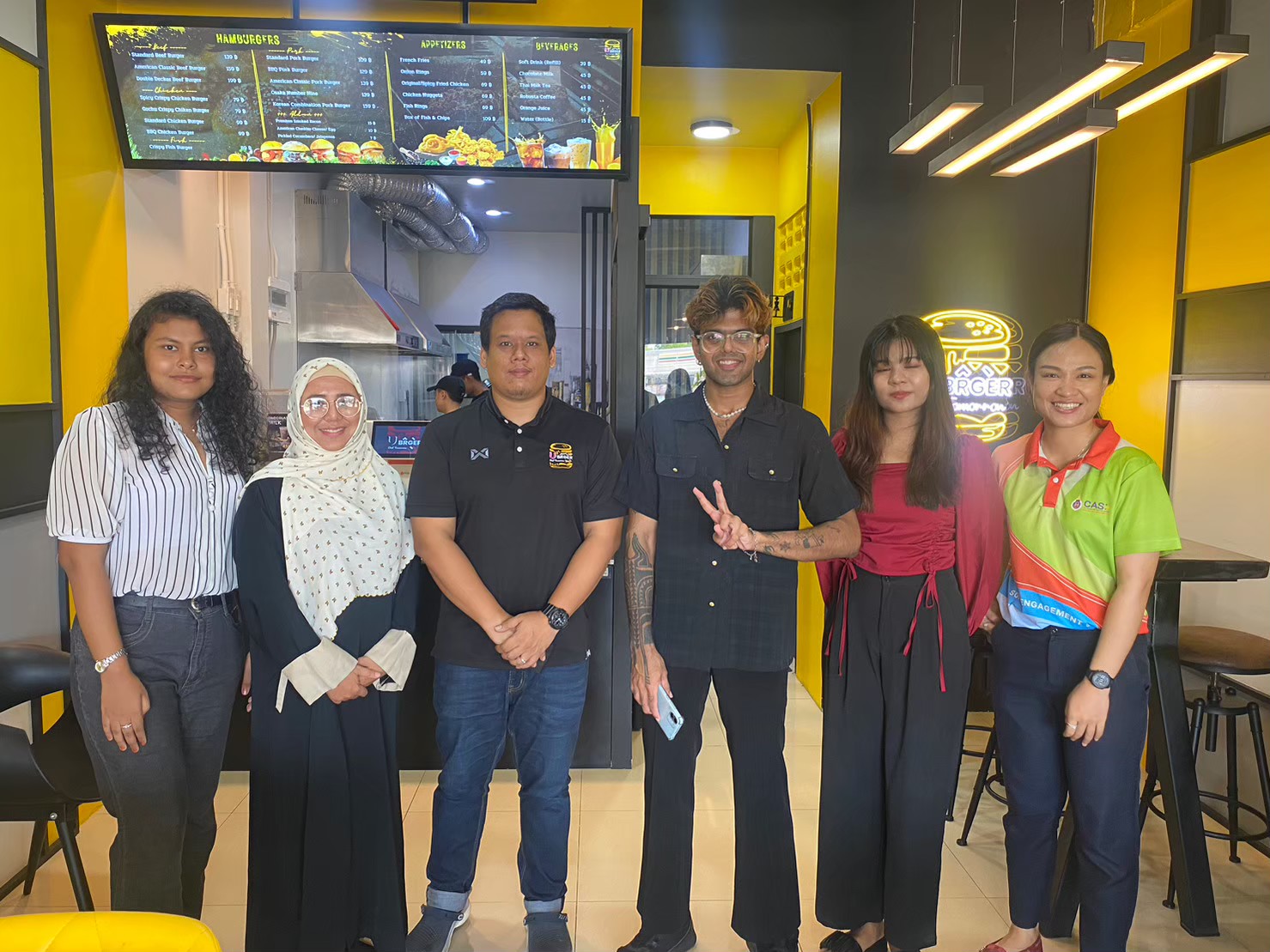
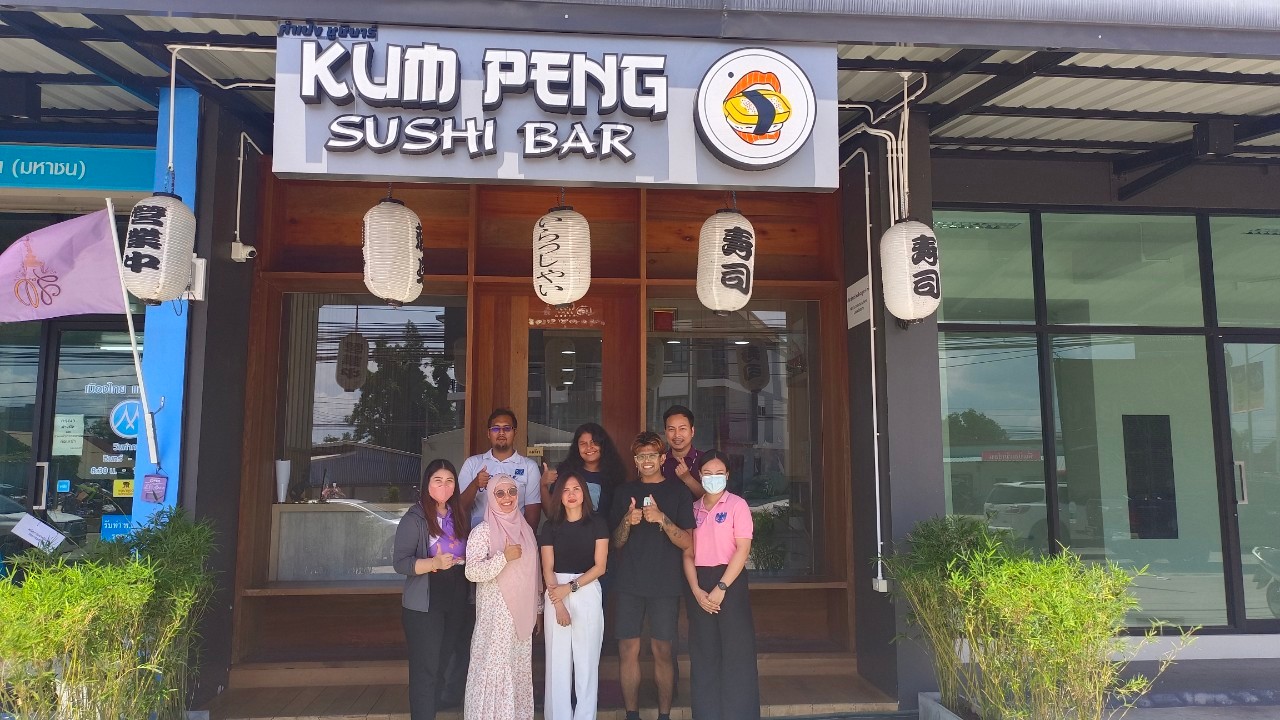
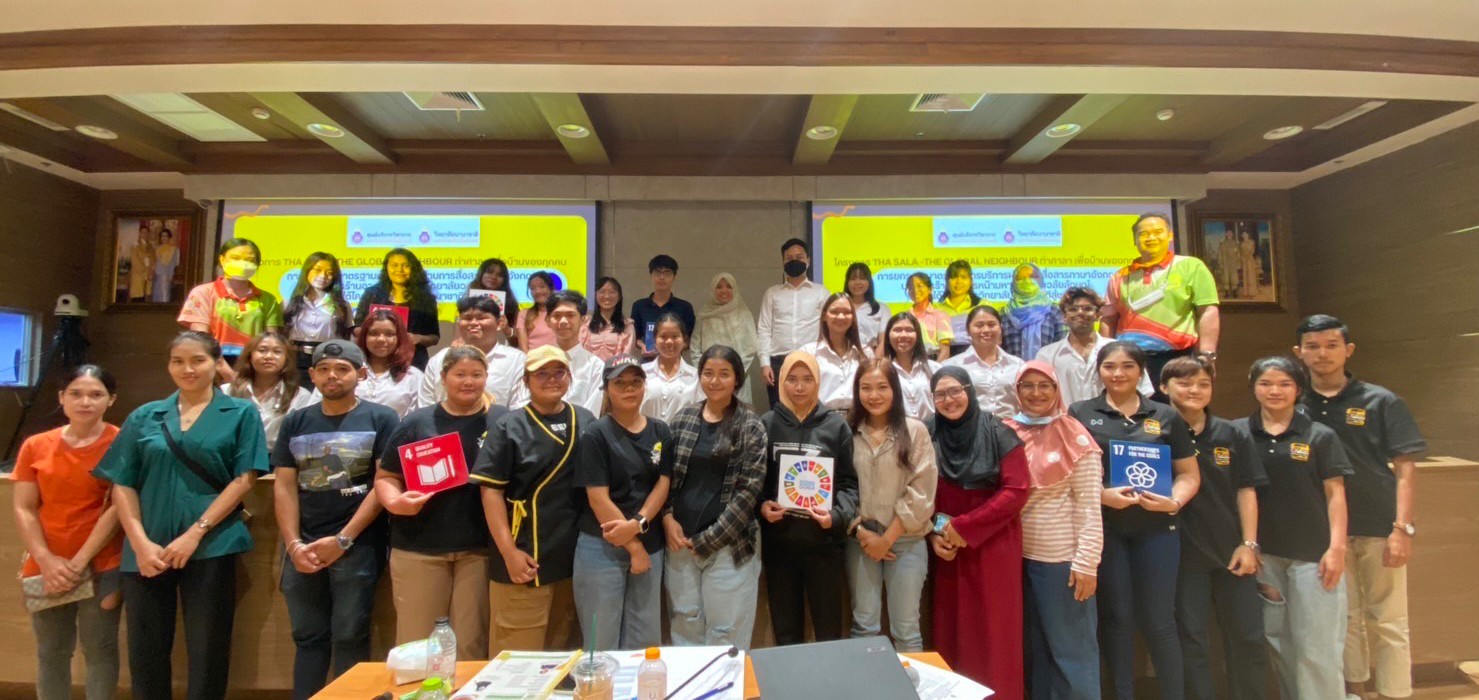
Consequently, the Accounting and Finance for Community Project, led by the School of Accountancy and Finance at Walailak University in collaboration with the Phrom Lok Subdistrict Municipality, has been addressing these issues by undertaking educational outreach activity beyond campus in the community. The project focuses on providing business management knowledge to six community enterprises through tailored lectures of community needs covering cost calculation, product pricing, bookkeeping, financial planning, marketing, and developing sales channels. These activities have been integrated with the teaching curriculum in business administration courses, such as Business Finance, Marketing, and Sustainable Business Management, to ensure comprehensive and lasting results. As integrated with the teaching curriculum, there are also voluntary student participating this program activity.
After participating in the project, the community enterprises were able to calculate product costs and set prices more accurately and appropriately. They gained an understanding of the importance of keeping track of their income and expenses, improved their sales channels and marketing communications, and developed networks with new entrepreneurs in the area. This networking has helped strengthen their businesses and ensure long-term sustainability.
In addition to working with local communities, the university has also implemented several educational outreach program activities in local schools, such as the ECEEP, the English Development Program for Students in Schools Surrounding the University, and the Sufficiency Economy Project.
ECEEP Project
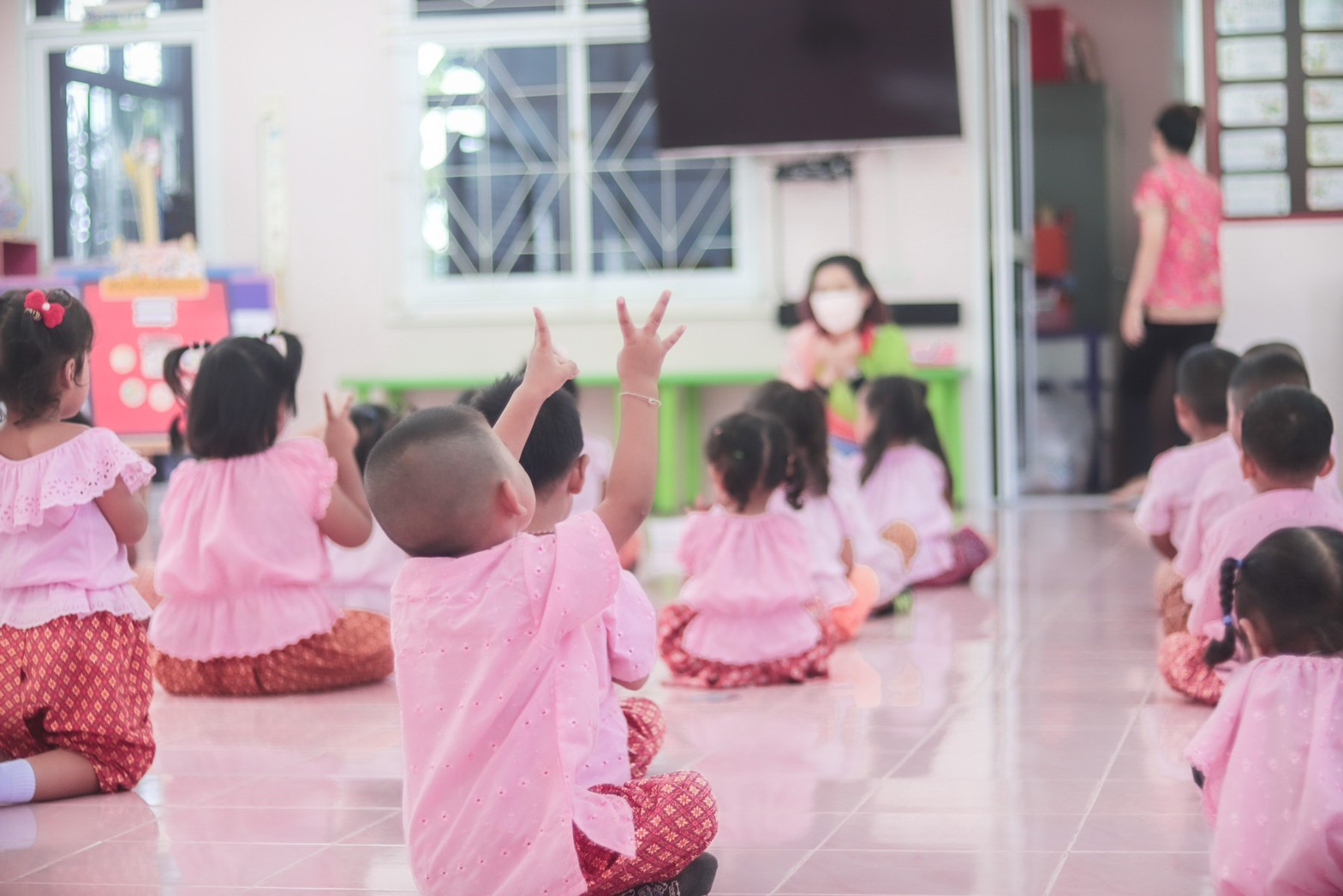
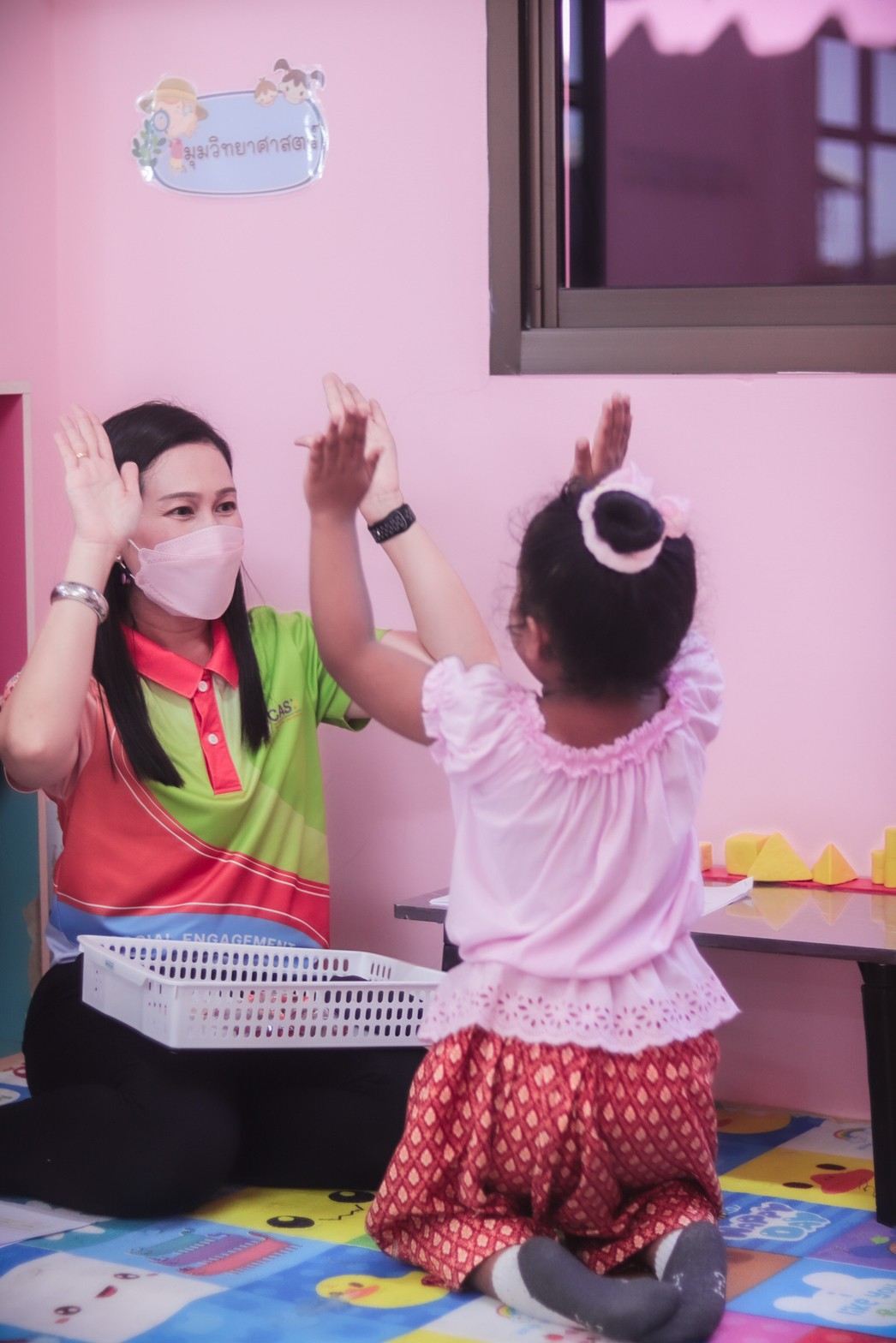
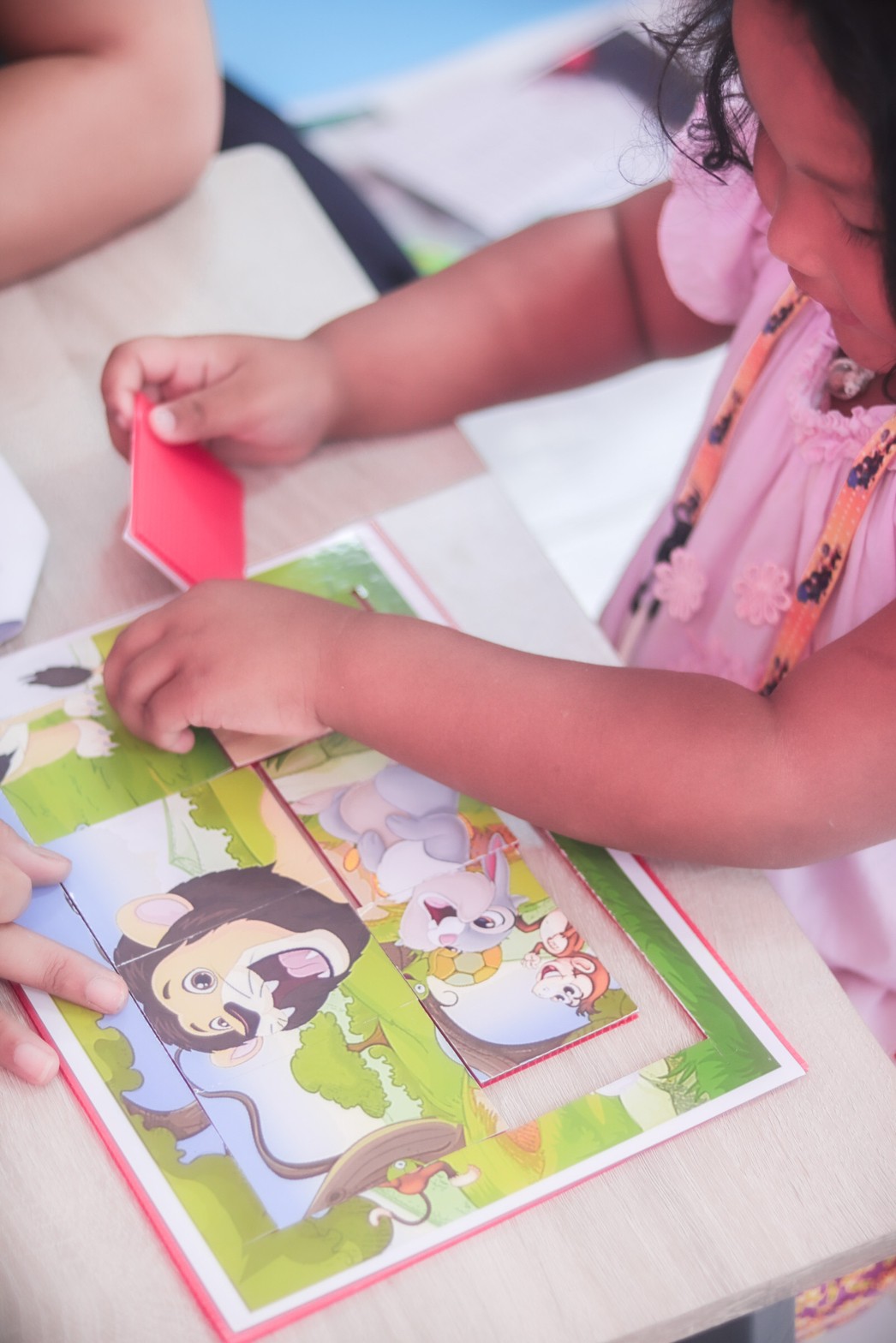
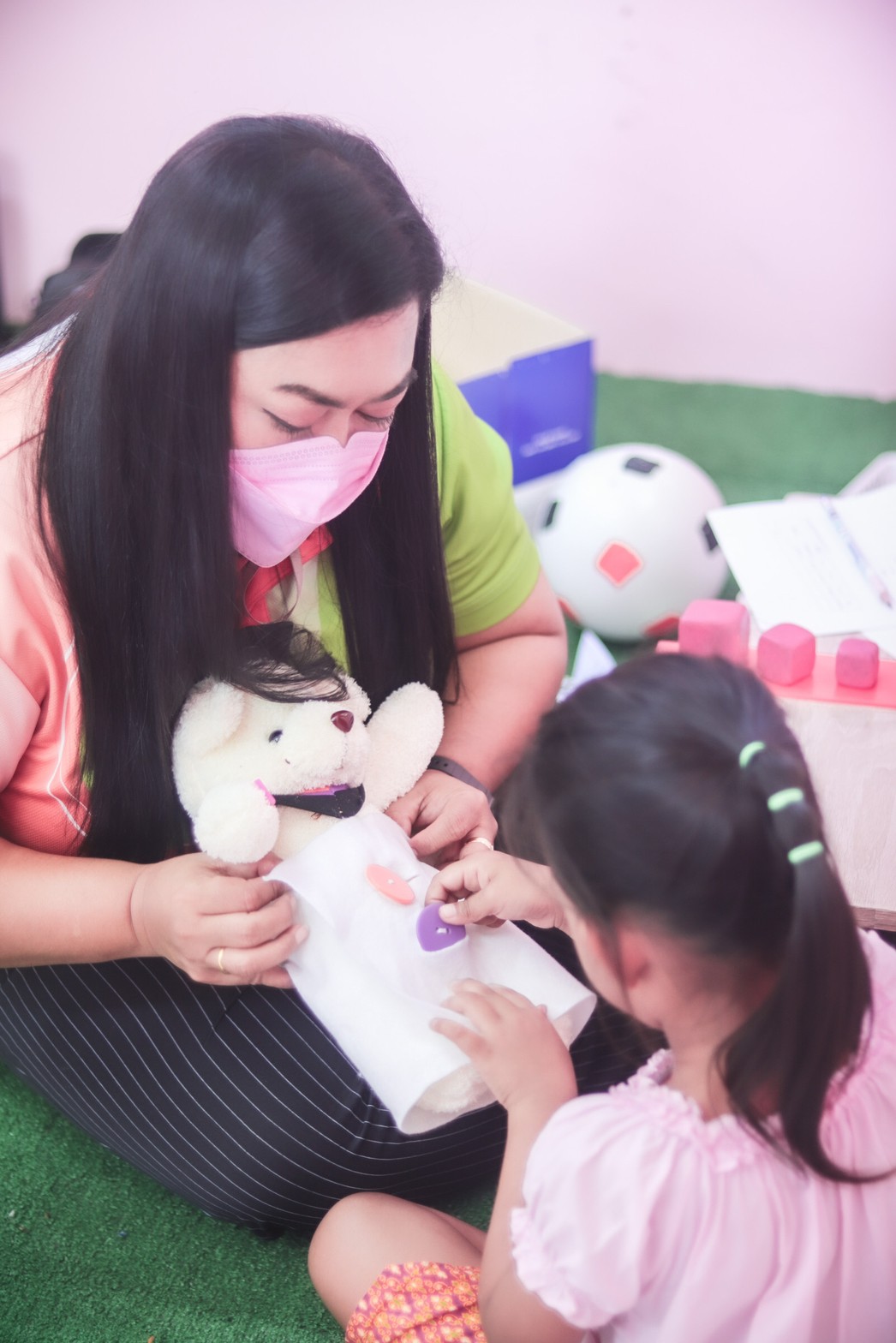
The Early Childhood Equity Education Project (ECEEP), now in its third year, was initiated by Walailak University in response to the educational inequality faced by early childhood students in local communities. This disparity has resulted in some children not receiving the proper education and development appropriate for their age, leading to issues with readiness for primary education. The project aims to improve education and reduce this gap through quality curriculum development and policy research.
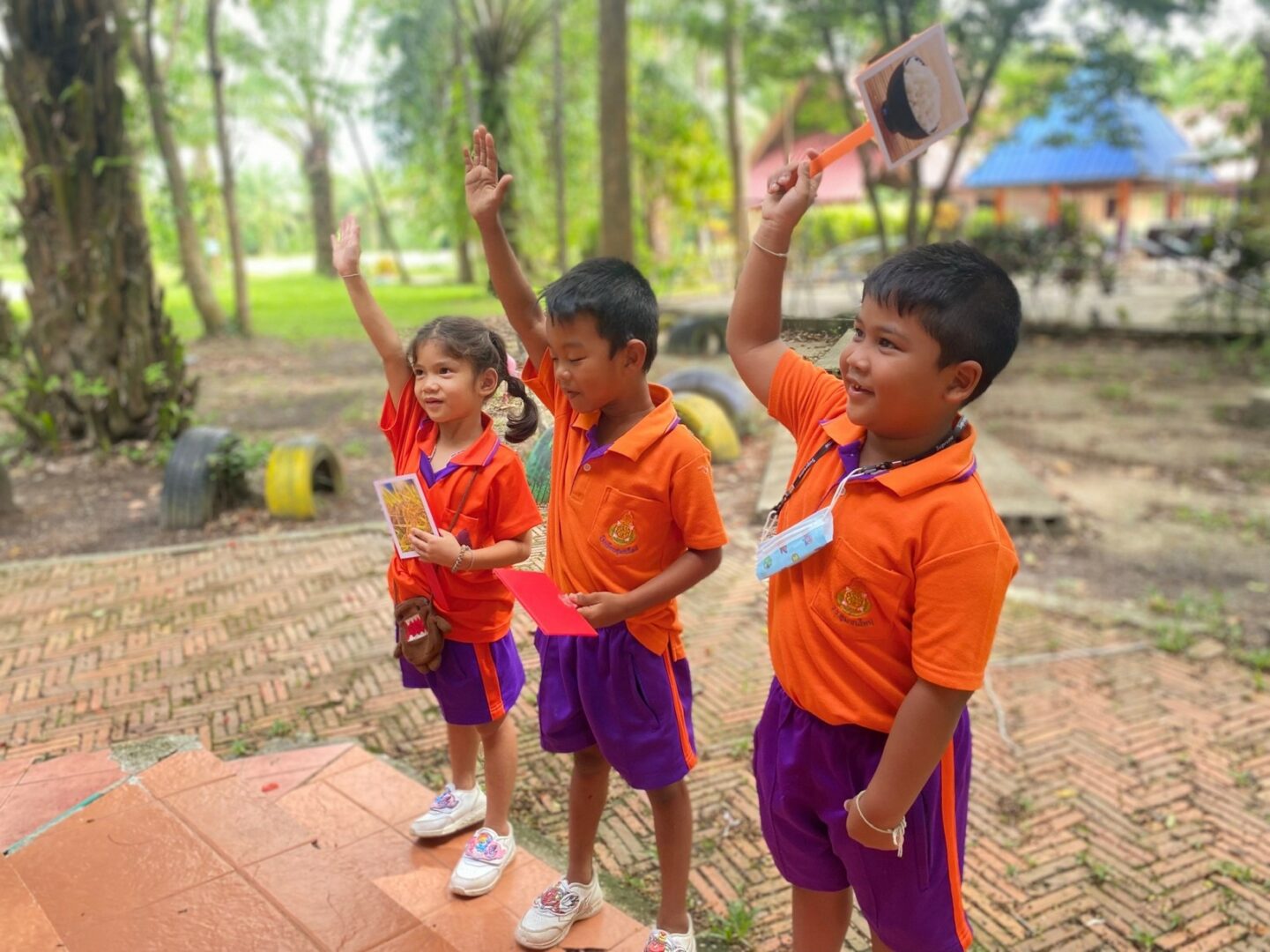
Walailak University has organized educational outreach activities to develop and train the High Scope curriculum at Wat Khok Lek Early Childhood Development Center and Satit Walailak Pattana Community Early Childhood Development Center. The project also monitors and evaluates the learning outcomes of the children, with results showing that preschool students at both centers have increased their executive function (EF) skills by 40%. This improvement is based on a standard deviation score of 0.40 when comparing the evaluation of skills before and after learning under the High Scope curriculum, which is age appropriate.
Additionally, the Wat Khok Lek Early Childhood Development Center received an evaluation score of over 95% from the model center assessment “RIECE Thailand” and has been upgraded to become the first demonstration center in Southern Thailand to implement High Scope learning methods in early childhood development.
English Development Program for Students in Schools Surrounding the University
In the modern era, English is increasingly important in 21st-century learning as it is the global language of communication. In everyday life, English is involved in various aspects, making it essential for students to be proficient in using it. In today’s society, where education knows no borders and communication can occur globally, students should develop English communication skills that they can apply in daily life and in various situations. The continuous development of English skills, including listening, speaking, reading, and writing, is essential as a foundation for higher education and for improving the quality of academic achievement.
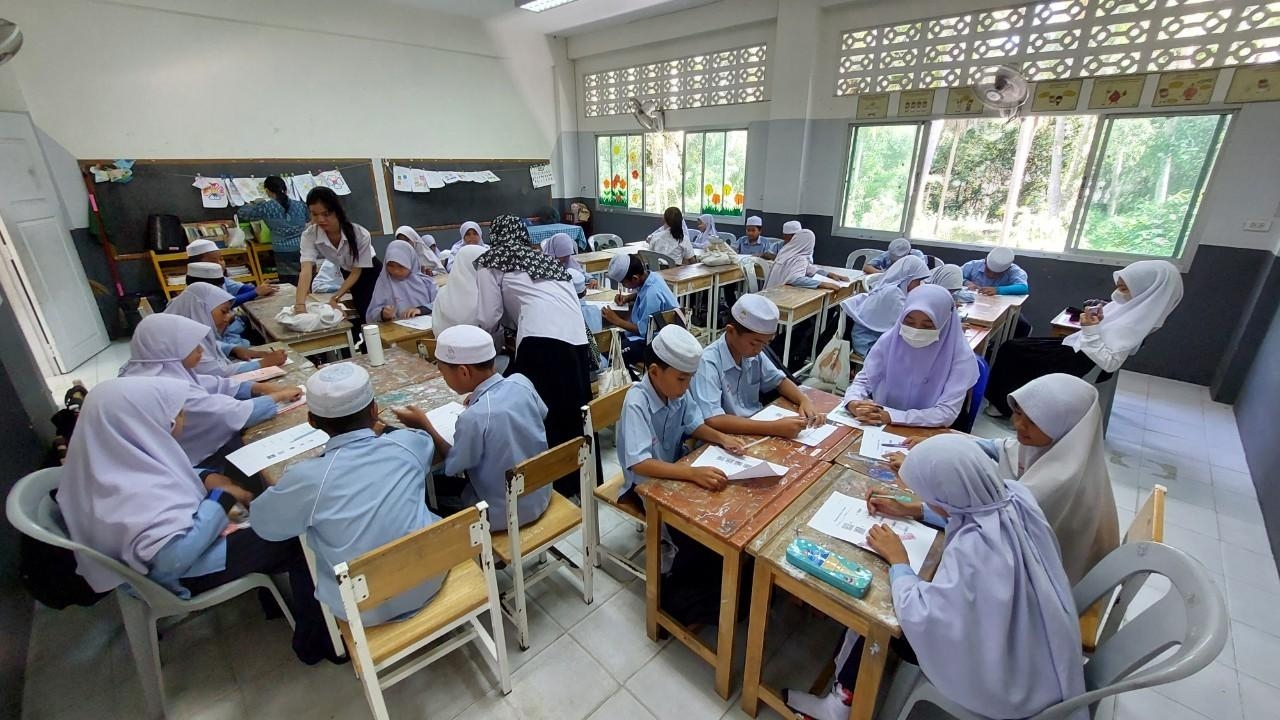
Modern students need to understand the processes of communication in English, acquire language skills, and be able to use English effectively on all occasions. This serves as a foundation for advanced learning and allows them to use their English knowledge for further education or future careers, so the English Development Program for Students in Schools Surrounding the University was established to provide local youth from diverse ethnic and religious backgrounds with access to quality English education. The program aims to develop English language skills appropriate to the students’ grade levels.
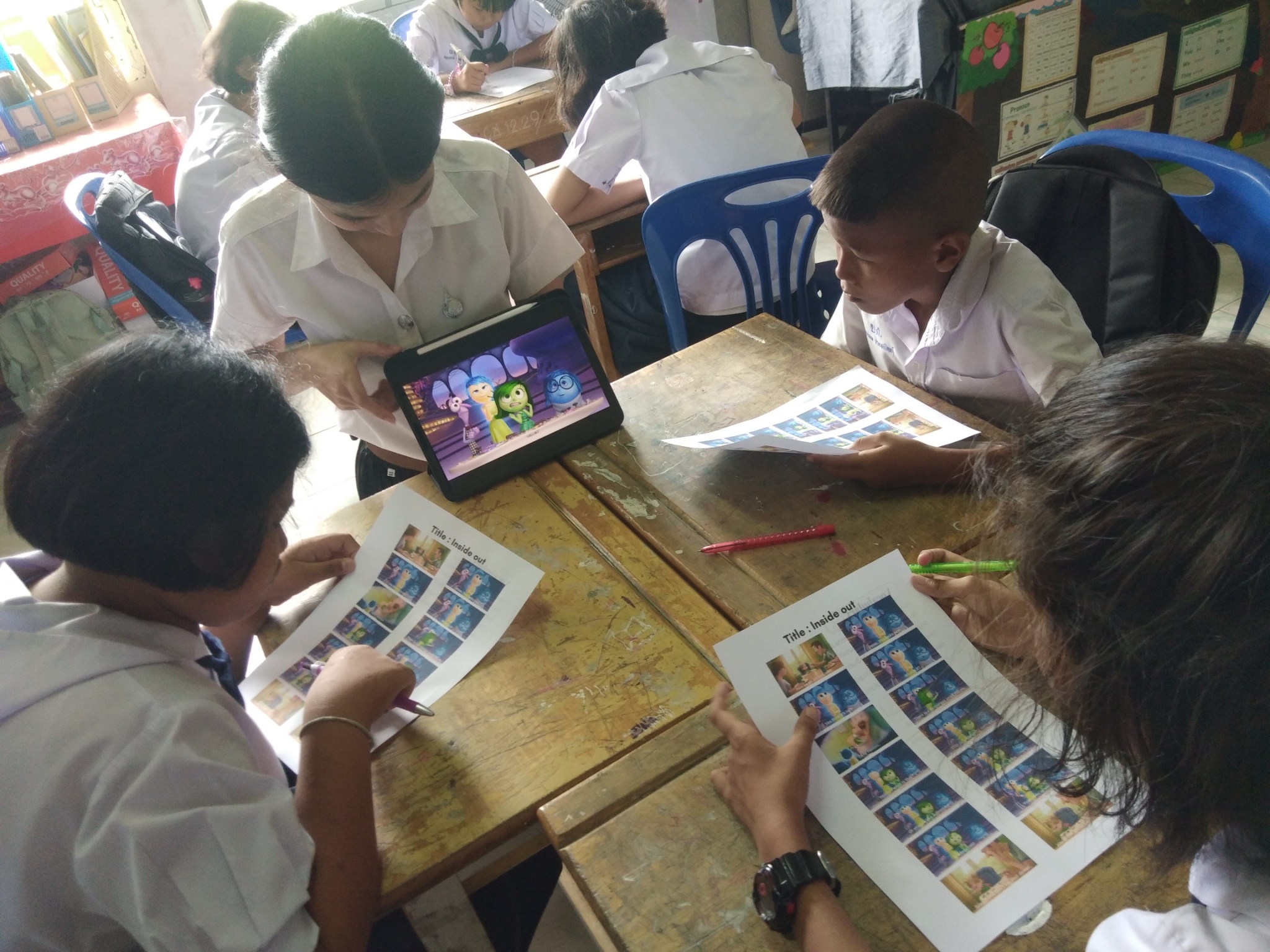
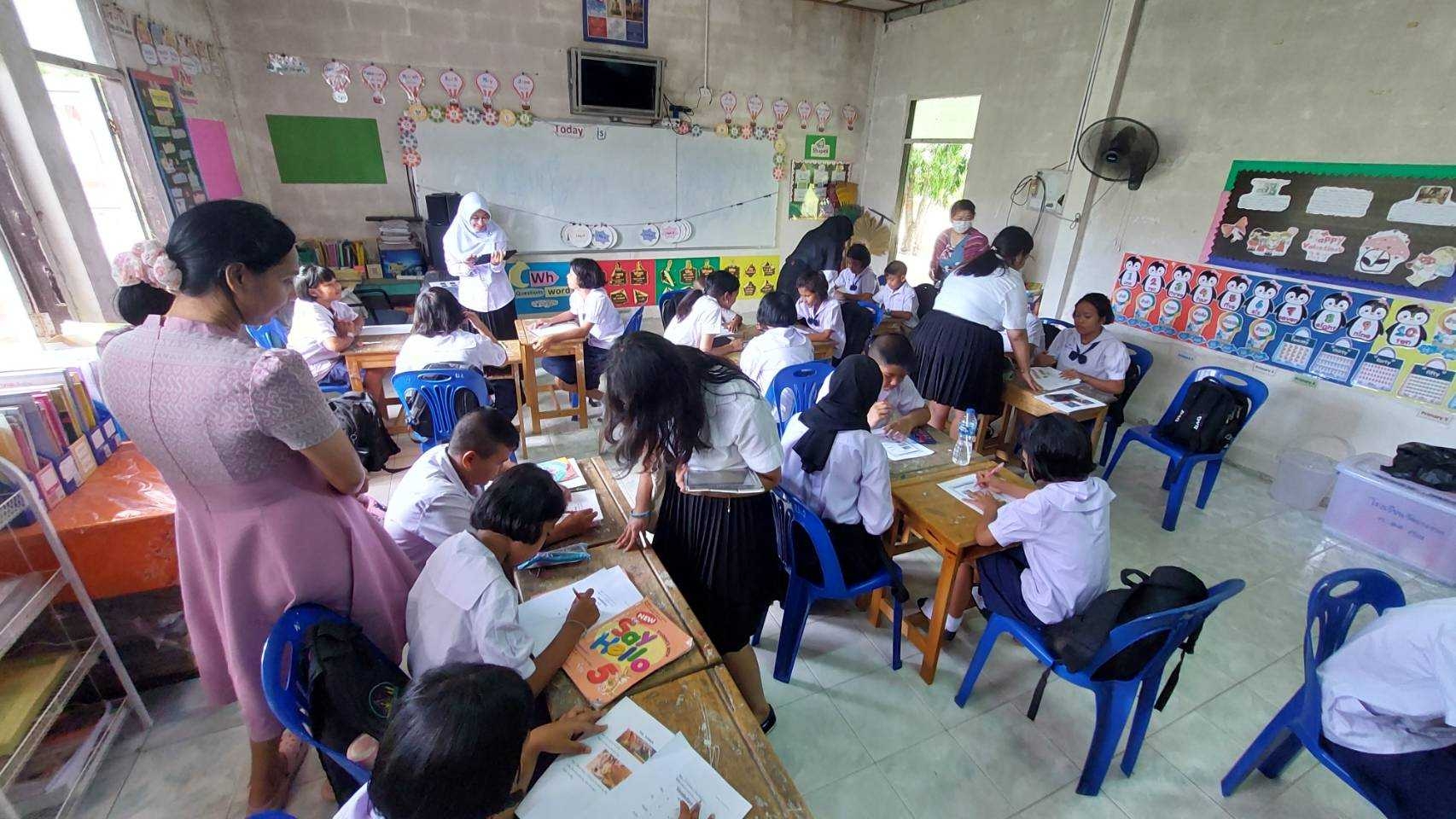
This project integrates English teaching activities through a “Reading and Writing Buddies” program, in which English major university students teach 5th-grade students from nearby schools. The activities focus on improving reading aloud, vocabulary, listening, speaking, reading, and writing skills through comics that match the students’ interests. The main goal is to build students’ confidence in using English, enabling them to communicate more effectively, foster a love of learning the language, and practice diligently.
The university students involved in the project could contribute to the community by teaching English to younger students. After each session, an evaluation is conducted where the university students assess the progress of the younger students, as well as any learning challenges they encounter. These assessments include techniques for remembering English letters, phonics, phrases and idioms, understanding grammar, and sentence structures used in short stories. The results serve as a basis for future lessons.
Upon completion of the program, 5th-grade students show significant improvement in both their confidence in using English and their success in tests. Their post-program test scores increased notably. Moreover, both teachers and students expressed high satisfaction with the program’s activities. The students enjoyed participating in the English learning activities. While students benefited from the diverse teaching methods, university students gained hands-on experience in teaching English to primary school students with voluntary student-run schemes.
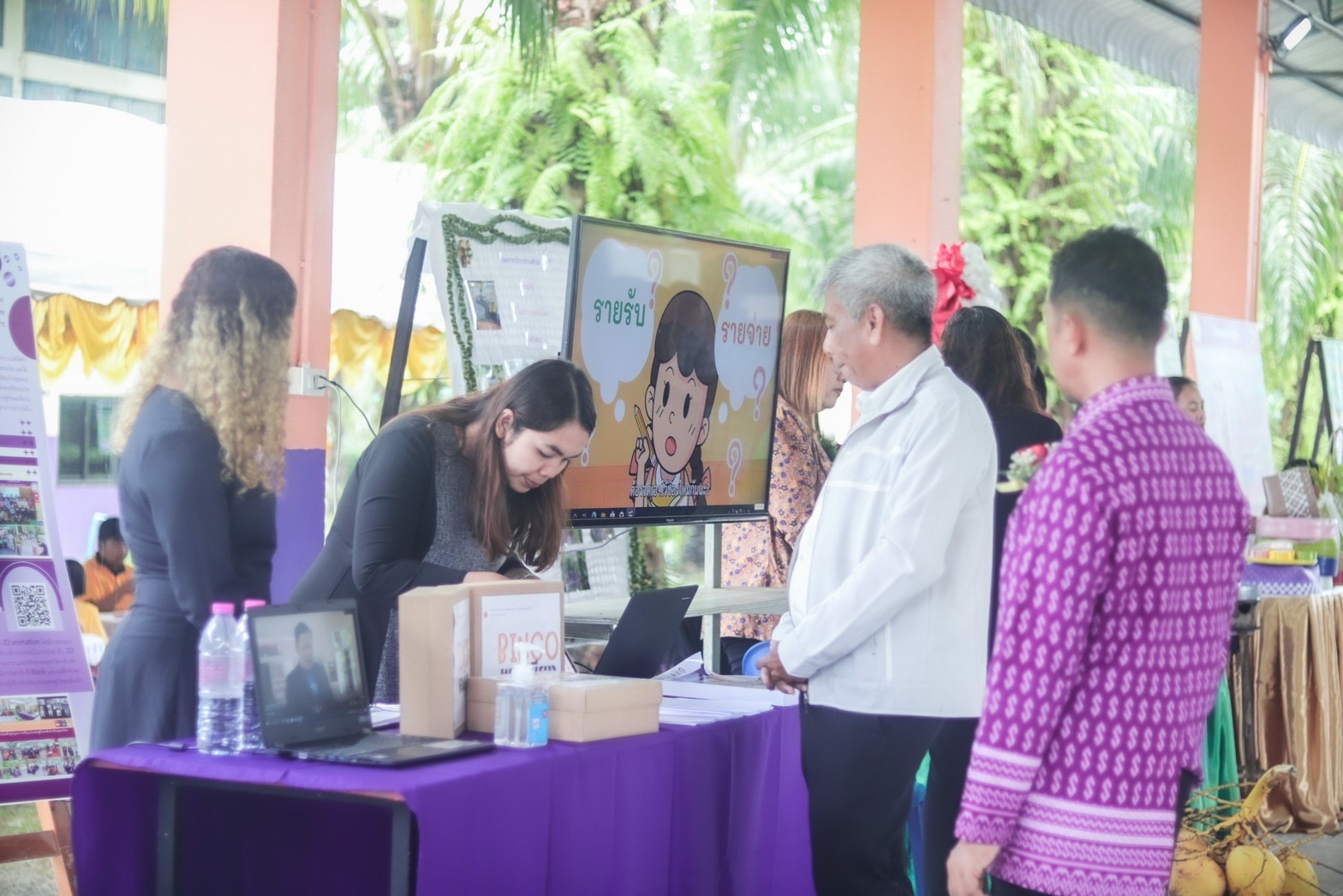
Project for the Development of Innovative Teaching Materials for the Integrated Curriculum on the Philosophy of Sufficiency Economy for Chumchon Mai School and Surrounding Community Schools, Year 4
Chumchon Mai School and surrounding community schools currently lack educational media that integrates the philosophy of sufficiency economy into their curriculum. This gap prevents students from fully understanding and applying the concept of sufficiency economy, as modern and easily accessible learning tools are not available. This poses a significant challenge in imparting knowledge about the sufficiency economy to youth in these areas. Additionally, there are difficulties in distributing this knowledge to nearby network schools.
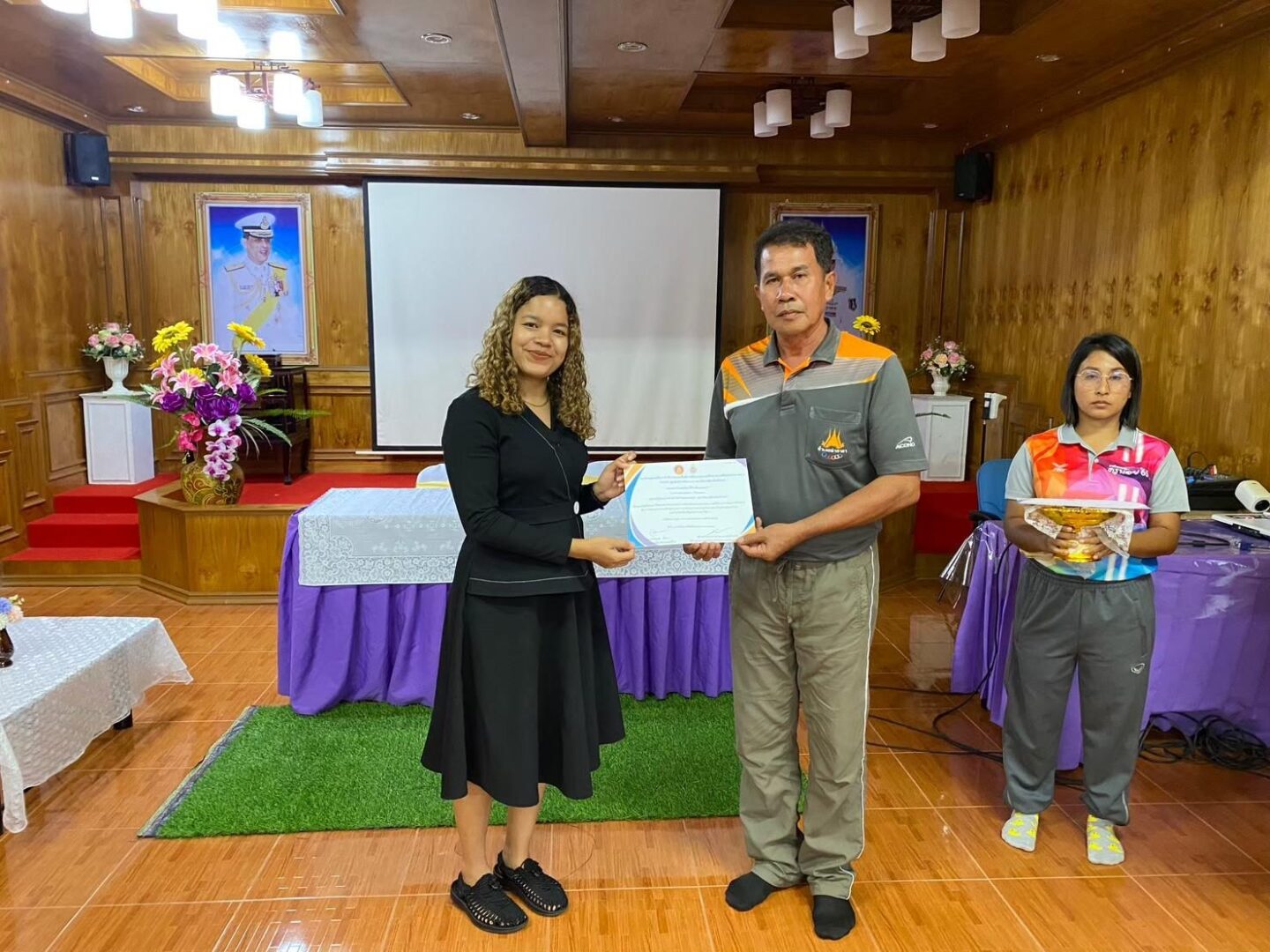
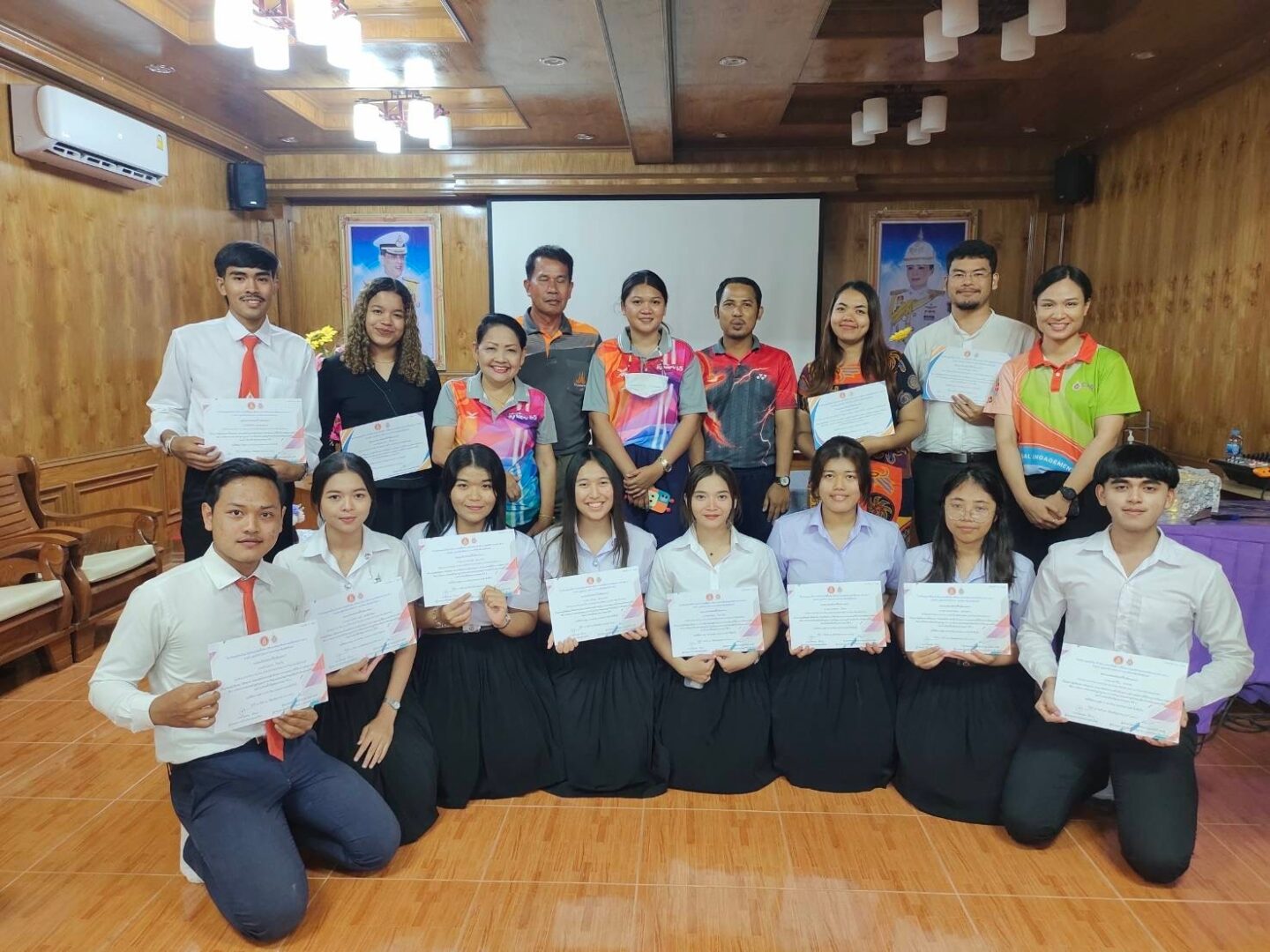
In response, this project developed 12 lessons in the form of 2D animation, allowing students from grades 1 through 9 to learn and take tests via online platforms. Certificates are awarded upon successful completion of the lessons, encouraging online learning among students in Chumchon Mai School and its network schools. In 2023, the project further expanded by developing additional learning materials, including E-books and skill-enhancing games that support the understanding of the sufficiency economy philosophy. Additionally, the project created exams to assess students’ knowledge. These activities promote learning beyond the classroom and provide interested individuals with 24/7 access to the materials through the project’s website. Moreover, the project received support from six network schools, and Walailak University students in the design and production of educational outreach program activities, ensuring comprehensive coverage and alignment with sustainable development goals.
As a result of the project, students at Chumchon Mai School and its network schools have gained a deeper understanding of the sufficiency economy philosophy through modern educational media such as 2D animations, E-books, and skill-enhancing games. Additionally, students received certificates validating their learning achievements, which further motivated them to study. Chumchon Mai School has also been able to use this knowledge to develop a national-level sufficiency economy learning center and integrate the products from this knowledge base into their lunch program and as a source of income for the school.
Educational Outreach Ad-hoc in the Communities and Local Schools
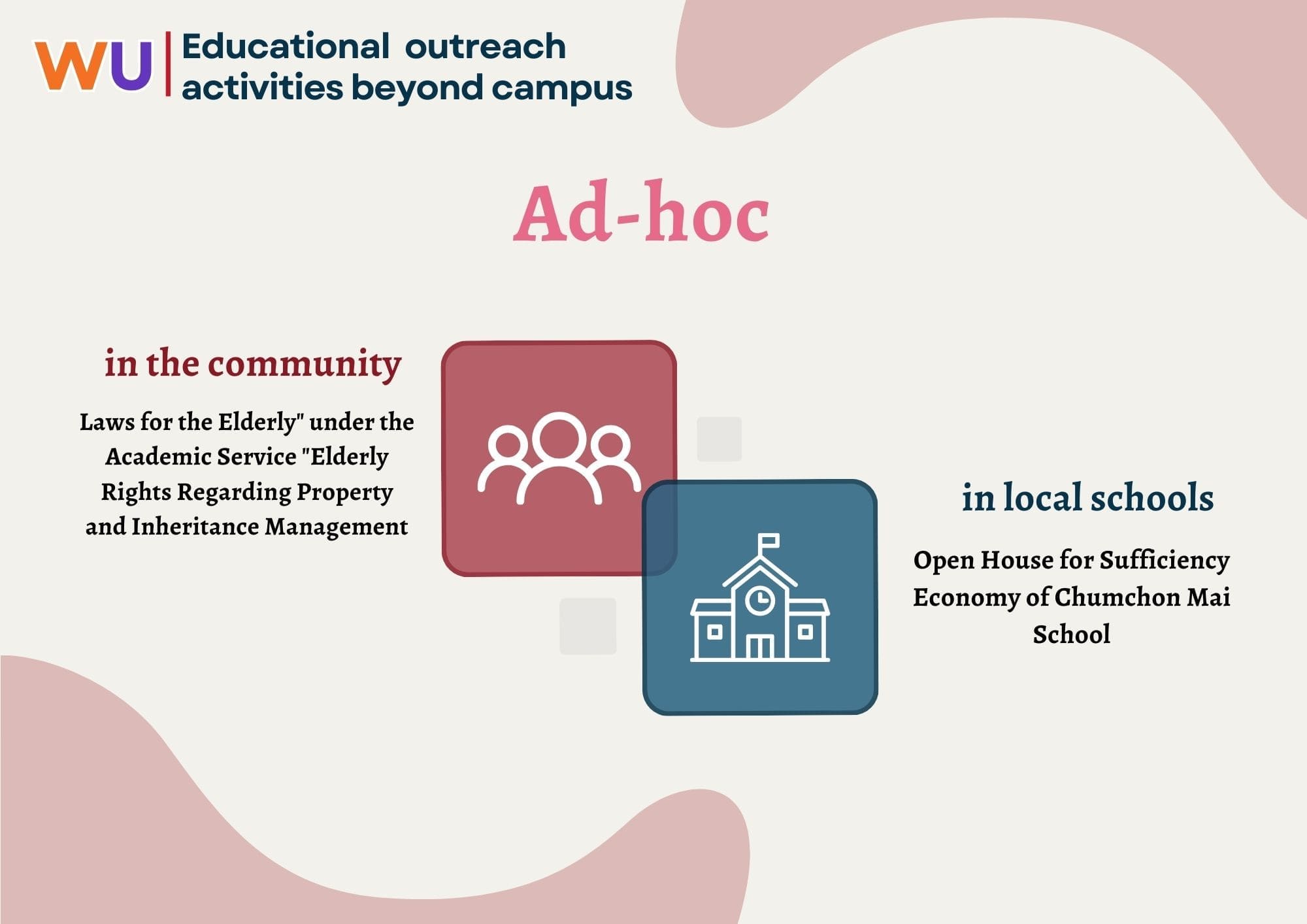
In addition to ongoing programs, the university also organizes ad-hoc activities to meet the urgent needs of people in the community who require immediate assistance. The university has therefore implemented activities in both local communities and schools as follows:
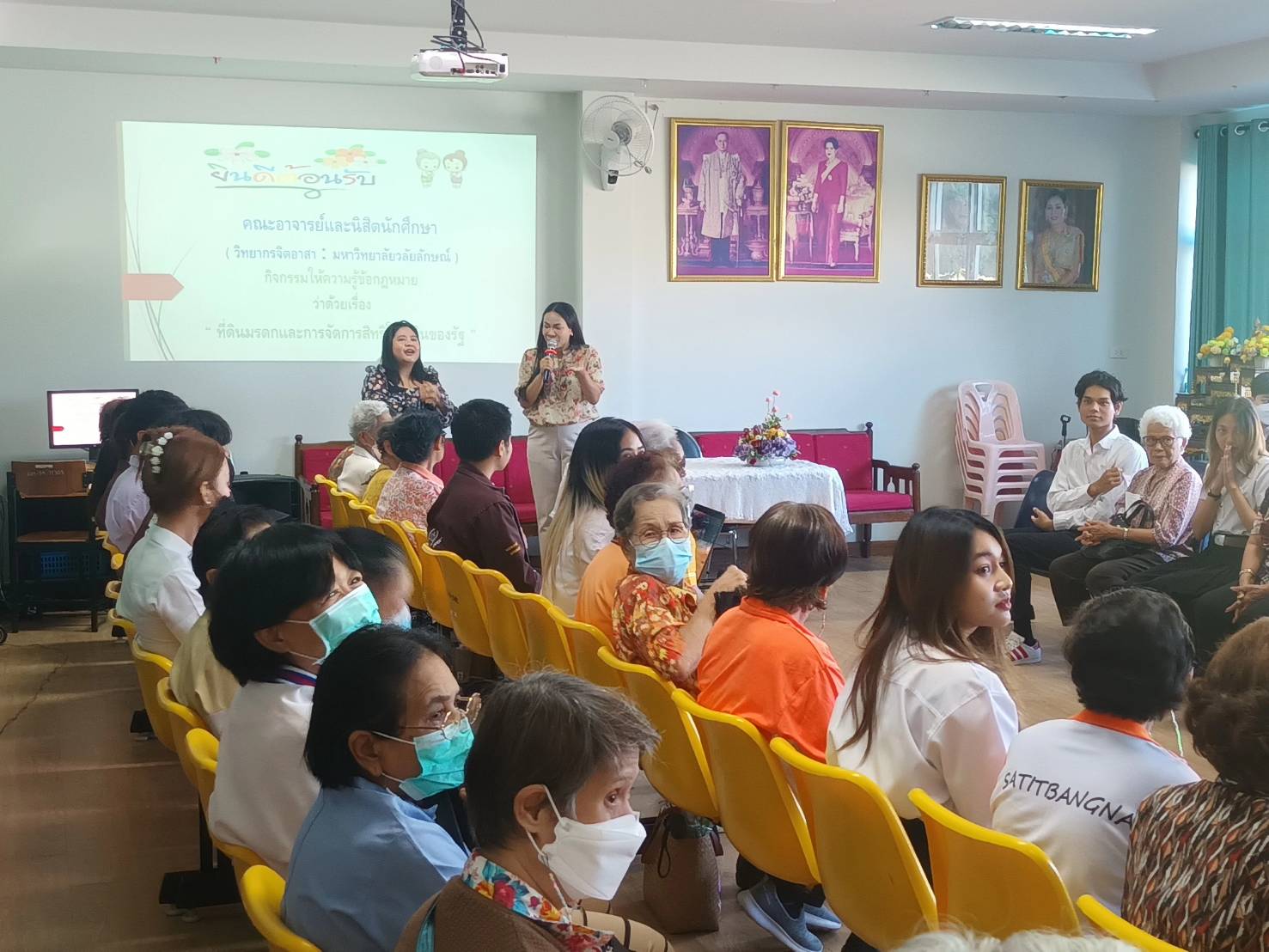
Currently, elderly people in Thailand are at risk of facing legal issues, particularly regarding asset management, inheritance, and state land rights, which are complex matters that often lead to conflicts if the relevant laws are not well understood. A lack of knowledge in this area can result in unfair asset management or the unintentional loss of property rights, impacting the quality of life and security of the elderly.
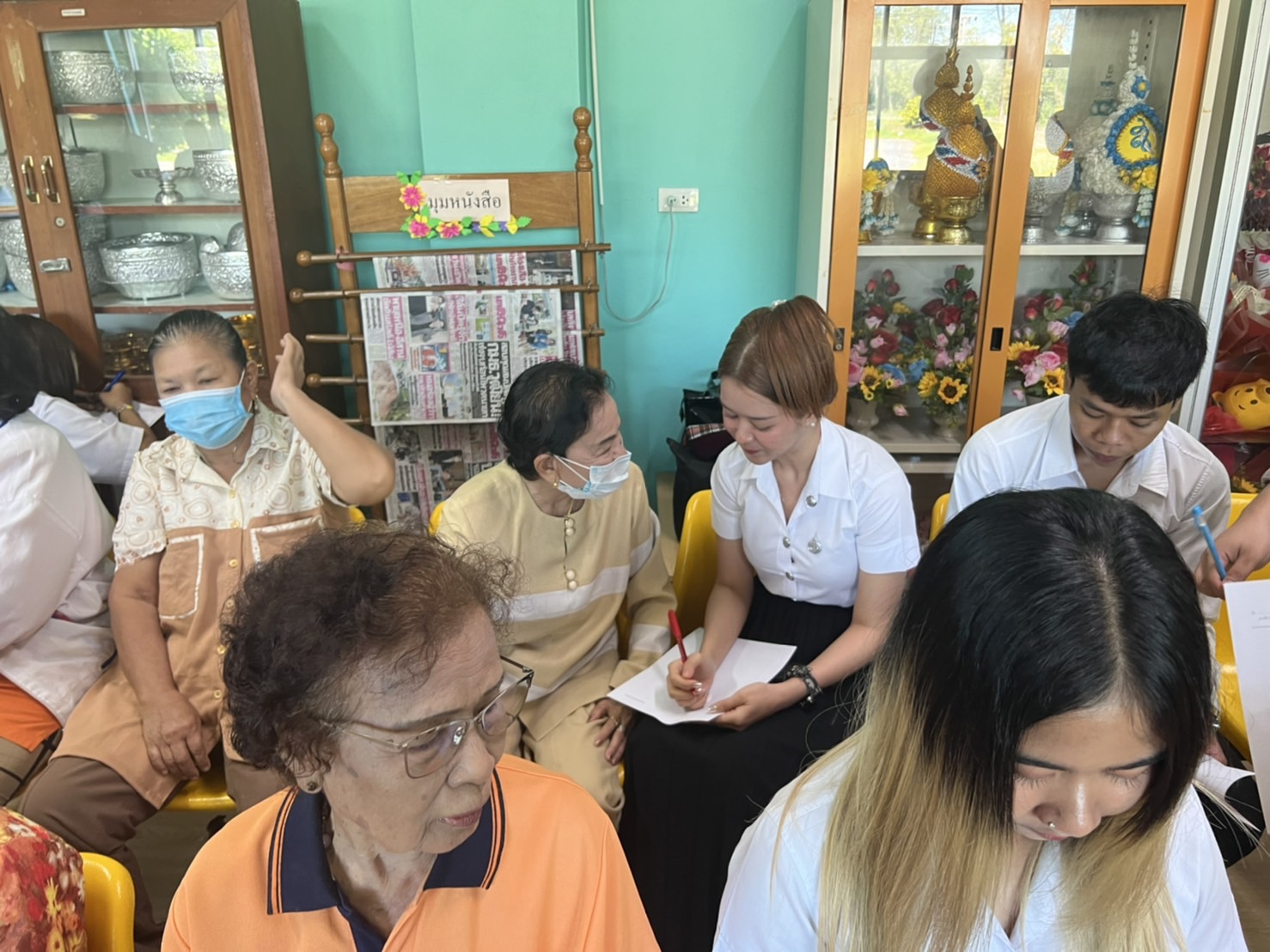
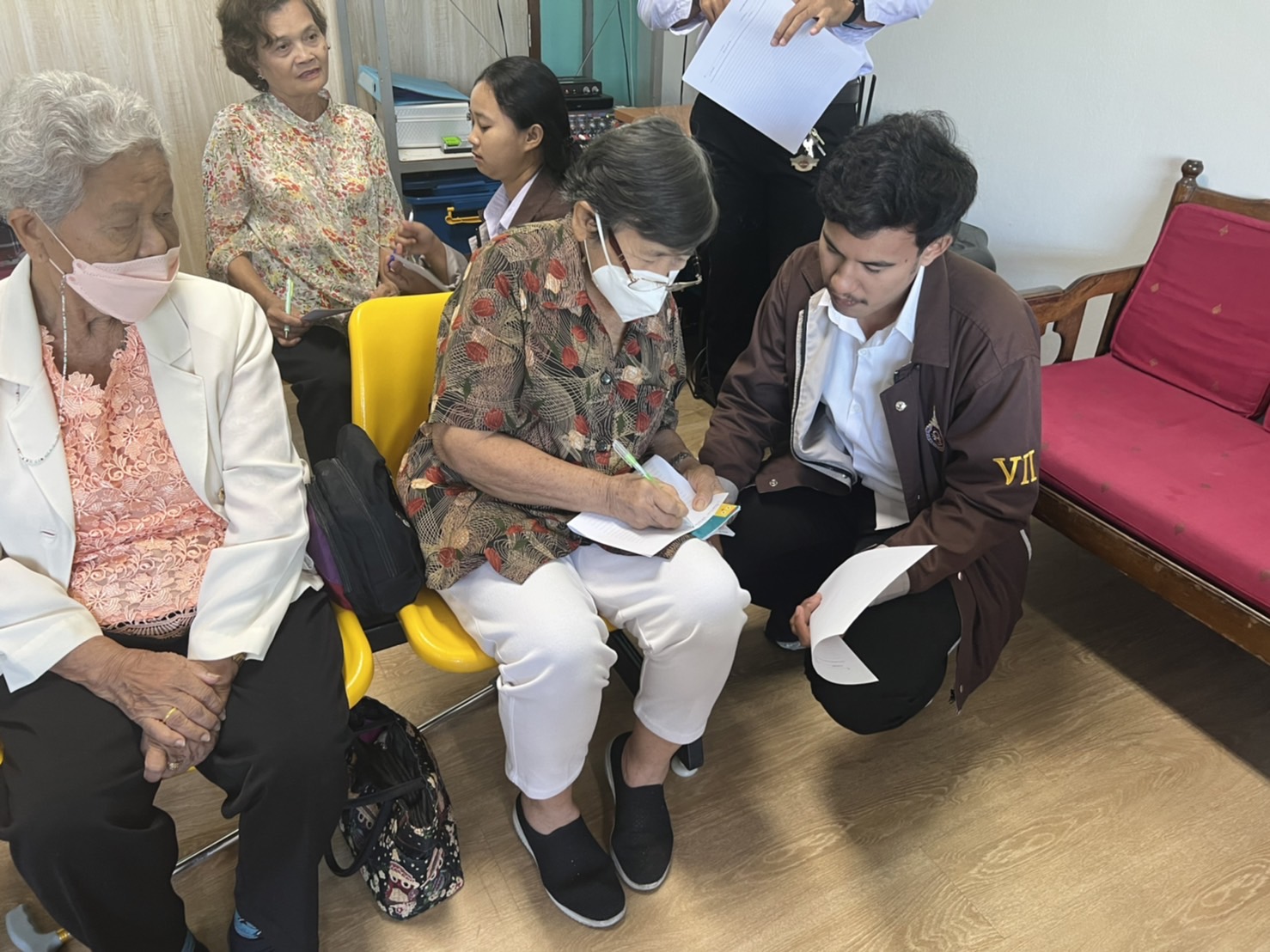
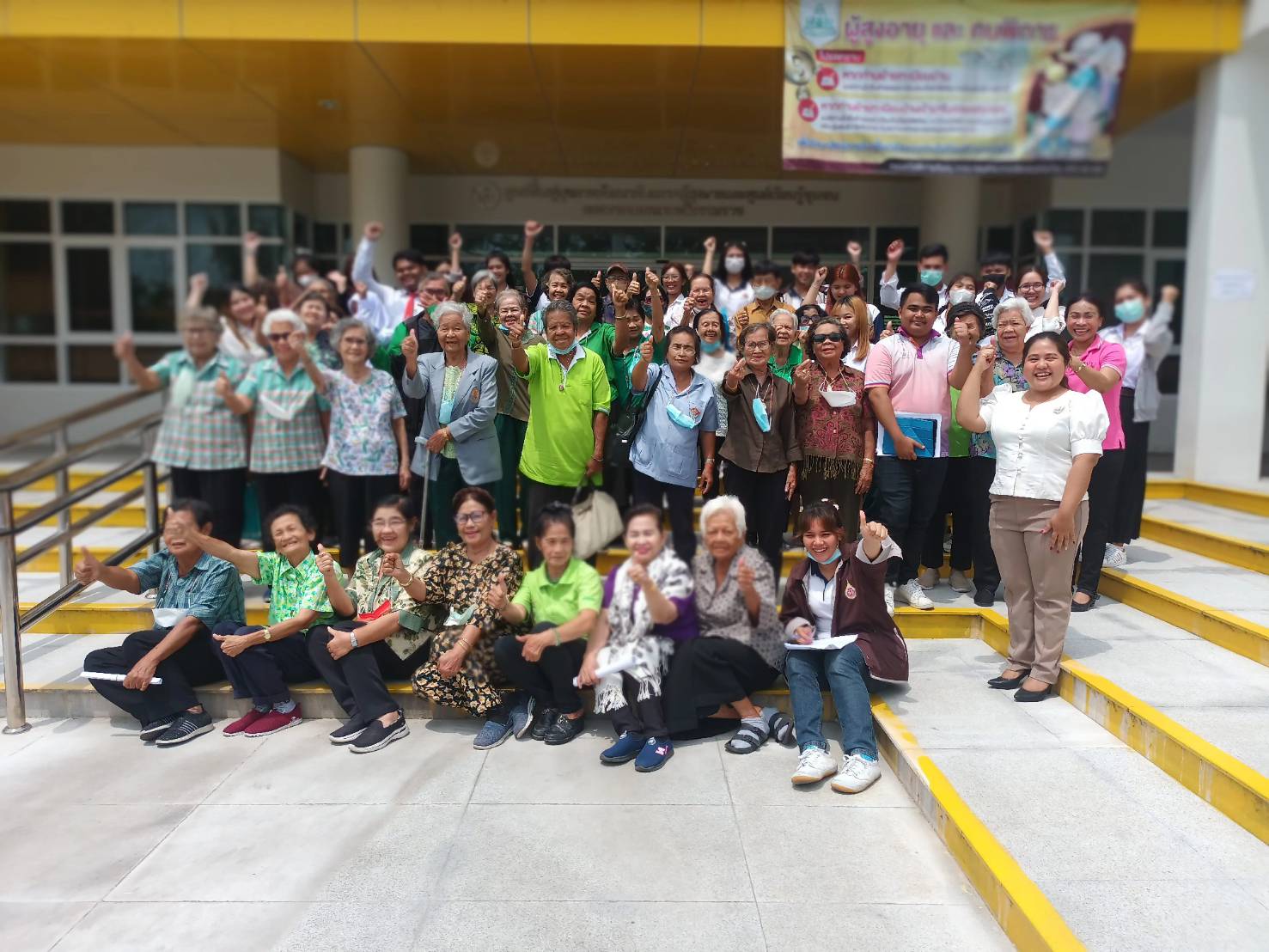
Walailak University, through its faculty and law students from the School of Law, has initiated an academic service activity to provide legal knowledge to the elderly. This is done through lectures and workshops on topics related to the rights and laws affecting the elderly. The lectures cover “Laws for the Elderly,” focusing on their rights, asset management, and inheritance. Additional activities were also held on ” Elderly Rights Regarding Property and Inheritance Management,” providing knowledge about legal matters related to the elderly’s asset management and how to preserve their rights over state land. Legal advice covering asset and inheritance management, as well as conflict prevention, was also provided.
This activity has helped elderly people in Nakhon Si Thammarat Municipality gain a better understanding of the laws related to asset management, inheritance, and state land rights. The elderly received clear legal advice from experts, enabling them to plan their asset management systematically and legally. This also reduces the risk of losing property or state land rights unintentionally. The activity has further contributed to promoting legal knowledge at the community level, fostering a correct and fair understanding of the asset management process, which ultimately enhances the quality of life and economic security of the elderly in the area.
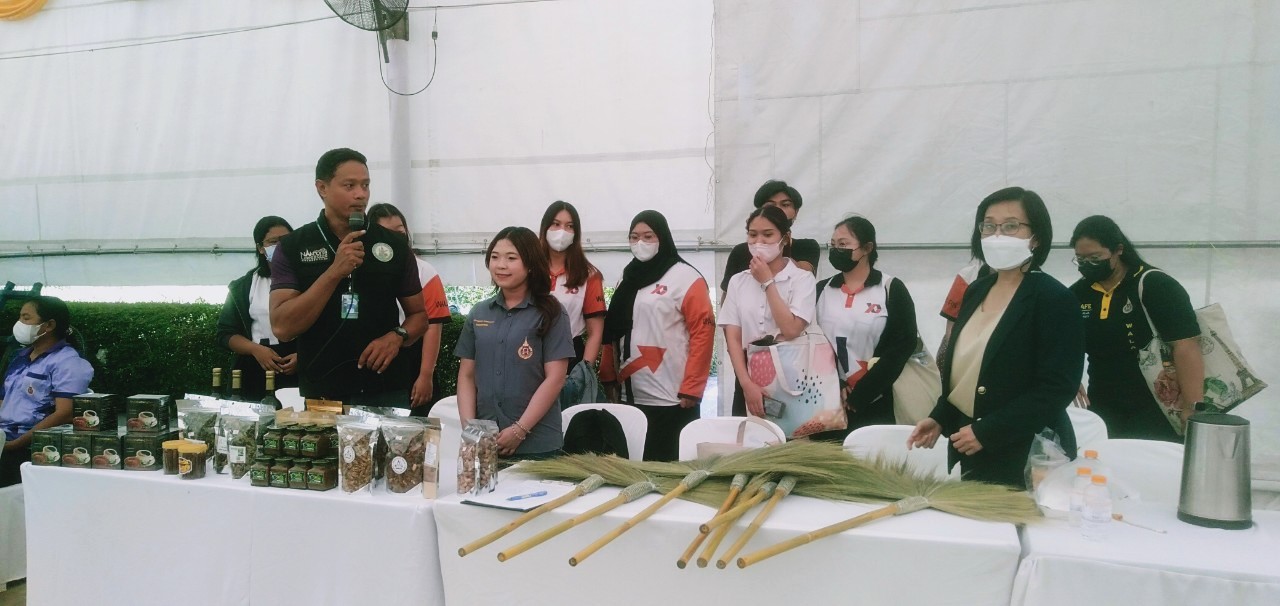
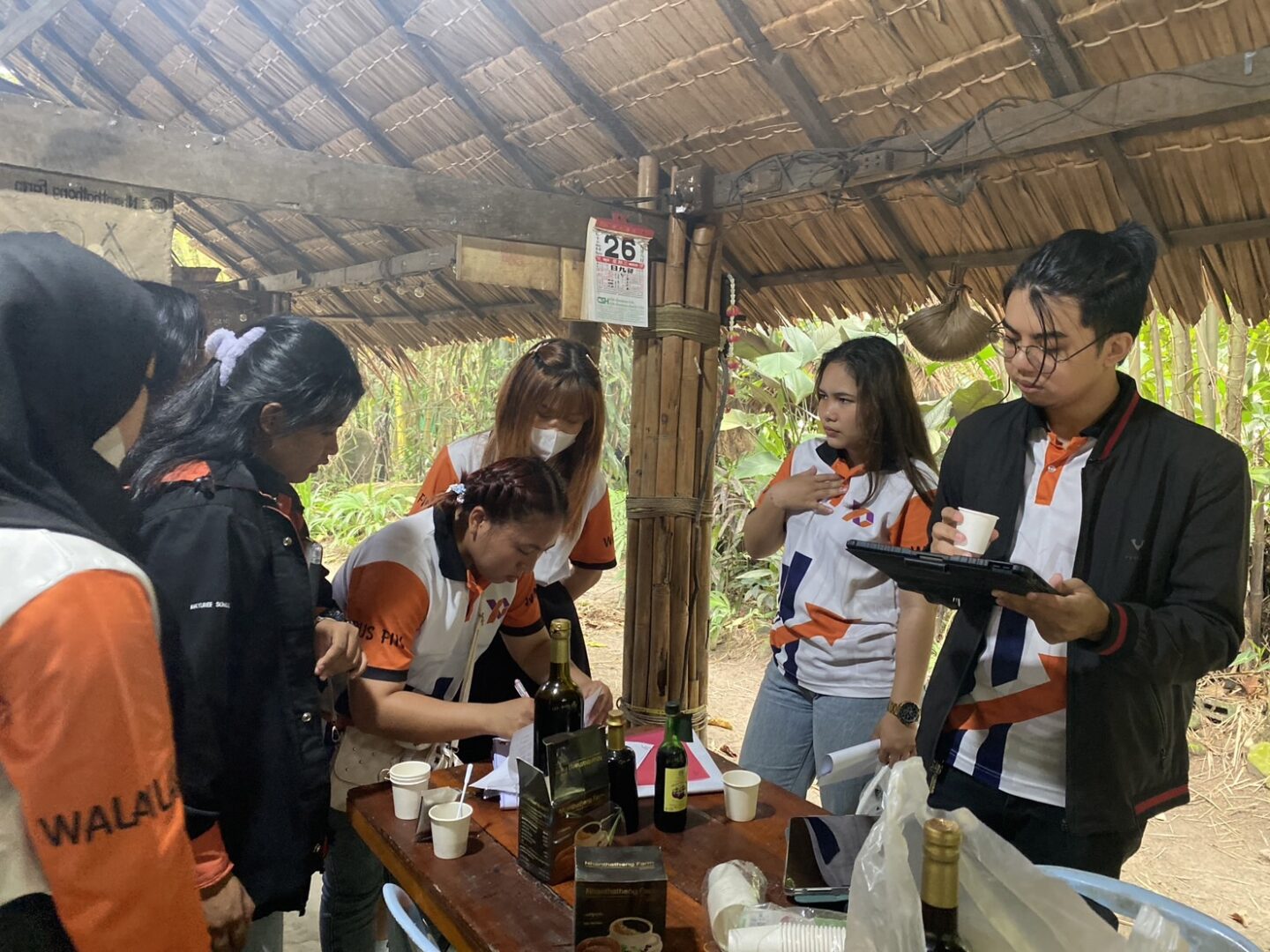
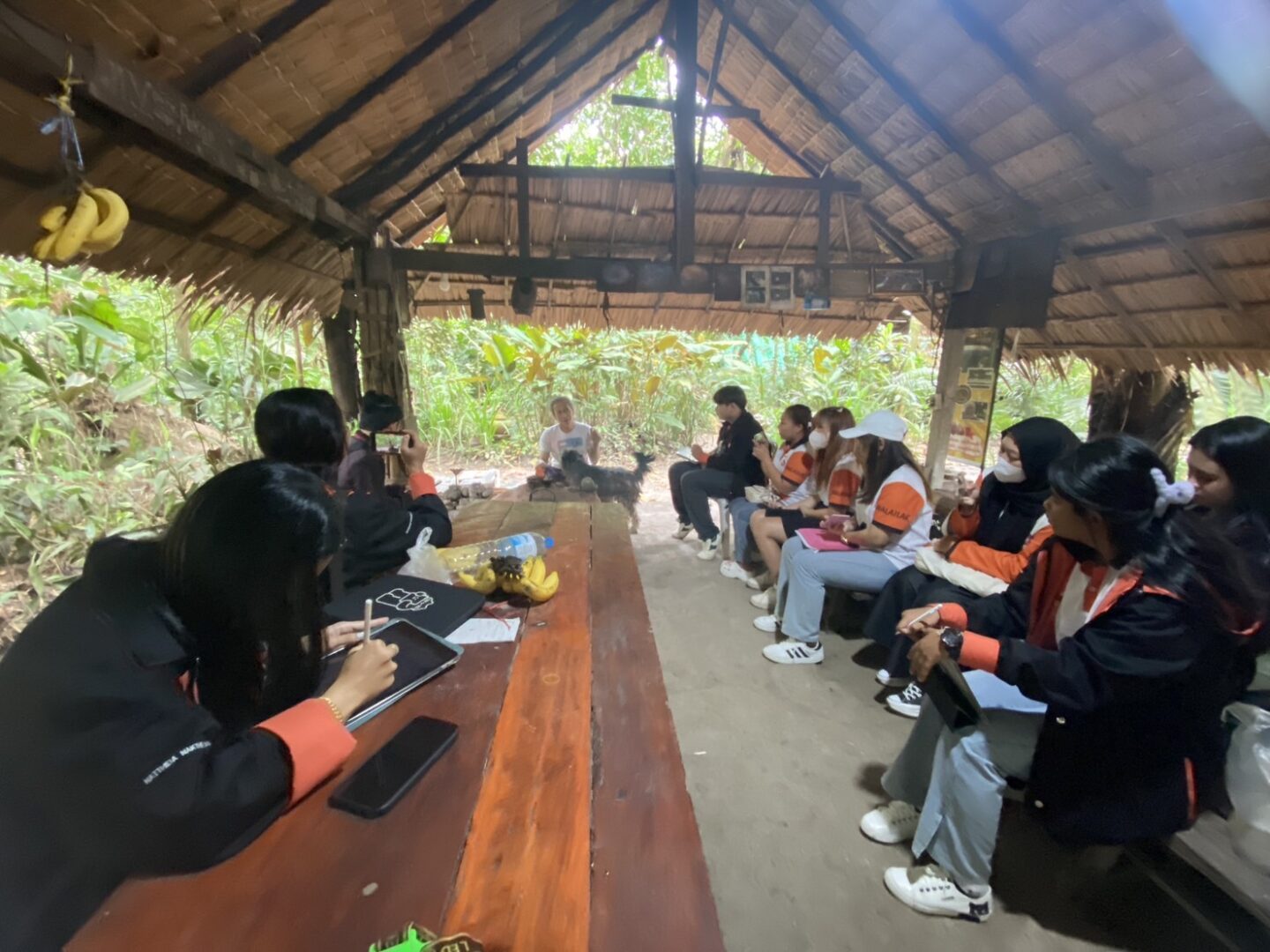
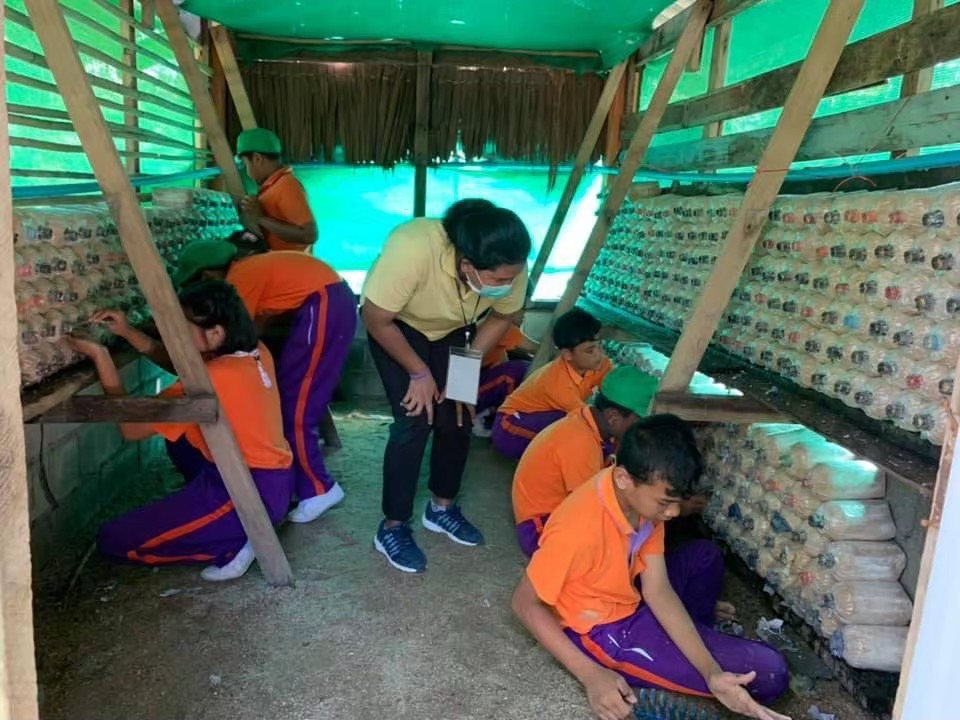
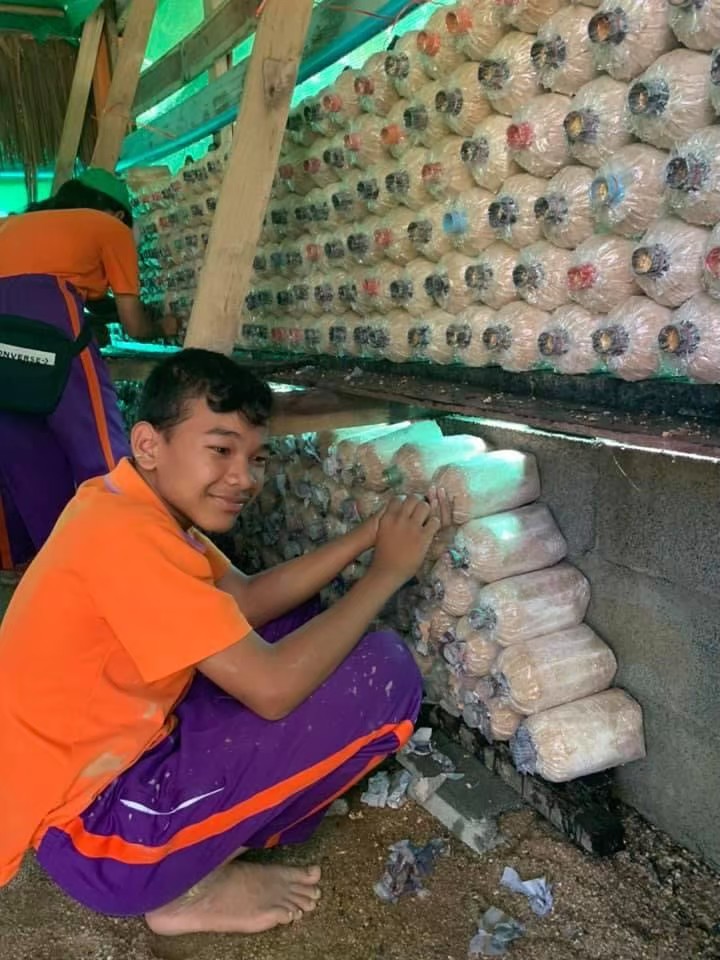
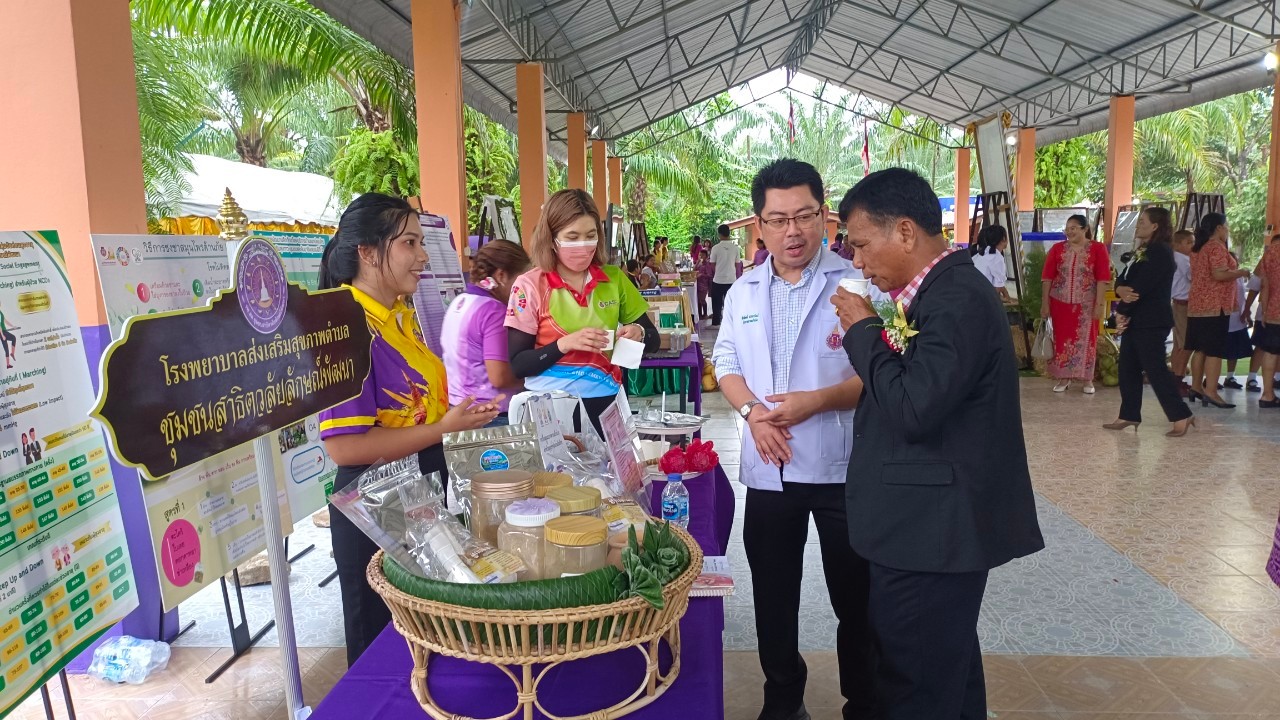
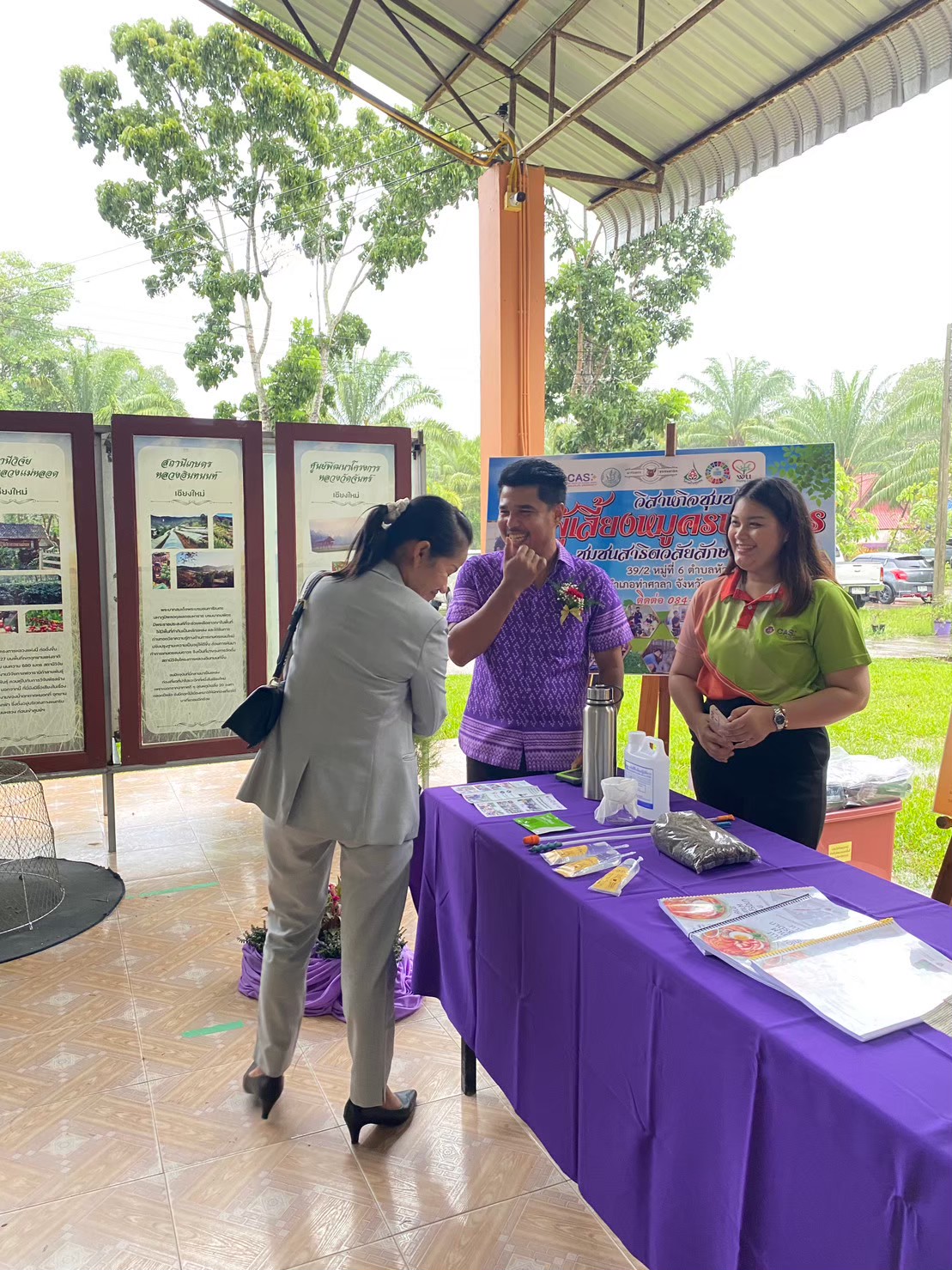
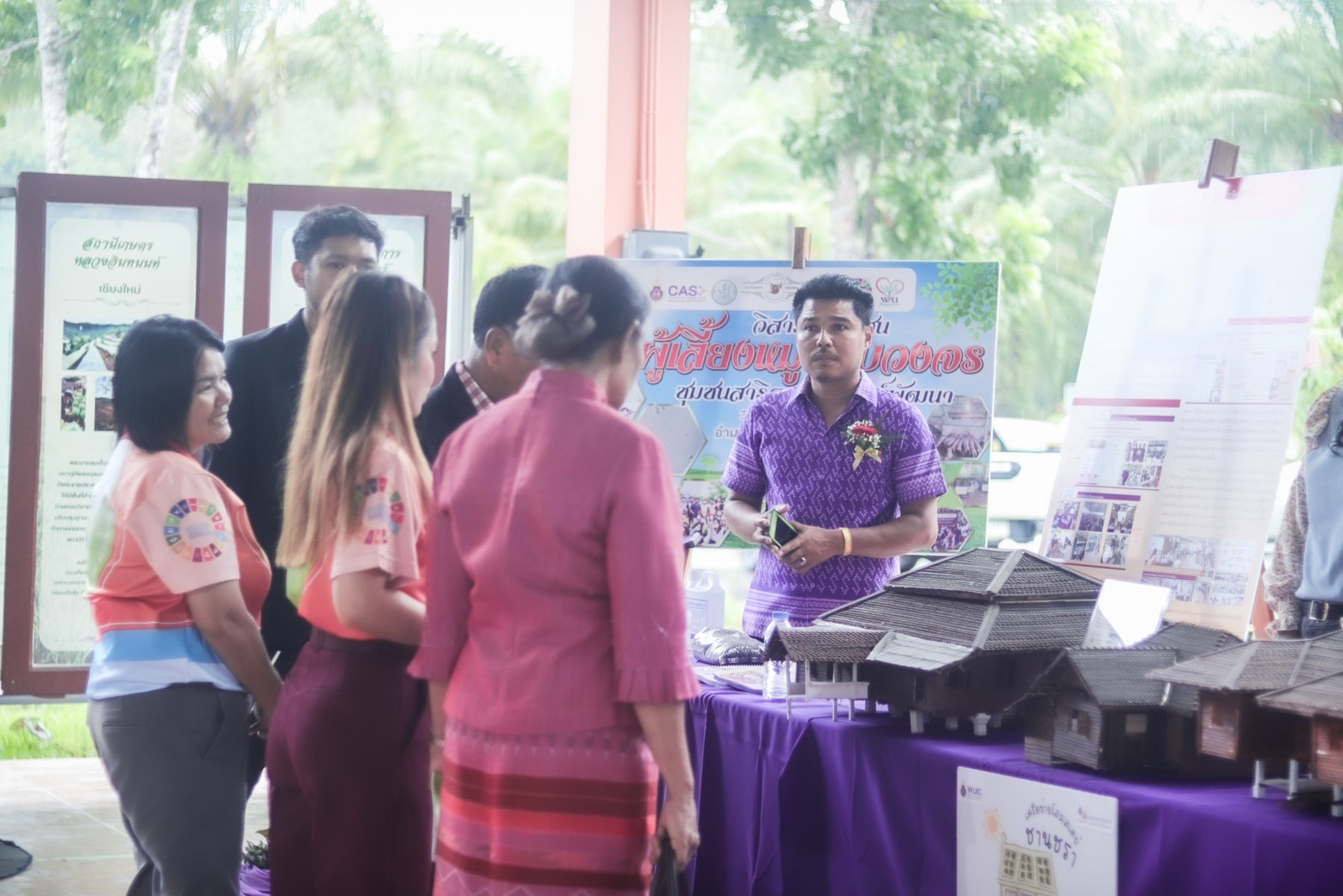
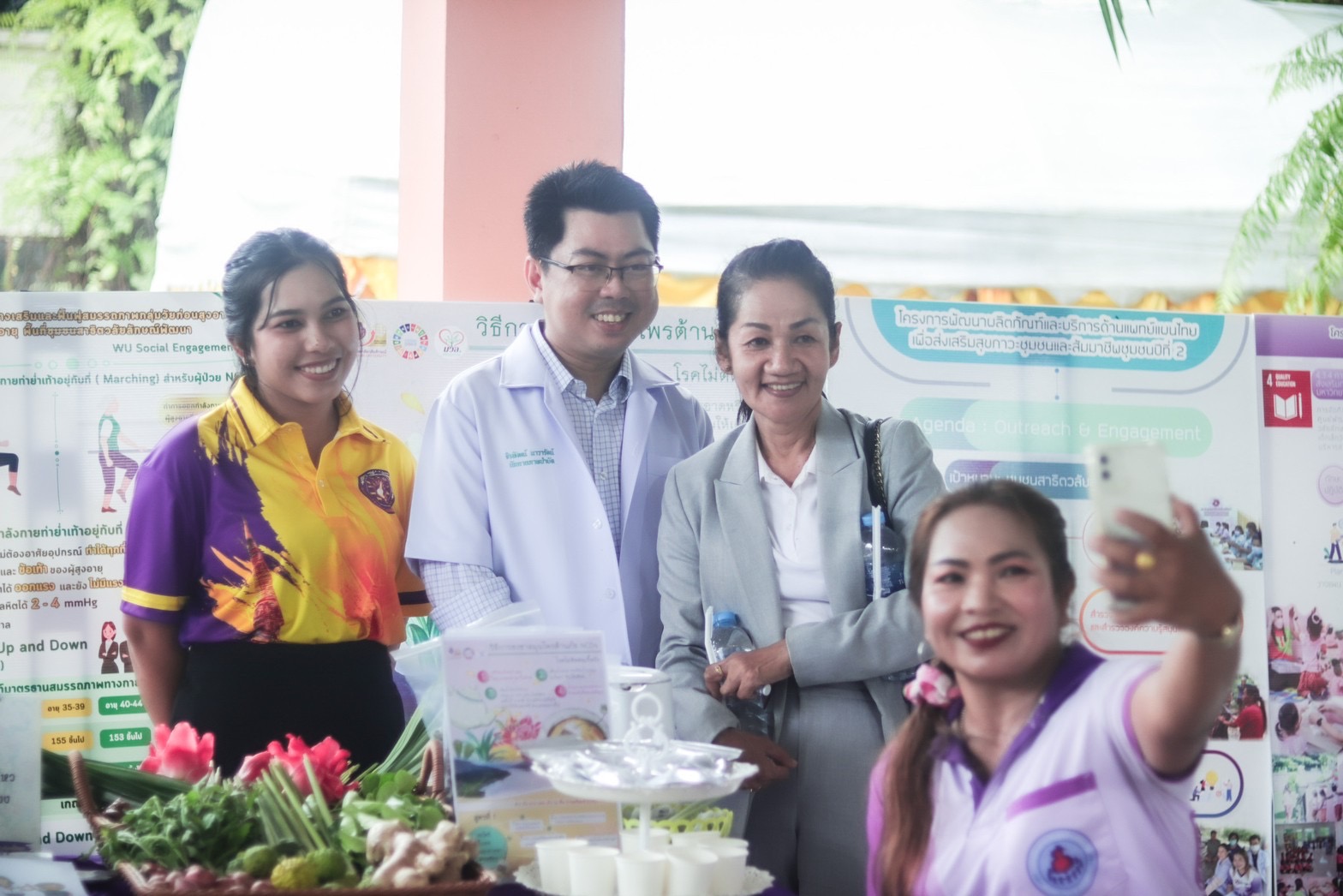
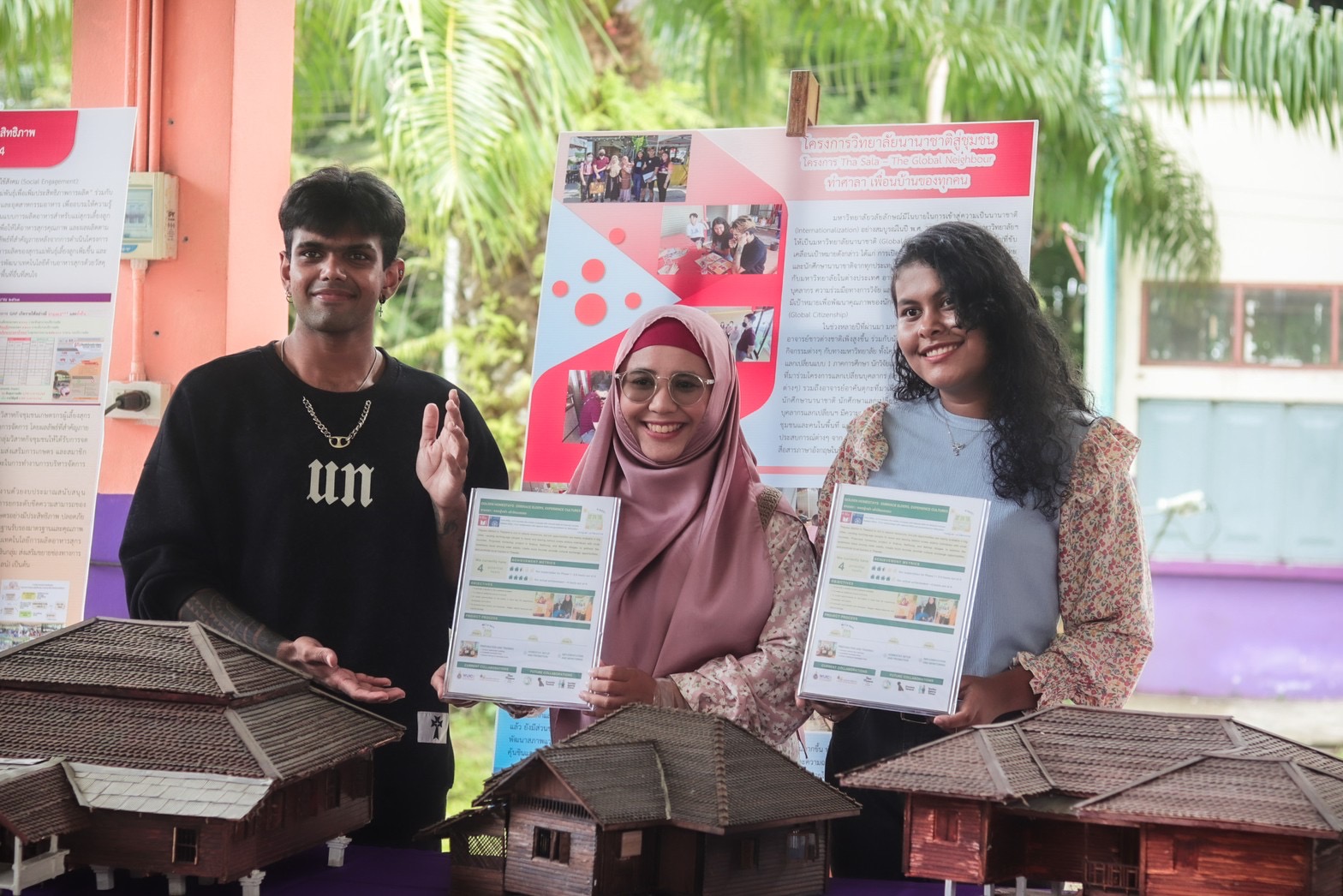
Additionally, an “Open House for Sufficiency Economy of Chumchon Mai School” event was held, another ad-hoc educational outreach activity beyond campus in local school. Walailak University participated by organizing a knowledge base exhibition to disseminate academic knowledge to the community, including providing information on swine diseases, disease prevention, and control, reproductive health testing, swine health examinations and treatments, preliminary sperm quality testing, and educating pre-elderly groups at risk of diseases. There was also knowledge sharing on local herbs, including herbal tea making.
The dissemination of this knowledge through ad-hoc activities aimed to engage participants from various agencies, such as the network partners from the Nakhon Si Thammarat Primary Education Service Area Office 4, directors, and teachers from Chumchon Mai School, Ban Song Phrak Mittrapap 92 School, Wat Don Khrai School, Wat Moklan School, Ban Khun Thale School, and Ban Thung Chon School. These participants benefited from the university’s effort to deliver knowledge to the community outside the university.
Upon completing these educational outreach activities beyond campus, diagnostics are performed on pertinent issues to enhance development and strengthen engagement with agencies or participants. Furthermore, each activity is followed by evaluations and the measurement of success, along with planning for sustained efforts in the following year. Previous activities have shown high levels of acceptance and satisfaction from both participants and beneficiaries.
Related links:
https://eservice-cas.wu.ac.th/sdg/UAT.php?id=353
https://cas.wu.ac.th/archives/22037
https://cas.wu.ac.th/archives/22979
https://cas.wu.ac.th/archives/25938
https://eservice-cas.wu.ac.th/sdg/UAT.php?id=594
https://eservice-cas.wu.ac.th/sdg/UAT.php?id=476
https://eservice-cas.wu.ac.th/sdg/UAT.php?id=493
https://eservice-cas.wu.ac.th/sdg/UAT.php?id=447