Sustainable Management Strategy of Aquatic Resources in Pak Panang River Basin and Bandon Bay, the Large Watershed Areas Located Nearby Walailak University   

Sustainable Management Strategy of Aquatic Resources in Pak Panang River Basin and Bandon Bay, the Large Watershed Areas Located Nearby Walailak University   

Walailak University (WU) has actively developed and implemented a watershed management strategy for the Pak Phanang River Basin and Bandon Bay, watershed areas located close to Walailak University. WU has emerged as a leader in implementing watershed and aquatic resource management strategies to protect Southern Thailand’s unique ecological regions, emphasizing specific diversity of aquatic species. By 2023, WU completed the development and application of two comprehensive management strategies: the watershed management plan for the Pak Phanang River Basin (Freshwater ecosystem) and the aquatic resource management plan for Bandon Bay (Marine Ecosystem). These strategies prioritize sustainable ecosystem practices, biodiversity conservation, and community resilience. Through rigorous research, cross-sector collaboration, and direct community involvement, WU has crafted location-specific solutions that align with its mission to support both environmental sustainability and local livelihoods.

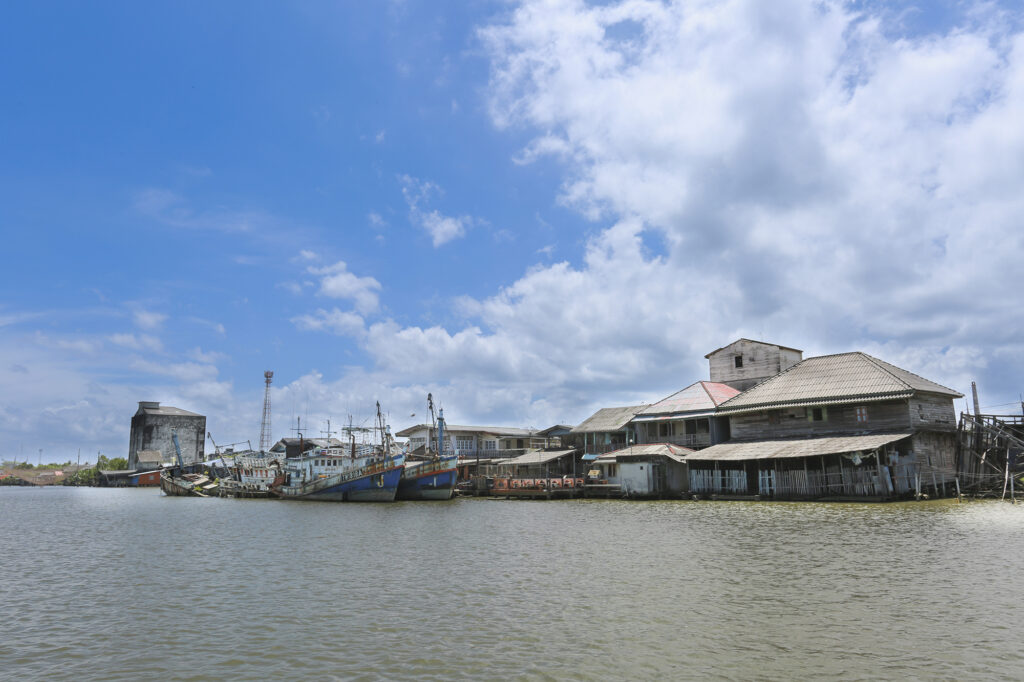
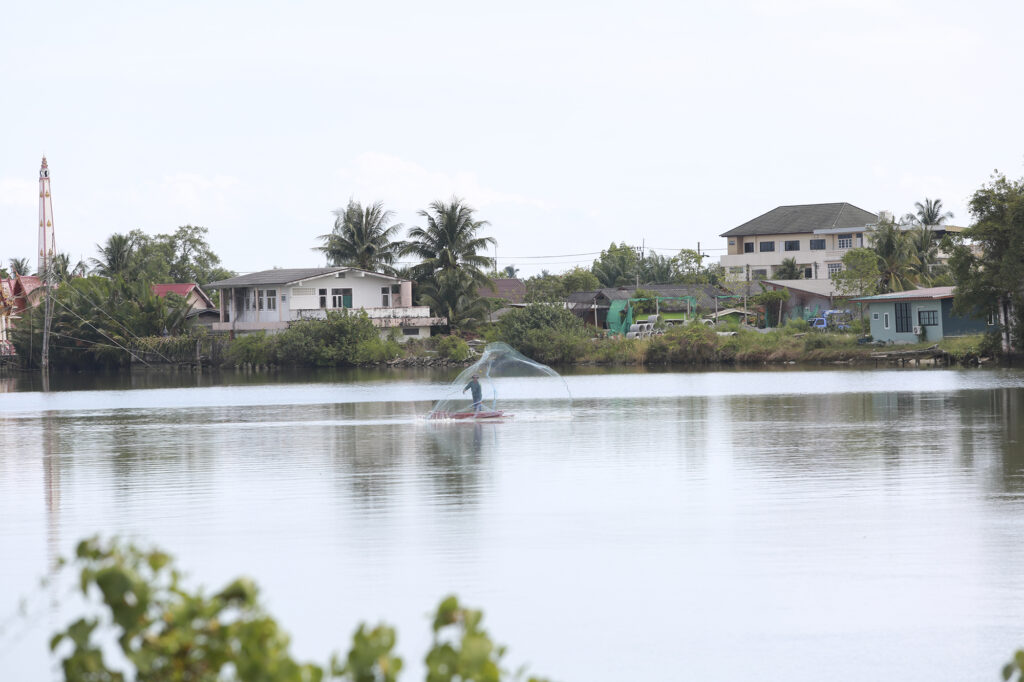
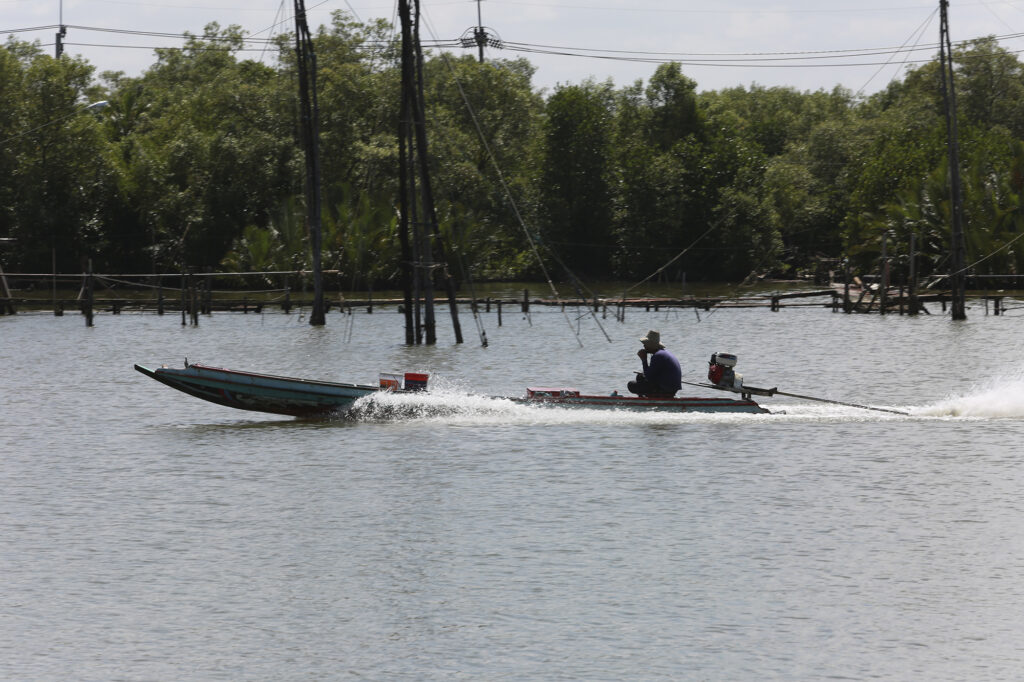
Pak Panang River Basin, a freshwater and blackish watershed area located near Walailak University

The Pak Phanang River Basin strategy is tailored to its three diverse ecological zones, upper, mid, and lower basin, each characterized by distinct ecosystems. WU’s projects focus on forest conservation, agroecology, and mangrove restoration, offering benefits such as erosion control, sustainable agriculture, and local livelihood enhancement. Collaborating with governmental and community stakeholders, WU integrates conservation with socioeconomic advancement, aiming for long-term resilience and biodiversity in this essential watershed.
The Pak Phanang River Basin, situated in the southern part of Nakhon Si Thammarat Province where Walailak University is based, spans diverse ecological zones. Its terrain is divided into three main regions:
      • Upper Basin – characterized by steep terrain and freshwater sources.
      • Mid-Basin – dominated by brackish water and swamplands.
      • Lower Basin – home to estuarine and saltwater ecosystems affected by coastal tide.
This unique and specific topography creates four distinct ecosystems within the basin: freshwater, sour water in swamps, brackish water, and saltwater near the estuary. The Pak Phanang River, stretching approximately 156 kilometers, is the main watercourse, supporting an intricate network of canals like the Lama, Tham Phra, and Rak Mai canals, which are essential for water resources throughout the upstream, midstream, and downstream areas. The watershed encompasses 665 villages across 77 sub-districts within 13 districts across three provinces, Nakhon Si Thammarat, Phatthalung, and Songkhla.
Since 2013, Walailak University has led multiple research initiatives and environmental projects focused on sustaining the Pak Phanang River Basin’s ecosystems. These continual projects aim to balance environmental conservation with socio-economic development for the local communities that rely on these resources. Over the years, WU has collaborated with stakeholders from local government, private sectors, and community members to implement diverse conservation measures.

Watershed Management Strategy

1.Upstream Management, the strategy focuses on restoring and conserving upstream forests. This includes:

      • Protecting and restoring watershed forests to ensure water quality and flow.
      • Promoting human-nature coexistence through integrated farming systems that are eco-friendly.
      • Building local awareness around natural resource preservation.
      • Establishing a conservation network to encourage community-driven environmental stewardship.
      • Enhancing local livelihoods in tandem with sustainable environmental practices.
      • Researching climate adaptation and disaster management, preparing communities for environmental challenges associated with climate change.

2.Midstream Management, efforts are focused on swamp and agroecology restoration. This includes:

      • Developing urban ecological spaces to promote sustainable land use.
      • Supporting eco-friendly farming practices that align with the region’s natural ecology.
      • Strengthening ecosystem-based career opportunities, allowing residents to engage in sustainable livelihoods.
      • Preventing wildfires through community education and preparedness programs.
      • Revitalizing agricultural practices that respect and enhance the local ecosystem.

3.Downstream Management, sensitive to tidal influences, faces unique challenges, including coastal erosion and habitat degradation. WU’s strategy in this area involves:

      • Restoring mangrove forests and coastal ecosystems to serve as natural barriers against erosion.
      • Rehabilitating woodland and coastal areas to support local fishing industries and resource-based occupations.
      • Promoting geographic identification for fruit crops, enhancing their value, and preserving regional agricultural heritage.
Additionally, Walailak University collaborates with the “Royal-initiated Pak Phanang River Basin Development” project, a governmental initiative focused on the basin’s long-term ecological health. To support these efforts, WU researchers and experts serve on several subcommittees:

1. The Subcommittee on Basin and Environment Development under the Royal Initiative – Focusing on comprehensive development strategies for environmental conservation.

2. The Subcommittee on Ecosystem-based Career Enhancement under the Royal Initiative – Supporting sustainable career development aligned with ecosystem preservation.

3. The Subcommittee on Coordinating the Development of the Pak Phanang River Basin under the Royal Initiative – Overseeing the coordination of various developmental projects within the basin.

In 2023, Walailak University’s watershed management strategy for the Pak Phanang River Basin reflects a holistic approach to preserving aquatic species diversity and supporting sustainable livelihoods. Through targeted conservation efforts in the upstream, midstream, and downstream sections of the basin, WU has implemented a watershed management plan tailored to the unique and specific environmental and socio-economic conditions of the southern region associated with the university. This long-term commitment to sustainable watershed management serves as a model for ecological resilience, community engagement, and inter-organizational collaboration.

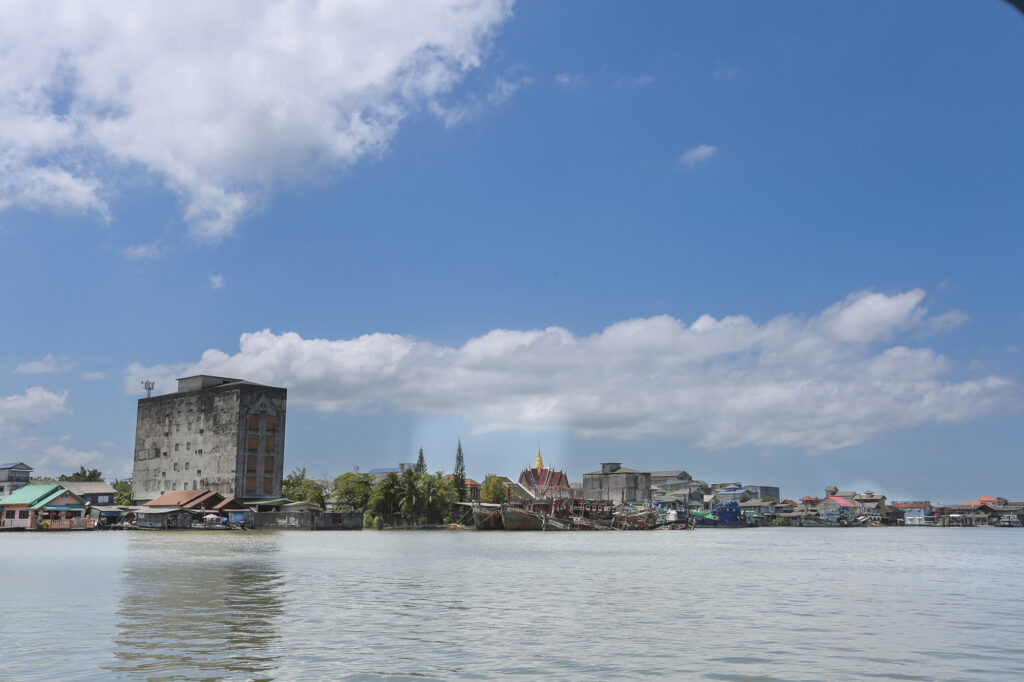
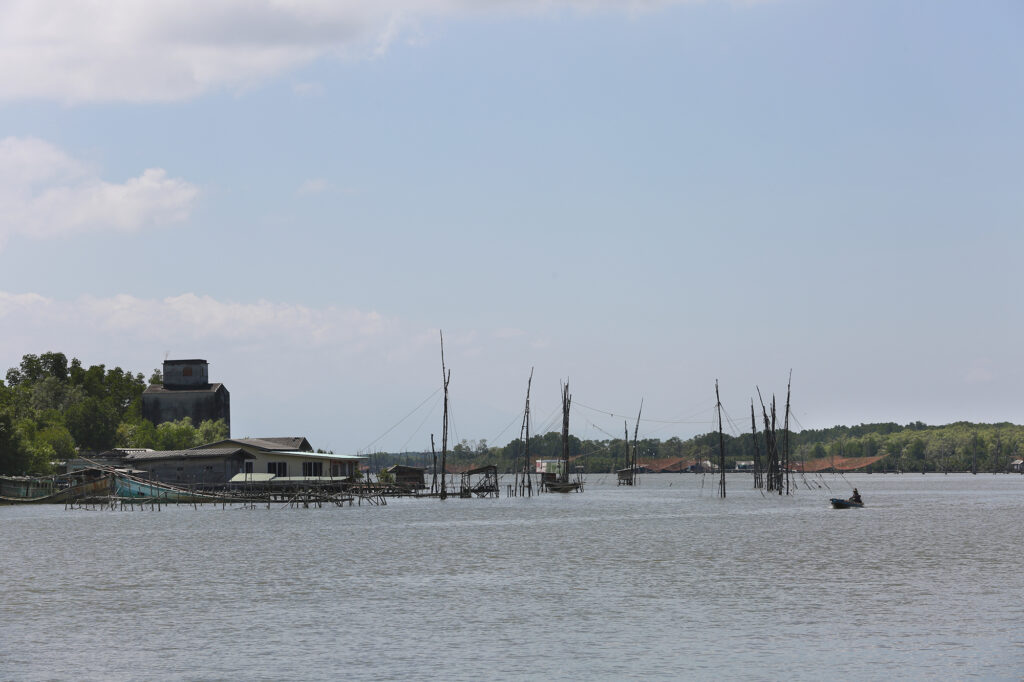
Bandon Bay, a large estuarine and marine ecosystem located close to Walailak University

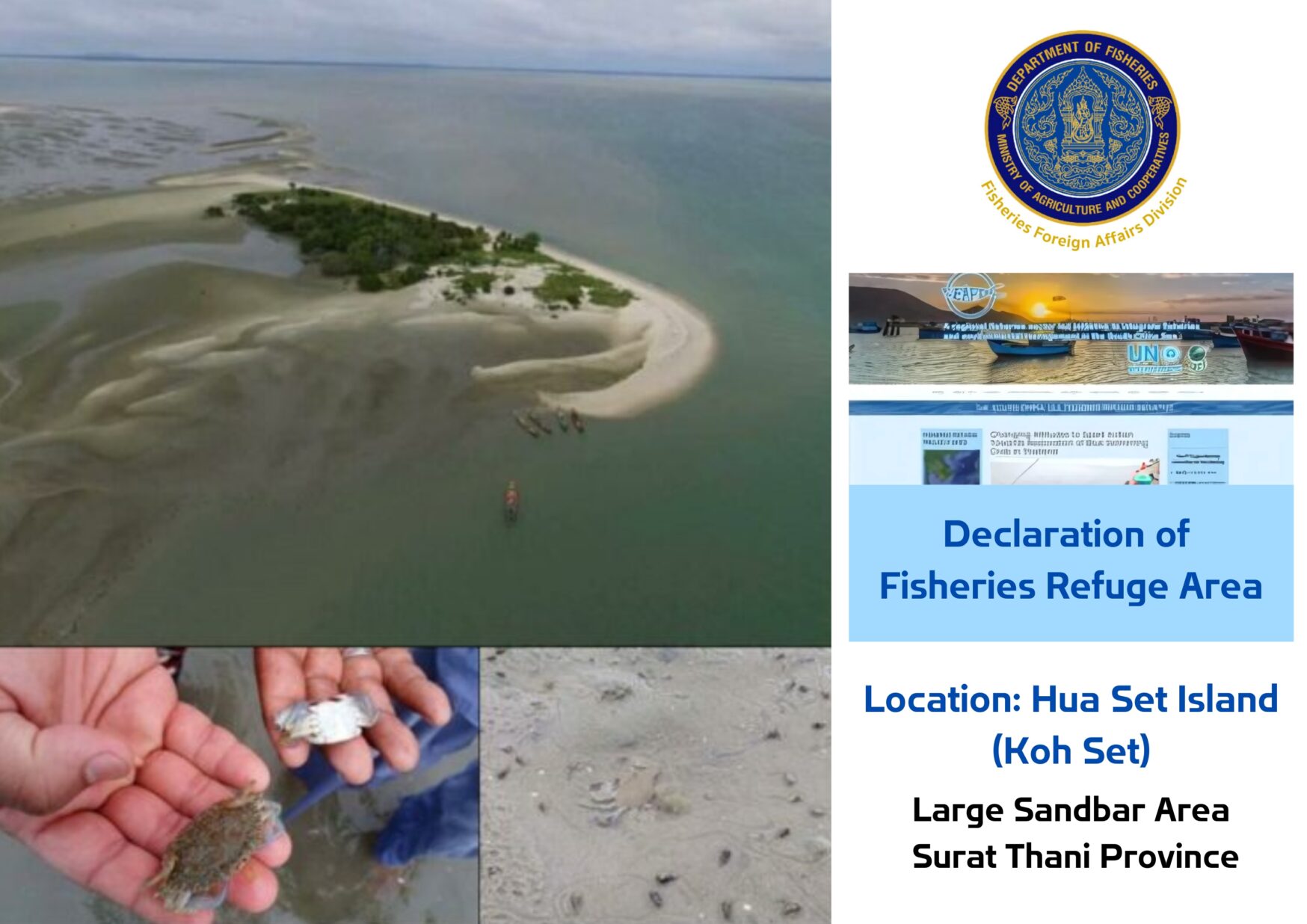
Bandon Bay holds a key role in Thailand’s fishing industry, particularly for blue swimming crab exports. However, overfishing and environmental pressures have threatened local fish populations. Since 2020, WU has collaborated with organizations like the Department of Fisheries and the Thai Frozen Foods Association to implement sustainable fishing practices, restore aquatic habitats, and promote responsible land use. Key actions include establishing crab nurseries, monitoring water quality, and encouraging eco-friendly fishing gear, all to restore aquatic animal populations and support the community’s fishing-dependent economy.
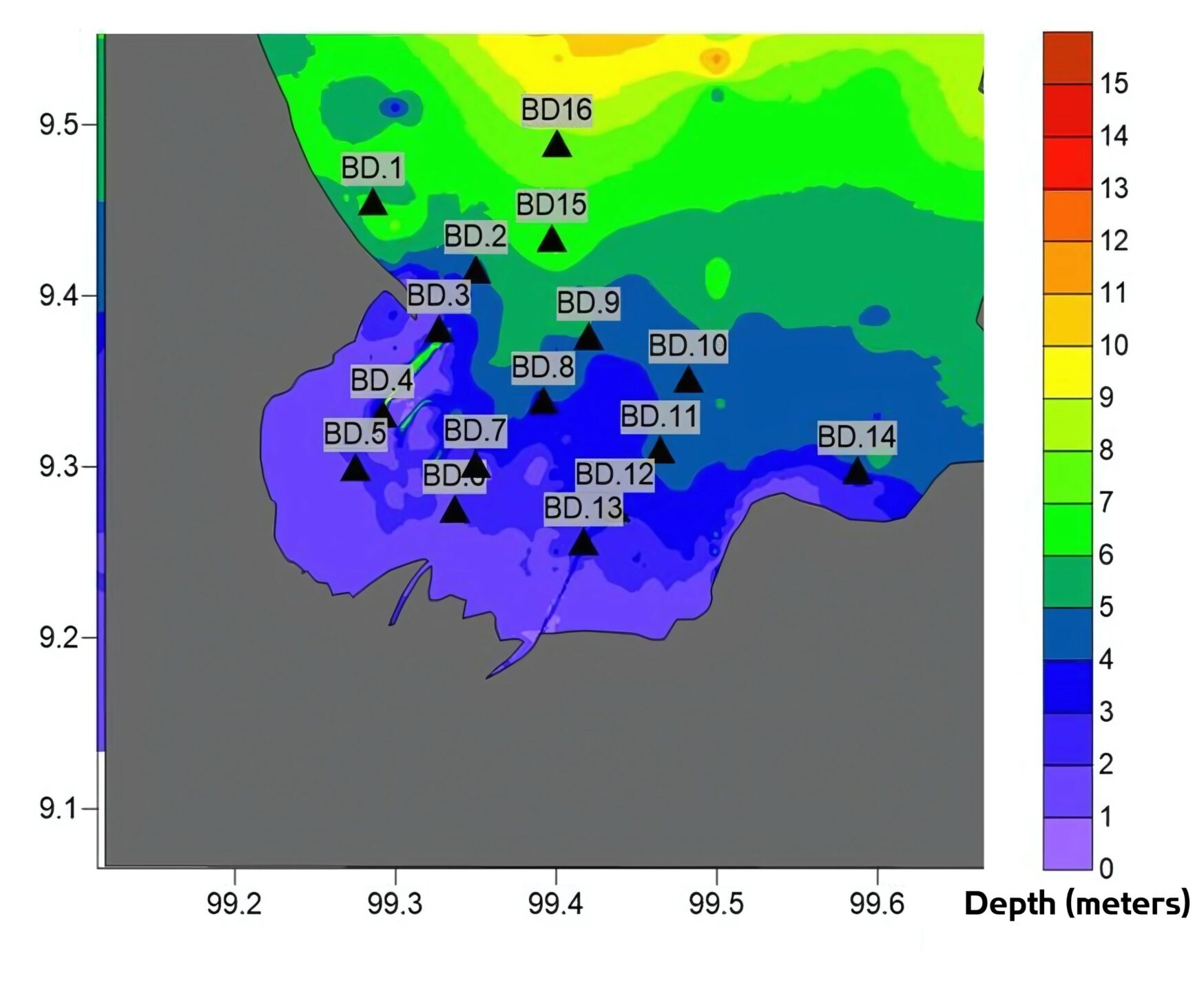
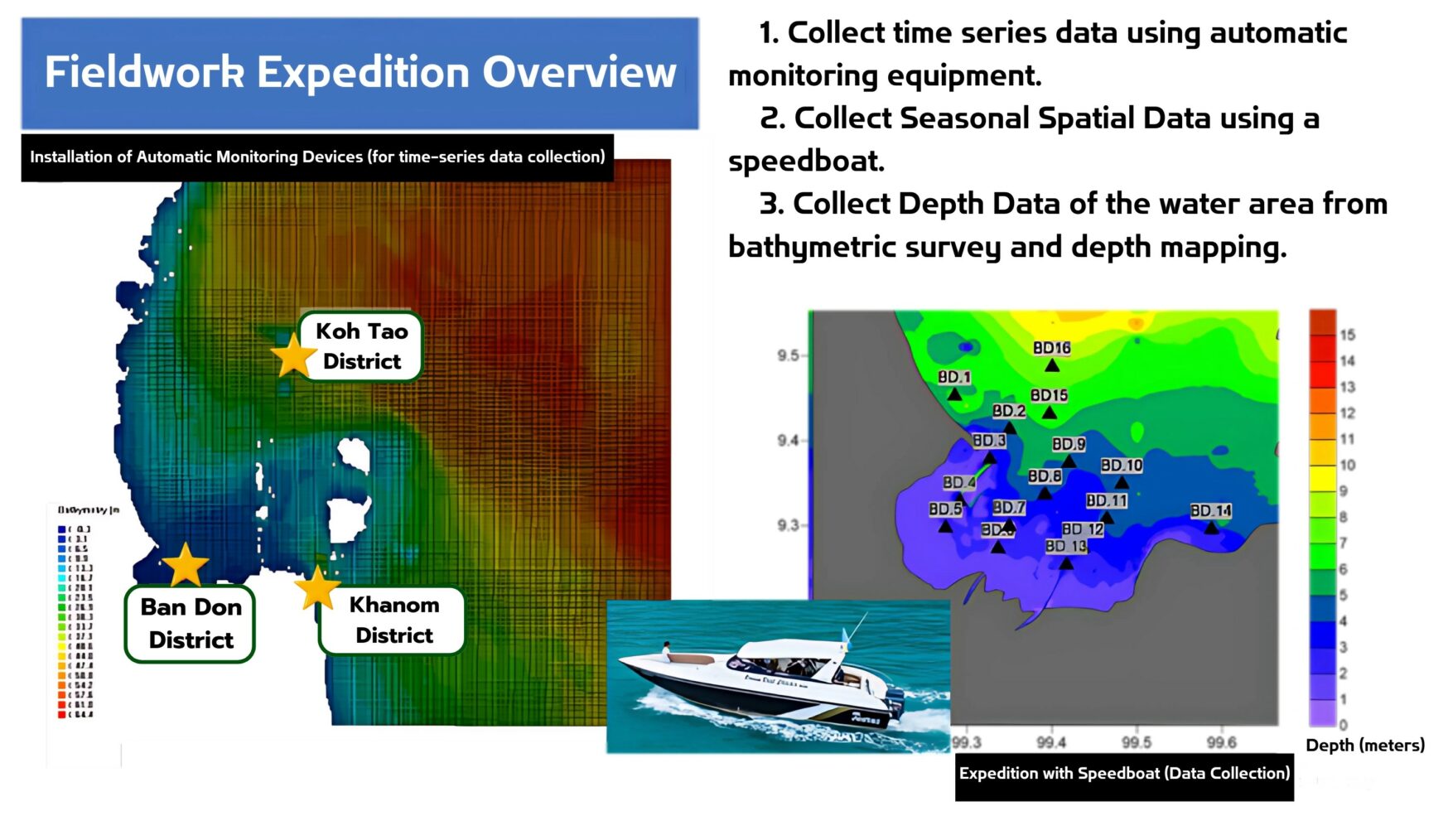
From 2020 to 2023, WU, led by Asst. Prof. Dr. Amonsak Sawusdee, collaborated with key organizations including the Department of Fisheries, the Department of Marine and Coastal Resources, the Thai Frozen Foods Association, and local communities to create a sustainable management plan for aquatic resources in Bandon Bay, one of Southern Thailand’s largest watershed area. This research initiative focused on gathering critical data on Bandon Bay’s ecosystems, fisheries resources, and land use, ultimately guiding a sustainable strategy to support the long-term health of this important marine area.
Bandon Bay, a crucial fishing region within the Gulf of Thailand, is renowned for its blue swimming crab populations, a species highly valued in both local consumption and export markets. However, overfishing has led to a decline in crab populations, directly impacting local fishers’ livelihoods. Recognizing the vulnerability of this essential ecosystem, Walailak University, in partnership with other organizations, developed a comprehensive management plan aimed at preserving aquatic life and supporting sustainable fishing practices.
In 2023, the continuous project resulted in a strategic environmental and fishery management plan, jointly developed by the research team, the Department of Fisheries, and local fishing communities. Key actions under this plan include:
      1. Raising Awareness for Sustainable Fishing: Educate local fishers to harvest only blue crabs larger than 10 cm and encourage them to bring gravid females to designated hatching stations. This ensures the continual release of juvenile crabs back into the ecosystem, supporting population growth.
      2. Establishing Priority Areas for Larval Release: Designate suitable locations—Tha Chana, Chaiya, Don Sak, and Kanchanadit Districts—as key sites for releasing blue crab larvae during peak breeding seasons, maximizing survival rates by leveraging these regions’ natural food abundance and nursery potential.
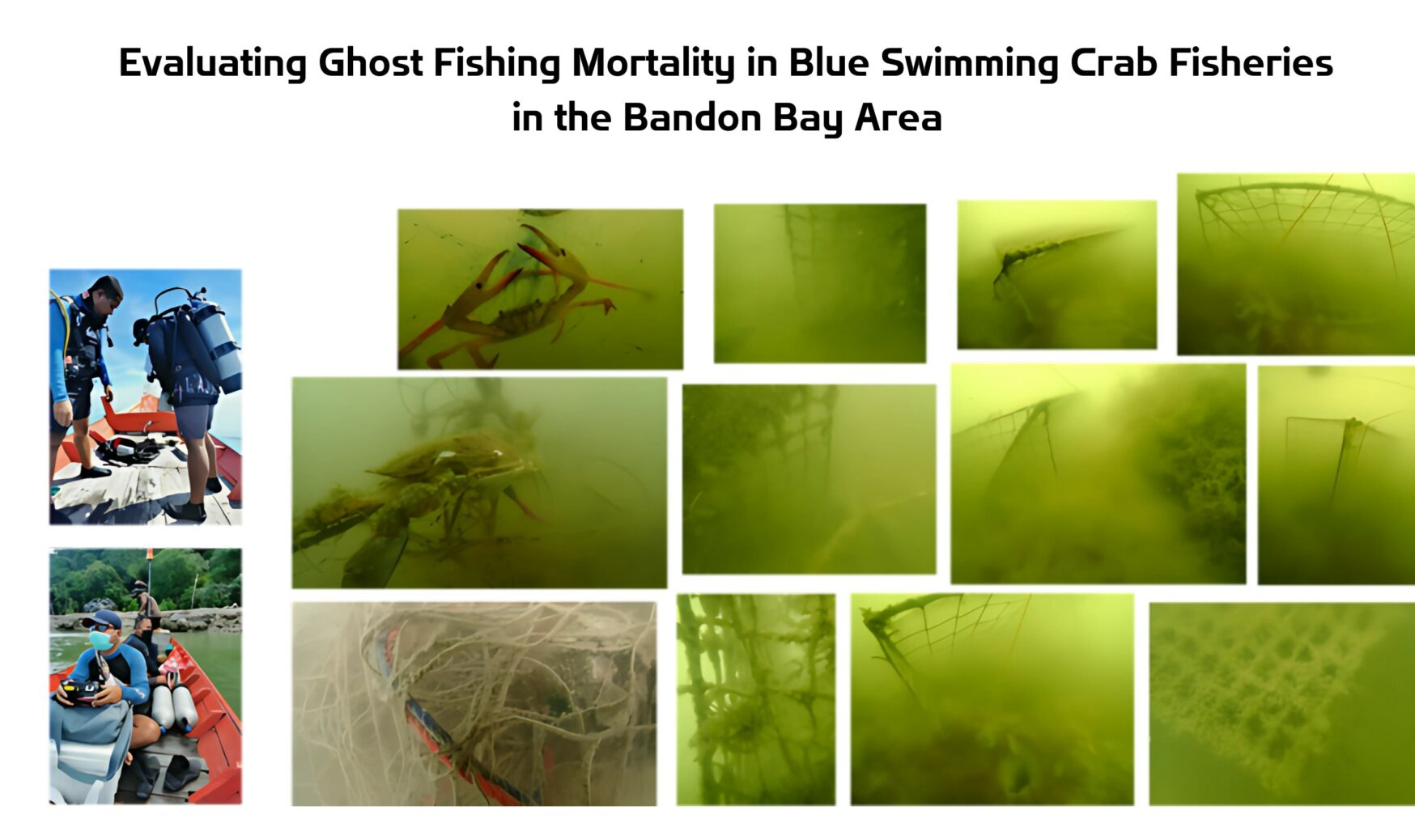
      3. Tracking Lost Fishing Gear: Conduct ongoing research to establish a comprehensive database of lost and discarded fishing gear, reducing the adverse effects of “ghost fishing” on marine animals and habitats.
      4. Organizing Clean-Up Initiatives: Implement ecological clean-ups, particularly in sensitive zones, to remove lost fishing gear and other debris from Bandon Bay, protecting both the ecosystem and aquatic life.
      5. Community-Based Spawning Measures: Develop clear, community-supported guidelines to enhance spawning potential ratios (SPR) and establish minimum crab size limits, helping maintain a sustainable population of blue crabs.
      6. Regular Blue Swimming Crab Population Monitoring: Continuously assesses blue crab abundance levels, adjusting management practices to sustain a balanced stock in response to population data.
      7. Designating Nearshore Nursery Zones: Encourage fishers to avoid fishing near shorelines and officially mark these areas as nurseries to protect juvenile aquatic life, particularly crab embryos, ensuring a thriving next generation.
      8. Promoting Legal and Sustainable Fishing Gear: Advocate for the use of legal 2.5-inch nets, which reduce seabed disturbance and limit the ecological impact of fishing activities.
      9. Assessing Coastal Erosion and Wave Impacts: Monitor the effects of waves, erosion, and sediment build-up along coastal areas, ensuring sustainable land use that protects these fragile zones.
      10. Managed Coastal Usage: Implement guidelines for responsible coastal area management that prevent the degradation of Bandon Bay, promoting balanced use of these critical resources.
      11. Controlling Heavy Metal Accumulation: Work with coastal industries to prevent activities that lead to heavy metal contamination, protecting Bandon Bay’s water quality.
      12. Encouraging Organic Agriculture: Support chemical-free agricultural practices to minimize harmful runoff and chemical intrusion into Bandon Bay’s ecosystem.
      13. Monitoring Water Quality for Key Nutrients: Regularly test chemical indicators like nitrates, nitrites, and phosphorus in critical areas such as spawning grounds and seagrass beds to maintain ecosystem health and manage sensitive zones effectively.
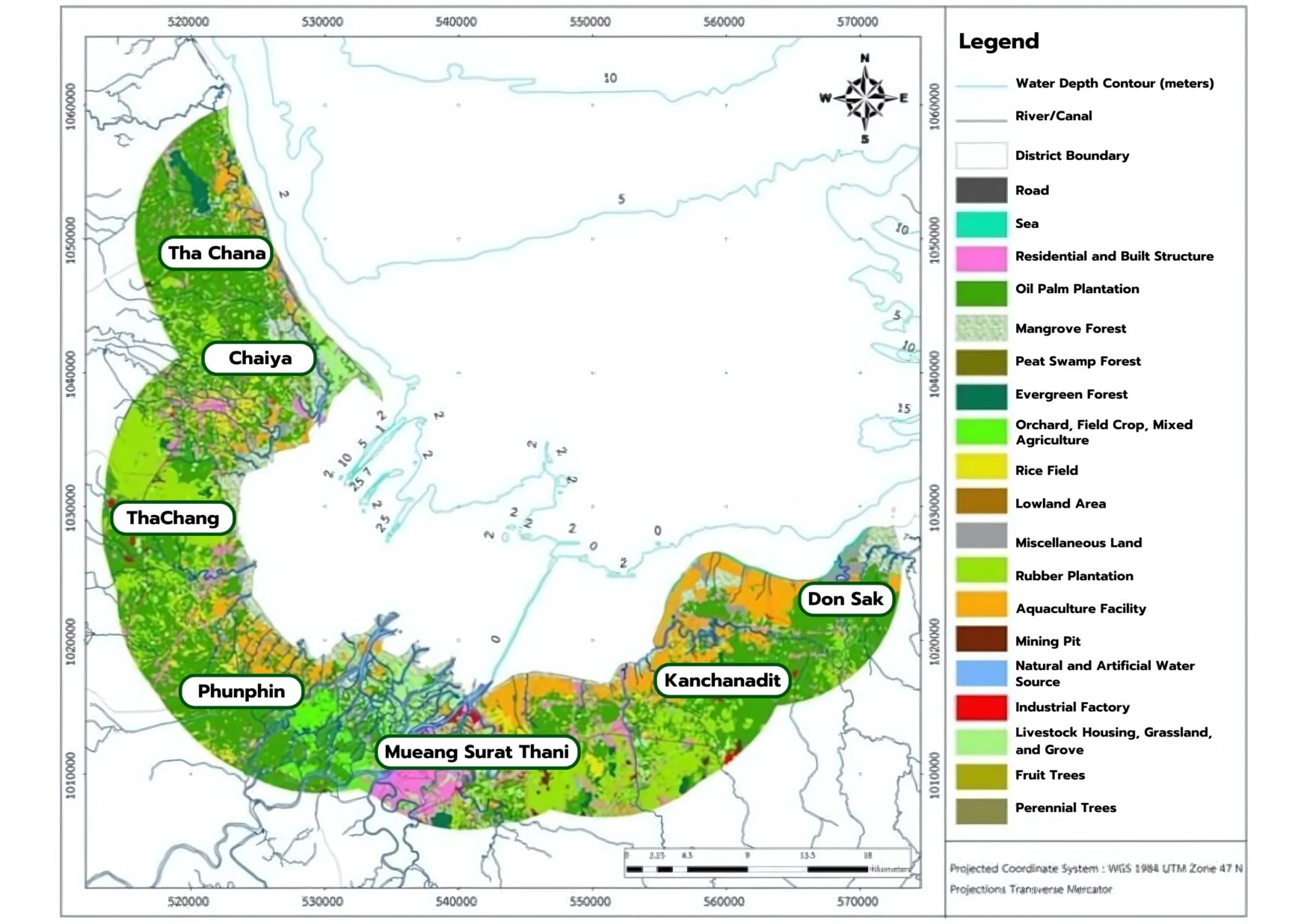
This sustainable watershed management strategy underscores Walailak University’s commitment to supporting long-term ecological health in Bandon Bay. Through community engagement, rigorous data collection, and strategic ecosystem management, the project aims to revitalize Bandon Bay’s aquatic resources, improve the livelihoods of local fishing communities, and create a model for sustainable fishery practices across Thailand.

Goal 14: Life below water

Goal 4: Quality Education

Goal 17: Partnerships for the Goals