The Spin-Off Companies Leveraging Intellectual Property

The Spin-Off Companies Leveraging Intellectual Property

Sustainability and Stewardship
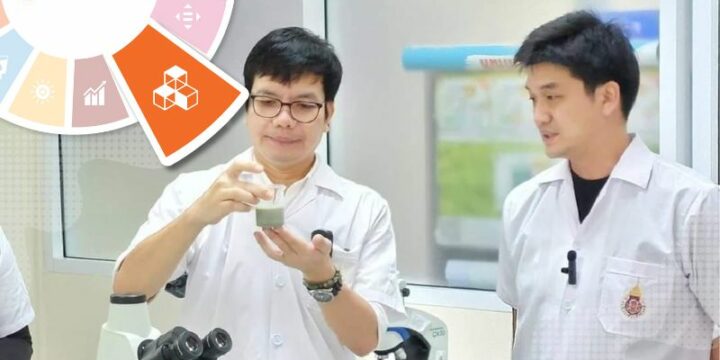
Sustainability and Stewardship WU, through the Business Incubation Center under the Science and Technology Park, actively fosters the creation of spin-off companies that leverage university-developed technologies to address societal challenges and generate income. By fiscal year 2024, WU had established seven such spin-off companies, including notable ventures like Walai Biocontrol Co., Ltd., which secured significant funding from the National Innovation Agency for its bioproduct services.  These initiatives not only contribute to sustainable economic growth but also reinforce WU’s role as an innovation hub, bridging the gap between academia and industry. Spin-Off Companies Overview By fiscal year, WU has established a total of seven active spin-off companies, with one new addition being Walai Trichoplus Co., Ltd. launched in the most recent year. In 2023, four companies were additionally founded: Plankton WU…
Read More
The Number of Patents Citing Research

The Number of Patents Citing Research

Sustainability and Stewardship
Sustainability and Stewardship Patents are vital indicator of how university research benefits society and industry. WU has demonstrated significant success in linking its research to practical applications, evidenced by the numerous patent and petty patents cited research conducted by the university. These achievements highlight WU’s commitment to fostering sustainable innovation and promoting real-world impact. Promoting Research and Patents Through   its   Science   and   Technology   Park, WU  supports   research  commercialization  and innovation, particularly in advanced technology sectors like Deep Tech. The university provides guidance on patent registration, legal knowledge, funding, and partnerships with the Department of Intellectual Property.Between 2021 and 2024, WU staff registered 60 intellectual property works, including 9 patents and petty patents in 2024. These cover diverse fields such as food innovation, biotechnology, medical…
Read More
Expanding Student Work Placements in Tourism

Expanding Student Work Placements in Tourism

Sustainability and Stewardship
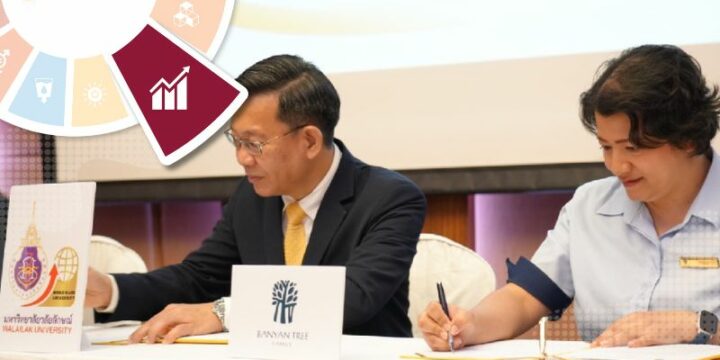
Sustainability and Stewardship Samui Island, a renowned tourist destination in southern Thailand, continues to captivate visitors from around the globe with its pristine beaches, luxury resorts, and vibrant cultural scene. Recognized as one of the best islands in Asia by the DestinAsian Readers' Choice Awards 2024, this accolade underscores the island’s thriving tourism industry and its critical role in bolstering the local economy. In 2024, WU reinforced its commitment to workforce development and industry-academia collaboration by signing the 2024 Memorandum of Understanding (MOU) on Cooperative and Work Integrated Education (CWIE), a mandatory of work placement program at WU, with 33 leading hotels, enterprises, and agencies on Samui Island. This landmark agreement aims to bridge the gap between academic learning and professional practice by equipping students with essential practical skills, fostering…
Read More
Living Wage Employment Practices

Living Wage Employment Practices

Sustainability and Stewardship
Sustainability and Stewardship WU acknowledges the significance of providing a living wage to its staff as part of its commitment to social responsibility and employee well-being. A living wage at WU is defined based on the local financial poverty indicator for a family of four and the local living wage determined by the Thai government. Demonstrating strong leadership and vision, the university has consistently paid salaries above the government-defined living wage since 2014, making it one of the higher education institutions in Thailand that upholds this commitment. This initiative ensures that all staff and faculty members receive fair compensation that enhances their quality of life and financial stability.In 2014, WU revised its policy on salary and living wages for all staff and faculty members, setting their compensation above the national…
Read More
Policy on Ending Discrimination in the Workplace

Policy on Ending Discrimination in the Workplace

Sustainability and Stewardship
Sustainability and Stewardship Walailak University (WU) should serve as a model of a discrimination-free workplace, fostering an environment that prepares students for real-world professional experiences. Since its establishment, WU has upheld a strong commitment to inclusivity, ensuring that no staff member faces discrimination in the workplace. The university values human diversity in all its forms, including religion, race, and immigrant status, and actively promotes a culture of respect and equal opportunities. In 2024, WU issued its Policy on Employment and Labor Management, B.E. 2567 (2024), to ensure that all staff members are safeguarded against discrimination of any kind. This policy underscores the university’s commitment to fostering an inclusive and equitable workplace.To reinforce this commitment, WU implements the policy that supports workplace fairness, diversity, and inclusion. WU provides training programs to…
Read More
Energy Efficiency Plan for a Sustainable Future

Energy Efficiency Plan for a Sustainable Future

Sustainability and Stewardship
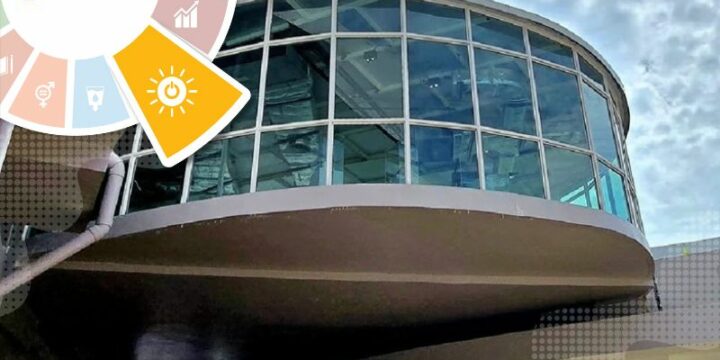
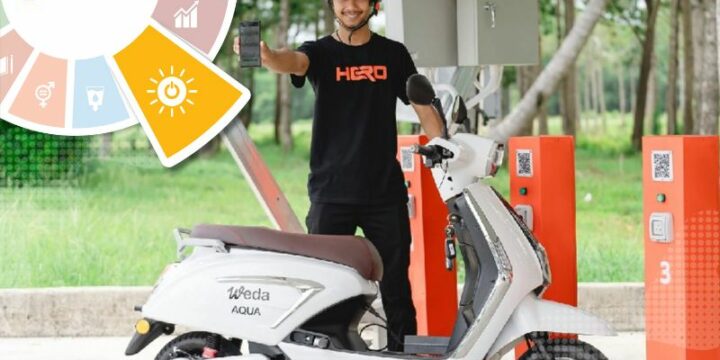
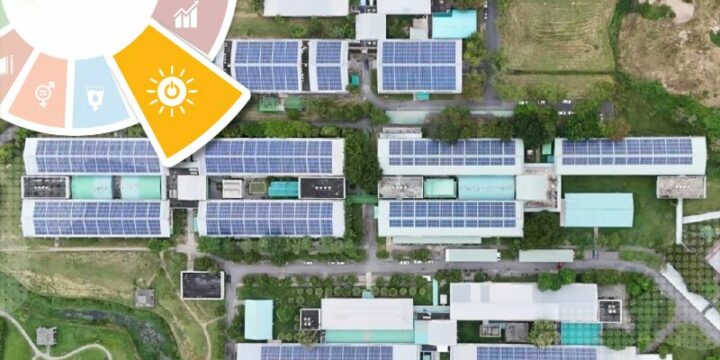
Sustainability and Stewardship Despite WU’s advancements in energy-efficient infrastructure, these efforts alone are insufficient to achieve the institution’s ambitious energy consumption targets. Thus, WU continually has an energy efficiency plan in place to reduce overall energy consumption, aiming to lower energy usage of the campus annually and foster a culture of conservation across campus by combining appliance upgrades, renewable energy adoption, and smart energy management systems in the year 2024. WU remains steadfast to sustainability and reducing energy consumption in alignment with the Energy Efficiency Development Plan. Upgrading to Energy-Efficient Appliances A key component of WU’s plan involves replacing outdated equipment with energy-efficient models. The university has completed a full transition to LED lighting, reducing energy consumption for lighting by 80%. Additionally, 100% of WU’s air conditioning units have been…
Read More
The Carbon Emission Reduction Process

The Carbon Emission Reduction Process

Sustainability and Stewardship
Sustainability and Stewardship Excessive carbon emissions present a major challenge for many educational institutions, impeding their progress toward sustainable development and environmental responsibility. To address this issue, WU has an effective carbon management process to reduce carbon dioxide emissions across the three scopes of greenhouse gas emissions. This approach integrates renewable energy adoption, emission control measures, and sustainable practices to align with the university’s long-term environmental goals. Direct Emissions To manage direct emissions, WU maintains efficient combustion systems and has transitioned its fleet to electric vehicles, reducing emissions by 47.31 tons of CO2 equivalent in 2024. Regular inspections of refrigerant systems minimized fugitive emissions, achieving a reduction of 855.05 tons of CO2 equivalent. Indirect Emissions The university has significantly reduced reliance on grid electricity by adopting renewable energy, such as…
Read More
The Plans for Energy-Efficient Upgrades

The Plans for Energy-Efficient Upgrades

Sustainability and Stewardship
Sustainability and Stewardship Inefficient   energy   use   is   a   key   barrier   to achieving Green University status, which represents environmental responsibility and sustainable innovation. WU, however, leads this shift with 80.80% of its infrastructure now classified as Smart Buildings. By integrating advanced technologies to boost efficiency, cut carbon emissions, and optimize operations, WU has plans to upgrade existing buildings to higher energy efficiency and sets a model for sustainability in higher education. Smart Buildings & Energy Efficiency Enhancements The   university   has   implemented   various energy-saving plans, including automated lighting and climate control systems that adjust based on real-time occupancy, significantly cutting energy waste. Real-time energy monitoring ensures continuous optimization, while fire suppression and security systems operate efficiently without compromising safety. Additionally, the…
Read More
Inclusive Support for Low-Income Students

Inclusive Support for Low-Income Students

Sustainability and Stewardship
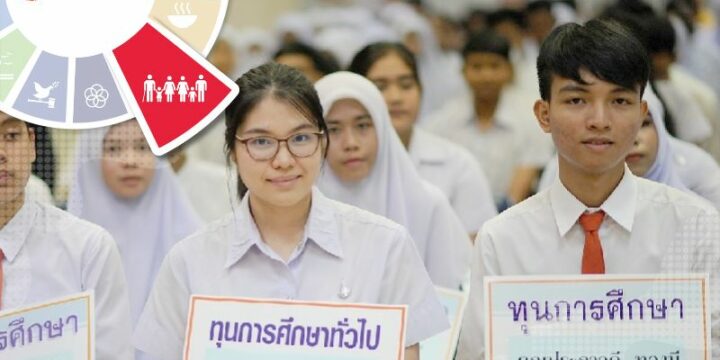
Sustainability and Stewardship Walailak University (WU) has been enrolling students who are from low-income families. WU has developed a comprehensive support system to ensure that low-income students can complete university without the burden of financial stress. Through scholarships, housing, food assistance, transportation, and legal services, WU continues to break barriers and pave the way for equal opportunities in higher education. Establishing a Dedicated Support Center WU has set up the Division of Student Support and Development (DSSD), which acts as a one-stop service hub for low-income students. The division provides scholarships, guidance, and other critical resources to meet the needs of these students, ensuring their academic journey is smooth and fulfilling. Scholarships and Tuition Waivers To alleviate financial pressures, WU offers various scholarships for Thai and international students from developing…
Read More
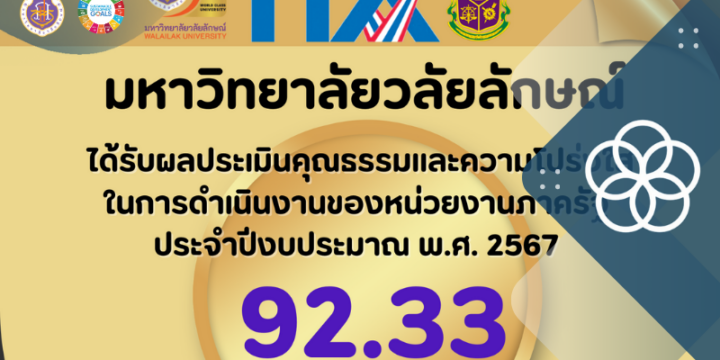
Walailak University Achieves a Score of 92.33 in the 2024 Integrity and Transparency Assessment (ITA) of Government Agencies

Walailak University Achieves a Score of 92.33 in the 2024 Integrity and Transparency Assessment (ITA) of Government Agencies

Sustainability and Stewardship
Walailak University has successfully passed the Integrity and Transparency Assessment (ITA) for the fiscal year 2024 with a score of 92.33. The evaluation comprises three key components: Internal Integrity and Transparency Assessment (IIT):This assessment reflects the opinions of university personnel who have been employed for at least one year, regarding the integrity and transparency of the institution. A total of 876 personnel participated in the survey, contributing to a score of 46 points. External Integrity and Transparency Assessment (EIT):This assessment collects feedback from service recipients and external stakeholders who interacted with the university during the fiscal year 2024. A total of 900 respondents participated, resulting in a score of 87 points. Open Data Integrity and Transparency Assessment (OIT): This component evaluates the extent to which public information is disclosed on the university’s official…
Read More