WU’s Financial Data Publication in 2024

WU’s Financial Data Publication in 2024

Sustainability and Stewardship
Sustainability and Stewardship Transparency and accountability are cornerstones of modern institutional governance, and publishing university financial data has become a crucial practice. WU shows this commitment, ensuring public access to its financial information annually. Such initiatives are not only regulatory requirements but also vital for fostering trust and engagement among students, faculty, donors, and the community.Publishing financial data enhances transparency, enabling stakeholders to understand the university’s financial decisions. It fosters trust by demonstrating ethical resource allocation and fiscal responsibility. For  prospective  students  and  families,  financial transparency   aids   in   evaluating   tuition   costs, financial aid, and affordability. Donors also benefit by gaining insight into how their contributions support educational goals. WU’s Financial Data Publication for 2024 In 2024, WU reaffirmed its transparency mission by publishing financial data…
Read More
Principles on Corruption and Bribery in 2024

Principles on Corruption and Bribery in 2024

Sustainability and Stewardship
Sustainability and Stewardship WU has published principles and commitments to combat organized crime, corruption, and bribery in 2024 to ensure transparent administration on campus. Through the implementation of policies and initiatives that promote transparency and integrity, the university continues to set an example of ethical governance in higher education. No Gift Policy The university's "No Gift Policy" prohibits personnel from accepting gifts related to their duties, preventing conflicts of interest and fostering impartiality. This published policy underscores WU’s dedication to accountability and public trust. Integrity and Transparency Assessment (ITA) On July 30, 2024, WU received the results of the Integrity and Transparency Assessment (ITA) for the fiscal year 2024, achieving "A Level" with a score of 92.33. This score surpasses the average ITA  assessment  score  of  91.28  for  educational institutions…
Read More
Independent Students’ Union Recognition

Independent Students’ Union Recognition

Sustainability and Stewardship
Sustainability and Stewardship The Students’ Union at WU plays a vital role in fostering student participation in governance, providing support, and creating an alive campus atmosphere. Through WU’s independent students’ union ideas which are always in the university's recognition, the actions empower students, faculties, and staff to contribute to university policies, support peers, and build a cohesive community. Governance Input The union ensures students have a voice in decision-making. Key highlights from 2024 include: - Workshop on Student Development Strategies: A collaboration between student representatives and university  officials  to  align  the development activities with WU student needs while avoiding redundancies. - Student Leadership Seminar: Aimed at fully equipping student leaders with governance skills, the seminar fostered collaboration among representatives from the Student Council and academic clubs. Student Support Creating a supportive environment…
Read More
Walailak University’s Elected Representation

Walailak University’s Elected Representation

Sustainability and Stewardship
Sustainability and Stewardship Fair and transparent elected representation is a hallmark of high-quality governance, ensuring accountability and inclusiveness in decision-making. Walailak University (WU) constantly upholds inclusive and transparent governance by ensuring elected representation from students, faculty, and staff in its highest governing body, the University Council. In 2024, this approach actively reflects the university’s commitment to participatory leadership, fostering diverse perspectives in decision-making. Student Representation Students actively participate in governance through structured organizations: Student Administrative Board: Electedrepresentatives manage student affairs and bridge communication with leadership, driving the sustainability activities in the campus.  click as: https://eservice-cas.wu.ac.th/QS/topic8/item8.html Student Council: Ensures transparency and accountability in student activities while addressing collective concerns. Student Clubs and Dormitory Committees: Smaller groups elect leaders to advocate for specific interests and foster community. Annual elections provide students with…
Read More
The Events for Conservation and Sustainable Use of the Original Forest Area

The Events for Conservation and Sustainable Use of the Original Forest Area

Sustainability and Stewardship
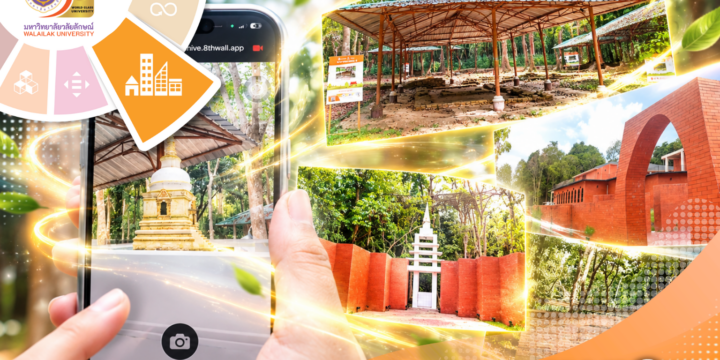
Sustainability and Stewardship The rapid expansion of urban areas, agriculture, and industrial zones has led to a significant decline in Thailand's forest areas. This phenomenon not only reduces biodiversity but also threatens the survival of unique plant species and the ecosystems they support. Recognizing the urgency of conservation, the Digital Communication Program at WU, in collaboration with the WBP, organized events aimed at promoting both the conservation and sustainable utilization of land, including forest and wild land resources. These events employ innovative communication strategies to foster  awareness  and  understanding  about  the importance of preserving natural habitats, particularly among local youth. Event to Promote Conservation of the Land This initiative focused on conserving flora in the original forest through a detailed survey of key plant species, conducted with botanists. Researchers identified…
Read More
Advancing Ecosystem Education: Flora and Fauna Conservation

Advancing Ecosystem Education: Flora and Fauna Conservation

Sustainability and Stewardship
Sustainability and Stewardship In an era where environmental conservation and natural resource management are of paramount importance, The University plays a significant role in advancing ecosystem knowledge through its comprehensive educational programs on ecosystems (looking at wild flora and fauna) for local and national communities. A central figure in these efforts is the Walailak Botanic Park (WBP), a key learning hub for ecosystems in Upper Southern Thailand. It focuses on conservation, knowledge expansion, and the promotion of community-level applications to support sustainable natural resource management. Educational Programmes on Ecosystems: Flora Education In 2024, WBP continued its long-term involvement in the RSPG project, which has been active since 2014. This initiative focuses on preserving plant biodiversity through research support and the delivery of educational programmes for local and national communities, as…
Read More
Preserving Nature, Extending Life: The Key Role in Ecosystem and Biodiversity Conservation

Preserving Nature, Extending Life: The Key Role in Ecosystem and Biodiversity Conservation

Sustainability and Stewardship
Sustainability and Stewardship In an era where ecosystems worldwide are facing severe threats, Walailak University (WU) has emerged as a leader in maintaining and extending natural ecosystems and their biodiversity. With a vast campus of over  14,400,000 m², WU has implemented comprehensive and sustainable natural resource management practices. Central to this effort is the Walailak Botanic Park, a pivotal hub for preserving and enhancing biodiversity in ecologically significant areas under threat. These direct works reflect the university's commitment to balancing development with conservation. Maintaining Existing Ecosystems and their Biodiversity The university strengthened its commitment to maintaining existing ecosystems and safeguarding biodiversity. The 79,456 m² of original forest was designated as a protected area, ensuring the preservation of native species and preventing further degradation. Also, disturbed lands were left to regenerate…
Read More
Low-Carbon Energy Tracking at wu

Low-Carbon Energy Tracking at wu

Carbon Capture, Sustainability and Stewardship
Walailak University (WU) has long been at the forefront of sustainability, aligning its energy policies with national frameworks like the Energy Efficiency Development Plan. In 2024, WU reinforced its commitment to reducing its environmental impact by implementing its Climate Action Policy, which emphasizes the measurement and adoption of low-carbon energy for whole university. By tracking energy use across the campus,   the university aims to reduce its reliance on fossil fuels and promote renewable energy solutions, fostering a more sustainable future. Figure: Assessing carbon footprint reduction through treesIn 2024, WU consumed 52,274 gigajoules of electrical energy, resulting in 12,433 tons of carbon dioxide equivalent emissions. Energy-intensive areas included: - Shops and campus-charged facilities (canteens, gardens): 19.93% of total energy consumption. - Integrated Academic Buildings: 13.57% of total energy consumption. - Student Dormitories:…
Read More
The Green Allies: Just Say No to Plastic Bag– Under WU Policies

The Green Allies: Just Say No to Plastic Bag– Under WU Policies

Sustainability and Stewardship
Sustainability and Stewardship Plastic waste and single-use items have become a critical global issue, causing severe environmental degradation and harming ecosystems. These materials, often non-biodegradable, contribute to pollution in land and marine environments, impacting both wildlife and human health. Addressing this problem requires collective efforts to reduce usage, promote sustainable alternatives, and manage waste effectively. Consequently, the university has the policies around use minimization of plastic and disposable items on campus.According to these policies, the university organized various activities in 2024, promoting and campaigning among students, staff, and employees, as well as food and beverage vendors operating within the university, to reduce waste through   various   approaches. These include awareness campaigns, workshops, and training sessions, such as the "8R Waste Management Seminar" and workshops on crafting items from everyday…
Read More
Integrated Waste Management: Advancing Towards Zero Waste

Integrated Waste Management: Advancing Towards Zero Waste

Sustainability and Stewardship
Sustainability and Stewardship Walailak University (WU) has always applied an integrated waste management approach in support of its Green University Initiative which goal is to attain zero waste management with economic, social, and environmental sustainability considerations in mind. At present, WU has policies, guidelines, and activities to measure the amount of waste generated across the university. The processes of existence of measurement at the whole university throughout its different stages are as follows: Waste Monitoring and Measurement at the Source This stage focuses on educating WU students and staff about the significance of reducing waste and properly sorting it by implementing a system of four color-coded bins to help categorize waste: Green Bins for organic waste; Blue Bins for general waste; Yellow Bins for recyclable materials; Red Bins for hazardous…
Read More