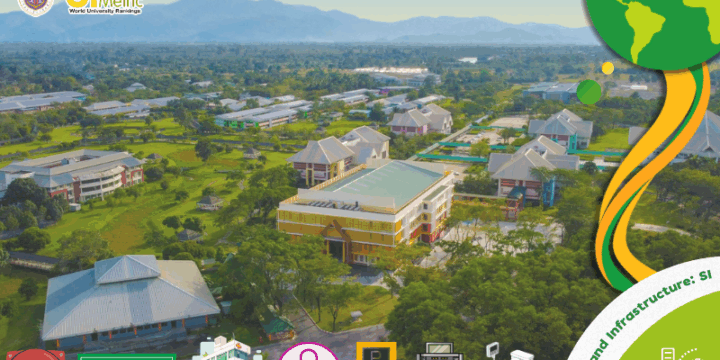
Setting and Infrastructure (SI) Total campus buildings area Total floor area of buildings on campus Campus building area (Walailak University, Thailand) Related SDGs 4 Goal 4 : Quality Education 9 Goal 9 : Industry, Innovation and Infrastructure 11 Goal 11 : Sustainable Cities and Communities 13 Goal 13 : Climate Action 15 Goal 15 : Life on Land
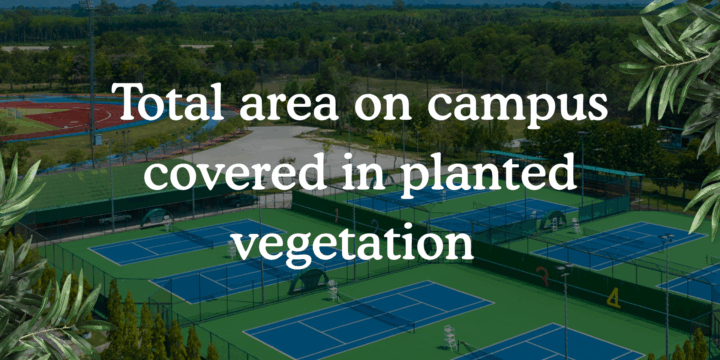
Setting and Infrastructure (SI) Total area on campus covered in planted vegetation 1. Walailak Park 2. The French Garden 3. KLA-D Demonstration organic farm KLA-D Demonstration organic farm The Center for Agricultural Innovation Demonstration and Development in Honor of King Rama IX, also known as “Kla Dee”, is located within Walailak University, covering an area of more than 16,000 square meters. The Center was established to translate the Royal Initiatives of His Majesty King Rama IX in agriculture into tangible practices, while integrating agricultural innovations and semi-innovations that align with the national development framework and directions. The Center’s operations focus on organic agricultural production, together with post-harvest management, product processing, and marketing, in order to generate appropriate and sustainable income. It also promotes collaboration with agricultural…
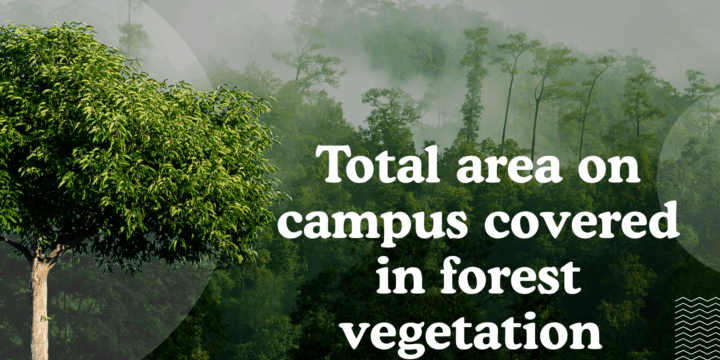
Setting and Infrastructure (SI) Total area covered by forest vegetation used for research, teaching, and/or community engagement Walailak University has a total campus area of 15,350,400.00 m², of which 5,470,315.45 m² is covered by forest vegetation. This represents 35.64% of the total campus area. The forest vegetation areas consist of natural and planted forests characterized by large trees, dense vegetation layers, and diverse plant species that support campus biodiversity. These forested areas are owned and managed by Walailak University as part of the campus landscape and conservation zones. The forest areas are actively used for academic and community purposes, including research, field-based teaching, and community engagement activities. Students and researchers conduct studies related to ecology, biodiversity conservation, environmental science, and sustainable land management within these…
Setting and Infrastructure (SI) Health infrastructure facilities for students, academics, and administrative staff’s well-being First Aid & Primary Care The Walailak University Primary Care Center, located in the student dormitory zone, provides free daily healthcare services to all students residing on campus. The center offers basic medical treatment, general health check-ups, and health consultations, ensuring that students have convenient access to primary healthcare within the university premises. Emergency room & Clinical Services The 24-hour Emergency Room at Walailak University Medical Center Hospital provides round-the-clock emergency medical services for all types of patients, including those in critical condition. The unit is staffed with qualified medical professionals, including emergency physicians, nurses, and support staff, and is equipped with modern medical technologies such as…
Setting and Infrastructure (SI) Campus facilities for disabled, special needs, and/or maternity care Map of Facilities for Disable, Special Needs and Maternity Care (Walailak University, Thailand) Walailak University provides fully functional, accessible facilities in all campus buildings for students, staff, persons with disabilities, individuals with special needs, and pregnant or postpartum women. All main buildings—including academic buildings, administrative offices, residential halls, recreational facilities, and the university hospital—are equipped to ensure safety, convenience, and universal accessibility. The university also operates Daycare Centers to support students and staff with young children, allowing them to fully access services and facilities. These initiatives reflect Walailak University’s commitment to creating an inclusive environment that promotes learning, work, and sustainable living. Key accessibility facilities include: Accessible building entrances and ramps…
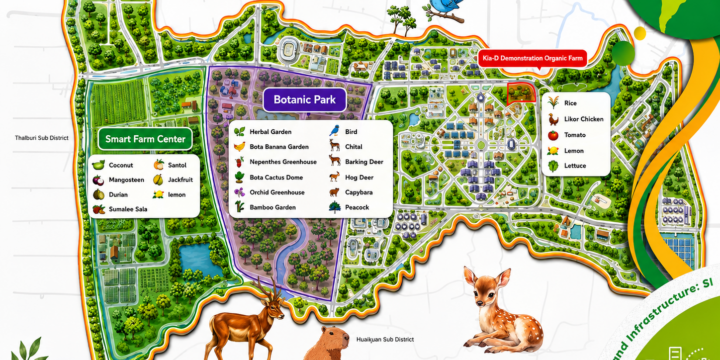
Setting and Infrastructure (SI) Conservation of flora, fauna, wildlife, and genetic resources Walailak University’s Implementation of Biodiversity Conservation Programs Walailak University systematically implements biodiversity conservation programs to protect flora, fauna, wildlife, and genetic resources for food and agriculture. These programs are conducted within university-managed conservation areas, including Walailak Botanical Park, the Smart Farm Center, and the KLA-D Agricultural Innovation Demonstration Center. The conservation programs cover both in-situ conservation and ex-situ/managed conservation. In-situ conservation focuses on protecting natural forest areas, aquatic ecosystems, wildlife habitats, and native plant communities within the university’s conservation areas. Ex-situ and managed conservation include plant collection, propagation, demonstration plots, seed and genetic resource conservation, as well as the management of agricultural and livestock genetic resources. Walailak University has established baseline species inventories and…
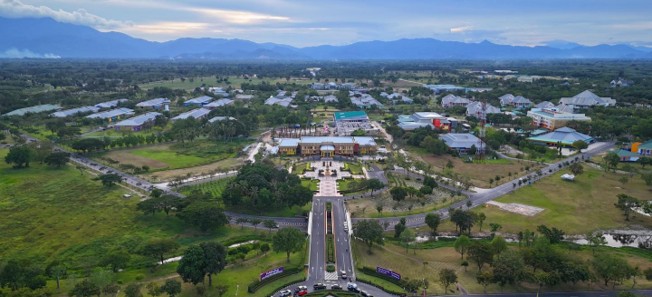
Setting and Infrastructure (SI) Total Green and Open Space Area on Campus Total area on campus covered in forest vegetationTotal area on campus covered in planted vegetationTotal campus buildings area Number of campus sites Walailak University, located in Nakhon Si Thammarat Province, Thailand. It is the largest university in the country by land area, covering a total area of 15,350,400 square meters. Established in 1992, the university is not only significant in higher education but also plays an important role in research and regional development. The campus of Walailak University has been carefully designed to balance modern educational facilities with natural beauty. It includes advanced infrastructure, widespread green areas, and variety of facilities that together create a supportive environment for both learning and personal growth. …
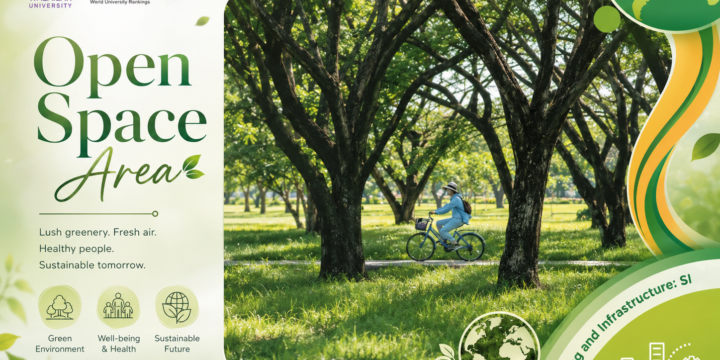
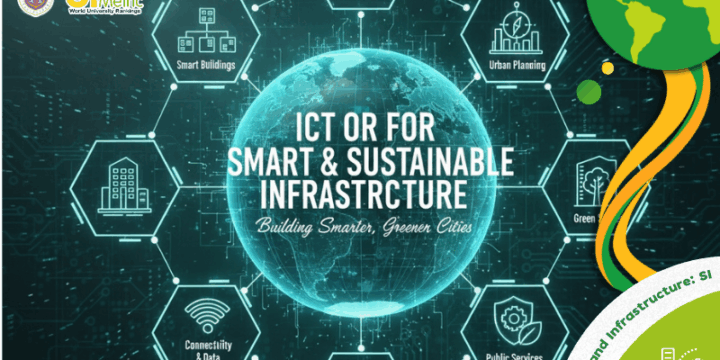
Setting and Infrastructure (SI) Planning, implementation, monitoring and/or evaluation of all programs related to Setting and Infrastructure through the utilization of Information and Communication Technology (ICT) · Allocating over 50% of the total campus area as green and open spaces to support biodiversity, reduce air temperature and pollution, and provide natural learning environments.· Designing and renovating buildings in accordance with Green Building standards, ensuring equal access and inclusiveness for all, while emphasizing efficient use of energy, water, and materials. ICT systems such as Smart Building technologies and dashboards are integrated for effective facility management.· Developing sustainable public utilities and transportation systems, including electric shuttle buses, EV charging stations, bicycle lanes, and pedestrian pathways that are…
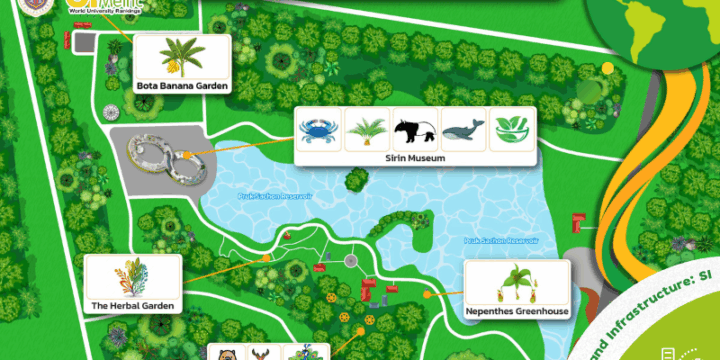
Setting and Infrastructure (SI) Conservation: Walailak University Botanical Park Walailak University Botanical Park is located within the university’s conservation area, covering approximately 2,160,000 square meters. It serves as a center for the conservation of plant species, animal species, wildlife, as well as genetic resources for food and agriculture. The park emphasizes the collection, propagation, and preservation of various plant families for the purposes of education, research, and conservation of native species in their original ecosystems. Within the area, the Princess Maha Chakri Sirindhorn Natural History Museum is situated. The building is uniquely designed in the shape of the number “8” symbolizing infinity and sustainability in the conservation of natural resources, the environment, and cultural wisdom. Key exhibitions include a simulated Krung Ching Waterfall, representing…