Water Conservation Program Implementation

Water Conservation Program Implementation

Water
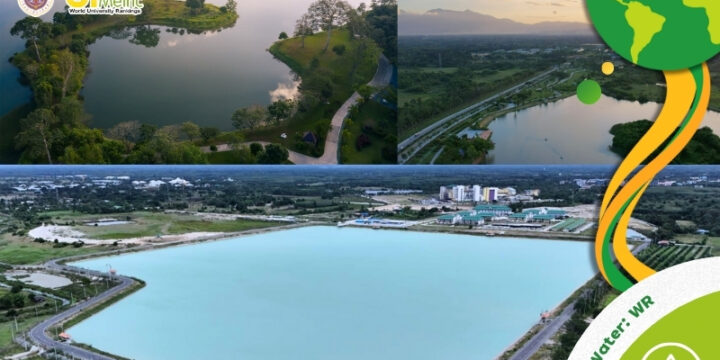
Water (WR) Water Conservation Program Implementation Figures: The Process of Water Management in the Reservoirs. (Walailak University, Thailand)The Process of Water Management in the ReservoirsWalailak University has established a comprehensive water management system that integrates natural water resource development, flood prevention, efficient distribution, and wastewater recycling. The university relies on three primary reservoirs: Pruk Sachon Reservoir, Mon Tara Reservoir, and Chala Nusorn Reservoir, which serve as essential infrastructure for sustainable water utilization and climate resilience within the campus.1. Reservoir and Natural Water Source Management           The university continually improves natural water sources and develops previously flooded areas into reservoirs to increase its water storage capacity. This approach not only enhances water security but also strengthens the university’s resilience against seasonal water shortages and climate-related risks. Figures: The reservoirs within Walailak University.…
Read More
Planning, implementation, monitoring and/or evaluation of all programs related to Energy and Climate Change through the utilization of Information and Communication Technology (ICT).

Planning, implementation, monitoring and/or evaluation of all programs related to Energy and Climate Change through the utilization of Information and Communication Technology (ICT).

Energy and Climate Change (EC)
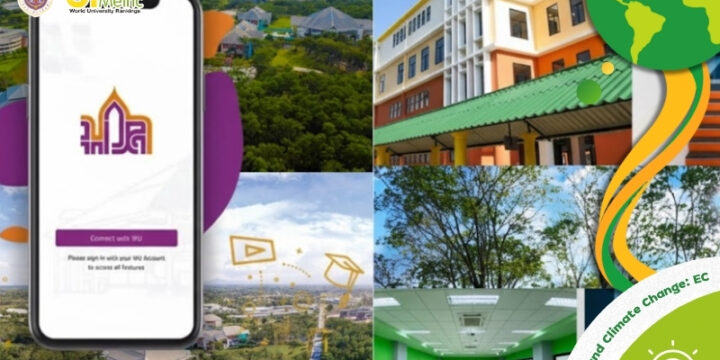
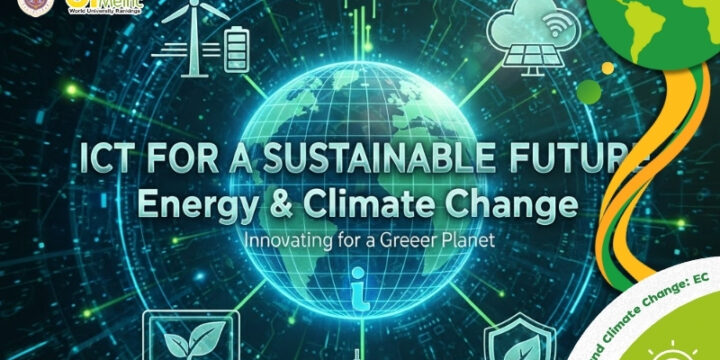
Energy and Climate Change (EC) Planning, implementation, monitoring and/or evaluation of all programs related to Energy and Climate Change through the utilization of Information and Communication Technology (ICT) Walailak University has integrated Information and Communication Technology (ICT) into its planning, implementation, monitoring, and evaluation of programs related to energy and climate change.
Read More
Impactful university program(s) on climate change

Impactful university program(s) on climate change

Energy and Climate Change (EC)
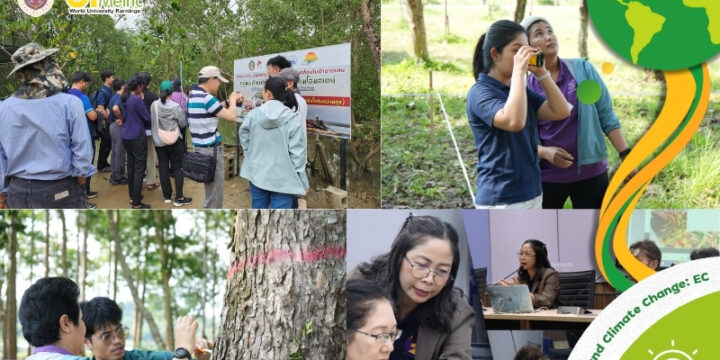
Energy and Climate Change (EC) Impactful university program(s) on climate change Walailak University's programs on climate change risks, impacts, mitigation, adaptation, impact reduction, and early warning for 2025 provide training, educational materials, seminars/conferences, and activities which are implemented by communities at the international level, demonstrating the university’s strong commitment to sustainability, climate action, and global collaboration. Training on Climate Change (Click) Educational Materials on Climate Change (Click) Seminars/Conferences on Climate Change (Click) Activities which are implemented by communities at the international level (Click) Related SDGs 4 Goal 4: Quality education 7 Goal 7: Affordable and clean energy 12 Goal 12: Responsible consumption and production 13 Goal 13: Climate action 15 Goal 15: Life on land 17 Goal 17: Partnerships for the goals
Read More
Innovative program(s) in energy and climate change

Innovative program(s) in energy and climate change

Energy and Climate Change (EC)
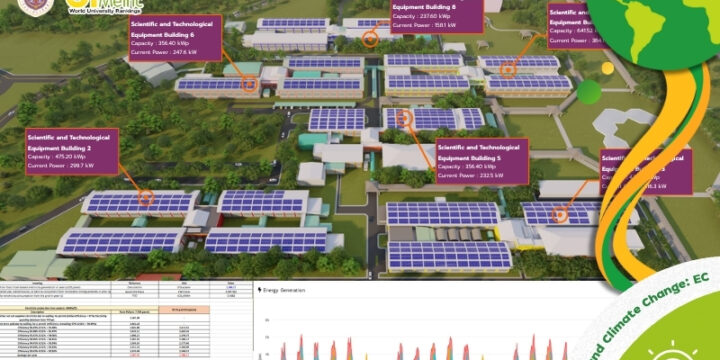
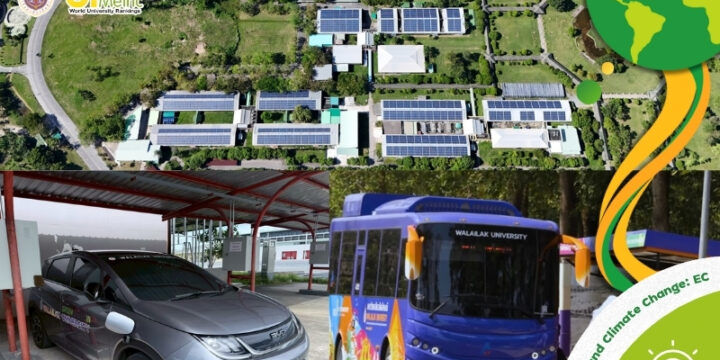
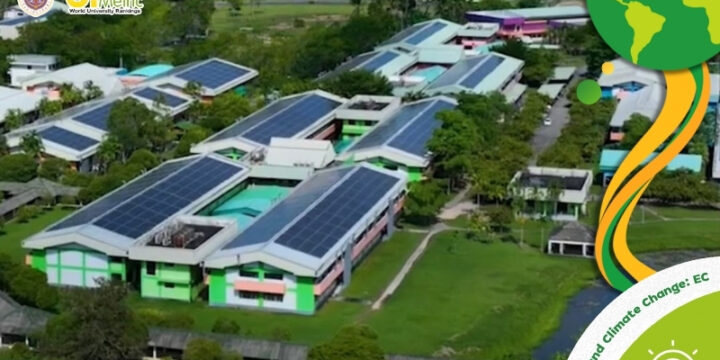
Energy and Climate Change (EC) Number of innovative program(s) in energy and climate change Walailak University has implemented a series of innovative programs in energy and climate change, contributing to the advancement of sustainability in these fields. Solar Roof Installation at the Center for Scientific and Technological Equipment This project enhances energy efficiency by harnessing solar power, reducing dependence on conventional energy sources. Reference of data : Real-time renewable energy monitoring programWalailak University’s 2.54 MW rooftop solar project at the Center for Scientific and Technological Equipment has been validated under the Thailand Voluntary Emission Reduction (TVER) Program, resulting in an average reduction of 1,585 tCO₂e in greenhouse gas emissions per yearThis solar photovoltaic (PV) installation generates renewable electricity that offsets grid electricity consumption, reducing Scope 2 indirect emissions. Beyond environmental…
Read More
Total carbon footprint

Total carbon footprint

Energy and Climate Change (EC)
Energy and Climate Change (EC) The Total Carbon Footprint (CO2 emission in the last 12 months, in metric tons) Carbon footprint in 2025 = 9,444.97 metric tonsThe total carbon footprint divided by the total campus population = 9,444.97 / 17,626 = 0.54 metric tons Related SDGs 7 Goal 7: Affordable and clean energy 13 Goal 13: Climate action
Read More
Greenhouse gas emission reduction program

Greenhouse gas emission reduction program

Energy and Climate Change (EC)
Energy and Climate Change (EC) Greenhouse gas emission reduction program Walailak University has implemented a comprehensive greenhouse gas (GHG) emission reduction program that spans all 3 emissions scopes, underscoring its unwavering commitment to sustainability and environmental stewardship. This program addresses initiatives across direct emissions, indirect emissions from energy use, and other indirect emissions within the University’s operations. Program for reducing greenhouse gas in Scope 1 (Click) Program for reducing greenhouse gas in Scope 2 (Click) Program for reducing greenhouse gas in Scope 3 (Click) Walailak University not only exemplifies leadership in environmental responsibility but also sets a benchmark for sustainable practices within the higher education sector. This comprehensive approach ensures that the University’s operations contribute positively to global efforts to combat climate change while fostering a culture of sustainability on…
Read More
Elements of green building implementation as reflected in all buildings

Elements of green building implementation as reflected in all buildings

Energy and Climate Change (EC)
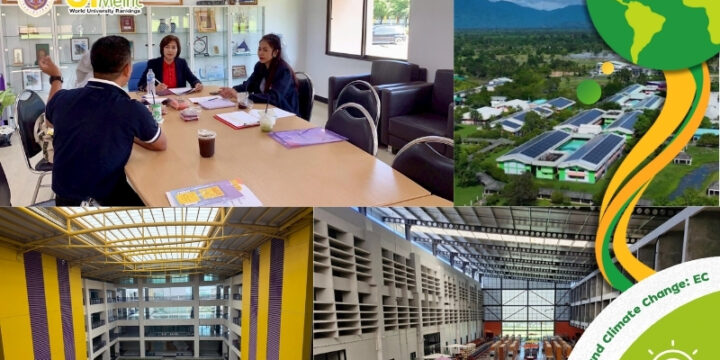
Energy and Climate Change (EC) Elements of Green Building Implementation as Reflected in All Construction and Renovation Policies. Walailak University is deeply committed to sustainability, a commitment that is reflected in all its building construction and renovation policies. The university has integrated multiple elements of green building practices to minimize environmental impact, enhance energy efficiency, and create healthy living and learning environments. These green building components encompass more than 3 elements Figures: Map of Walailak University indicating the distribution of buildings with green building elements under the GBI Non-Residential Existing Building category. (Walailak University, Thailand) Element 1 Energy Efficiency (Click) Element 2 Indoor Environmental Quality (Click) Elements 3 Sustainable Site Planning & Management (Click) Elements 4: Materials & Resources Environmental Quality (Click) Elements 5: Water Efficiency (Click) Walailak University demonstrates…
Read More
Smart Building Implementation

Smart Building Implementation

Energy and Climate Change (EC)
Energy and Climate Change (EC) Smart Building Implementation Figures: Distribution Map of Smart Building in Walailak University (507,981.53m2). (Walailak University, Thailand)1. Smart Building – Automation at Walailak UniversityWalailak University integrates advanced automation systems to enhance operational efficiency, energy management, and user convenience across campus facilities. The automation framework includes two main categories:1.1 Building Management System (BMS): Automated Air Conditioning Control System: Adjusts classroom air conditioning according to class schedules, optimizing energy use. The Air Conditioning Control Panel or Building Automation System (BAS) Touch Panel is implemented for centralized control and monitoring of air conditioning systems within the building. This system enables real-time management of temperature settings, operation schedules, and energy usage, thereby enhancing energy efficiency and ensuring occupant comfort. By integrating automation technology, the university can reduce unnecessary energy consumption, support sustainable…
Read More
Energy Efficient Appliances Usage

Energy Efficient Appliances Usage

Energy and Climate Change (EC)
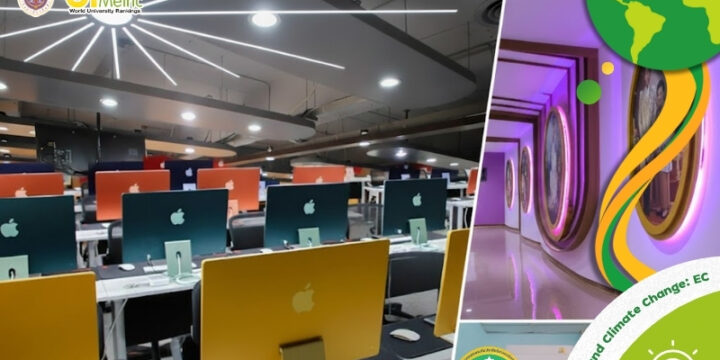
Energy and Climate Change (EC) Figures: Distribution Map of Energy-Efficient Equipment 100% implemented across all buildings. (Walailak University, Thailand) The Energy Efficiency Dashboard presents data on the replacement of conventional equipment with energy-saving appliances. (Walailak University, Thailand)Energy Efficient Appliances Usage: Use of LED light detection %Implemented 100% In 2024, Walailak University reached a significant milestone in its energy conservation strategy by completing the comprehensive replacement of all campus lighting systems with LED technology, encompassing a total of 57,351 bulbs. This initiative represented a full 100% transition, with no incandescent or fluorescent bulbs remaining in operation. Building upon this achievement, the university continued to emphasize energy efficiency in 2025 as a central aspect of its campus development. All newly constructed buildings were designed to be equipped exclusively with LED lighting systems. Consequently, by…
Read More
Renewable energy on campus

Renewable energy on campus

Energy and Climate Change (EC)
Energy and Climate Change (EC) Renewable Energy Sources in Campus Figures: Distribution map of renewable energy facilities at Walailak University. (Walailak University, Thailand)Walailak University is a leader in integrating multiple renewable energy sources into its operations, showcasing a strong commitment to sustainability and reducing its carbon footprint. The university’s renewable energy portfolio includes > 3 sources: solar power, clean biomass, hydropower, combined heat and power, and wind power. Each of these sources plays a vital role in creating a balanced and sustainable energy system that supports the university’s long-term environmental goals. Renewable energy sources and their capacity (in kilowatt hours) Solar Power Solar power is a cornerstone of the university’s renewable energy strategy. Photovoltaic systems are installed on rooftops and open spaces across the campus, converting sunlight into electricity. This clean energy…
Read More