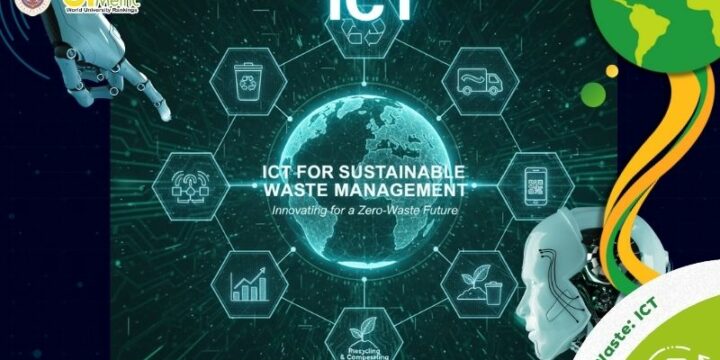
Planning, implementation, monitoring and/or evaluation of all programs related to Waste Management through the utilization of Information and Communication Technology (ICT)

Planning, implementation, monitoring and/or evaluation of all programs related to Waste Management through the utilization of Information and Communication Technology (ICT)

Waste
Waste (WS) Planning, implementation, monitoring and/or evaluation of all programs related to Waste Management through the utilization of Information and Communication Technology (ICT) Figure 1 Planning, implementation, monitoring and/or evaluation of all programs related to Waste Management through the utilization of Information and Communication Technology (ICT) Fifgure 2 Data Flow Diagram Waste Management DashboardWalailak University places great importance on continuous waste management to create a sustainable environment and reduce environmental impacts, in line with UI GreenMetric standards. The university implements systematic strategies for waste reduction, segregation, and recycling.A key tool for monitoring is the waste management dashboard, which serves as a central platform for collecting and analyzing waste data from all areas of the campus. The dashboard provides critical information, including:Waste quantities by type: Data on organic waste, recyclable waste,…
Read More
Sewage disposal

Sewage disposal

Waste
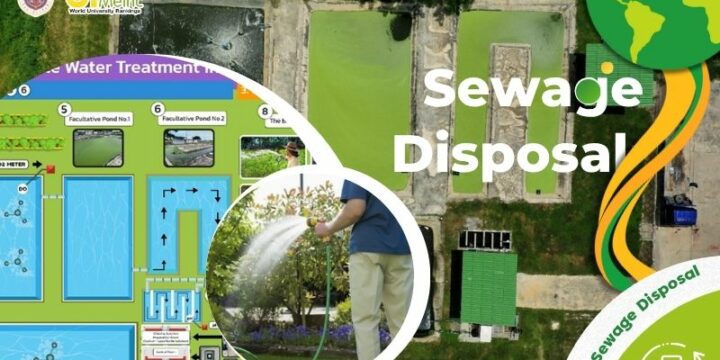
Waste (WS) Sewage Disposal Wastewater Treatment System of Walailak UniversityThe wastewater treatment system at Walailak University receives wastewater from various buildings and facilities across the campus. The system is designed to efficiently manage and treat wastewater while supporting educational initiatives and promoting sustainability. It has a maximum capacity of 4,000 cubic meters per day and primarily employs biological treatment methods, particularly an aeration process using aerobic bacteria to decompose organic matter.After the biological treatment, the water undergoes tertiary treatment, which includes chlorine disinfection to remove remaining contaminants, bacteria, and microorganisms. This process ensures that the treated water meets quality standards and is safe according to regulatory requirements.The treated water can then be reused for various purposes, such as vehicle washing, street cleaning, irrigation, and landscaping, supporting the university’s sustainable water…
Read More
Toxic Waste Treatment

Toxic Waste Treatment

Waste
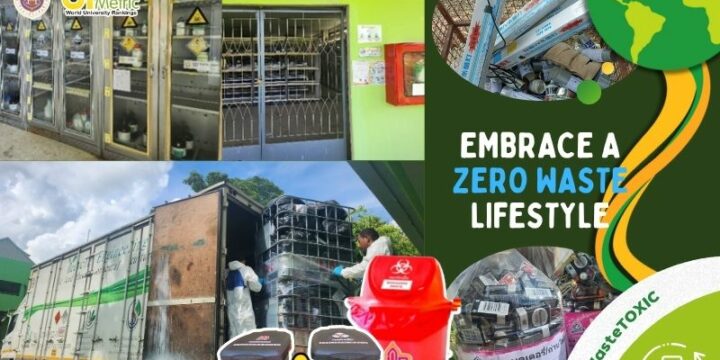
Waste (WS) Toxic Waste Treatment Inorganic waste Generation in University Figure 1.1 Total volume of toxic waste produced in this year Figure 1.2 Total volume of toxic waste produced in this yearThe total volume of toxic waste produced at Walailak University  3.77 tons per year.In assessing toxic waste production at Walailak University, the total volume for 2025  amounted to 3.77 tons. The toxic waste produced consists of several categories:Laboratory Chemical Waste: This includes chemical by-products from research and academic activities in the university's laboratories. The total generated from this source was 3.75 tons.Other Toxic Waste: This smaller category includes waste such as electronics, fluorescent lamps, batteries, and aerosol cans. The total waste from this group was 0.02 tons.Walailak University places great importance on raising environmental awareness among staff and students…
Read More
Inorganic Waste Treatment

Inorganic Waste Treatment

Waste
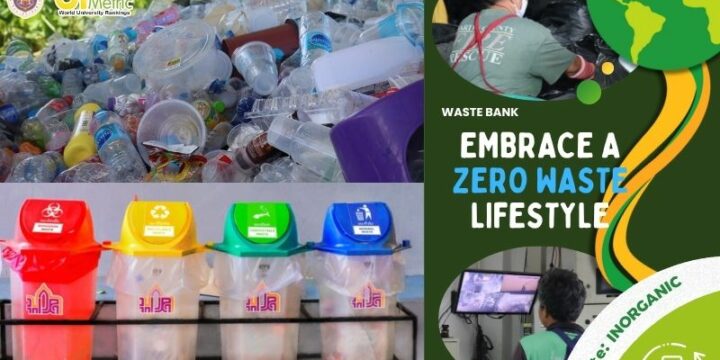
Waste (WS) Inorganic Waste Treatment Inorganic waste Generation in University Figure 1 Total volume inorganic waste produced 569.79 ton per year        Walailak University places great emphasis on systematic inorganic waste management to align with the sustainability criteria of the UI GreenMetric World University Ranking. In the most recent year, the university generated a total of 584.35 tons of inorganic waste per year, which can be categorized into four main groups: paper, plastic, metal, and general waste. This classification highlights the diverse sources of inorganic waste across the campus.Paper waste (discarded paper), totaling 37.06 tons, includes office paper, packaging materials, and other paper products. The relatively small amount indicates the university’s success in implementing paper reduction measures, such as transitioning to digital platforms and promoting electronic documentation.Plastic waste…
Read More
Organic Waste Treatment

Organic Waste Treatment

Waste
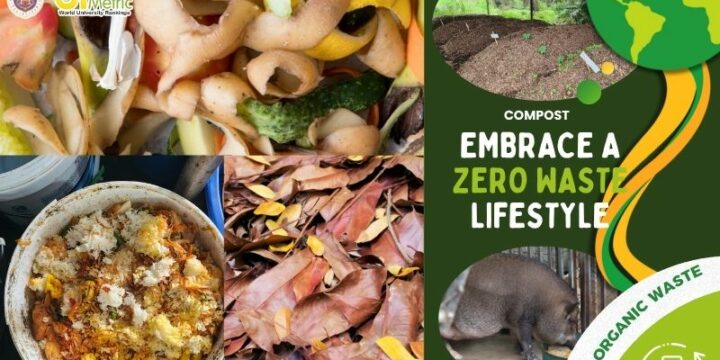
Waste (WS) Organic Waste Treatment Organic waste Generation in University       Walailak University generated a total of 253.9 tons of organic waste in this year . This organic waste can be classified into three main categories as follows:Food Waste: Generated from canteens and other food service points within the university, totaling 9.40 tons.Discarded Vegetables: Vegetable residues from canteens and the KIA-D Demonstrative Farm within the university, totaling 4.17 tons.Garden waste (plant matter): Generated from gardens and landscaped areas of the university, including fallen leaves, pruned branches, and other plant residues, totaling 240.32 tons. Figure 1: Total volume of paper and plastic produced this year Figure 2: Monthly categorization of organic waste Categorization of  organic waste, classified by sources of origin within the university     The total amount of…
Read More
Program to Reduce the Use of Paper and Plastic on Campus

Program to Reduce the Use of Paper and Plastic on Campus

Waste
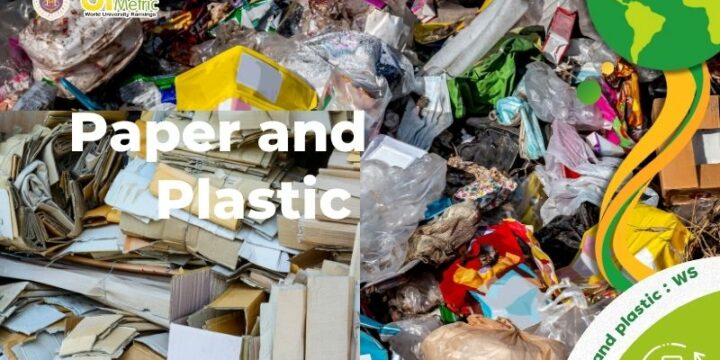
Waste (WS) Program to Reduce the Use of Paper and Plastic on Campus Figure 1 Total volume of paper and plastic produced this yearThe total amount of paper and plastic at Walailak University is 107.9 tons, divided as follows:1.The paper has a total quantity of 37.06 tons, categorized as follows:Cardboard: 24.51 tonsColored paper: 7.16 tonsBlack and white paper: 5.40 tons2.The plastic has a total quantity of 70.84 tonsWalailak University has continuously collected and monitored data on the volume of waste generated from on-campus activities and operations. This information serves as a fundamental basis for planning resource management and minimizing environmental impacts. According to the monitoring results, the total paper waste generated amounted to 37.06 tons, comprising 24.51 tons of cardboard , 7.16 tons of colored paper and 5.40 tons of…
Read More
3R (Reduce, Reuse, Recycle) program for university’s waste

3R (Reduce, Reuse, Recycle) program for university’s waste

Waste
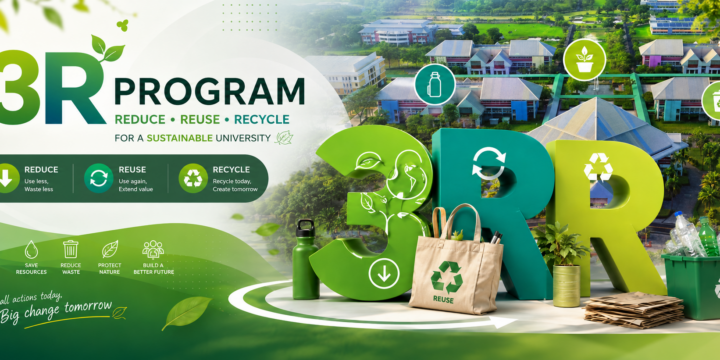
Waste (WS) 3R (Reduce, Reuse and Recycle) Program for University Waste 3 R Programs in Walailak University Currently, Walailak University has 41 active 3R programs, fully implemented to encourage staff and students to participate. Therefore, more than 75% of the 3R programs have been implemented. Figure 1 Currently, Walailak University has fully implemented 41 3R program University's Waste Management Policy and Goals.         Walailak University remains firmly committed to implementing a comprehensive waste management system as outlined in its Green University Policy. With a resolute focus on achieving zero waste, the university takes into account economic, social, and environmental factors, aligning with the Sustainable Development Goals (SDGs).The university has actively promoted awareness and engagement among its faculty, students, and staff to reduce waste at the source. Key…
Read More
Planning, implementation, monitoring and/or evaluation of all programs related to Water Management through the utilization of Information and Communication Technology (ICT)

Planning, implementation, monitoring and/or evaluation of all programs related to Water Management through the utilization of Information and Communication Technology (ICT)

Water
Water (WR) Planning, implementation, monitoring and/or evaluation of all programs related to Water Management through the utilization of Information and Communication Technology (ICT) Walailak University places a strong emphasis on integrating Information and Communication Technology (ICT) into all stages of its water management programs — from planning and implementation to monitoring and evaluation. This strategic integration enhances efficiency, accuracy, and sustainability in the management of water resources across the campus.• Planning Figures: Coordination meetings to plan and analyze the university’s water management system, covering water demand, building water use, and wastewater management. (Walailak University, Thailand)The university conducts coordination meetings to plan and analyze the entire water management system, encompassing water demand, usage in campus buildings, and wastewater treatment processes. ICT tools, including digital data records, GIS mapping, Google Earth, and online…
Read More
Water-efficient appliances usage

Water-efficient appliances usage

Water
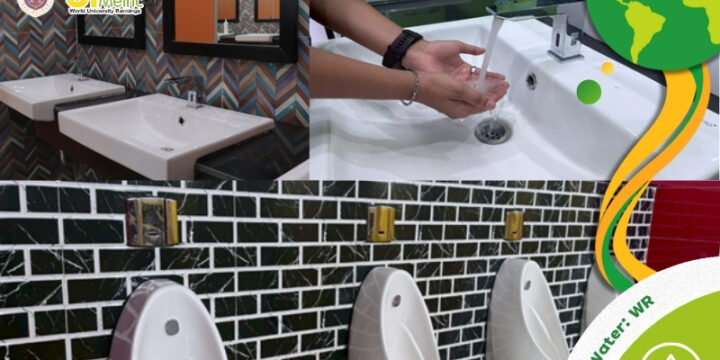
Water (WR) Water-efficient appliances usage Figures: Campus Map of Water-Efficient Appliance Installations in All University Buildings. (Walailak University, Thailand)Walailak University has a policy to promote reduced water usage and efficient water management within the university for maximum benefit. The university has applied building standards aimed at minimizing water use. Announcement of Walailak University Subject : Water Reuse Guidelines. Thai version see : https://bit.ly/3G0jyQv Walailak University has a policy to promote reduced water usage and efficient water management within the university for maximum benefit. The university has adopted building standards aimed at minimizing water use, as follows:• FaucetsSelf-closing faucets have been installed instead of swivel faucets, effectively controlling and limiting water usage. Picture : Automatic faucets• Urinal flush valvesThese have been replaced with water-saving models (6 liters), reducing water consumption by…
Read More
Water recycling program implementation

Water recycling program implementation

Water
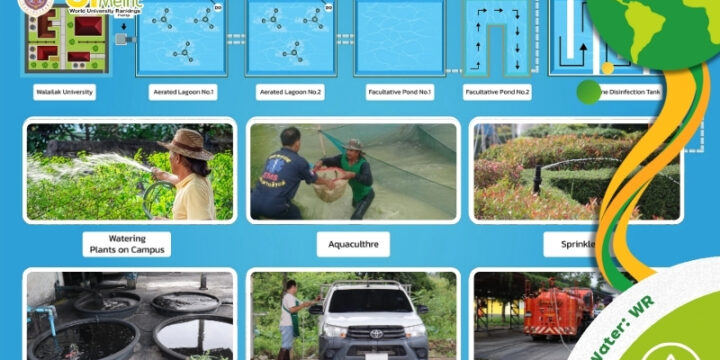
Water (WR) Water recycling program implementation Walailak University has implemented a water recycling program to promote sustainable water use and achieve > 50% water recycled. In 2025, the university’s daily water consumption for domestic purposes was 960.37 cubic meters, of which 768.29 cubic meters per day (approximately 80% of total water use) entered the wastewater system. Approximately 729.88 cubic meters per day of treated water (reflecting a 5% loss during the treatment process) was reused in the following activities: 1. Watering Plants on Campus: Treated water is used for watering plants and ornamental trees throughout the campus to maintain greenery and reduce the use of new tap water. This activity helps promote a healthy campus ecosystem and supports a pleasant, shaded environment. 2. Aquaculture: Treated water, tested to meet quality…
Read More