Promoting Educational Access among International Students from Developing Countries

Promoting Educational Access among International Students from Developing Countries

Sustainability and Stewardship
Sustainability and Stewardship Walailak University (WU) deeply recognizes the importance of equality in educational access among international students to foster a diverse and inclusive academic environment. Ensuring that students from all backgrounds have the opportunity to pursue higher education is fundamental to our mission. WU is committed to providing the necessary support systems, including scholarships, language programs, and cultural integration initiatives, to help international students thrive. The WU International College is one of the organizations that is responsible for assisting undergraduate international students to complete their education while the College of Graduate Studies is responsible for graduate students. In 2024, more than 170 international students studied at WU across all levels. These students came from Myanmar, Vietnam, China, Zimbabwe, the Philippines, Uganda, Nigeria, Pakistan, Bhutan, and Egypt. They had equal…
Read More
Walailak University offers Free Educational Outreach: Low-Carbon Tourism for Sustainability in the “Nipa Palm” Agricultural Area of Khanap Nak Community, Pak Panang District, Nakhon Si Thammarat Province   

Walailak University offers Free Educational Outreach: Low-Carbon Tourism for Sustainability in the “Nipa Palm” Agricultural Area of Khanap Nak Community, Pak Panang District, Nakhon Si Thammarat Province   

Outreach and Engagement
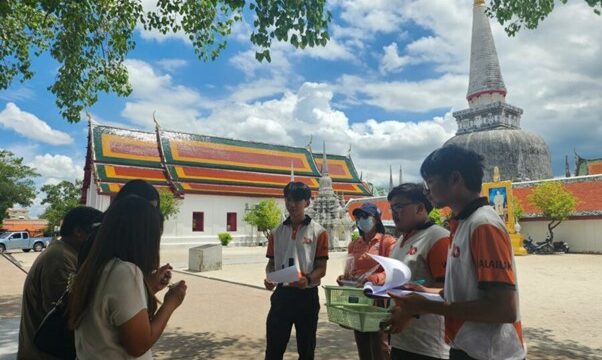
Outreach and Engagement Walailak University offers Free Educational Outreach: Low-Carbon Tourism for Sustainability in the "Nipa Palm" Agricultural Area of Khanap Nak Community, Pak Panang District, Nakhon Si Thammarat Province On August 3, 2024, the School of Management at Walailak University organized a field study program to provide free educational opportunities to local community members about low-carbon tourism in the agricultural area "Nipa Palm" in the Khanab Naak community, Pak Phanang District, Nakhon Si Thammarat Province, Thailand, in order to promote tourism and sustainability. The School of Management has carried out four major activities, as follows: 1. Preliminary survey of needs for tourism activities that promote sustainability of the agricultural area "Nipa Palm" Since June 2024, the School of Management, led by Dr. Sukhuman Klamsaengsai, has surveyed the needs of…
Read More
Sustainable Management Strategy of Aquatic Resources in Pak Panang River Basin and Bandon Bay, the Large Watershed Areas Located Nearby Walailak University   

Sustainable Management Strategy of Aquatic Resources in Pak Panang River Basin and Bandon Bay, the Large Watershed Areas Located Nearby Walailak University   

Uncategorized
Sustainability and Stewardship Walailak University (WU) has actively developed and implemented a watershed management strategy for the Pak Phanang River Basin and Bandon Bay, watershed areas located close to Walailak University. WU has emerged as a leader in implementing watershed and aquatic resource management strategies to protect Southern Thailand’s unique ecological regions, emphasizing specific diversity of aquatic species. By 2023, WU completed the development and application of two comprehensive management strategies: the watershed management plan for the Pak Phanang River Basin (Freshwater ecosystem) and the aquatic resource management plan for Bandon Bay (Marine Ecosystem). These strategies prioritize sustainable ecosystem practices, biodiversity conservation, and community resilience. Through rigorous research, cross-sector collaboration, and direct community involvement, WU has crafted location-specific solutions that align with its mission to support both environmental sustainability and…
Read More
Collaborative Conservation: Walailak University’s Crab Bank Initiative for Sustainable Management of Shared Coastal Ecosystems   

Collaborative Conservation: Walailak University’s Crab Bank Initiative for Sustainable Management of Shared Coastal Ecosystems   

Blue Swimming Crab2025
Sustainability and Stewardship Walailak University (WU), in partnership with local fishing communities and various stakeholders, has launched a groundbreaking initiative to restore blue swimming crab populations along Thailand’s coast. Known as the "Crab Bank" project, this community-centered program seeks to address the urgent need for sustainable fishery practices amid declining marine resources. With blue swimming crabs being one of Thailand’s top seafood exports, the depletion of this resource has far-reaching effects on the economy, food security, and the livelihoods of coastal communities. By combining research, stakeholder collaboration, and local community engagement, WU’s ongoing project aims to protect and maintain Thailand's shared coastal and aquatic ecosystems and secure a sustainable future for the fishing industry. Thailand’s coastal regions are home to diverse marine species, providing crucial protein and income for many…
Read More
Ongoing Programs Promoting Good Aquatic Stewardship Practices  

Ongoing Programs Promoting Good Aquatic Stewardship Practices  

Uncategorized
Sustainability and Stewardship Walailak University (WU) enthusiastically develops and supports programs to promote sustainable practices in the fisheries and aquaculture sectors, aiming to foster environmental stewardship in alignment with global standards. Two significant ongoing programs, focused on encouraging and maintaining blue swimming crab rehabilitation and sustainable tilapia aquaculture, serve as prime examples of the university’s commitment to advancing good aquatic stewardship. 1. Blue Swimming Crab Fishery: Advancing Sustainable Practices in Aquatic Restoration Stewardship Spanning six years, 2018-2024, WU’s ongoing project on blue swimming crab rehabilitation in Bandon Bay, led by Asst. Prof. Dr. Amonsak Sawusdee achieved remarkable progress in raising fishery standards according to the Fishery Improvement Program (FIP) framework. Recognized by Thailand’s Agricultural Research Development Agency and the Ministry of Agriculture and Cooperatives, this project has been hailed as…
Read More
Advancing Innovative Monitoring Strategy on the Health of Aquatic Ecosystem through Technology and Community Engagement  

Advancing Innovative Monitoring Strategy on the Health of Aquatic Ecosystem through Technology and Community Engagement  

Uncategorized
Sustainability and Stewardship Walailak University (WU) actively protects and monitors the health of aquatic ecosystems through various scientific approaches. Strategically located near important marine and freshwater resources, WU is dedicated to tracking the health of ecosystems in nearby zones. This commitment includes using advanced technologies like GIS, remote sensing, CTD sensor networks, and UAV drones. The following sections outline WU's ecosystem monitoring initiatives for 2023, which cover the area of Bandon Bay, Phuket’s coral reefs, Nakhon Si Thammarat. 1. Monitoring Bandon Bay Using GIS and Remote Sensing Located near WU, Bandon Bay is vital to local communities and marine biodiversity. During 2018-2023, WU researchers have partnered with government agencies and the industry sector, the Thai Frozen Foods Association (TFFA) to conduct extensive studies funded by the National Research Council of…
Read More
Walailak University’s Plans to Strengthen Blue Crab Conservation and Conserve Marine Ecosystem through National and International Collaboration   

Walailak University’s Plans to Strengthen Blue Crab Conservation and Conserve Marine Ecosystem through National and International Collaboration   

Blue Swimming Crab2025
Sustainability and Stewardship Walailak University (WU) has made significant plans to minimize the alteration of aquatic ecosystems, and foster sustainable fisheries management, particularly focusing on the blue swimming crab population in Ban Don Bay, which is the related aquatic ecosystem of the campus. In 2023, Asst. Prof. Dr. Amonsak Sawusdee, a prominent figure in WU’s School of Science and a member of the National Scientific and Technical Committee, played a central role in developing and advising sustainable fishery policies and plans. Dr. Sawusdee’s contributions include his active involvement in research and policy development under the Thai Fishery Improvement Project (FIP), which aligns closely with the university’s broader efforts to combat overfishing and mitigate the environmental impacts of unsustainable practices in Thai waters.In addition to national-level initiatives, WU has collaborated extensively…
Read More
WU’s Policy for Preventing and Reducing Marine Pollution  

WU’s Policy for Preventing and Reducing Marine Pollution  

Uncategorized
Sustainability and Stewardship Walailak University revised the policy on Marine Pollution Reduction in 2024 to keep the policy updated and provide more details on measures to prevent and reduce marine pollution of all kinds, in particular from land-based activities to show WU’s commitment to being good stewardship both on and off campus. The new policy is titled “Policy on Marine Pollution Reduction B.E. 2567 (2024)”.Walailak University realizes that it must implement the Policy on Marine Pollution Reduction to uphold its commitment to environmental stewardship and sustainability. As a prominent educational institution in Thailand, the university has a responsibility to model best practices in environmental management and align with the United Nations Sustainable Development Goal 14 (SDG 14). This policy’s new version addresses the urgent need for marine conservation and reinforces the…
Read More
WU’s Action Plan for Reducing Plastic Waste on Campus 

WU’s Action Plan for Reducing Plastic Waste on Campus 

Uncategorized
Sustainability and Stewardship Walailak University has implemented guidelines and an action plan in place to reduce plastic waste on campus and its usage and eliminate the distribution of handled plastic bags and foam packaging in food establishments on campus. This initiative aligns with the green university policy, specifically the fifth strategic goal, which aims to enhance its image as a "Happy Green Campus." Waste management measures have been introduced in key areas, including WU Food Centers, shops, food kiosks, restaurants, etc. All vendors are required to refrain from offering handled plastic bags and foam containers for food, supporting waste reduction at the source through the 3Rs principle: Reduce, Reuse, and Reject. From 2022 to 2025, Walailak University has developed an action plan for plastic waste management aimed at minimizing the…
Read More
Water Quality Standards and Guidelines for Water Discharges

Water Quality Standards and Guidelines for Water Discharges

Uncategorized
Sustainability and Stewardship Walailak University has water quality guidelines and standards for wastewater treatment from buildings and all campus areas to uphold water quality in order to protect ecosystems, wildlife, and human health and welfare. In addition to these guidelines and policies, the university has developed a comprehensive manual on campus wastewater treatment, which is described in detail in the e-book and attached PDF file below. WU recognizes the importance of supporting maintenance staff involved in building operations, enabling them to conduct preliminary checks and address any issues with proper procedures. Wastewater treatment procedures at Walailak University prevent wastewater from entering nearby ecosystems through established standards and measures. Importantly, the procedures do not impact the Walailak community or surrounding areas with odor or noise pollution. The university also demonstrates the…
Read More