Parking Areas and Programs to Limit or Reduce Parking Space on Campus

Parking Areas and Programs to Limit or Reduce Parking Space on Campus

Transportation (TR)
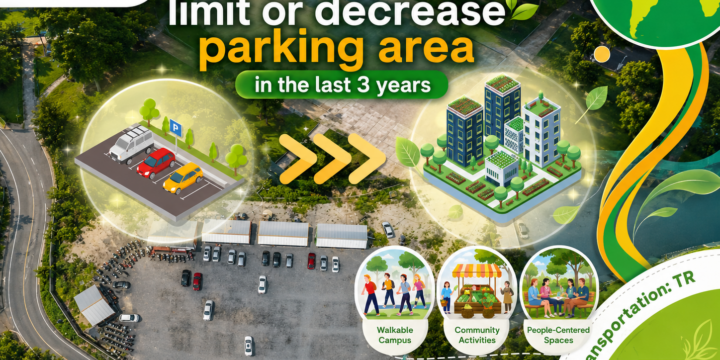
Transportation (TR) Total ground parking area Total campus area and parking area of Walailak University      Walailak University has adopted a sustainable transportation policy aimed at reducing dependence on private vehicles and promoting environmentally friendly modes of transportation, including electric shuttle buses, electric trams, public bicycles, and pedestrian-friendly infrastructure. As a result, the university allocates only a small proportion of its campus area to parking facilities.     The university has continuously reduced parking areas and repurposed former parking spaces into educational, cultural, recreational, and community engagement facilities. These efforts are aligned with the Green Campus policy and the university’s commitment to sustainable development.     Walailak University occupies a total area of 15,350,400 m², while the total designated parking area is only 28,035.32 m², representing 0.18% of the total campus…
Read More
Transportation Initiatives: Shuttle Services and Programs to Limit Private Vehicle Use

Transportation Initiatives: Shuttle Services and Programs to Limit Private Vehicle Use

Transportation (TR)
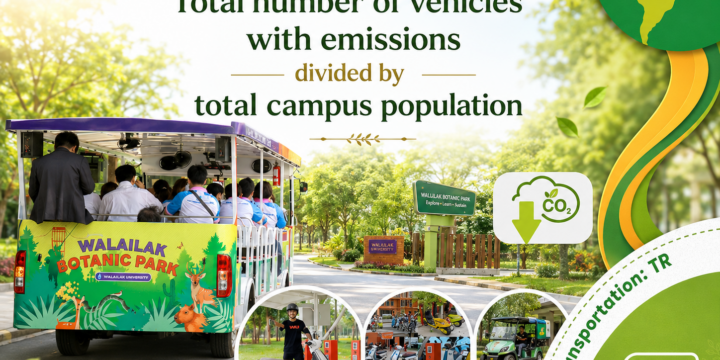
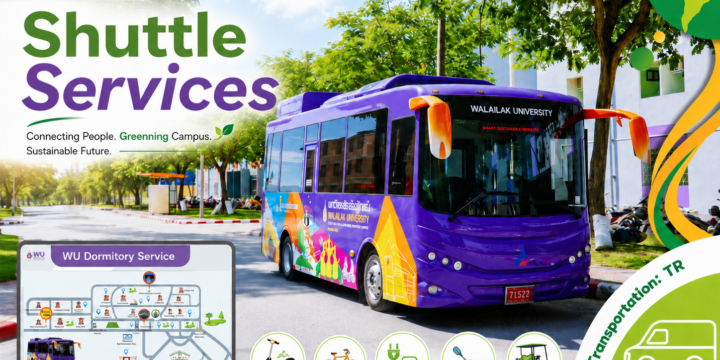
Transportation (TR) Getting around walailak universityWU EV buses operate within the dormitory zone, providing easy access to classrooms, university buildings, and key facilities.         Walailak University provides a regular and free campus shuttle service operated using zero-emission vehicles to support sustainable mobility across the campus. The university currently operates electric shuttle buses for students, staff, and visitors, reducing dependence on private vehicles and fossil fuel-based transportation. Policy from Walailak University President to reduce the use of motorcycles Car Sharing Program          The university provides shuttle services for staff members to reduce the use of private vehicles, particularly for those commuting from outside the campus. This initiative encourages shared transportation among personnel traveling along the same routes, replacing individual car use with university-operated shuttle services. Public…
Read More
Total number of vehicles (cars and motorcycles with internal combustion engines and electric vehicles)

Total number of vehicles (cars and motorcycles with internal combustion engines and electric vehicles)

Transportation (TR)
Transportation (TR) Number of cars actively used and managed by the university Total Cars and Motorcycles with Combustion Engines at Walailak University Total number of vehicles with emissions divided by total campus population Total number of ZEV divided by total campus population        Walailak University actively promotes the use of Zero Emission Vehicles (ZEVs) as part of its sustainable transportation strategy and low-carbon campus development program. The university provides a variety of zero-emission transportation options that are regularly used by students, academic staff, administrative personnel, and visitors throughout the campus.     To support sustainable mobility, Walailak University provides free electric shuttle bus services operating on multiple routes connecting academic buildings, student residences, sports facilities, the university hospital, the central library, Walailak Park, and other key destinations. These electric…
Read More
Planning, implementation, monitoring and/or evaluation of all programs related to Setting and Infrastructure through the utilization of Information and Communication Technology (ICT)

Planning, implementation, monitoring and/or evaluation of all programs related to Setting and Infrastructure through the utilization of Information and Communication Technology (ICT)

Setting and infrastructure (SI)
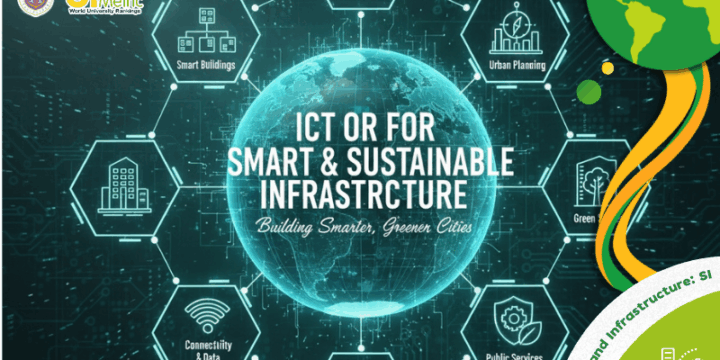
Setting and Infrastructure (SI) Planning, implementation, monitoring and/or evaluation of all programs related to Setting and Infrastructure through the utilization of Information and Communication Technology (ICT) ·          Allocating over 50% of the total campus area as green and open spaces to support biodiversity, reduce air temperature and pollution, and provide natural learning environments.·                  Designing and renovating buildings in accordance with Green Building standards, ensuring equal access and inclusiveness for all, while emphasizing efficient use of energy, water, and materials. ICT systems such as Smart Building technologies and dashboards are integrated for effective facility management.·              Developing sustainable public utilities and transportation systems, including electric shuttle buses, EV charging stations, bicycle lanes, and pedestrian pathways that are…
Read More
Conservation: Plant (Flora), Animal (Fauna), or wildlife, genetic resources for food and agriculture secured in either medium or long-term conservation facilities

Conservation: Plant (Flora), Animal (Fauna), or wildlife, genetic resources for food and agriculture secured in either medium or long-term conservation facilities

Setting and infrastructure (SI)
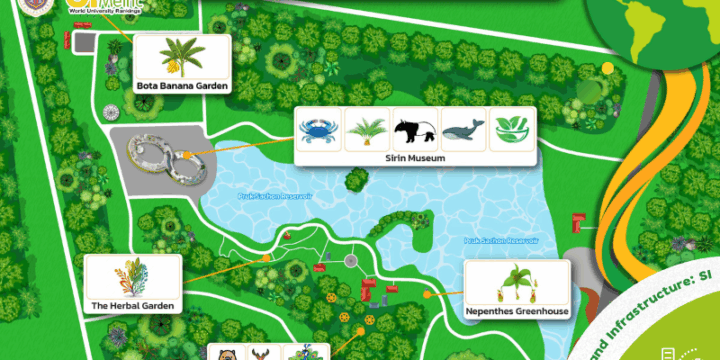
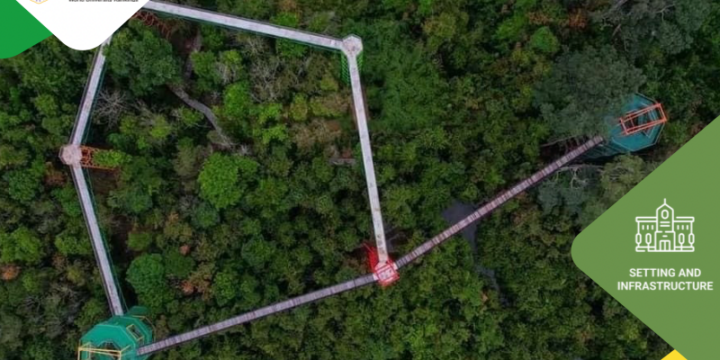
Setting and Infrastructure (SI) Conservation: Walailak University Botanical Park        Walailak University Botanical Park is located within the university’s conservation area, covering approximately 2,160,000 square meters. It serves as a center for the conservation of plant species, animal species, wildlife, as well as genetic resources for food and agriculture. The park emphasizes the collection, propagation, and preservation of various plant families for the purposes of education, research, and conservation of native species in their original ecosystems.       Within the area, the Princess Maha Chakri Sirindhorn Natural History Museum is situated. The building is uniquely designed in the shape of the number “8” symbolizing infinity and sustainability in the conservation of natural resources, the environment, and cultural wisdom. Key exhibitions include a simulated Krung Ching Waterfall, representing…
Read More
Total Green and Open Space Area on Campus

Total Green and Open Space Area on Campus

Setting and infrastructure (SI)
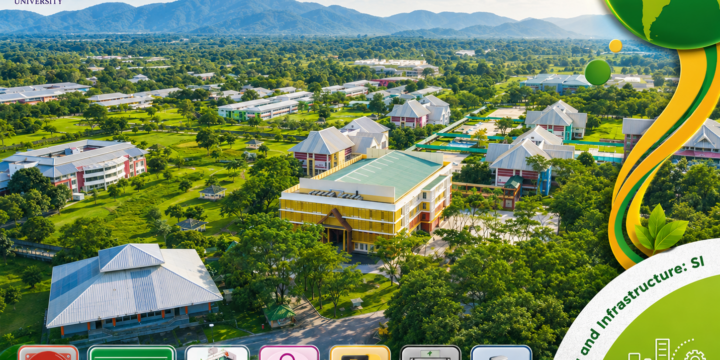
Setting and Infrastructure (SI) Total forest vegetation area          Walailak University encompasses an expansive total area of 15,350,400 square meters, featuring a substantial forested expanse of 3,992,637.05 square meters. The university has secured funding to establish a nature and ecological museum dedicated to the Plant Genetic Conservation Project, an initiative under the esteemed royal patronage of Her Royal Highness Princess Maha Chakri Sirindhorn. This endeavor aims to facilitate study and research while conserving the diverse plant and flower species indigenous to southern Thailand. Situated within the lush, green forest area of the campus, the museum will function as an open-air facility, complemented by a nature study path that invites exploration and learning. Notably, the forest vegetation comprises approximately 26.14% of the university's total land area, underscoring the…
Read More
Total area on Campus Covered in planted Vegetation (SI.3)

Total area on Campus Covered in planted Vegetation (SI.3)

Setting and infrastructure (SI)
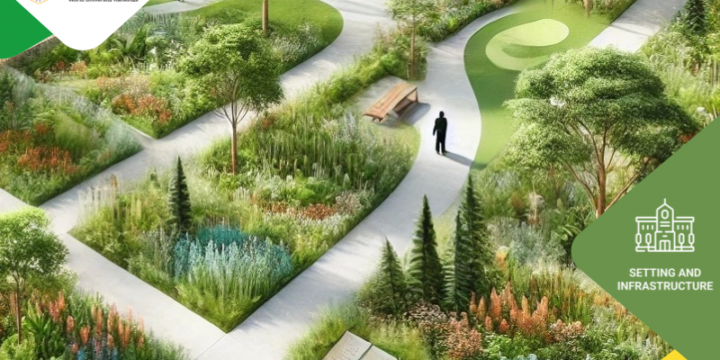
Setting and Infrastructure (SI) Walailak Park          Walailak Park was established between 2017 and 2018 as a public park designed to offer a recreational space for the university community, including faculty, staff, and students, as well as residents of Tha Sala District, people of Nakhon Si Thammarat Province and nearby areas, and visitors from across the country and abroad. With the opening of the Walailak University Medical Center Hospital, Walailak Park also provides a tranquil setting where hospital visitors can relax and rejuvenate both physically and mentally. Additional evidence links: Walailak Park Bota Cactus Dome         The Bota Cactus Dome, the largest of its kind in Southern Thailand, houses an extensive collection of cactus species, drought-tolerant plants, and succulents, serving as an important botanical…
Read More