Ongoing Programs Promoting Good Aquatic Stewardship Practices

Ongoing Programs Promoting Good Aquatic Stewardship Practices

Outreach and Engagement
Outreach and Engagement Walailak University (WU) continues to play an active role in advancing sustainable fisheries and aquaculture practices, fostering environmental stewardship in alignment with international standards and national priorities. Through long-term projects that combine scientific innovation, government collaboration, and community participation, WU supports both ecological preservation and local livelihoods. Two flagship ongoing programs—the Blue Swimming Crab Fishery Project and the Tilapia Aquaculture Program—illustrate the university’s leadership in promoting good aquatic stewardship. Blue Swimming Crab Fishery: Advancing Sustainable Practices in Aquatic Restoration From 2018 to 2024, WU has spearheaded an ongoing project to rehabilitate blue swimming crab populations in Bandon Bay under the leadership of Asst. Prof. Dr. Amonsak Sawusdee. This initiative has made remarkable progress in elevating Thailand’s fishery standards in accordance with the Fishery Improvement Program (FIP) framework.…
Read More
Monitoring Aquatic Ecosystem Health through Technology and Community Engagement

Monitoring Aquatic Ecosystem Health through Technology and Community Engagement

Outreach and Engagement
Outreach and Engagement Walailak University (WU) is committed to safeguarding and monitoring the health of aquatic ecosystems in its surrounding areas through advanced scientific approaches. Strategically situated near key marine and freshwater resources, WU actively tracks ecosystem conditions to support sustainable management. The university employs cutting-edge technologies, including Geographic Information Systems (GIS), remote sensing, CTD sensor networks, and unmanned aerial vehicles (UAVs), to collect and analyze environmental data. The following highlights WU’s ecosystem monitoring efforts in Bandon Bay and the coral reef areas of Phuket. Monitoring Bandon Bay with GIS and Remote Sensing Bandon Bay, adjacent to WU, plays a critical role in supporting both local communities and marine biodiversity. To protect this vital ecosystem, WU researchers collaborate with government agencies and industry partners, including the Thai Frozen Foods Association…
Read More
Policy for Preventing and Reducing Marine Pollution

Policy for Preventing and Reducing Marine Pollution

Sustainability and Stewardship
Sustainability and Stewardship In 2024, Walailak University issued its policy on marine pollution reduction to strengthen measures aimed at preventing and mitigating pollution from all sources, particularly land-based activities. The policy, titled “Policy on Marine Pollution Reduction B.E. 2567 (2024),” demonstrates the university’s commitment to responsible environmental stewardship on and off campus. As a leading educational institution in Thailand, Walailak University recognizes its role in modeling best practices in environmental management and supporting the United Nations Sustainable Development Goal 14 (SDG 14) on life below water. The policy provides a clear framework for monitoring and addressing marine pollution, ensuring compliance with national and international regulations, and protecting vital marine ecosystems that sustain biodiversity and the livelihoods of coastal communities.Beyond regulatory compliance, the university emphasizes education and community engagement. By integrating…
Read More
Walailak University’s Action Plan for Reducing Plastic Waste

Walailak University’s Action Plan for Reducing Plastic Waste

Sustainability and Stewardship
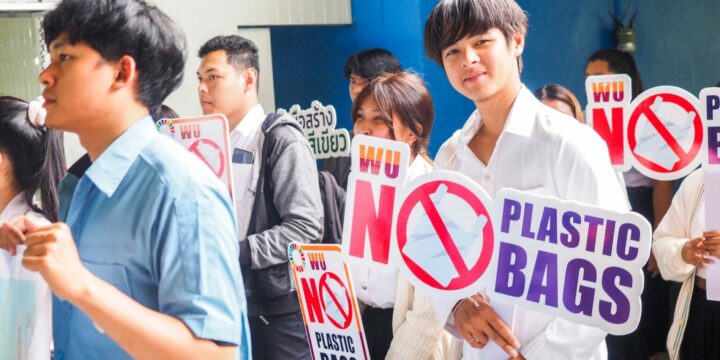
Sustainability and Stewardship Walailak University (WU) has adopted a comprehensive action plan and set of guidelines to reduce plastic waste on campus, eliminate the distribution of handled plastic bags and foam packaging in food establishments, and promote sustainable consumption practices. This initiative supports the university’s Green Campus Policy, particularly its fifth strategic goal: “Enhancing the image of WU as a Happy Green Campus.” Key Focus Areas Plastic waste management measures have been implemented across WU Food Centers, shops, food kiosks, and restaurants. All vendors are prohibited from distributing handled plastic bags and foam containers, helping reduce waste at the source in line with the 3Rs principle: Reduce, Reuse, and Reject. 2022–2025 Plastic Waste Action Plan Figures : WU Action Plan on Plastic Waste Reduction 2022-2025The university’s action plan aims to…
Read More
Water Quality Standards and Wastewater Management at Walailak University

Water Quality Standards and Wastewater Management at Walailak University

Outreach and Engagement
Outreach and Engagement Walailak University has water quality standards and guidelines for water discharges to uphold water quality in order to protect ecosystems, wildlife, and human health and welfare. All of the water resources used on campus are from tap water extracted by WU on campus 100% and recycled wastewater. Chala Nusorn Water Works HouseWastewater Treatment Plant The Tap Water from Natural Rainwater Walailak University’s primary water supply is produced from natural rainwater collected in the Phuksa Chon and Chalanuson Reservoirs. The Chalanuson Reservoir, covering 329,385 m² with a capacity of 4.94 million m³, serves as the main source. The Chalanuson Water Supply Plant, with a production capacity of 400 m³ per hour (9,600 m³ per day), distributes tap water across the campus. Raw water is pumped from the reservoir…
Read More
Technologies for Preventing and Minimizing Damage to Aquatic Ecosystems

Technologies for Preventing and Minimizing Damage to Aquatic Ecosystems

Outreach and Engagement
Outreach and Engagement In 2024, Walailak University collaborated with government agencies, local authorities, and marine industry partners to implement projects that provide advanced technologies to minimize and prevent damage to aquatic ecosystems.Among these initiatives, the Bandon Bay Project employs Geographic Information Systems (GIS) and Remote Sensing to monitor and mitigate ecosystem degradation across this expansive watershed. The university also established a CTD Sensor Network around coral reefs on Racha Island, delivering real-time data to support coral conservation and address climate change-related threats.To protect vulnerable marine species, the Aerial Survey Using UAV-Drone project monitors populations of dugongs, turtles, and dolphins in Krabi Province. Each project integrates cutting-edge technology with collaborative efforts, reflecting Walailak University’s commitment to sustainable marine industry practices and the protection of aquatic ecosystems. GIS and Remote Sensing Technologies…
Read More
Direct Involvement for Preserving Freshwater, Coastal, and Marine Ecosystems and Biodiversity

Direct Involvement for Preserving Freshwater, Coastal, and Marine Ecosystems and Biodiversity

Outreach and Engagement
Outreach and Engagement As global environmental challenges intensify, the conservation of aquatic ecosystems has become increasingly urgent. Walailak University (WU) actively engages in research and community initiatives to protect and restore freshwater and marine ecosystems, with particular attention to species and habitats under threat.Demonstrating a strong commitment to ecological preservation, WU collaborates with local communities, government agencies, private sectors, relevant industries, and NGOs to implement impactful projects. These efforts aim to safeguard biodiversity, maintain ecosystem health, and ensure the sustainable management of freshwater, coastal, and marine environments. Maintaining Freshwater Ecosystem and Biodiversity: Community-Based Living Weirs for Plants and Animals Conservation In 2024, Walailak University collaborated with local communities, government agencies, and industrial partners—including the Department of Provincial Administration, Na Mai Phai Subdistrict Administrative Organization, the Subdistrict Agricultural Technology Transfer and…
Read More
Walailak University Advances Global Excellence through Marine Conservation and Sustainable Resource Utilization

Walailak University Advances Global Excellence through Marine Conservation and Sustainable Resource Utilization

Outreach and Engagement
Outreach and Engagement Walailak University is dedicated to the conservation and sustainable utilization of aquatic resources, taking direct action to maintain the health of ecosystems in rivers, lakes, and seas. The university’s efforts extend to the protection of oceans, freshwater bodies, and marine biodiversity.Through close collaboration with local communities, government agencies, private sectors, and non-profit organizations, Walailak University organizes and supports a variety of initiatives that promote the sustainable management of aquatic and marine resources. Activities such as constructing artificial fish habitats, repairing living weirs, and releasing juvenile blue crabs into the sea not only help restore and strengthen local ecosystems but also generate lasting social and economic benefits for nearby communities.These initiatives serve as valuable platforms for education, community engagement, and practical conservation. They highlight the importance of protecting…
Read More
Free Educational Activities to Raise Awareness about Overfishing and Destructive Fishing Practices

Free Educational Activities to Raise Awareness about Overfishing and Destructive Fishing Practices

Blue Swimming Crab2025, Outreach and Engagement
Outreach and Engagement In 2024, Walailak University organized free outreach activities for local and national communities to raise awareness about overfishing, illegal, unreported, and unregulated fishing, and destructive fishing practices. These outreach activities were organized for local fishermen, students, youths, and the general public as part of Walailak University’s initiatives on the promotion of sustainable fishery in Nakhon Si Thammarat and Thailand. Public Seminar on Partnership Promotion for Sustainable Coastal and Marine Resources and Fisheries Management Walailak University has long collaborated with local fishermen in Tha Sala District, Nakhon Si Thammarat Province, to promote sustainable fisheries and the conservation of marine resources. Through continuous outreach and academic service activities, the University has aimed to enhance local awareness of environmentally friendly fishing practices and encourage the responsible use of marine resources…
Read More
Free Educational  Outreach Programs on Sustainable Fisheries, Aquaculture, and Tourism

Free Educational  Outreach Programs on Sustainable Fisheries, Aquaculture, and Tourism

Blue Swimming Crab2025, Outreach and Engagement
Outreach and Engagement In 2024, Walailak University offered various outreach programs on the sustainable management of fisheries, aquaculture, and tourism for local and national communities. All of the outreach programs were provided to the communities freely without any cost to ensure access to educational opportunities among local agriculturists, aquaculturists, and the general public. The outreach programs include both marine biodiversity and freshwater biodiversity. Sustainable Management of Blue Swimming Crab Fisheries and Aquaculture Sustainable Blue Swimming Crab Fisheries In 2024, Blue swimming crab resources in Nakhon Si Thammarat and Surat Thani were still a predominant issue in the local fishery, as it has served as an economic aquatic animal, contributing to the local fishermen’s income and grassroots economy. Additionally, each year, there are new groups of fishermen who still do not…
Read More